

Recent Posts








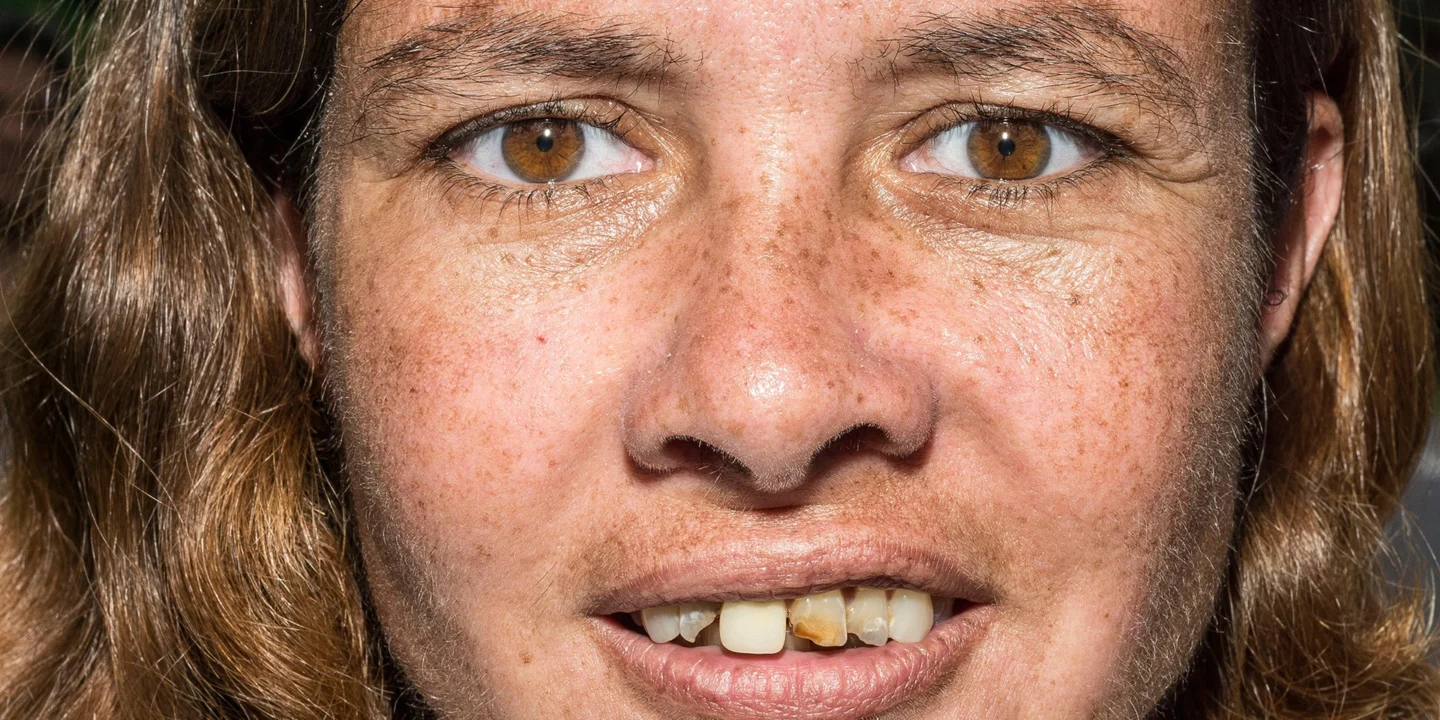
I am bone of the bone of those who live in trailer homes, mobile homes and cheap rentals. I grew up knowing people like Tiffany “Pennsatucky” Doggett. In Orange Is the New Black, she is violent, crude, evangelical and always ready for a fight, a character viewers find both repulsive and impossible to ignore. But I recognised her not by her accent, nor by her anger. I recognised her by her teeth.
Those teeth were too familiar. Grey, broken, sharp, like bits of stone grown out of poverty. When the first season aired, many viewers were startled by them. People joked online about “Pennsatucky teeth”, as if they were a mark of monstrosity. To me, they were not monster teeth. They were teeth I had seen many times before.
Poor people in film and television rarely have poor people’s bodies. The actors who play them often carry white, straight, carefully maintained smiles, protected by dentists and cosmetic industry money. Even when the clothes are torn, the hair is greasy and the face is dirtied for the role, the mouth gives away the class magic. They still have the teeth of middle- or upper-class America. Pennsatucky was unsettling because her teeth made poverty physical, impossible to keep politely outside the viewer’s gaze.
There were many Pennsatuckys in my life. She was the relative who fell asleep beside the pool while supposed to be watching children. She was the person who later stole my mother’s ring for drugs. She was the woman whose cheeks had been hollowed out by substances and by life. She was also the step-relative living with my construction-worker father in a mobile-home park, her body, teeth and nerves all worn down by the same long years. Not all of them had used meth. Often, they were simply poor.
That is why “meth teeth” is too easy an explanation. It turns everything into private failure, as though avoiding drugs were enough to guarantee a clean, even smile; as though dental care, insurance, nutrition, knowledge and geography had nothing to do with it. My grandmother lost her teeth early, too. She was not a television villain or a cautionary tale. She was young and beautiful, with green eyes, long legs and natural blonde hair. When she walked into the courthouse where she worked, men noticed. She had waited tables, worked factory lines and eventually taken a desk job in the county court system in Wichita, Kansas. She helped raise me.
She was only 35 when I was born, so the grandmother I remember was not an old woman but a bright, capable, radiant one. By day, she dressed for work and moved through the courthouse with confidence. At night, in the farmhouse or in the small brick house we fixed up in a rough neighbourhood, she would take her teeth out. I was fascinated by the ritual. She held the dentures in her hand, scrubbed them with a stiff brush, then dropped them into a glass of water where a tablet fizzed around them.
“Brush your teeth, and don’t eat too much candy,” she would tell me. “You don’t want to end up like Grandma.”
Then she would widen her eyes and push the dentures forward until they bulged from her mouth in a comic grimace. I laughed, and she laughed too. But the joke had something unfunny beneath it. In the early 1970s, a dentist pulled every tooth from her twenty-something skull. Some were too far gone; others were not impossible to save, only too expensive. She is now nearly 70 and has worn false teeth for more than four decades.
When I asked how it happened, she said her teeth had always been bad. They looked straight enough, even decent, but they hurt all the time. When I was a child, the story had many versions: a car accident, teeth that simply went bad, a doctor saying nothing could be done. Later, she spoke more plainly. She had been in so much pain that losing all her teeth felt like deliverance. She looked forward to a life without toothache. Now she thinks it may have been a foolish decision, but at the time, pain overpowered the future.
This is how poor people make choices. Not from a menu filled with real possibilities, but between pain, bills, fear and whatever can be done right now to keep living.
Tens of millions of Americans have no dental insurance. Even those who do are often covered only for basic cleanings and checkups, while expensive procedures — fillings, crowns, root canals, extractions, dentures — require large out-of-pocket payments. For middle- and upper-class people, that may be an unpleasant expense. For poor people, it often means no treatment at all. Small cavities become large cavities. Toothaches become infections. Infections become emergencies. Teeth decay while people wait.
Cost is not the only obstacle. Some public programmes reimburse so little that dentists refuse to accept them. Many rural and poor communities do not have enough dentists in the first place. Medicare often treats dental care as though it were separate from the rest of health. As if teeth were cosmetic. As if the mouth were merely an ornament on the face, not the entrance to eating, speaking, breathing and dignity.
The Affordable Care Act changed many lives, including mine. But the exclusion or limitation of dental care in so many forms of coverage still reveals an absurd medical division: the heart is part of the body, the lungs are part of the body, the blood is part of the body, but teeth somehow are not. Anyone who has truly had a toothache knows how cruel that distinction is.
It was not sugar that determined the fate of our teeth, nor meth, but the absence of insurance, knowledge and nutrition
My father nearly died from a bad tooth. He was about 50 when an abscessed tooth became infected, the infection entered his bloodstream, and his heart nearly stopped. He never had stable dental insurance and rarely saw a dentist. Usually, he went only when pain became impossible to endure. This is not an unusual story. Many people end up not in dental clinics but in emergency rooms, being treated for infections that could have been prevented much earlier.
My father has always been handsome. Even now, you can see the lines of the young man people once admired. But over time his teeth have shifted, broken and grown strange. One canine is long and ragged, like an animal tooth that life never filed down. During a break from a side job renovating a fraternity house, he told me that he notices other people’s teeth because his own are so bad.
“Nutrition affects teeth, right?” he asked.
Of course it does. I also reminded him that the bottled Gatorade he sometimes buys as a treat is full of sugar. But I knew that sugar alone had not determined the fate of his teeth, or my grandmother’s. Middle-class and wealthy people drink sweet drinks too. They eat desserts. They buy candy for their children. The difference is that they have regular cleanings, fluoridated water, parents who know what to watch for, insurance cards, early fillings, braces and dentists who explain prevention. Their mistakes can be corrected. Ours are recorded in bone.
So it was not sugar alone. It was not meth. It was having no insurance, not knowing what prevention required, not having money to treat a problem while it was still small, eating food that was cheap but not nourishing, living without fluoridated water, lacking transportation, having parents too overworked to schedule regular appointments, and learning to endure pain until it became normal. It was poverty itself.
Bad teeth create a special form of shame. You are excluded from the system that could treat you, yet still held responsible for the result. When your teeth decay, people say you are lazy, dirty, addicted to soda, undisciplined, careless. Few ask whether you had a dentist as a child. Whether your family had insurance. Whether there was a clinic where you lived. Whether your parents knew baby teeth mattered. Whether anyone could take time off work to bring you in when the pain began.
This is a familiar American cruelty: first withdraw the public system, then blame people for the damage caused by its absence. Education works this way. Healthcare works this way. Housing works this way. The structure lets people fall, then points to the fallen and says: look how badly they stand.
When a news host introduces the actress who plays Pennsatucky, there is often a rush to reassure viewers: do not be fooled by those awful teeth; the actress is actually beautiful and talented. The compliment contains an insult. It suggests that bad teeth cannot coexist with beauty, talent, intelligence or respectability. Once the teeth are bad, the person seems to slip out of full personhood and into the category of joke, monster, lower thing.
Open racism and sexism have become less acceptable in many settings, but class contempt still passes easily as entertainment. People laugh at Walmart shoppers’ clothes, bodies, wheelchairs, oxygen tanks, stomachs and hair. Their photographs circulate as jokes. Yet many of those signs are not matters of taste. They are the bodily results of illness, poverty, geography, education, labour and hopelessness.
Upper-class people have long liked to explain their advantages as virtue and other people’s deprivation as defect. A century ago, eugenicists tried to prove that poor white people were hereditary failures. They targeted not only racial minorities but rural poor whites. Poverty has often been disguised as a problem of blood, intelligence or morality. Once that happens, society does not have to admit that it produces poverty. It can simply say the poor were made for it.
When I was a child, no one in my family had medical or dental insurance. My father would say that the medical and dental industries were scams, criminal businesses. Maybe there was truth in that, and maybe it was too sweeping. But it gave us a kind of psychological protection: we were not unable to pay; we were too principled to participate in their racket. People who have been shut out often need such stories. Without them, shame is too heavy.
My baby teeth once looked good: white, straight, not the mouth of a problem child. I was not fat either, not yet part of the childhood obesity epidemic that would later mark poor children so visibly. But I carried plenty of class signals. Bangs cut crooked at home with scissors. A paper grocery bag for school supplies when other children had pretty backpacks. The smell of cigarette smoke in my clothes. Recurrent ringworm. Hand-me-down clothes that did not fit. Cheap plastic boots from a discount store, imitating a fashionable style badly enough for other children to notice. None of these things appeared on a report card, but classmates, teachers and strangers could read them immediately.
I also had moments of good clothes, good hair and confidence. I was not always excluded. I had friends. I was praised. But I still remember the boy who handed me a dessert cup from his lunch box every day when a mistake in the free-lunch programme left me without a meal card for months. He did not make a speech. He simply gave me something. Poverty is not always dramatic hunger. Sometimes it is standing beside the line, knowing you are not authorised to receive lunch.
He pulled from my skull the grey tooth, cracked cleanly down the middle
During those years, pain lived in my mouth. Not the cinematic kind of pain that produces a sudden scream, but a low, constant, irritating throb. When I bit down, one root would send up a shock like electricity. In class, the deep pulse in my gums would travel into my head until I could not concentrate. My baby teeth looked acceptable on the surface, but inside they were full of cavities.
There were many possible explanations. Maybe it was the formula I drank as a baby, or the sweet cereal that became a source of comfort in a difficult house. Maybe it was the lack of fluoride in the water where we lived. But none of that explains everything. Wealthier children drink formula, eat sugar and drink soda too. The difference is that their cavities are found and filled while still small. Mine had to wait until pain made them undeniable.
Around third grade, an upper molar began to hurt beyond anything I had known. It was the worst toothache I remember. The tooth decayed so badly that it cracked while still in my mouth. My mother somehow got me to a dentist. He said the pain was so severe because the nerve was exposed. Then he pulled the grey tooth from my skull. It had split perfectly in half. He let me take it home.
I kept the two halves in a tiny jewellery box for years. Sometimes I took them out and fitted them together. They looked like a broken heart pendant, like the friendship necklaces sold in stores, where each friend wore one half. Mine came from my own mouth, from a tooth poverty had allowed to rot until the end.
Around the same time, I had my jaw X-rayed for the first time. The dentist told my mother that she might as well begin saving for braces. She later repeated this with a tired kind of amusement. She had recently divorced, and in the years that followed we moved often, with insurance appearing and disappearing. Sometimes it was employer-based and vanished when she changed jobs. Sometimes it was a state programme for poor children, limited and complicated. Each change meant finding a new dentist who would accept the coverage. Then came waiting periods, appointments, missing records. My files were often lost in the shuffle.
My medical records were the same way. Because immunisation papers could not be found, I was given new rounds of shots almost every year. The system treated my body again and again as newly arrived, without history, needing to prove itself from the beginning.
There was, of course, no saving for braces. We could barely manage fillings.
The prediction about braces did not come true. My baby teeth were slow to fall out, and my adult teeth were slow to appear. We waited years to see what would happen. Then the surprising verdict arrived: my teeth grew in straight. Not merely straight enough. Straight enough to make dentists pause. Whenever I sat in the chair under the hot lamp, the dentist would call the hygienist over.
“Look at her teeth.”
“Really, no braces?”
“You whiten them, though, don’t you?”
I would shake my head with my mouth open, filled with something like religious gratitude. I do not know why, in that environment, I was given a bright, orderly set of teeth. Genes, luck and the body’s private mystery seemed to have been unusually kind. But I know who preserved them afterwards: I did.
When a health teacher said to brush twice a day, I brushed twice a day. When a television commercial said dentists recommended daily flossing, I flossed daily. A college roommate once laughed at the intensity of my dental rituals. On drunken nights, when everyone else fell into bed, I held on long enough to get to the bathroom and squeeze toothpaste onto the brush. However tired, however drunk, I cleaned every surface of every tooth, then drew out the floss and threaded it through those tiny sacred spaces. For other people, it was hygiene. For me, it was the guarding of a pass.
I learned early that bad teeth produce not only shame but further poverty. People with bad teeth have a harder time getting hired, especially in work that requires facing the public. Without good jobs, there is no good insurance. Without insurance, there is no dental care. Without dental care, there are worse teeth. The cycle tightens around the mouth and around life.
Privileged America judges harshly the mouths that chew orange chips, drink yellow soda and breathe with a rough rattle
If Pennsatucky ever escapes poverty, it may be partly because of a prison fight. At the end of the first season, the upper-class protagonist knocks out her repulsive teeth. At the beginning of the second, nearly toothless, she manages to force the prison system to give her a new set. She has replaced drugs with born-again religious zeal, but what truly makes her look as if she might begin again is the teeth.
People often say the eyes are the windows of the soul. But the mouth may be the soul’s door. Food enters through it. Language comes out of it. Breath passes through it. The mouth connects the body to the world, and it exposes a person’s class to the world.
Privileged America pursues purity — organic, natural, gluten-free, low-sugar, hand-crafted — while judging the mouths that chew orange Doritos, drink yellow Mountain Dew, hold tobacco in the lip, speak in profanity, misuse grammar and breathe with the sound of damaged lungs. It treats those mouths as evidence of failure, rarely admitting that they may never have had decent choices.
When Pennsatucky gets her new teeth, she cries in the prison van. Later, while working in the laundry, she shows them off with an exaggerated grin. Another prisoner, jealous, says she looks a little stupid. Pennsatucky answers: I am not stupid. I got new teeth.
The line is funny and sad. Because new teeth are not just new teeth. They mean people may look at her differently. She may still be poor, coarse, wounded and aggressive, but her mouth no longer instantly sentences her as hopeless.
As a young adult, I learned that I had been born without wisdom teeth. The dentist joked that I was evolutionarily advanced, since modern humans no longer need so many teeth for tearing primitive food. The comment moved me more than it should have. So many television shows, jokes and Halloween costumes had told me that the place I came from meant backwardness, ignorance and vulgarity. Suddenly, someone with professional authority told me that my body was not backward, but advanced. It was only a light joke, but I remembered it.
I remembered it the way I remembered seeing the word “genius” in a school psychologist’s notes to my mother in fourth grade and crying on the sidewalk. Small counter-judgments from authority can feel like windows opening for a child pressed down by class narrative.
Because I have crossed a class line and been misread on both sides of it, I have often found peace in things that do not evaluate my social rank: nature, animals, art, books. W E B Du Bois wrote that he sat with Shakespeare and Shakespeare did not wince. Books do not close because your shoes are cheap. Nature does not change the direction of the wind because of your accent. Animals do not decide whether you are worthy of affection by asking about your family income.
Du Bois used the term “double consciousness” to describe the constant awareness of more than one self. For him, one of the heaviest forms of doubleness was to be educated and Black. For me, and for many people living on one side of America’s income divide, a defining doubleness is to be educated and from poverty.
This is not an identity one simply escapes. Many people imagine class mobility as leaving one place and entering another. It is not that simple. You do not walk away from trailer homes, farms, poor schools, free lunches and relatives with bad teeth and simply become a person of another class. You carry several narratives at once. You enter new rooms while still hearing the old ones.
Friends who know my background sometimes tease me. When I am drunk, I may misuse a verb or slip into a drawl. When I am sober, I may reveal some gap in formal knowledge, the kind of thing others assume everyone learned in sixth grade, while my sixth-grade year was spent mostly in red dirt outside a small schoolhouse near the Oklahoma border. They laugh, too, at the pleasure I take in solid furniture from yard sales, or at the small cast-iron skillet I once loved because it reminded me of the pan my grandmother used to defend her mother from a drunken stepfather.
I do not dislike these jokes. Sometimes they mean my friends see the true clichés woven into my story and do not turn away. But I also know that the same behaviour in wealthy people is read differently. Wealthy people use cast-iron skillets, and it is rustic, tasteful, vintage. Wealthy people use bad grammar, and it is casual. Wealthy people do not know certain basic facts, and it is specialisation. When poor people do the same things, they become proof of origin.
I have watched journalists preserve the bad grammar of trailer-park tornado survivors so they sound foolish, crude and local, while editing the foolish-sounding remarks of city officials and executives into smoother prose suited to their status. Language has class retouching. Some people’s flaws are kept. Others are corrected into dignity.
I took much of the education I had not been given from libraries, encyclopedias and magazines left behind by others. At the same time, I have known plenty of middle- and upper-class people who were handed opportunities they refused or did not know how to use. Class shapes us, but it is not identical to us. Character, intelligence, talent and skill finally exist at the level of the individual, not the class label. To think otherwise, as history has shown through countless persecutions of our own making, is at best an insult and at worst the beginning of enslavement, violence and extermination.
The liberals who support Occupy Wall Street are often the same people who think Southerners are inbred and Walmart shoppers are slovenly fools
In Thomas Harris’s crime novels, the FBI consults the imprisoned serial killer Hannibal Lecter while searching for a murderer known as the Tooth Fairy, a man who bites his victims with dentures modelled on his grandmother’s distorted teeth. Years later, the FBI again seeks Lecter’s help. This refined, learned, cannibalistic sociopath becomes less interested in the case than in the young agent Clarice Starling.
He looks at her and says that with her good bag and cheap shoes, she looks like a scrubbed-up, ambitious rube with a little taste. He says good nutrition has given her length of bone, but she is no more than one generation from poor white trash. He hears the West Virginia accent she has tried to bury and asks whether her father was a coal miner.
The insult works because it strikes the most vulnerable point in the American story of class mobility. Starling has entered the FBI Academy through intelligence, ambition, discipline and courage. She stands on the right side of the prison bars. But Lecter sees at once the place she has tried to hide: the cheap shoes, the accent, the family, the poverty, the origin newly scrubbed but not fully bleached away.
She is not destroyed by it. She hands Lecter a psychological evaluation and tells him to look at himself. America should do the same. Many people who consider themselves progressive support Occupy Wall Street, condemn the greed of the one per cent and speak in favour of economic justice. Yet they still mock Southerners, Walmart shoppers, trailer-park residents, slow speakers, fat bodies, bad teeth and cheap clothes. They oppose rich people’s oppression of the poor while culturally despising the poor.
A century ago, Du Bois wrote that the problem of the 20th century was the colour line. One of the problems the United States cannot avoid in the 21st is the class line. It is not only a matter of income inequality, wages, tax rates, housing costs or insurance coverage. It also lives in glances, jokes and the quick judgments we make when we see bad teeth, cheap clothes, a large body, a mobility scooter or a cart full of low-cost food.
If the American Dream is to honour its own promise, it needs more than structural repair — though it certainly needs universal dental care, genuinely accessible medicine, stable education and decent wages. It also needs a more private and difficult self-examination. We have to notice how quickly we read the marks of poverty as defects of character, how easily we turn deprived bodies into comedy, how often we make another person’s mouth into the symbol of the fall we most fear for ourselves.
Teeth are never only teeth. They are insurance cards, childhoods, water supplies, parents’ wages, school lunches, addresses, dentists willing or unwilling to treat you, and whether a person receives help while pain is still small. They are also first impressions at job interviews, the courage to smile, the impulse to cover the mouth while speaking, and the judgment made before a person has finished a sentence.
I have good teeth, and they have given me an unfair kind of passage. They allow me not to look like the place I came from. But I know that bad teeth are not moral failures. They are marks of the American class line written into bone. They remind me how a society turns some people’s pain into a joke, and how it teaches others to mistake luck for virtue.
What needs examination is not only the poor person’s mouth. It is also the eye that looks at that mouth and immediately feels superiority, disgust or fear.