









TRAVEL · JAPAN
A four-day Kyoto route for first-time visitors, balancing headline temples, old neighborhoods, local food, a Nara excursion, and quieter cultural experiences without wasting hours crossing the city.
Kyoto can feel deceptively difficult to organize. The landmarks are spread across several districts, famous temples often close early, and the same lane can be serene at breakfast and almost impassable by midday. A useful four-day plan therefore depends as much on geography and timing as on the list of places you hope to see.
This itinerary combines Kyoto’s essential first-visit experiences—Gion, Kiyomizu-dera, Arashiyama, Kinkaku-ji, and Fushimi Inari—with a full Nara day, neighborhood cycling, food stops, and a hands-on samurai session. The schedule is ambitious, but each day stays within a logical part of the city before moving on.
Four days will not exhaust Kyoto, and that is not the goal. It is enough time to understand the city’s different personalities: ceremonial and commercial, crowded and contemplative, meticulously preserved and comfortably ordinary. The route also leaves small pockets for shopping, unplanned meals, and simply noticing the streets between monuments.
Use the timings as a framework rather than a contract. Seasonal opening hours, weather, energy, and personal interests should decide what you trim. The most successful version of this trip is not the one that checks every box, but the one that preserves the rhythm of each area. Season changes the emphasis as well. Spring blossoms and autumn color intensify demand, summer brings heat and humidity, and winter shortens daylight but often softens crowds. Keep the geographic sequence, then adjust starting times, rest breaks, and outdoor exposure to the month in which you travel.
How the Route Fits Together
Think of the itinerary as four geographic clusters. Day 1 stays around downtown, Gion, and the eastern hills; Day 2 moves west to Arashiyama and northwest Kyoto; Day 3 links southern Kyoto with Nara; Day 4 returns to central and eastern neighborhoods for cycling and cultural activities.
Before leaving home, save every stop in your preferred map app and download the area for offline use throughout the day. Group pins by day, note the attractions with fixed closing times, and keep one optional stop in each cluster. That simple preparation replaces constant route recalculation and makes it easier to change plans when crowds or weather intervene. A useful planning habit is to label each pin as fixed, flexible, or optional. Fixed stops have reservations or early closing times; flexible stops can move within the day; optional stops disappear first. This prevents one delayed lunch from turning the remaining schedule into a stressful race.
Before Your Kyoto Visit
Keep yen alongside your cards. Larger stores and restaurants usually accept electronic payment, but temple admissions, shrine offerings, lockers, vending machines, and small food counters may not. A modest supply of cash prevents unnecessary detours to an ATM at exactly the moment you are trying to enter a sight.
Confirm opening days and last-entry times shortly before each visit. Many Kyoto temples close between 5 and 6 p.m., with ticket windows shutting earlier, and smaller sites may follow seasonal or weekday schedules. Build the afternoon around the least flexible attraction, then treat everything around it as adjustable.
Book limited-capacity activities before arrival. Market tours, tea ceremonies, private Nara outings, cycling tours, and samurai classes can fill their most convenient sessions well in advance. Reserving the anchors first gives the rest of the itinerary a stable shape without forcing every meal or temple visit into a reservation.
Begin popular sightseeing early. Even a sixty-minute advantage changes the experience at Arashiyama and Fushimi Inari, while Kiyomizu-dera often works better late in the afternoon when the light softens. The objective is not to beat every visitor, but to place at least one major sight in a calmer window each day.
Taxis can be a strategic tool rather than the default. Trains and buses serve this route, but a short taxi ride between distant clusters may save energy and protect an early closing time. Walking remains the best way to experience Gion, Higashiyama, downtown, and the preserved streets around Arashiyama.
Choose a central base within easy reach of downtown Kyoto and Gion. That location shortens the most repeated journeys, makes evening meals flexible, and allows you to revisit the old streets after day-trippers leave. Staying beside Kyoto Station is convenient for rail travel, but it is less atmospheric for this particular four-day plan. Whatever neighborhood you select, check the final walk from the nearest station with luggage. Kyoto blocks can look compact on a map, yet pedestrian crossings, underground exits, and river bridges add time. Easy evening access matters more over four nights than saving a few minutes on arrival.
The sequence below is designed for a first visit and assumes four full sightseeing days. If your arrival or departure consumes part of a day, protect Days 1 and 3, then simplify Day 2 or Day 4 according to whether temples or activities matter more to you.
Day 1: Markets, Gion & Kiyomizu-dera
Start with Kyoto’s most recognizable urban mix: food culture, shopping streets, geisha-district scenery, hillside lanes, shrines, and Kiyomizu-dera. The route gradually travels east from Nishiki Market toward Gion and Higashiyama, so most of the day can be completed on foot without repeated transport.
The exact pace is easy to adjust. Skip the animal café, shorten shopping, or replace afternoon tea with a formal ceremony. Anything with a timed entry should be booked first; the streets and temples can then fill the spaces around those appointments. Comfortable shoes are essential today because the route combines covered arcades, polished temple surfaces, slopes, and stone steps. Carry a light layer and water, but avoid an overloaded daypack; shops and cafés provide regular pauses, and lockers are available around major transport hubs.
Nishiki Market
Begin around Nishiki Market, the covered shopping street often described as Kyoto’s kitchen. A morning food walk is a particularly useful first-day activity because it turns unfamiliar displays into recognizable ingredients and gives you context for meals you will encounter later in the trip.
A three-hour tasting route can comfortably fill the morning. Expect small portions of sweets, omelet, croquettes, pickles, seafood, and other local snacks, followed by something substantial enough to count as lunch. Arrive hungry, pace yourself, and remember that the narrow arcade becomes much busier as the day advances.
The value is not only the food. A good local guide can explain market etiquette, seasonal specialties, shrine customs, and why certain shops have survived for generations. Those details make later independent wandering more meaningful and reduce the temptation to order only the most familiar dishes.
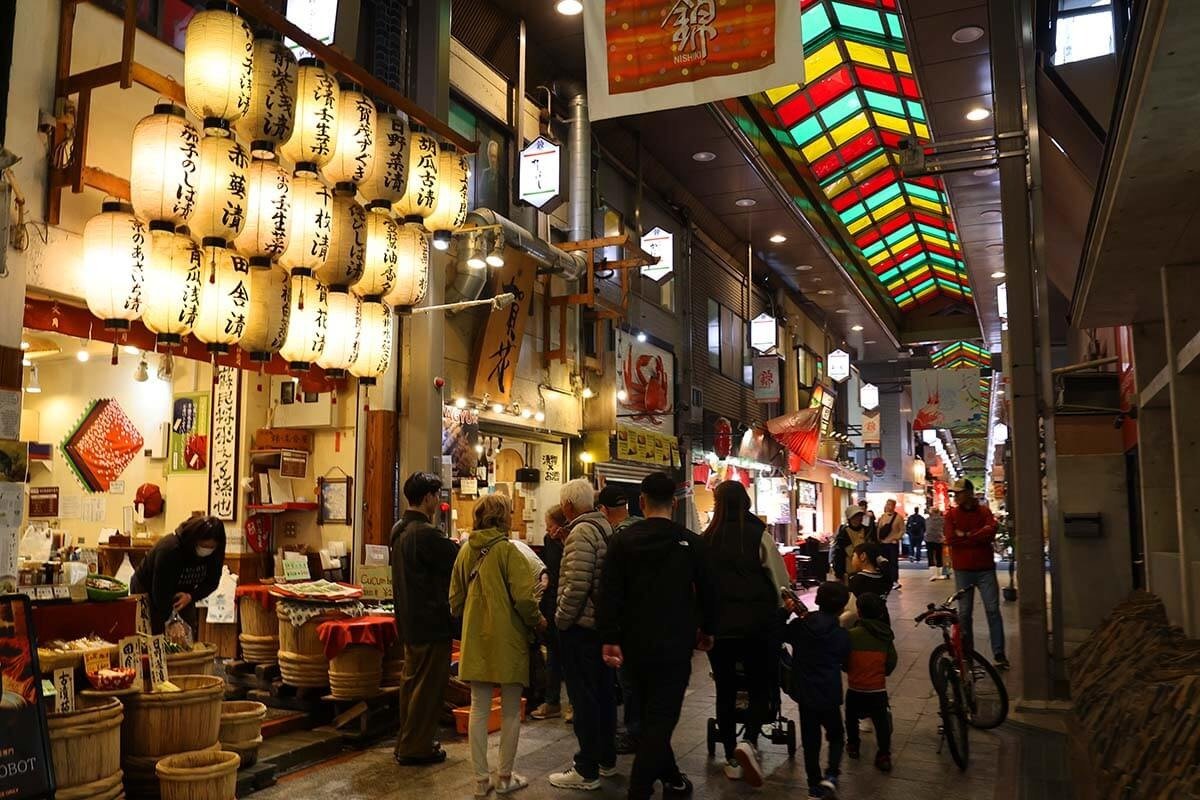

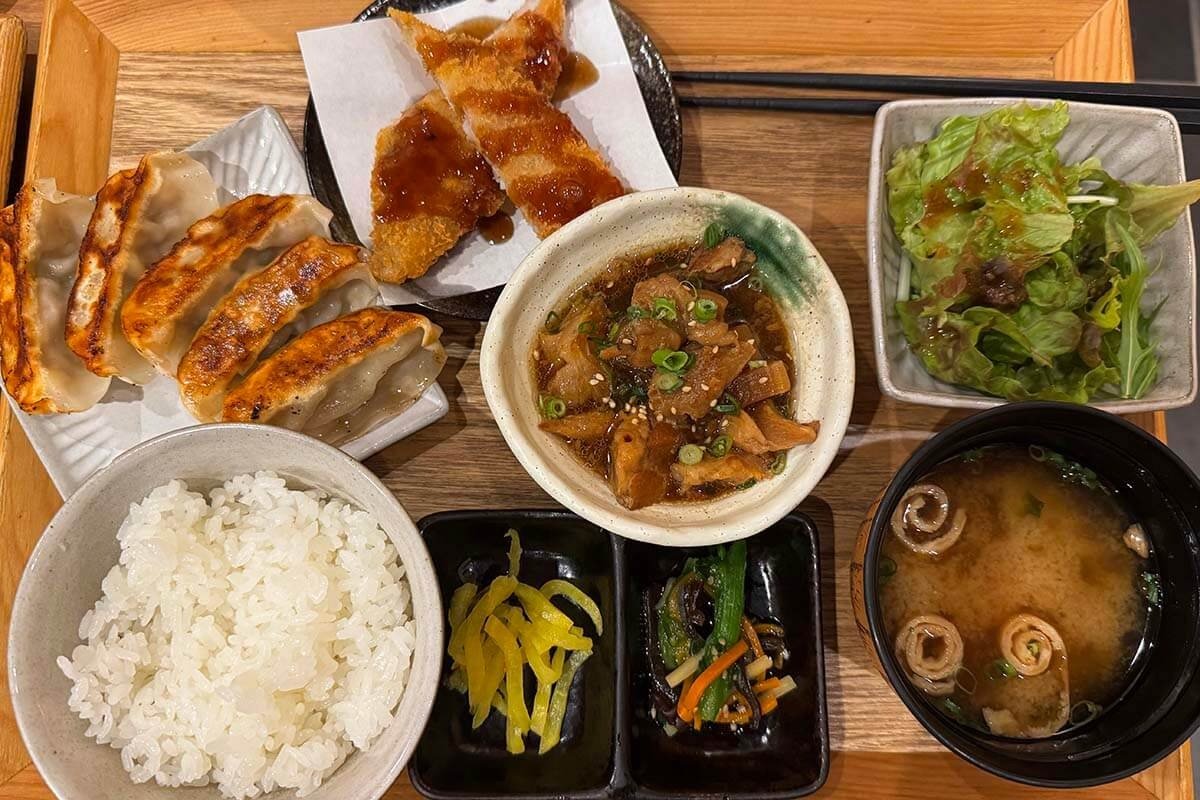
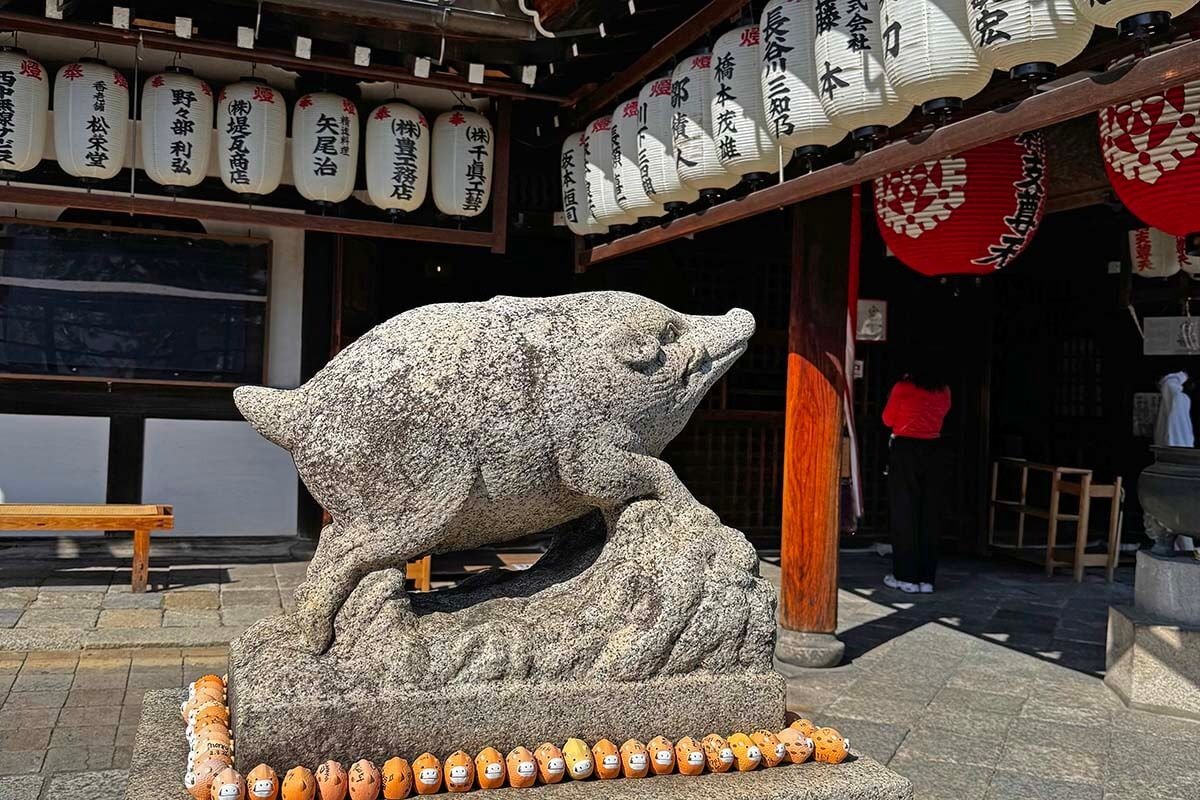
Extend the walk to Nishiki Tenmangū Shrine and the nearby entrance to Pontochō. The compact shrine creates a striking pause beside the shopping streets, while Pontochō offers a first glimpse of the narrow lane you may revisit after dark on the final evening.
Morning is the practical window. By early afternoon, tour groups and shoppers compress the passage, photographs become harder, and stopping at a stall can block the flow. Taking a food-focused activity near the beginning of the trip also produces restaurant ideas for the days ahead.


Mipig Cafe Kyoto (Optional)
Travelers interested in animal cafés can add a brief visit to the centrally located mini-pig café after the market. It sits close enough to the route that the stop does not distort the day, and it may be a memorable break for older children or teenagers who specifically want the experience.
Reserve a short early-afternoon slot rather than arriving spontaneously. About thirty minutes is sufficient for most visitors, and advance booking avoids waiting during the most valuable sightseeing hours. Review the venue’s current animal-welfare policies and decide whether the experience fits your own comfort level.
If it does not appeal, omit it without replacing it. Cross the river and give the saved time to Gion, tea, or Higashiyama. The itinerary becomes more relaxed, and none of the essential geographic logic depends on this optional pause.


Gion, Yasaka Shrine & Maruyama Park
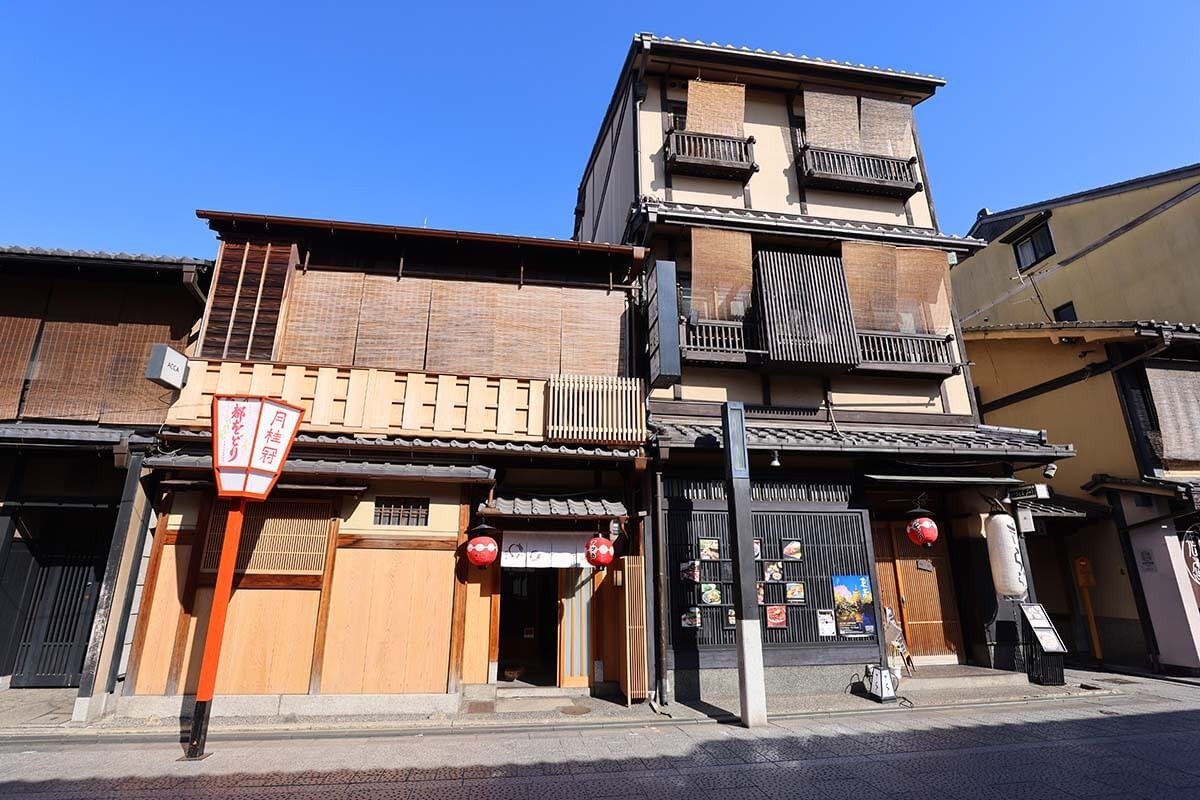
Continue into Gion during the afternoon. Kyoto’s best-known geisha district rewards slow walking more than aggressive sightseeing, so allow time for wooden façades, narrow alleys, small bridges, and the contrast between working neighborhood and carefully preserved image.
The district is associated with geiko and maiko, but visitors should never chase, obstruct, or photograph people without permission. The appeal of Gion does not depend on an encounter. Tea houses, stone lanes, changing light, and restrained architecture supply more than enough atmosphere.
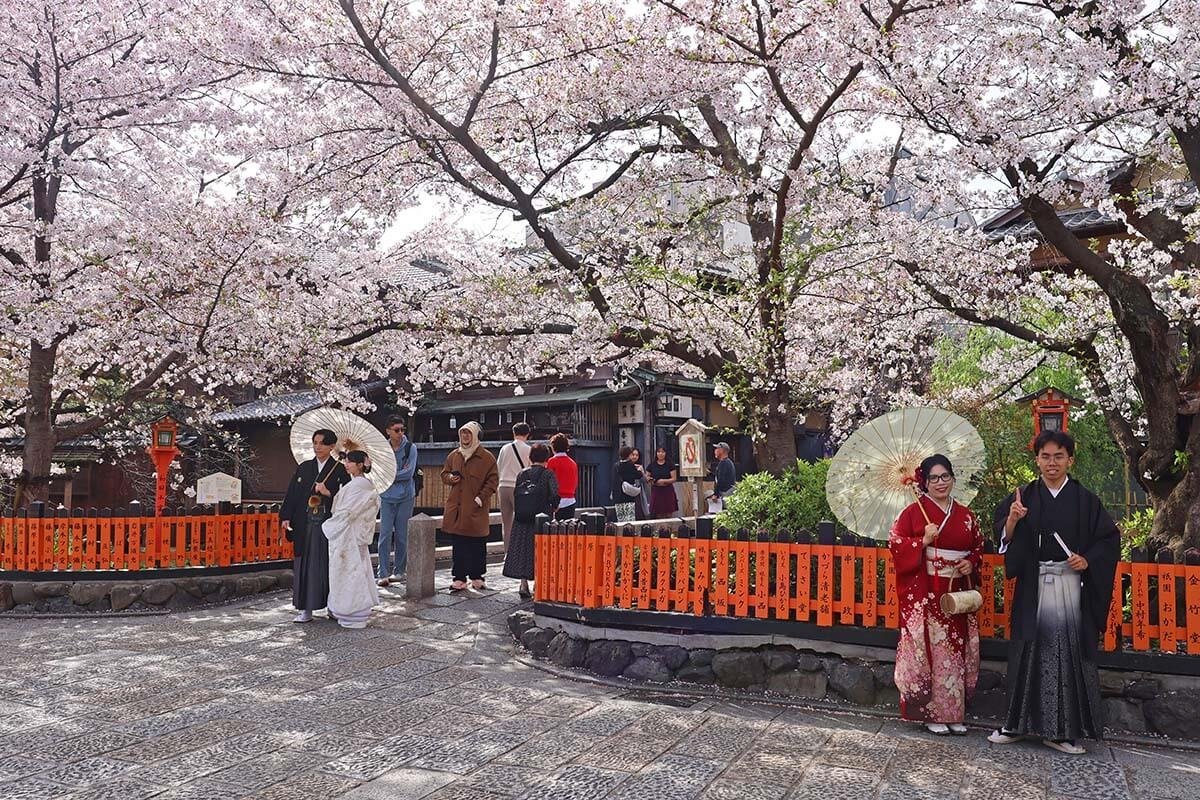
Begin near the Shirakawa Canal and Tatsumi Bridge, where willow-lined water and traditional buildings create one of the area’s most photogenic scenes. Kimono photo sessions are common throughout the day, yet early morning or evening still feels quieter than the central afternoon rush.
Walk south toward Hanamikoji Street, then continue to Yasaka Shrine and Maruyama Park. Food stalls, souvenir shops, worshippers, and visitors blend together here, creating a livelier counterpoint to the canal. The shrine also forms a natural gateway between Gion and the eastern hills.

Afternoon Tea in Gion
A tea ceremony fits naturally between Gion and Higashiyama. Options range from concise tastings to longer sessions in traditional rooms, sometimes combined with kimono dressing or cultural performance. Choose by depth and duration rather than by the largest bundle of extras.
Multiple daily sessions make the activity relatively easy to place, but the most convenient times sell first. A mid-afternoon booking provides a seated rest after the market and Gion while preserving the late-day light for Kiyomizu-dera.
If you want kimono styling, reserve even earlier and allow generous preparation time. Wearing formal clothing changes walking speed and comfort, especially on steep stone streets, so decide whether the photographic experience is worth adjusting the rest of the day.
A casual pastry shop is a simpler alternative. Beautiful wagashi, cake, or tea can still create a memorable pause, though it should not be confused with the instruction, ritual, and hospitality of a formal ceremony. Pick the experience your group will genuinely enjoy.


Higashiyama & Kiyomizu-dera
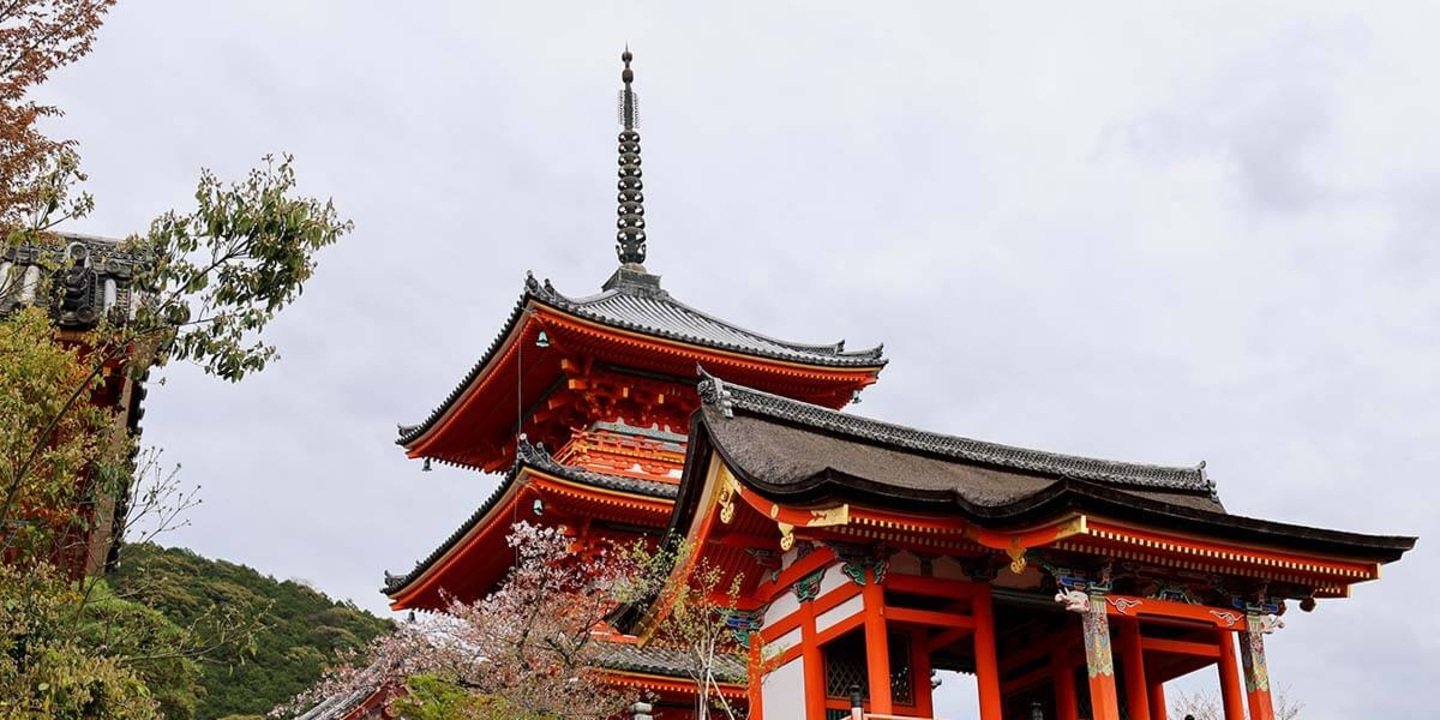
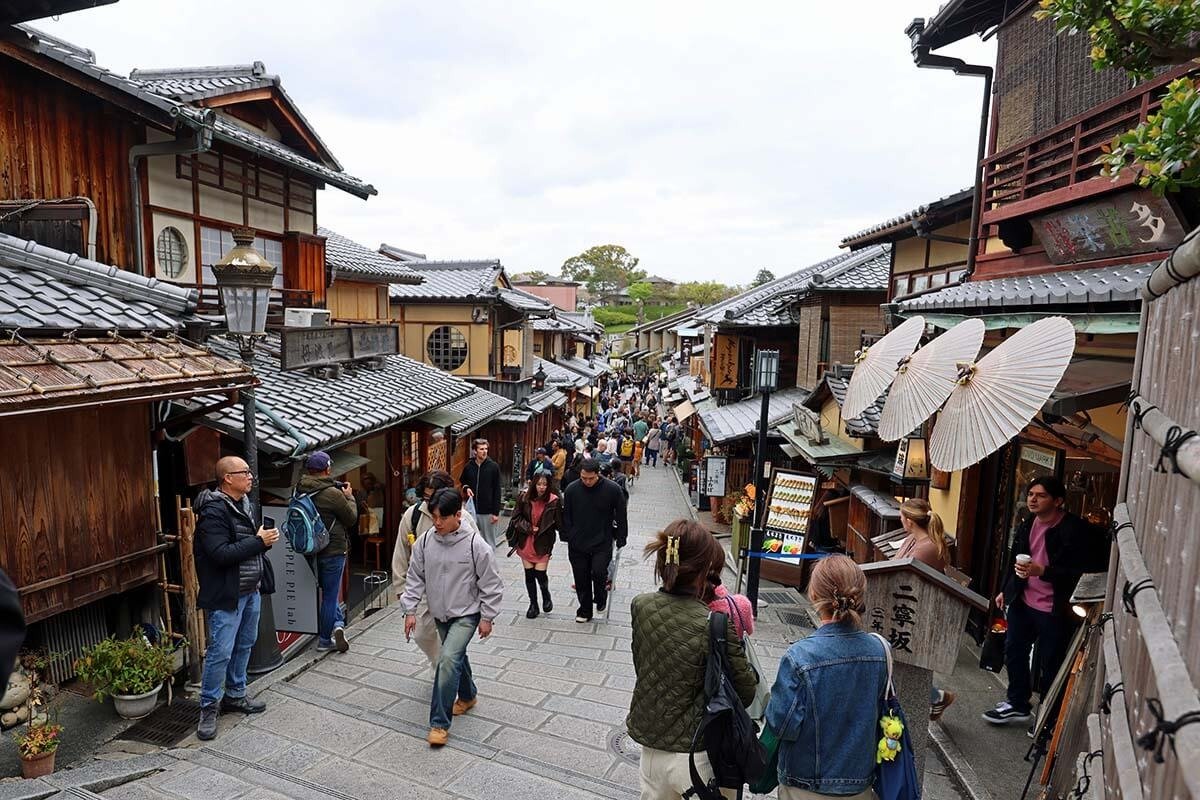
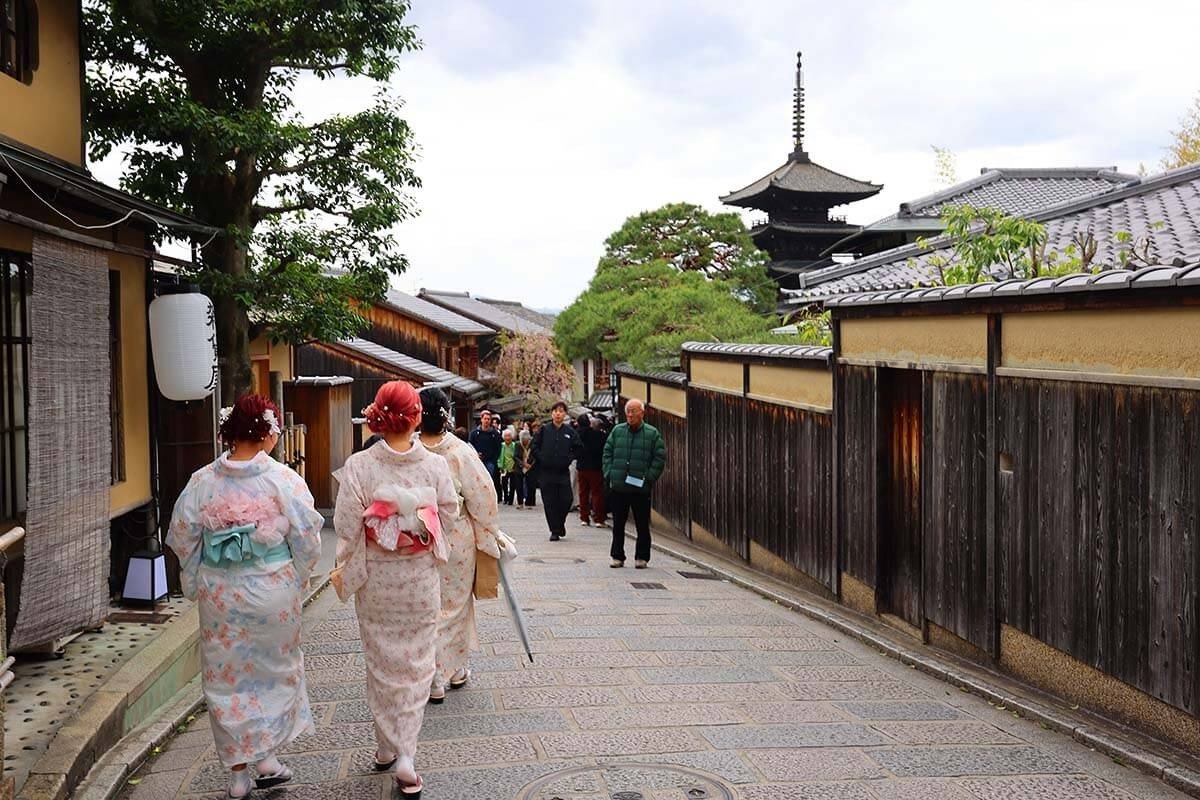
From Gion, begin climbing through Higashiyama toward Kiyomizu-dera. This is not merely a connection between two attractions; the route itself is one of Kyoto’s defining experiences, with temple gates, pagoda views, old houses, food counters, ceramics, and small courtyards appearing in quick succession.
Useful waypoints include Yasaka Kōshin-dō, Hōkan-ji and its Yasaka Pagoda, Nene-no-Michi, Ishibe-kōji, Ninenzaka, and Sannenzaka. Do not attempt to investigate every doorway. Select a few pauses and let the street texture carry you uphill.
Kiyomizu-dera deserves at least forty-five minutes, and more if you enjoy temple complexes. Beyond the famous wooden stage, the grounds contain smaller halls, viewpoints, and paths that reveal the city from different angles. Late afternoon adds flattering light and can lead naturally into sunset.
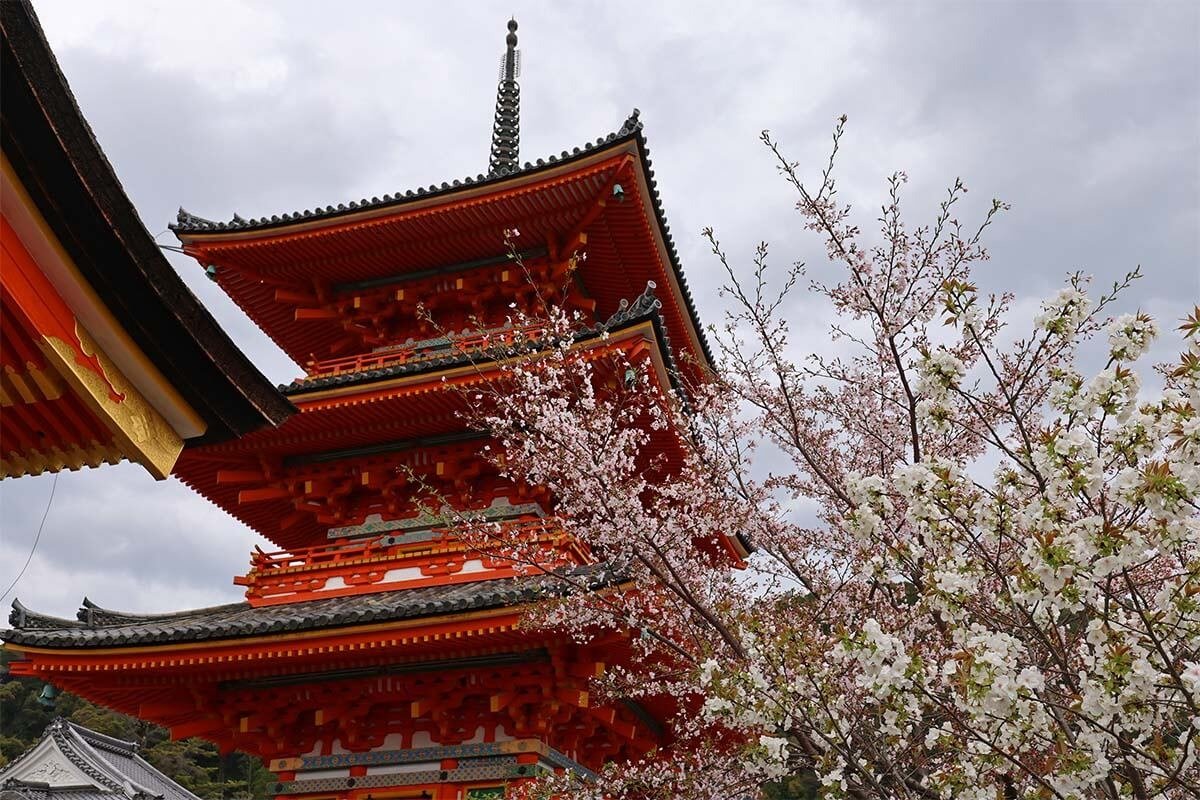
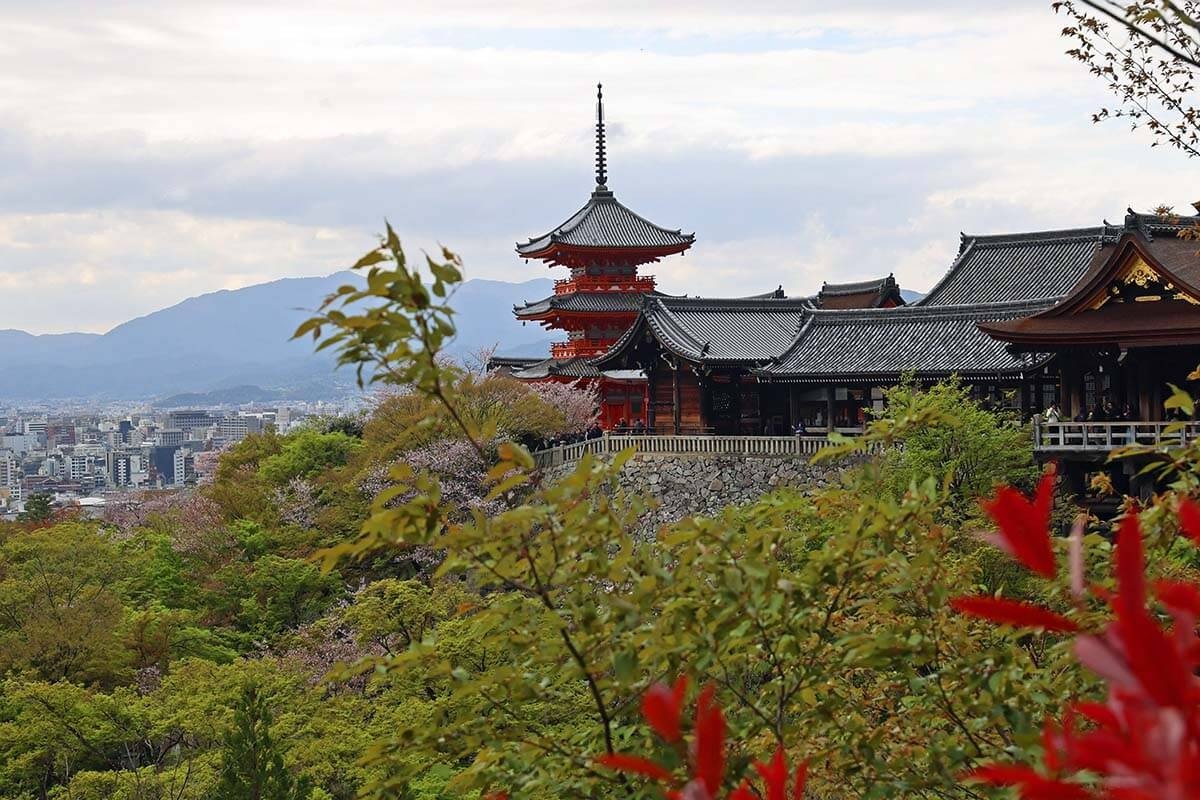
The drawback is density. During peak hours, the historic slopes can become a corridor of tour groups, rental kimonos, souvenir browsing, and photography queues. Accept some bustle rather than expecting an untouched old town in the middle of the day.
For calmer photographs, return early on another morning or remain after shops begin closing. If the temple interior matters, separate its ticket deadline from the streets’ atmosphere: the lanes remain attractive later, but the admission gate will not wait for sunset plans.

Dinner & Shopping in Downtown Kyoto
Descend toward Shijō Kawaramachi for the evening. The shift from temple roofs to illuminated department stores happens quickly, showing how comfortably contemporary Kyoto sits beside its historic image.
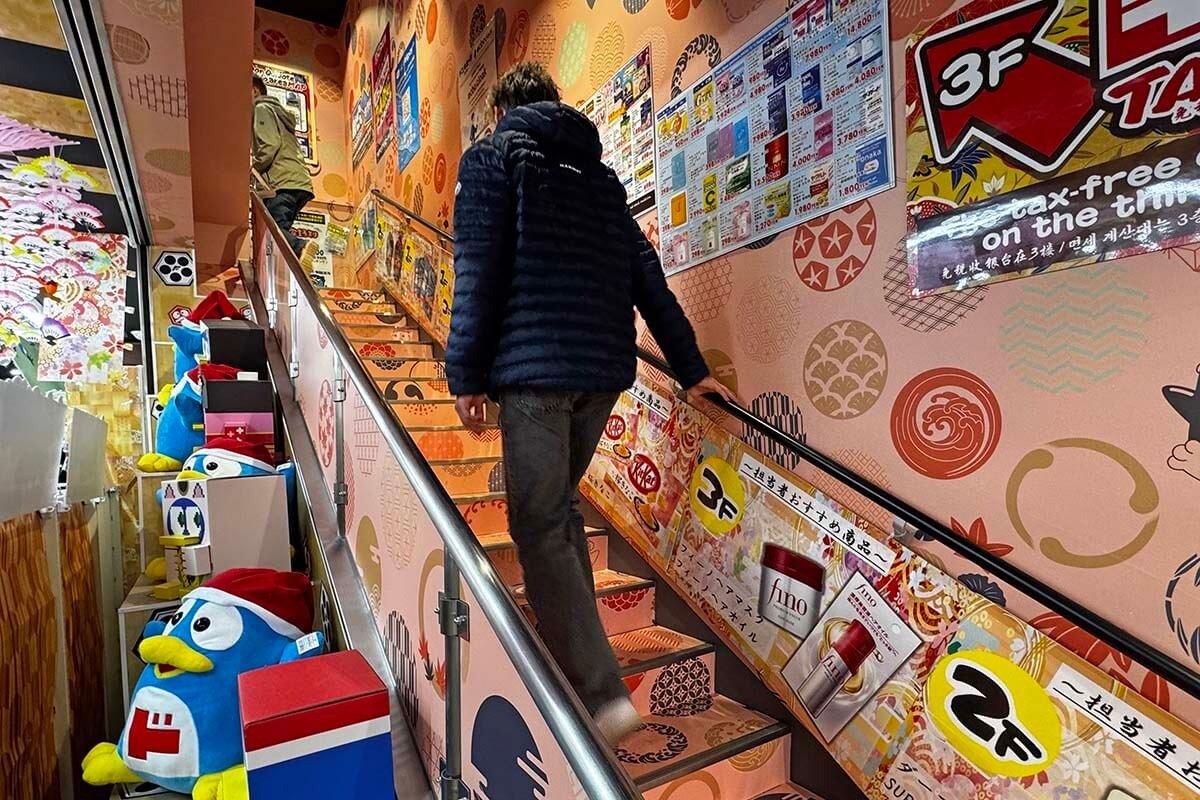
Arcades, anime shops, game centers, character stores, and discount retailers make this area especially entertaining for teenagers. Set a meeting point and a spending limit if the group separates, because the connected shopping passages are larger and more absorbing than they first appear.
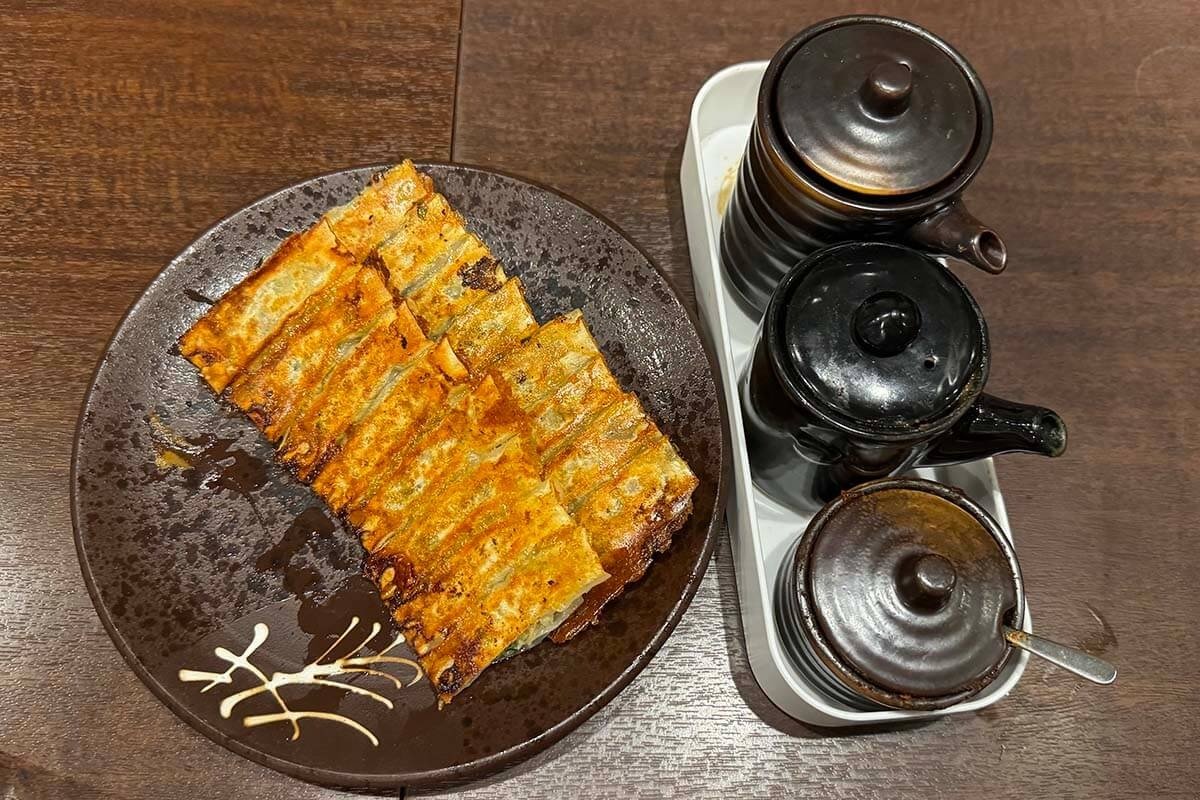
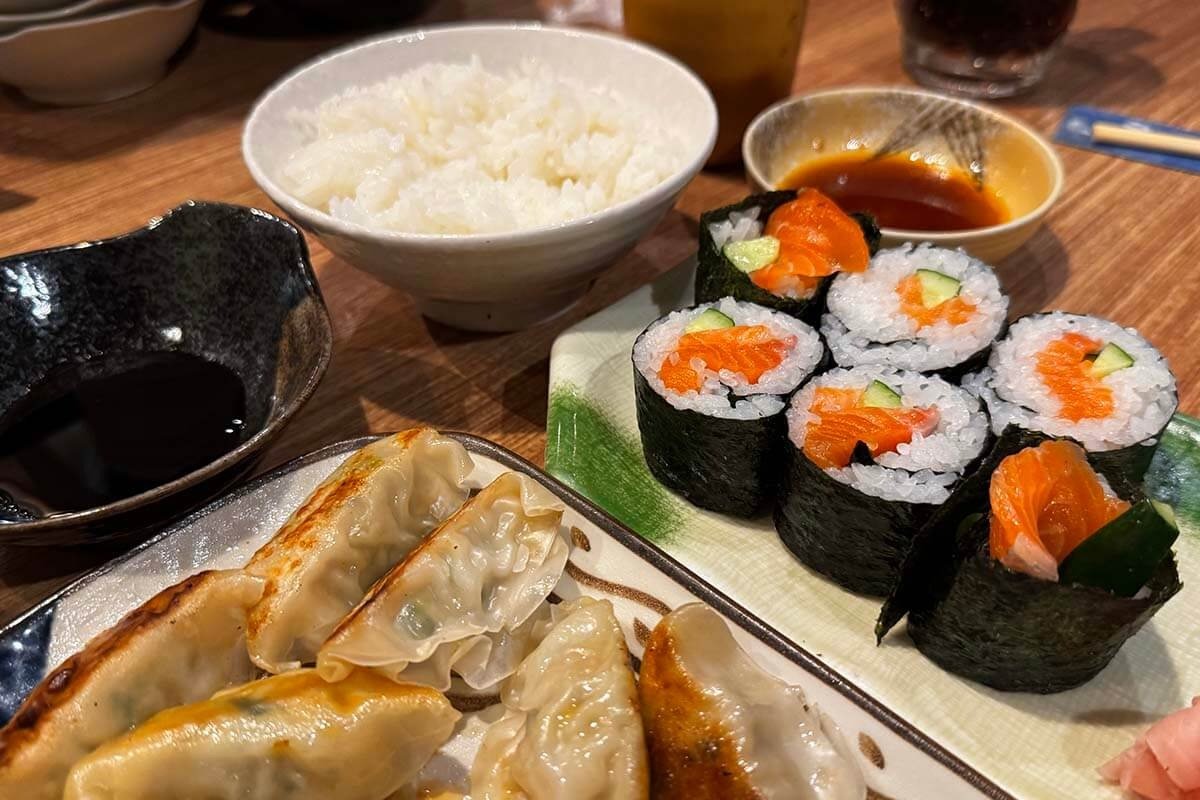
Finish with dumplings or another informal meal nearby. Famous counters may require a long queue, and popularity does not automatically make one plate dramatically better than a quieter alternative. If hunger or fatigue is rising, choose the good restaurant you can enter now and preserve energy for tomorrow.

Day 2: Arashiyama & Northwest Kyoto
West Kyoto feels like a separate trip. Begin with Arashiyama’s bamboo and river landscape, then travel through Zen gardens, the Golden Pavilion, and quieter neighborhood shrines. The day includes more transfers than Day 1, so transportation choices strongly influence how many afternoon stops remain realistic.
No major activity needs a reservation, but closing times matter. Taxis shorten the jumps between Arashiyama and northwest Kyoto; trains and buses also work if you reduce one secondary stop. Decide before lunch whether Kinkaku-ji or Nijo-jo is the non-negotiable afternoon anchor. If rain is forecast, keep the temple sequence but reconsider the monkey climb and exposed river time. Gardens can look beautiful in wet weather, whereas steep paths and long outdoor queues become less appealing. An umbrella plus a waterproof layer gives you more options than either item alone.
Arashiyama Bamboo Grove
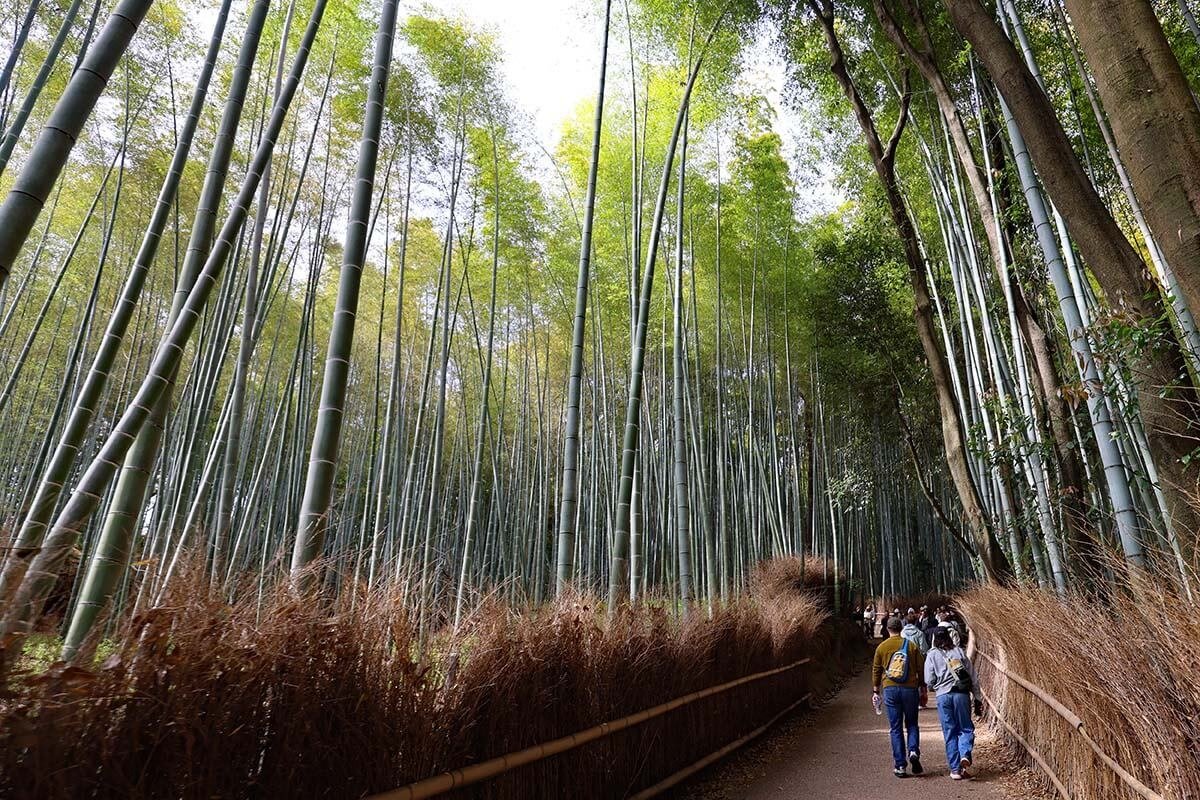
Reach the bamboo grove early because its fame greatly exceeds its physical size. Sunrise delivers the emptiest path, yet arriving around 8:30 a.m. can be a sensible compromise when nearby temples do not open until later.
That timing allows a quiet first pass without creating an hour of idle waiting. The grove may still feel spacious at arrival and crowded soon afterward, so take photographs promptly and continue instead of circling the same short path.
Fifteen to twenty minutes is enough for most people. Tall stalks, filtered light, and moving leaves are beautiful, but the experience is brief and the central lane is not a vast wilderness. Keeping expectations accurate prevents a famous photo location from consuming the entire morning.
If it feels less impressive than expected, do not judge Arashiyama by this stop alone. The district becomes more rewarding through its temple gardens, preserved street, river, mountain views, and outlying sites. One of the best places in this route comes next.

Otagi Nenbutsu-ji & Saga-Toriimoto
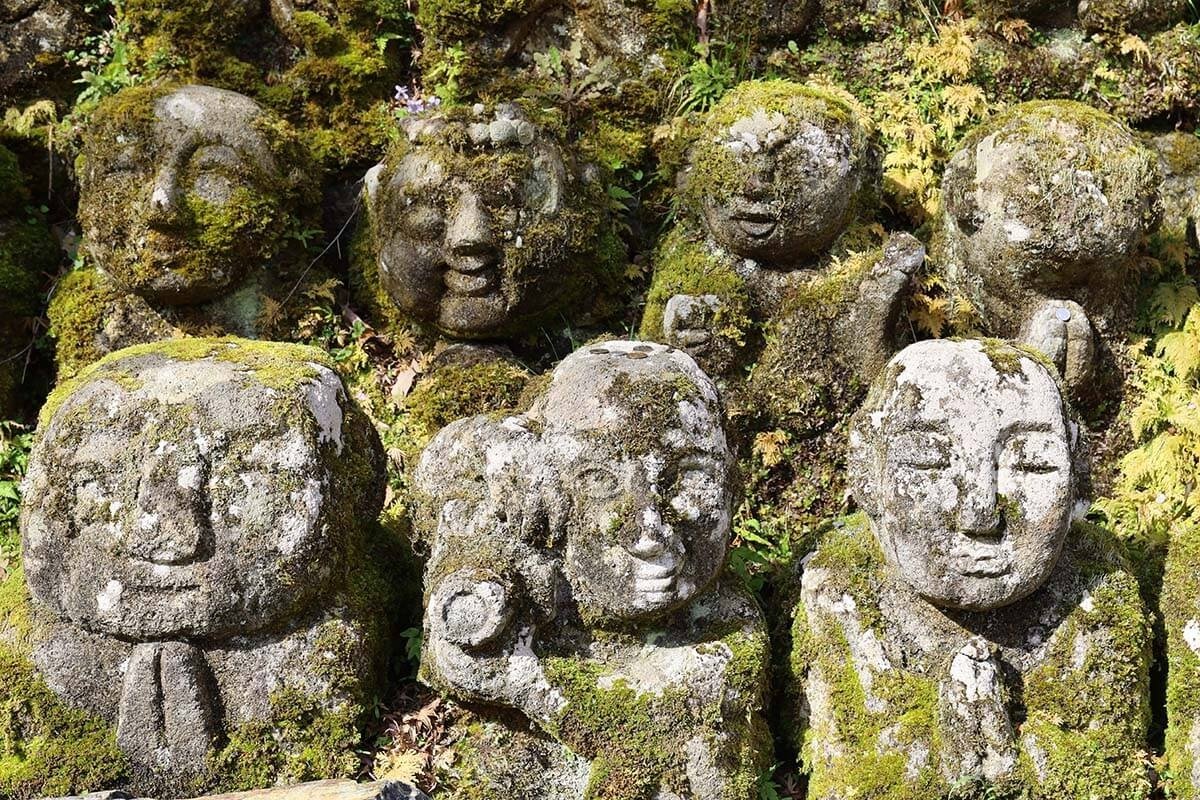
Take a taxi or bus north to Otagi Nenbutsu-ji, a compact temple beyond the busiest Arashiyama circuit. Its distance from the central station area filters out many casual visitors, and the wooded setting immediately feels more playful and personal than the headline attractions.
Hundreds of stone rakan figures fill the slopes, each carved with a different face, pose, or accessory. Cameras, spectacles, laughter, and eccentric expressions reveal that the collection is more recent than it first appears. Spend about twenty minutes looking for details rather than rushing through a checklist.
Verify the opening schedule before setting out, because the temple does not necessarily welcome visitors every day. Public transport is possible, but a short taxi ride buys useful morning time and positions you perfectly for the downhill walk that follows.

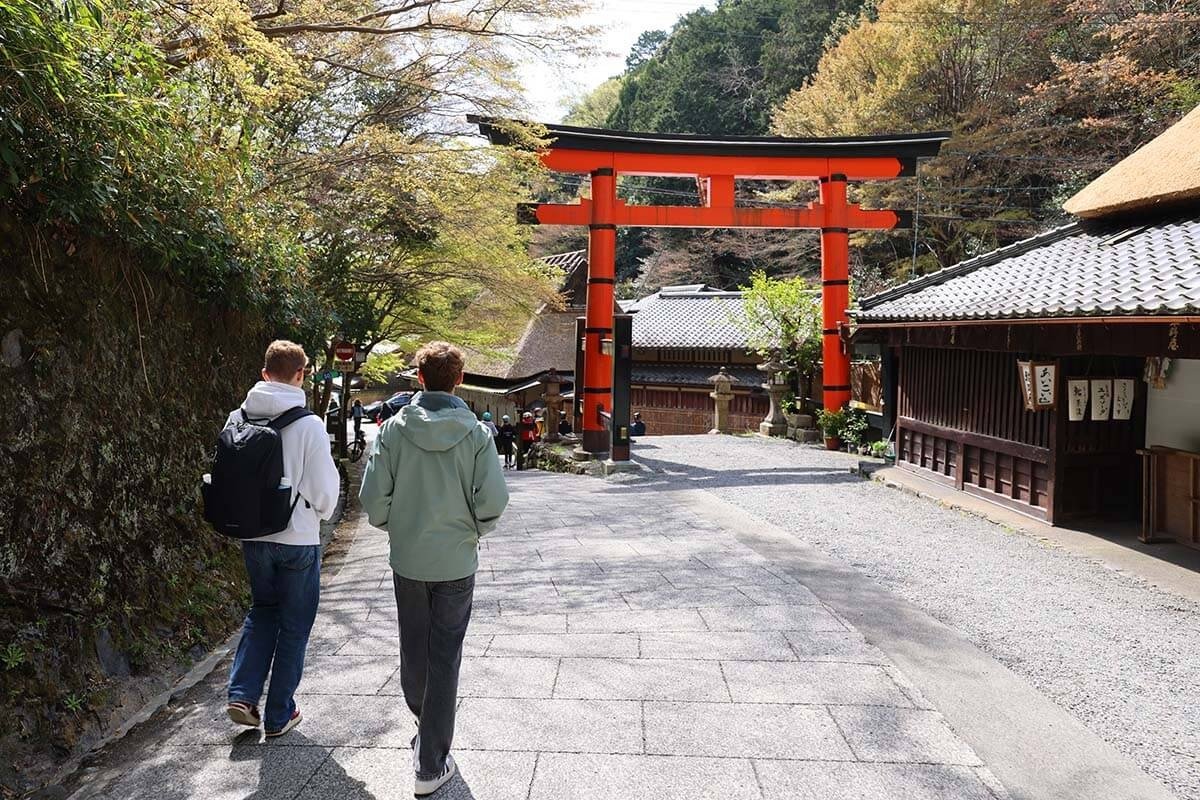
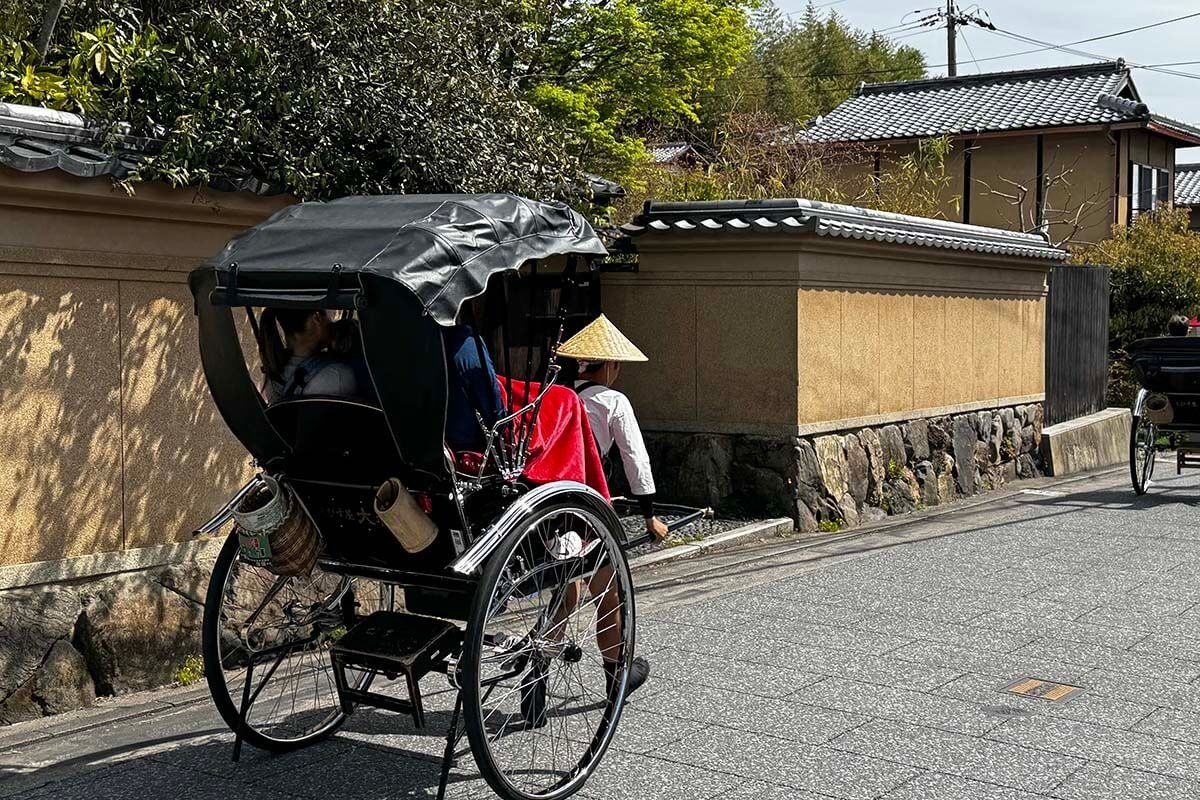
Return toward central Arashiyama along Saga-Toriimoto Preserved Street. Traditional houses, small shrines, craft shops, and modest restaurants turn the connection into a destination, particularly before day visitors spread north from the bamboo grove.
Allow roughly thirty minutes plus photography stops. The road descends gently, the atmosphere is quieter than the central commercial lanes, and the sequence gives useful context to Arashiyama beyond its most photographed bamboo corridor.
You eventually re-enter the grove from the quieter side. By then it may be dramatically busier, confirming why the early first visit mattered. Although reversing the order looks simpler on a map, starting with bamboo protects the only crowd-sensitive part of the morning.
Tenryu-ji & Togetsukyo Bridge
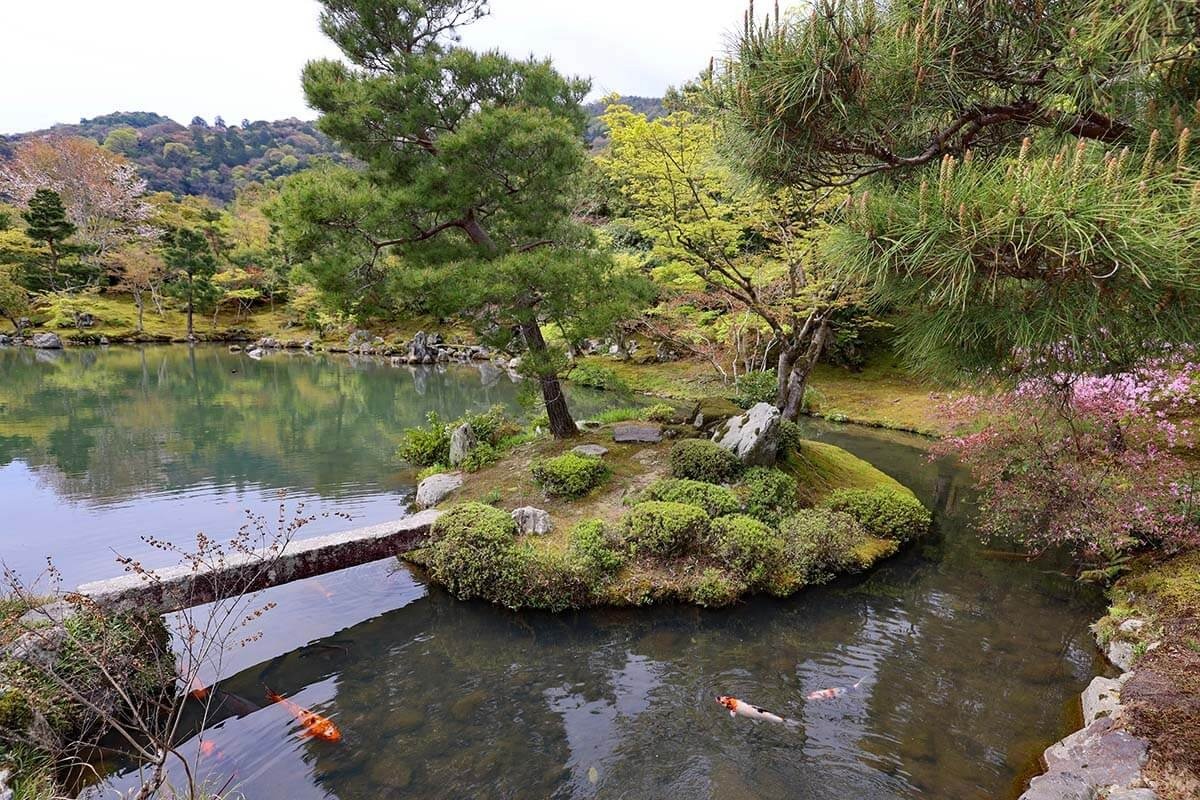
Visit Tenryu-ji beside the bamboo grove. The Zen temple is historically important, but its landscape garden is the visual highlight: pond, rocks, clipped vegetation, and mountain backdrop form a composition that changes with season and weather.
About thirty minutes works for a focused garden visit. The calm design offers a welcome pause after crowded paths, while the proximity means no transport penalty. Add the buildings only if architecture and temple interiors are a priority.
Walk toward Togetsukyo Bridge and cross the Katsura River. The open water and surrounding hills create a refreshing change of scale after enclosed lanes and temple grounds, and the opposite bank leads directly toward the monkey park.
Boat rides depart near the bridge, but this particular stretch may not justify sacrificing a tight afternoon. Travelers who want a stronger river experience can investigate excursions farther west; everyone else can enjoy the view from shore and keep moving.

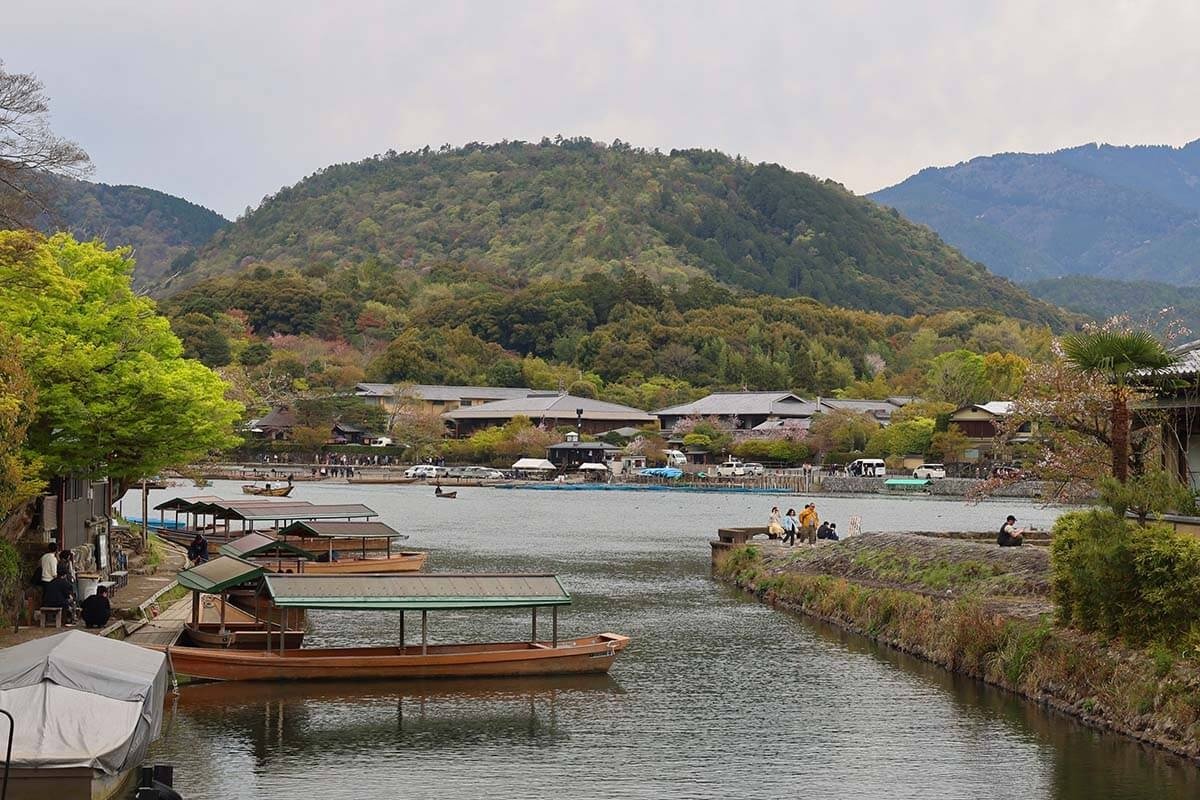
Arashiyama Monkey Park Iwatayama
The monkey park places wild Japanese macaques on the mountain above Arashiyama rather than inside conventional enclosures. At the summit, visitors observe the animals moving through the open area while Kyoto stretches across the distance below.
Reaching that viewpoint requires a steep fifteen-to-twenty-minute climb in each direction. The walk is manageable in mild conditions, but heat, humidity, mobility, and the day’s remaining schedule should all factor into the decision.
At the top, a fenced hut reverses the usual zoo arrangement: people stand inside while monkeys remain outside. Feeding from the designated area can be fun for families, but follow staff instructions and keep food secured everywhere else.
Skip this stop first if the group is tired or the queue is long. A complete visit may take fifty minutes in quiet conditions and substantially longer at peak time. Omitting it creates valuable room for lunch or an additional temple later.


Lunch
Arashiyama has many restaurants and cafés, from quick snacks to formal meals. If breakfast and market grazing from the previous day have shaped your appetite, a light lunch may be enough. Avoid waiting simply because a restaurant appears on every popular list.
Use lunch to reassess the afternoon. Travel method, earlier queues, and your chosen meal can shift the schedule by an hour. Decide now whether you are heading directly toward Kinkaku-ji or attempting both the Golden Pavilion and Nijo-jo before closing.
Kinkaku-ji and Nijo-jo usually admit their last visitors well before evening. To see both, you may need to remove Ryōan-ji or Kitano Tenmangū. There is no prize for reaching every gate at closing time; choose a coherent afternoon over a hurried collection.
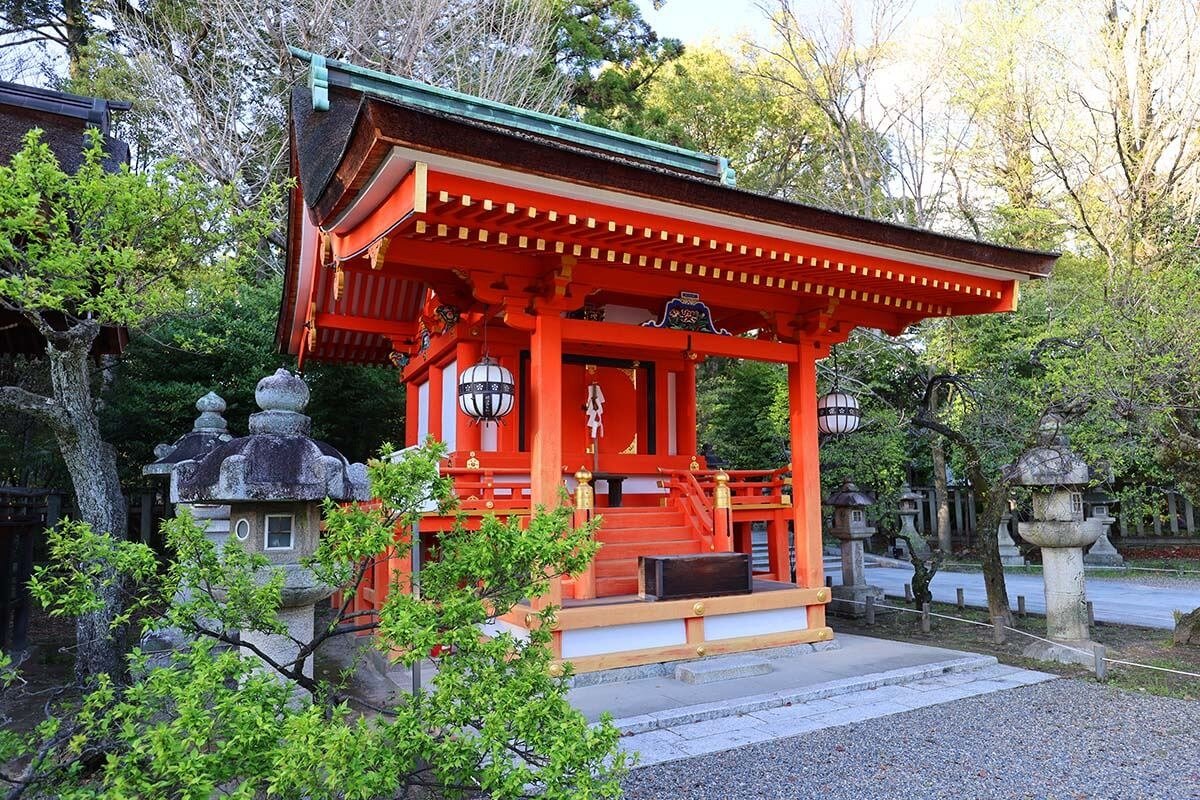
Ryōan-ji
Ryōan-ji makes a natural first stop after Arashiyama for travelers interested in Zen design. Its name is commonly translated in English as the Temple of the Dragon-at-Peace, but the celebrated rock garden supplies the clearest reason to visit.
Fifteen stones sit within raked pale gravel, composed so that one remains hidden from every normal viewing position. The restraint invites interpretation without prescribing a single answer. Sit quietly for a few minutes before reaching for the camera.
The surrounding paths, pond, and temple art broaden the experience beyond the famous rectangle. Roughly forty minutes is sufficient, and the gentler atmosphere makes a useful bridge between busy Arashiyama and the heavily visited Golden Pavilion.

Kinkaku-ji
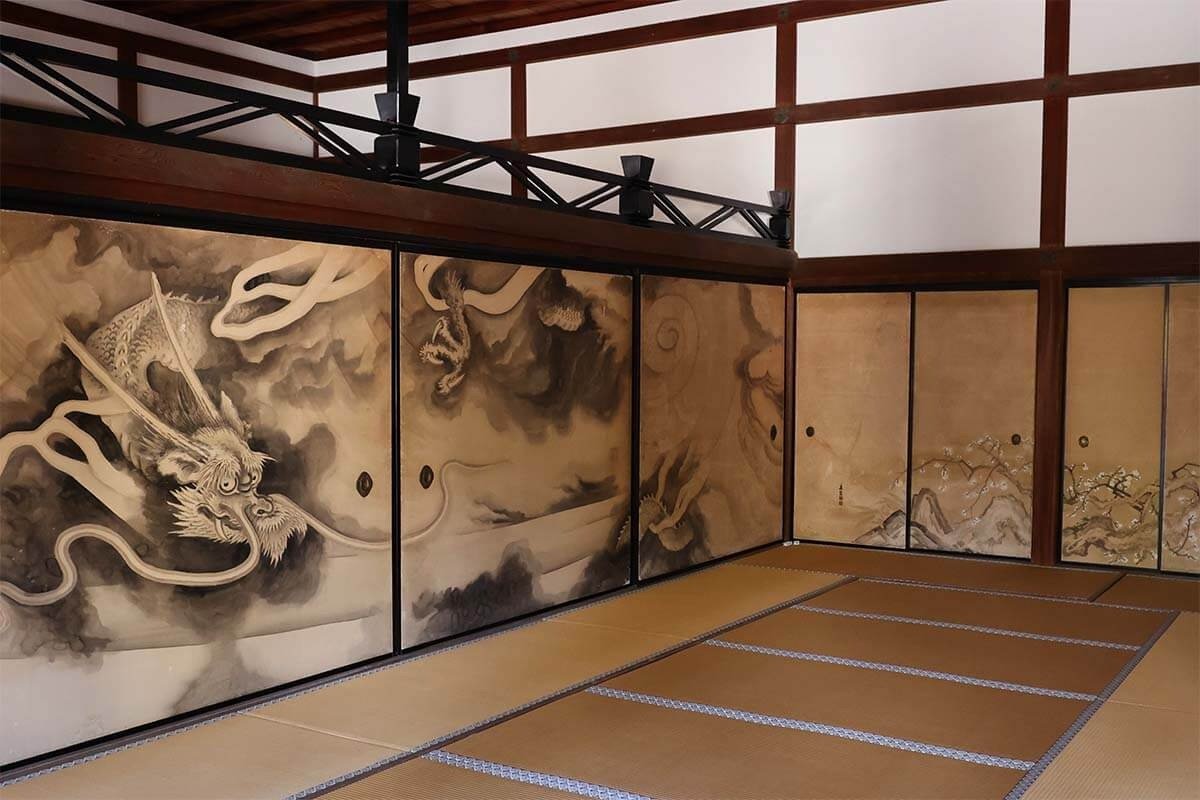
Walk or take a short ride to Kinkaku-ji, whose gold-covered pavilion is one of Kyoto’s most immediately recognizable images. The first view across the pond delivers the classic reflection when wind and light cooperate.
Visitors cannot enter the pavilion. Instead, a one-way path curves around the water and through the grounds, offering several angles before passing smaller garden features and refreshment points. This controlled route keeps the visit relatively efficient despite the crowds.
Allow about thirty minutes. The site is undeniably busy, yet the architecture remains impressive in person and the short circuit prevents congestion from dominating the day. For a first Kyoto visit, it earns its place.
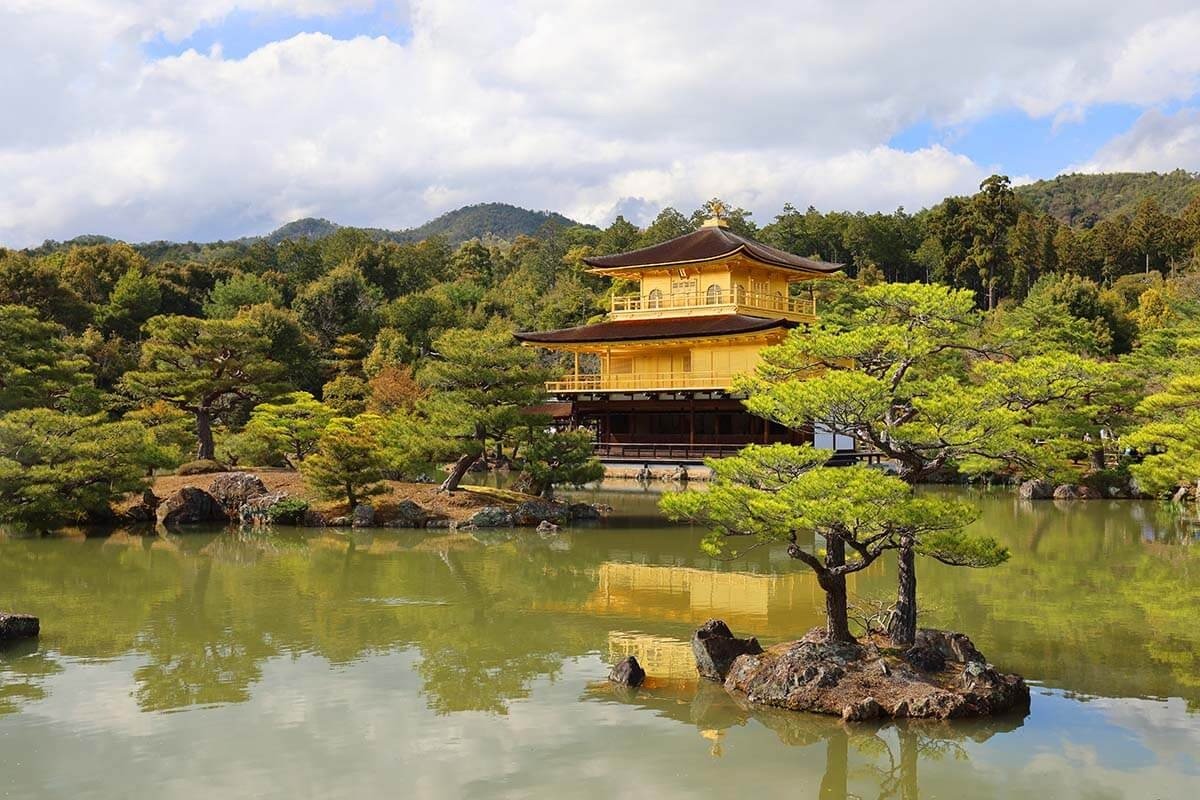

Kitano Tenmangū
Continue on foot toward Kitano Tenmangū, passing Hirano Shrine if time permits. The twenty-minute neighborhood walk exposes a more ordinary Kyoto between headline sights and may be especially attractive during cherry-blossom season.
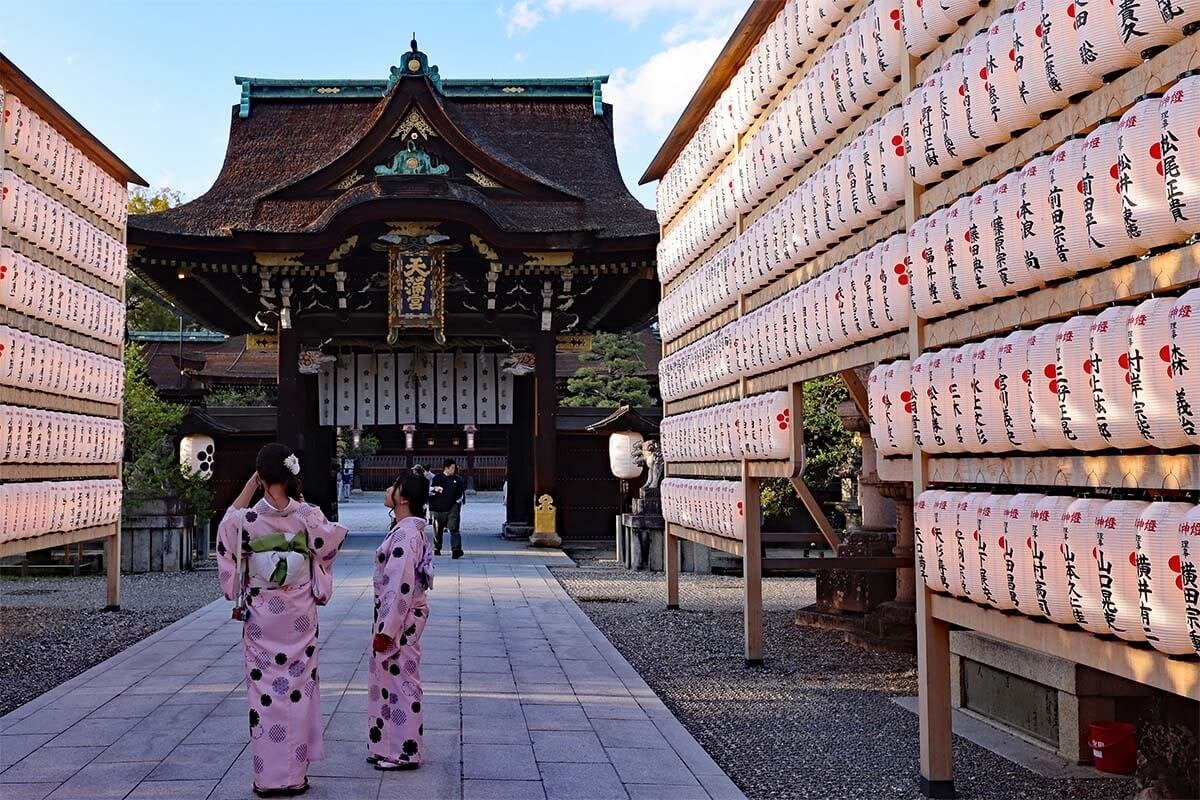
Kitano Tenmangū combines substantial architecture, rows of lanterns, and seasonal gardens with noticeably fewer foreign visitors than Kinkaku-ji. The contrast is part of its appeal: the shrine feels active and important without operating primarily as a sightseeing machine.
Evening light suits the lanterns, while late winter and early spring bring celebrated plum blossoms and occasional illuminations. Check seasonal access because special events can extend hours or alter the normal route.
Budget about forty-five minutes including the walk from Kinkaku-ji. This is an optional detour, but a rewarding one for travelers who want the day to end somewhere quieter and more local.


Alternative: Nijo-jo Castle
Travelers more interested in political history than another shrine can replace Ryōan-ji, Kitano Tenmangū, or both with Nijo-jo Castle. The choice depends on season, closing time, and how long the morning took.
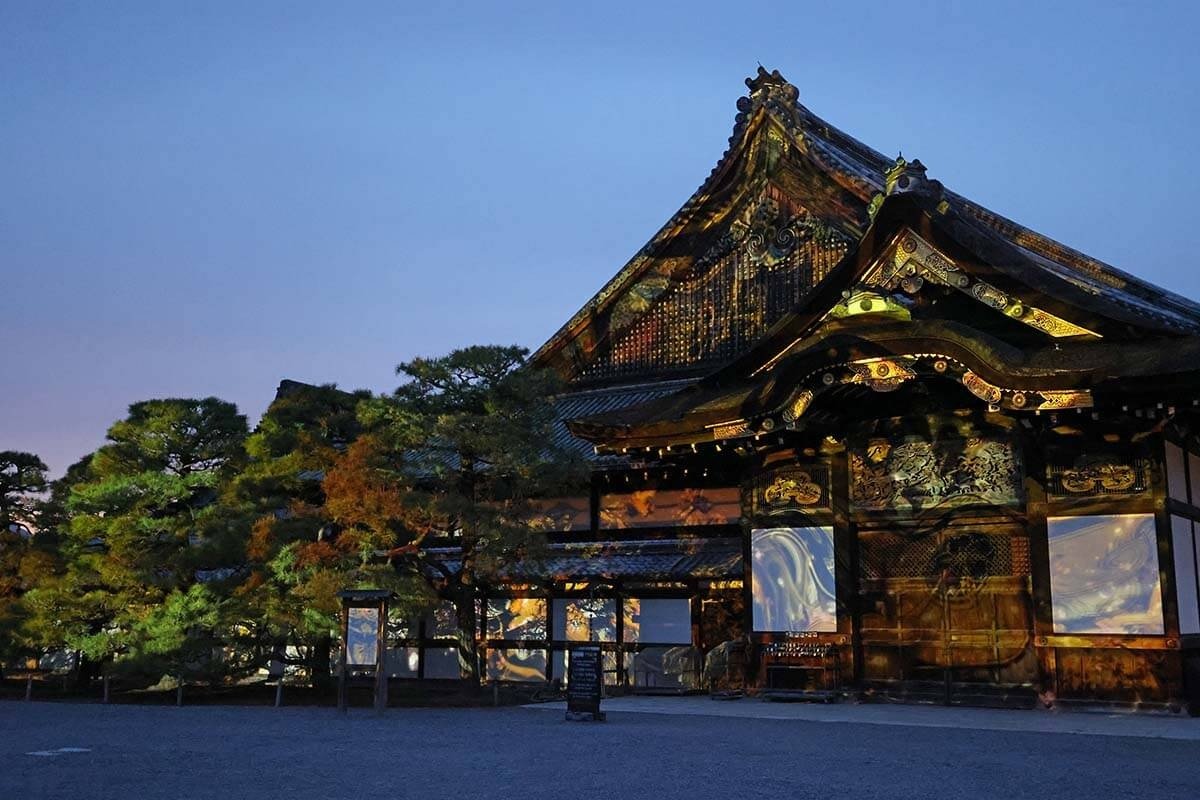
The castle introduces the world of the Tokugawa shoguns and provides a welcome architectural counterpoint to Kyoto’s religious sites. Moats, walls, palace rooms, and broad grounds explain power through space rather than through temple ritual.
Ninomaru Palace is the core experience. Painted interiors communicate rank and ceremony, while the famous nightingale floors produce a birdlike sound underfoot, traditionally associated with alerting occupants to movement.
Gardens and defensive structures make the complex larger than it first appears. If your schedule contains only four days and feudal history is not a priority, the castle is optional; if that history fascinates you, it may be more valuable than another temple.
Plan at least sixty to ninety minutes and confirm the final admission time. Seasonal evening events can create a second opportunity, especially during blossoms or illumination programs, but those dates and ticket rules change.
Because the castle lies relatively close to central Kyoto, it can also move to another day. It may replace the optional café on Day 1 or fit before the late-afternoon activity on Day 4, provided you protect travel time.

Dinner
Return to downtown Kyoto and choose dinner near the hotel. After a transport-heavy day, a convenient neighborhood restaurant often feels better than crossing the city for a famous reservation.
Central Kyoto offers enough variety that flexibility usually works for a small group. Keep one or two saved options, check queues on arrival, and choose the place that matches your energy. An unscheduled meal also provides room to recover if earlier attractions run late.

Day 3: Fushimi Inari & Nara
The third day expands beyond Kyoto. Start with a quiet look at Gion and Fushimi Inari, then continue to Hōryū-ji and central Nara for forest shrines, deer, Tōdai-ji, and parkland. The sequence is long, but it combines southern Kyoto with a natural route toward Nara.
A private driver and guide make the logistics effortless, allowing different drop-off and collection points. Independent travelers can use trains and local transport, though matching every stop will take longer. If traveling without a tour, simplify by omitting either Hōryū-ji or the early Gion revisit.
The advantage of guidance is not merely speed. Shrine symbolism, animal etiquette, and small route choices are easier to understand with local context. A group tour reduces cost; a private day maximizes flexibility for families or travelers with limited mobility. Leave Kyoto with water, a charged phone, and a clear return plan. The day spans multiple jurisdictions and transport systems, so small delays compound more quickly than they do inside one neighborhood. Independent travelers should save platform details and the final train options before starting.

Gion
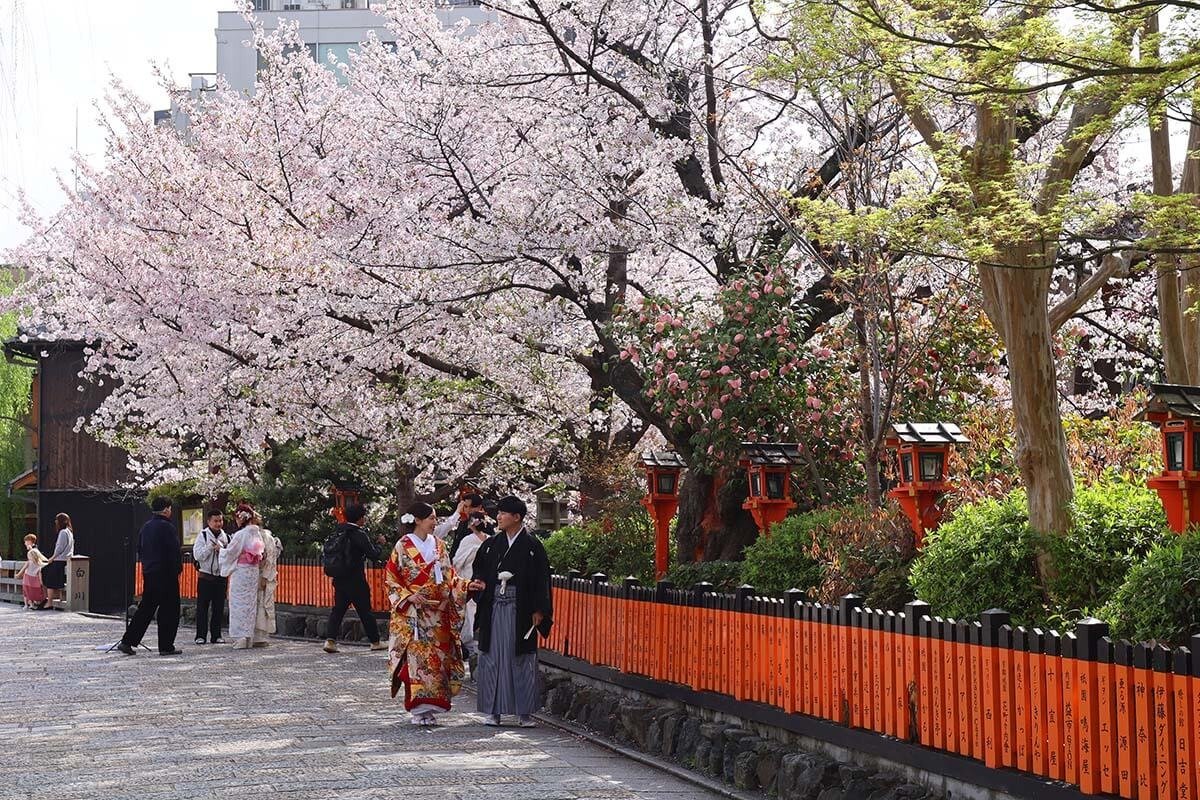
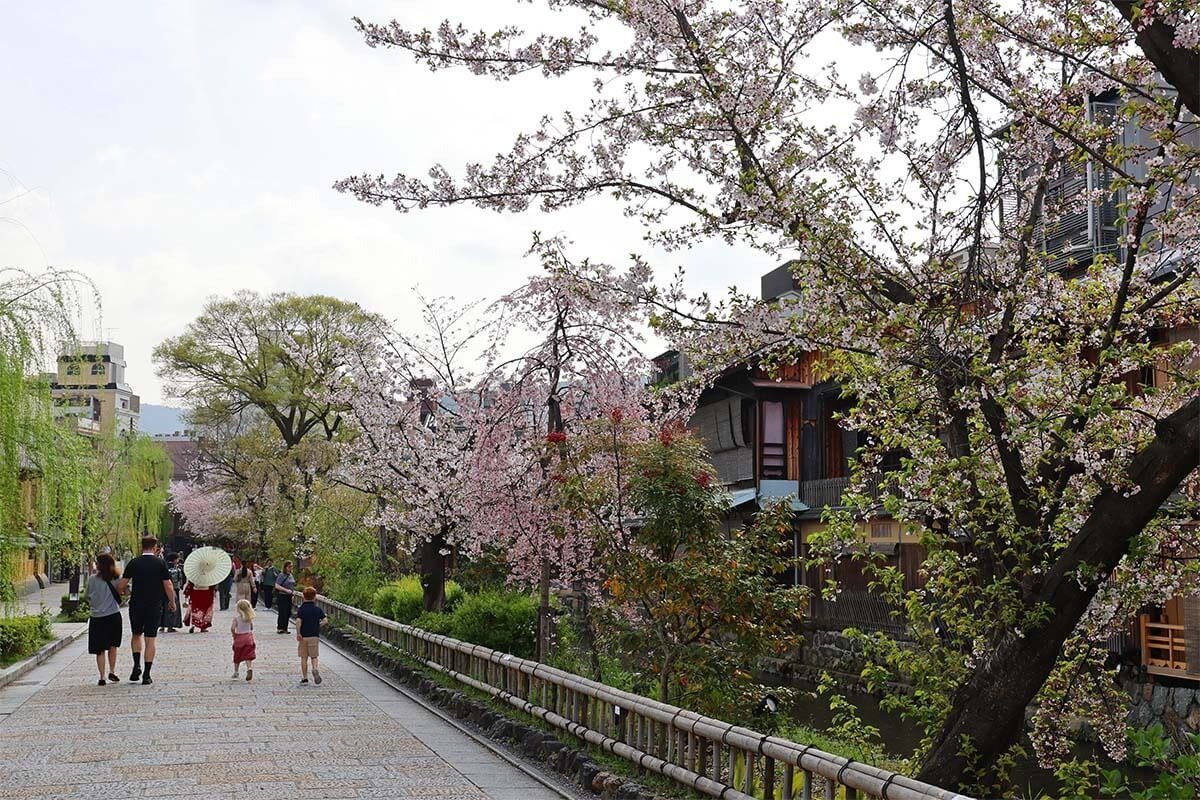
An early pickup creates an opportunity to revisit Tatsumi Bridge and the Shirakawa Canal before the neighborhood fills. A place seen amid afternoon crowds can feel completely different in the clean morning light.
Professional kimono photography may already be underway, but ordinary foot traffic remains low. Keep the stop brief: its purpose is to experience the atmosphere you could not find on Day 1, then continue before the advantage disappears.
Fushimi Inari Taisha
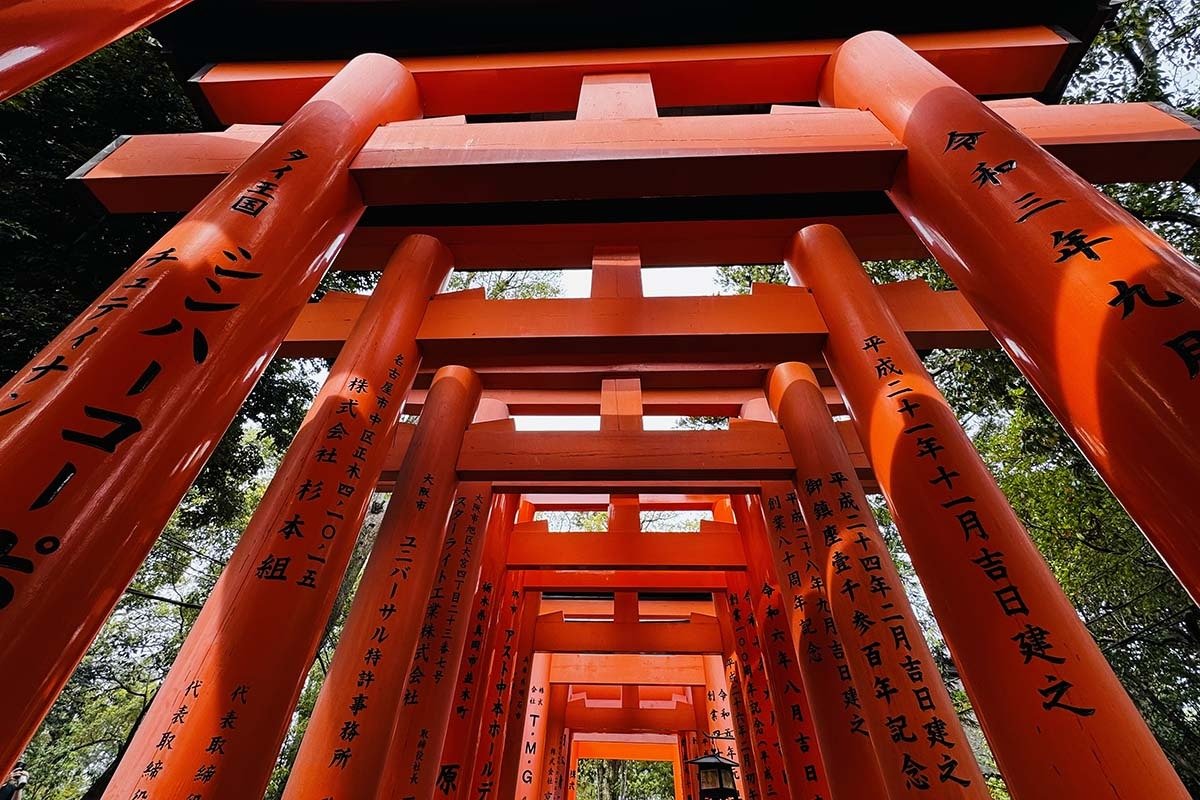
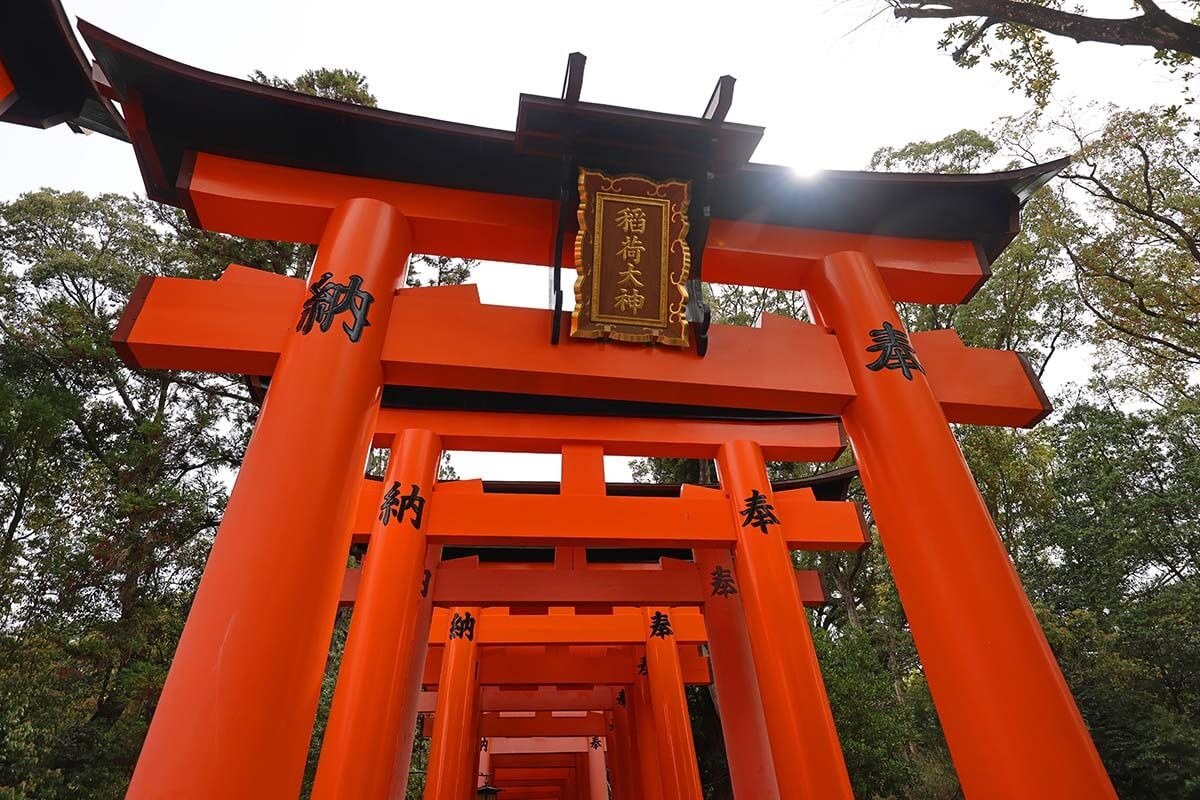
Proceed to Fushimi Inari, where thousands of vermilion torii gates climb the mountain in long, curving tunnels. Photographs make the motif familiar, but the physical repetition, slope, shadows, and scale are far more powerful in person.
The lower shrine and first gate corridors receive the greatest pressure. Many visitors turn back after the famous paired tunnels, so continuing uphill for even a modest distance creates more breathing room and clearer views.
You do not need to reach the summit to understand the site. Walk until the crowd thins, notice fox imagery and inscriptions, and explore one of the side paths if conditions allow. A knowledgeable guide can reveal details that disappear inside the visual spectacle.
Travelers with additional time should dedicate a separate half day to the mountain or join a route that uses quieter trails. On a Nara day, set a firm turnaround time; Fushimi Inari can absorb several hours without warning.


Hōryū-ji
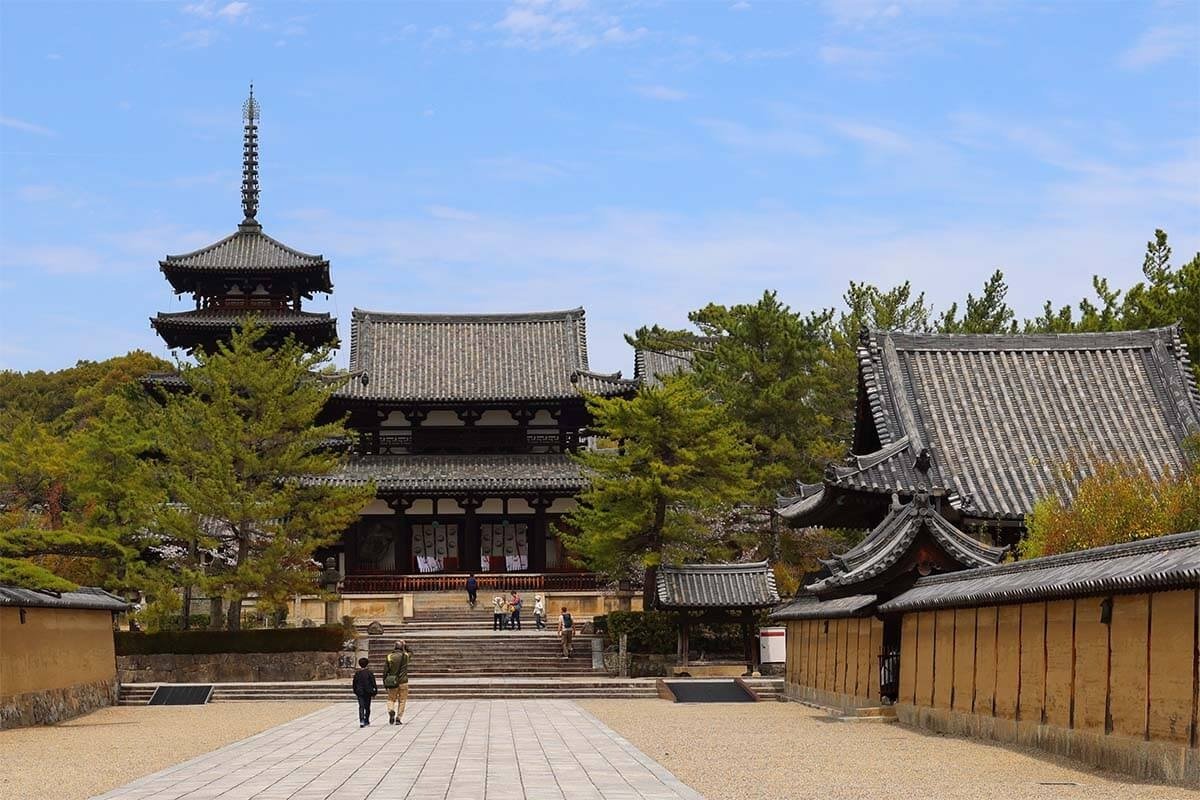
Continue south to Hōryū-ji before entering central Nara. The UNESCO-listed complex contains wooden structures among the oldest still standing anywhere, with origins extending thirteen centuries into Japan’s Buddhist history.
Age alone does not explain its impact. The spacious grounds can be remarkably quiet, replacing souvenir streets and tour queues with open courtyards, timber, gravel, and distant temple sounds. That calm makes the architecture easier to absorb.
Hōryū-ji is less convenient by public transport than Nara’s central highlights, which helps preserve the atmosphere. Include it when using a driver or when ancient architecture is a major interest; otherwise, devote the saved time to Fushimi Inari or Nara Park.

Lunch in Nara
Stop for a straightforward local lunch before the busiest walking section. Tonkatsu—a breaded pork cutlet served with rice, cabbage, soup, and sauces—is filling, familiar enough for cautious eaters, and still distinctly Japanese in its presentation.
Simple meals often become stronger memories than elaborate reservations. Sharing condiments, navigating unfamiliar table customs, and attempting large pieces with chopsticks can turn lunch into a relaxed cultural lesson without any staged explanation.
Keep the break efficient but unhurried. Kasuga Taisha, Tōdai-ji, and Nara Park require substantial walking, so this is the moment to refill water, use facilities, and decide whether everyone wants to feed the deer.

Kasuga Taisha
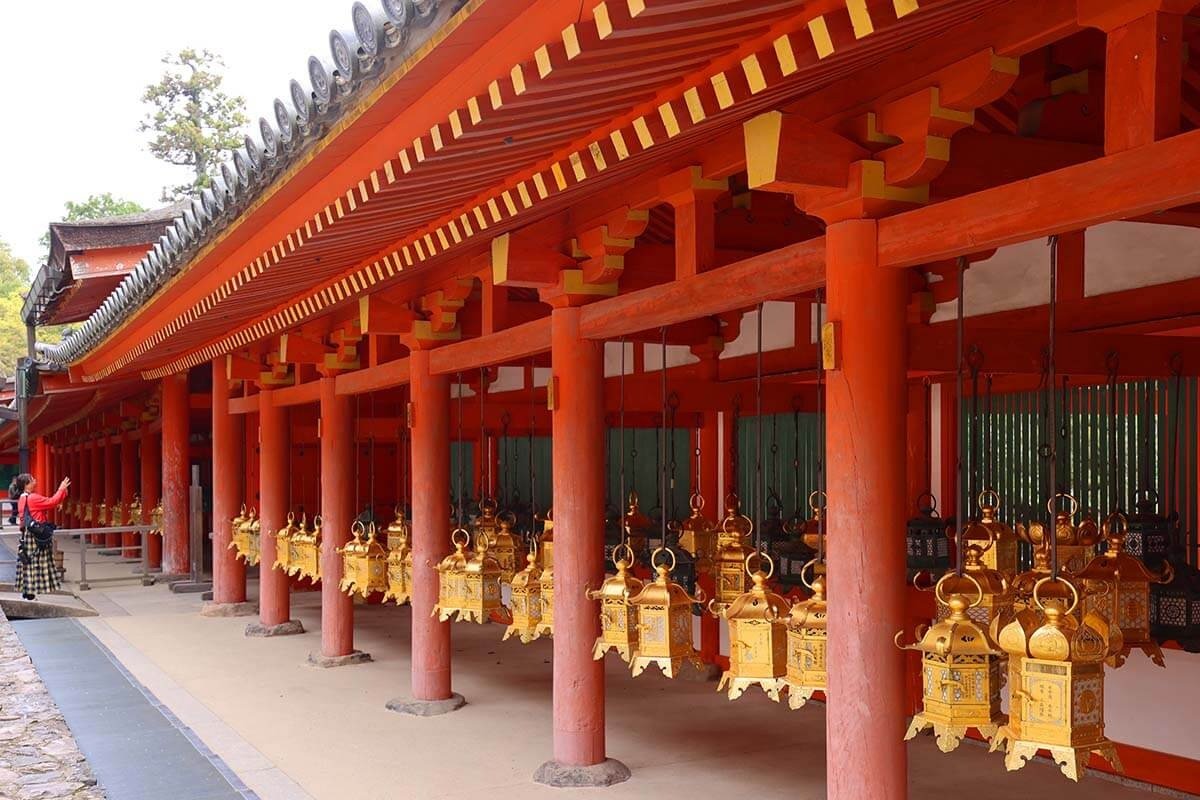
Enter Nara’s forest at Kasuga Taisha, one of the city’s principal Shinto shrines. The approach immediately feels calmer than the commercial streets around Nara Park and frames the sacred buildings through moss, trees, and stone lanterns.
Lanterns define the site. Stone examples line the paths, while bronze lanterns hang in dense rows from vermilion corridors. The repetition feels ceremonial rather than decorative and encourages a slower pace.
During major festivals the lanterns are illuminated together. At other times, a darkened room filled with glowing examples suggests the effect. Allow your eyes to adjust before taking photographs; the subdued atmosphere is more memorable than a rushed image.

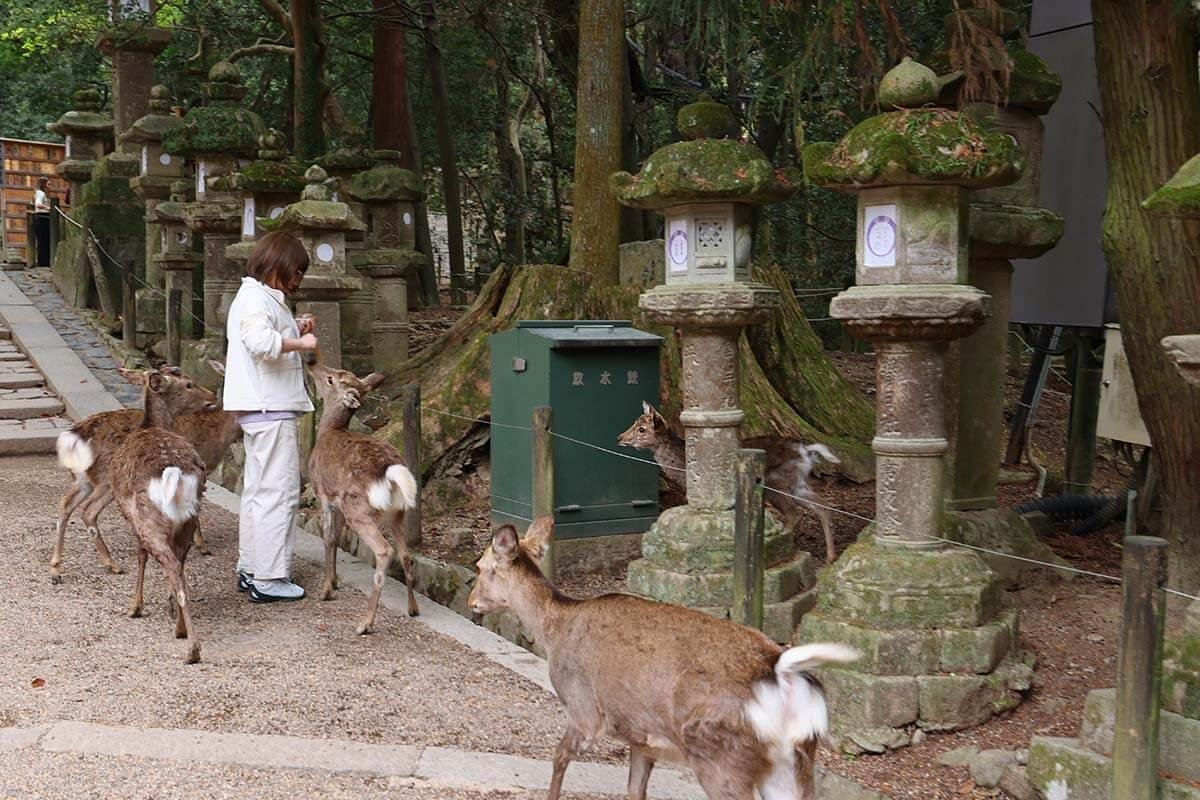
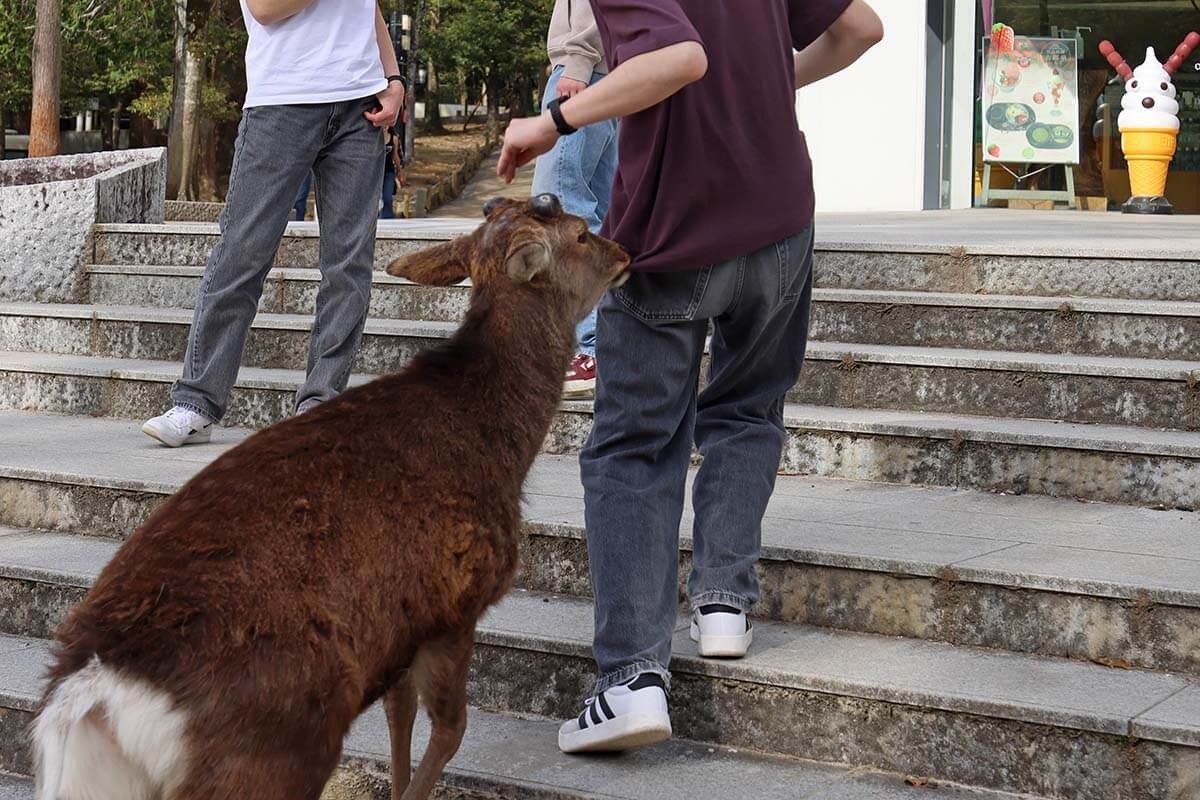
Deer roam freely through the surrounding forest and temple grounds. You will not need to search for them, but you should treat them as wild animals rather than props. Keep bags closed and food hidden until you are ready.
Many deer have learned to bow for the special crackers sold nearby. The exchange is amusing, yet behavior varies: some animals are gentle and others are impatient. Bow once, offer one cracker, and step away calmly when finished.
A guide can demonstrate safe feeding and identify quieter areas. Never tease an animal with food, and supervise children closely; once several deer notice crackers, their attention becomes persistent and may feel overwhelming. The crackers are sold specifically for the deer; do not substitute ordinary snacks. Hold maps, tickets, and loose paper securely because curious animals may investigate them. If a deer lowers its head, crowds you, or seems agitated, show empty hands and create space rather than running.
For families, these encounters may become the day’s defining memory. Build in enough time to enjoy them without letting every deer stop delay the final temple, whose interior closes earlier than the park.
Tōdai-ji & Nara Park
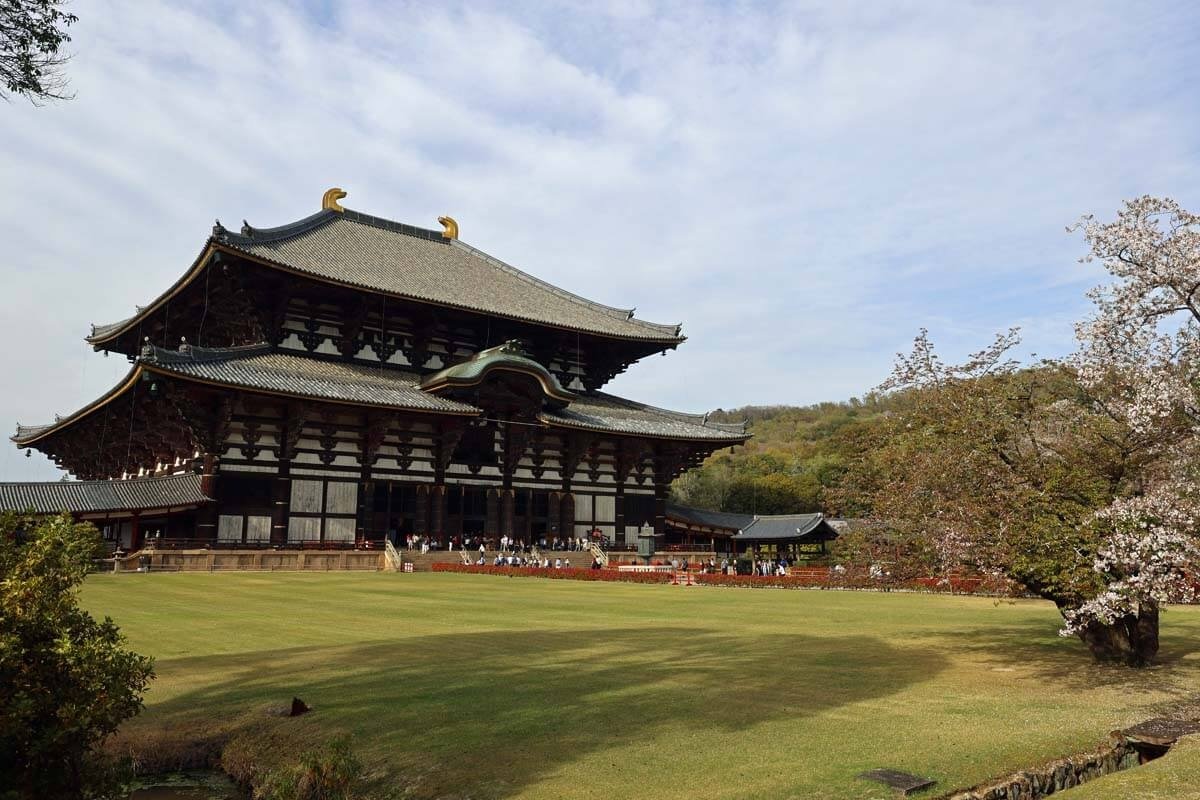
Finish the major sightseeing at Tōdai-ji and the central section of Nara Park. This is Nara’s most visited zone, with shops and food stands lining the approach, but late afternoon can feel easier after large tour groups begin departing.
The Great Buddha inside stands about fifteen meters high, yet the surrounding wooden hall may be equally astonishing. Doorways, beams, and interior volume establish scale before the statue fully registers. Pause near the entrance rather than walking directly to the altar.
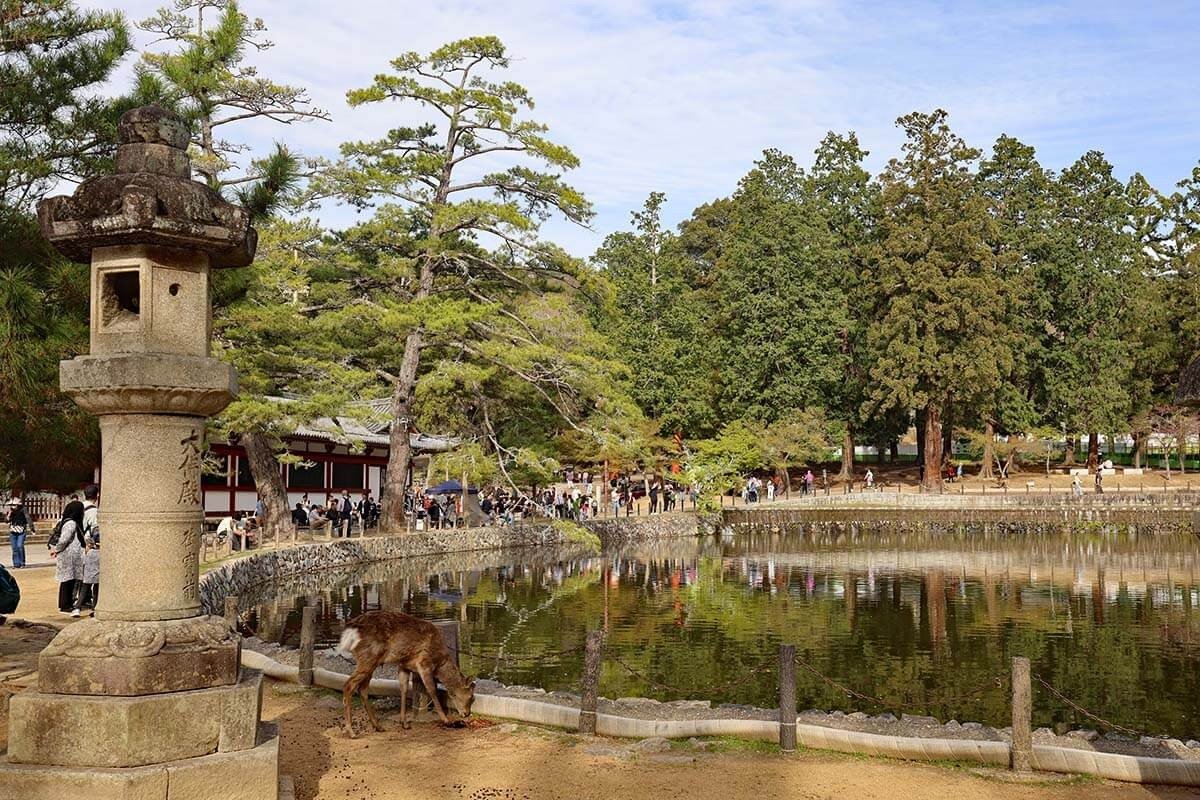
After the temple, wander through the park toward ponds and open lawns. Deer move between religious grounds and ordinary paths, making the landscape feel continuous rather than divided into separate attractions.
This gentle walk provides a natural ending to an intensive day. Offer the final crackers, photograph the temple reflections, and leave before fatigue turns the return to Kyoto into a chore.

Dinner in Kyoto
Back in Kyoto, choose a relaxed restaurant near your accommodation. A small upper-floor café or neighborhood dining room can feel refreshing after the heavily visited areas of Nara.
Some of the most enjoyable places have subtle entrances or little English signage, so saved recommendations help. Do not overplan the evening: a good meal, short walk, and early night prepare you for the active final day.

Day 4: Cycling & Samurai Culture
After three days of landmark sightseeing, change perspective. A morning e-bike tour reveals residential streets and lesser-known temples, while the afternoon returns to Gion for Zen gardens and an interactive samurai class. The day is structured around experiences rather than a long list of admissions.
Reserve both activities in advance, leaving enough time between them for lunch and delays. Popular cultural sessions have limited places, and choosing the right start time is more important than squeezing in another temple. Check the weather before setting out. Tours may operate in light rain, but wet paving changes braking distance and makes temple approaches slippery. Wear clothing that moves easily, secure cameras and phones, and avoid long scarves or loose straps that could interfere with the bicycle.
Kyoto E-Bike Tour
Kyoto’s flat central basin and network of smaller streets make cycling an efficient way to connect places that feel disconnected by bus. Select a tour aimed at neighborhoods and hidden corners rather than one repeating the monuments already covered on Days 1 and 2.
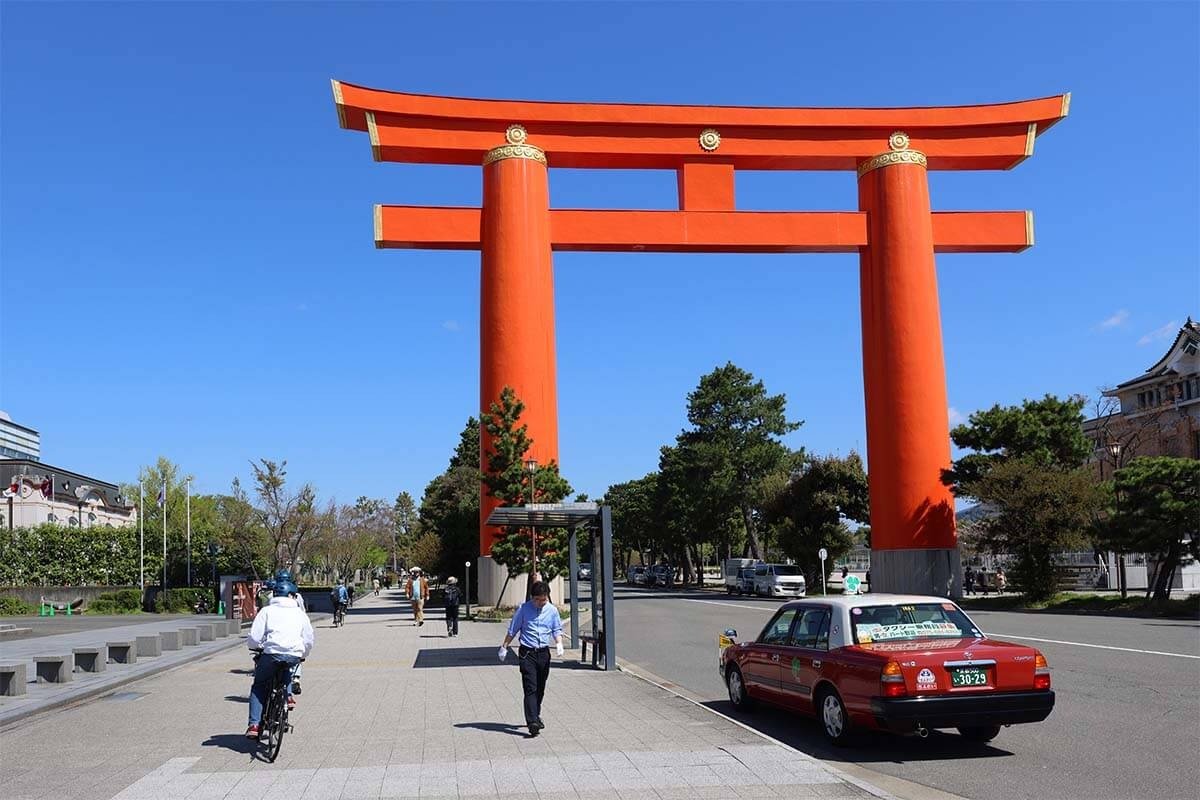
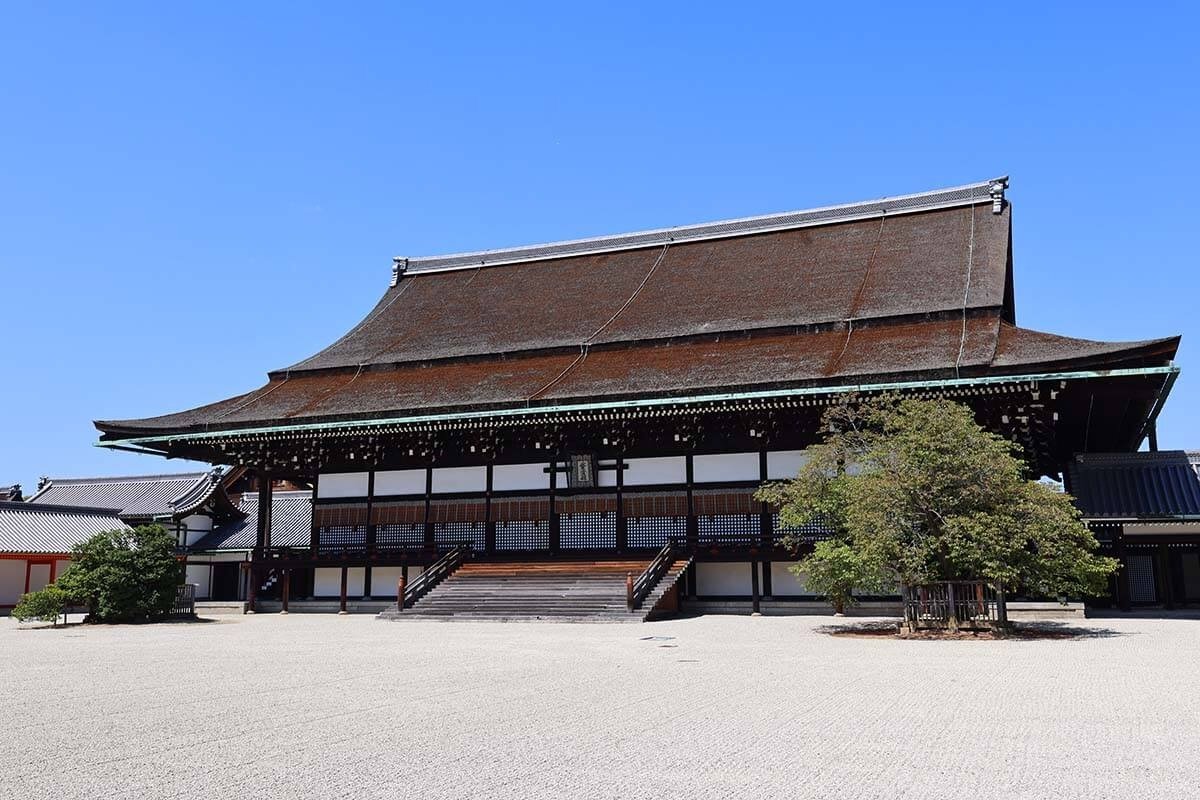
A backstreet-focused route may include Nanzen-ji, Heian-jingū, the Philosopher’s Path, Kyoto Imperial Palace, riverside lanes, and small temples. The value lies in the connections—the quiet blocks and waterways between named stops—not only the stops themselves.
Four hours, roughly 9 a.m. to 1 p.m., provides enough range without occupying the whole day. Confirm minimum age, height, helmet rules, and weather policy when booking, particularly for families.
E-bikes flatten the few steeper sections and keep mixed-ability groups together. Most of the riding is gentle, but Japan drives on the left and local streets still demand attention. Follow the guide’s signals, slow at blind corners, and park only where instructed.
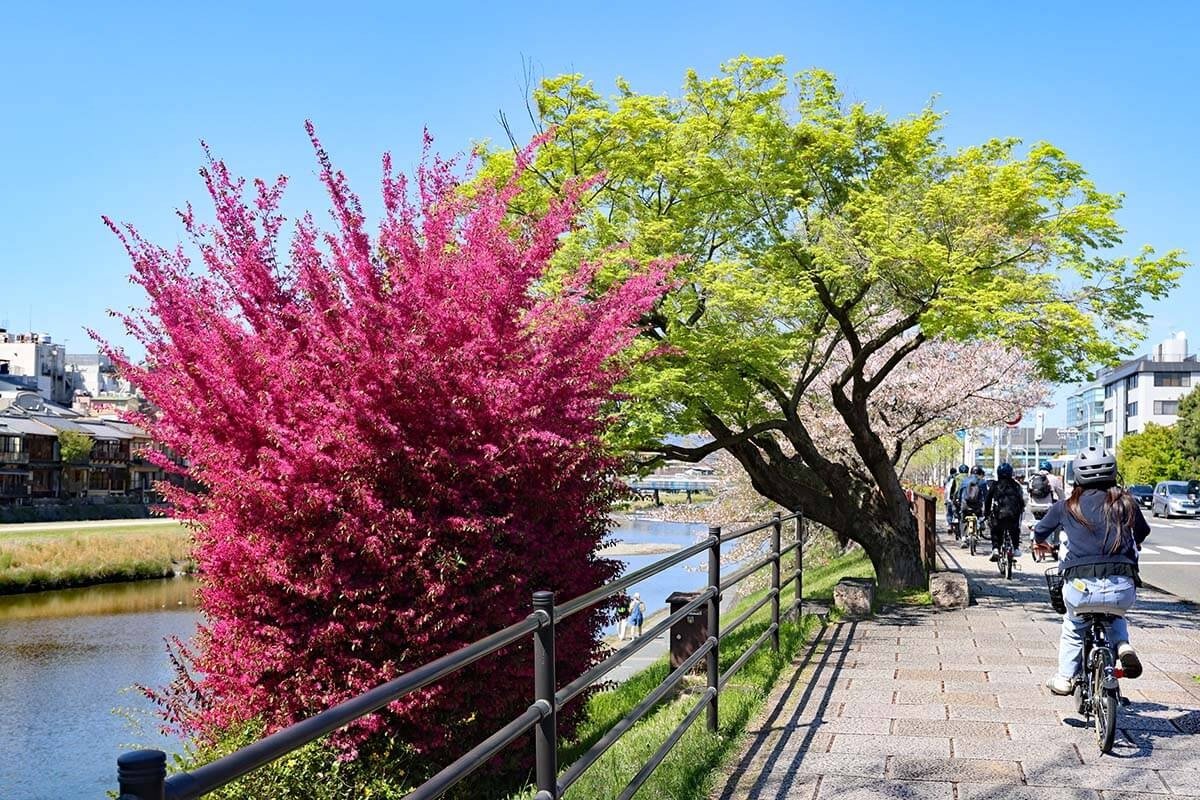
The photographs may show shrines and aqueducts, yet the strongest impression is movement: cherry-lined paths, neighborhood shops, school routes, and ordinary houses passing at a human pace. Cycling makes Kyoto feel lived in rather than displayed.



Lunch in Gion & Kennin-ji
Return the bikes and eat nearby. After several Japanese meals, choosing pizza or another familiar lunch is perfectly reasonable, especially when it keeps the group happy and the schedule moving.
Then visit Kennin-ji and the smaller Zenkyo-an. Large timber halls, dry gardens, and dramatic painted ceilings provide stillness in the center of Gion, and the atmosphere can remain surprisingly composed despite the district outside.
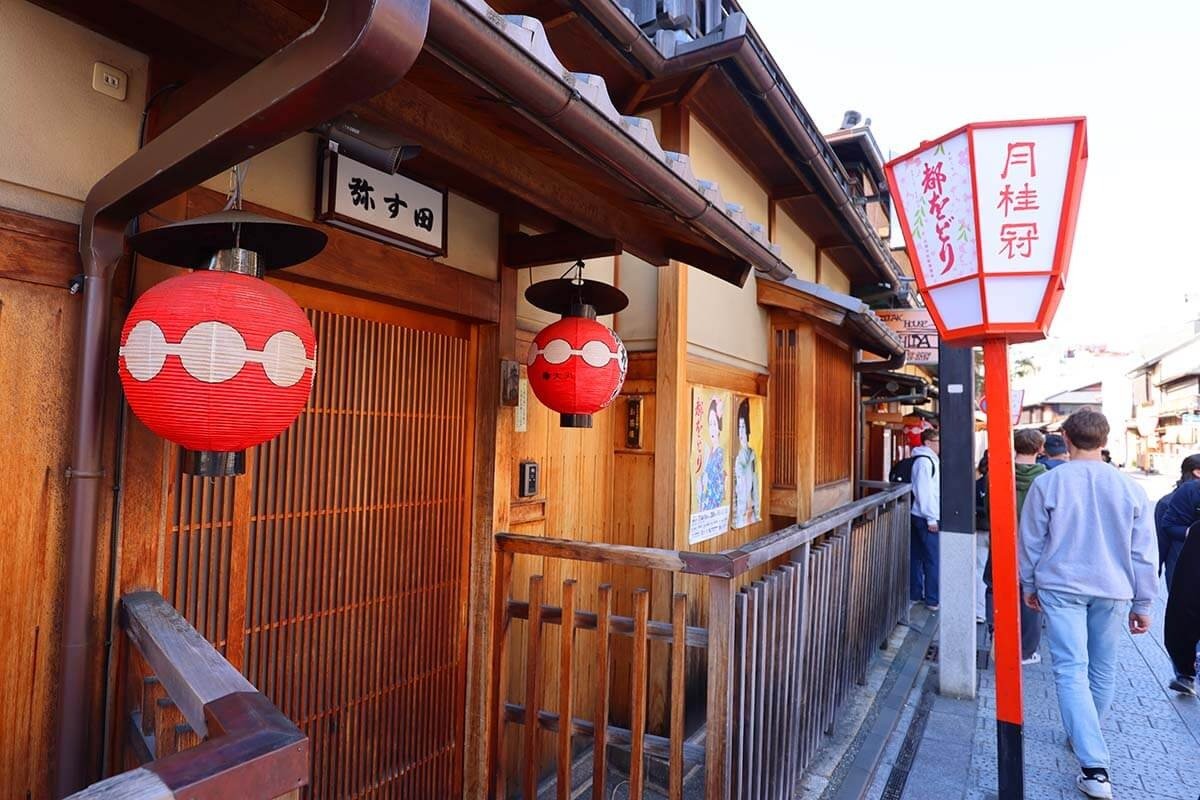
Continue through Yasui Kompiragū and Hanamikoji toward the afternoon venue. This route revisits familiar streets with a new purpose and avoids wasting the gap between activities on transport.

Samurai Sword Class & Performance
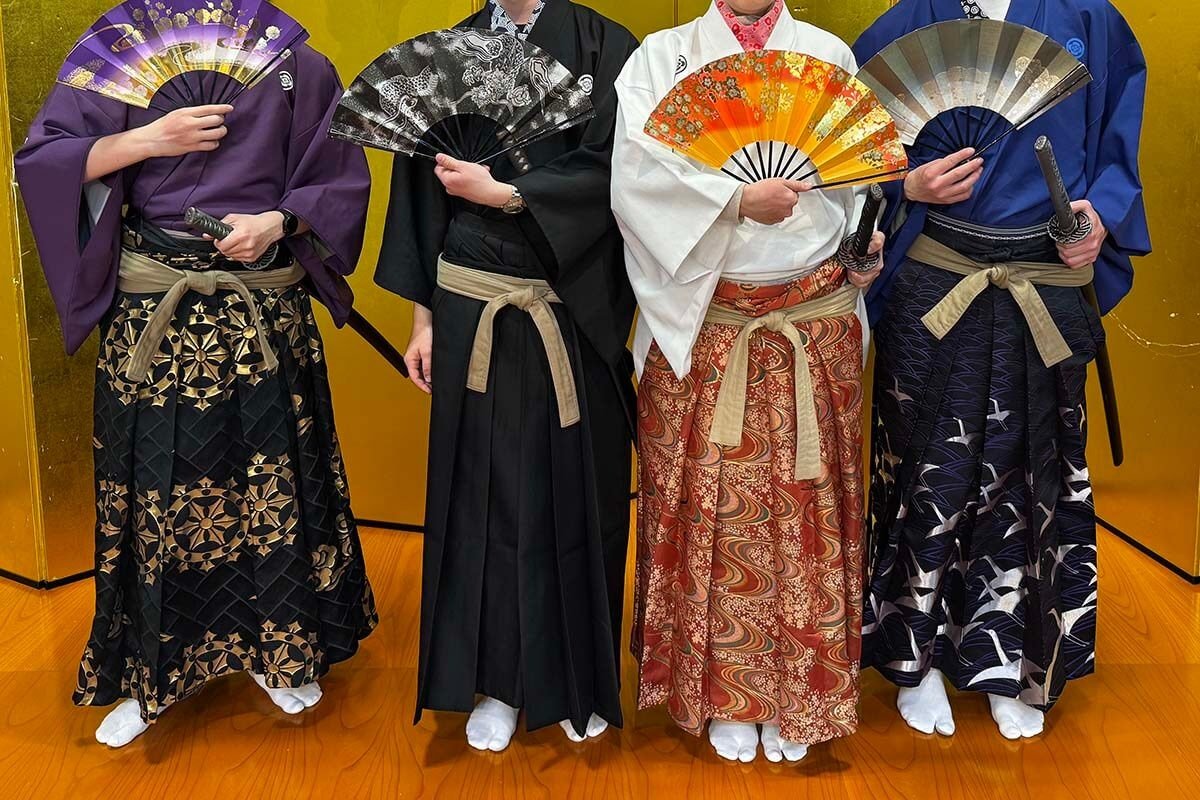
Book a late-afternoon samurai session with enough buffer after lunch. A two-hour format typically combines performance, clothing, instruction, and supervised practice. Limited capacity makes advance reservation important, especially for the final convenient time slots.
The performance introduces kenbu, but participation is what makes the activity memorable. Learning stance, grip, and a simple sequence transforms the subject from costume imagery into controlled physical discipline.
Experienced instructors keep the lesson structured and accessible. Participants wear traditional clothing and practice under close supervision, creating photographs without reducing the session to dressing up.
Adults and teenagers are likely to gain the most from the format; younger children may not meet age or attention requirements. Check restrictions before paying. For the right group, this can become one of Kyoto’s strongest hands-on cultural experiences.

Dinner at Pontochō Alley
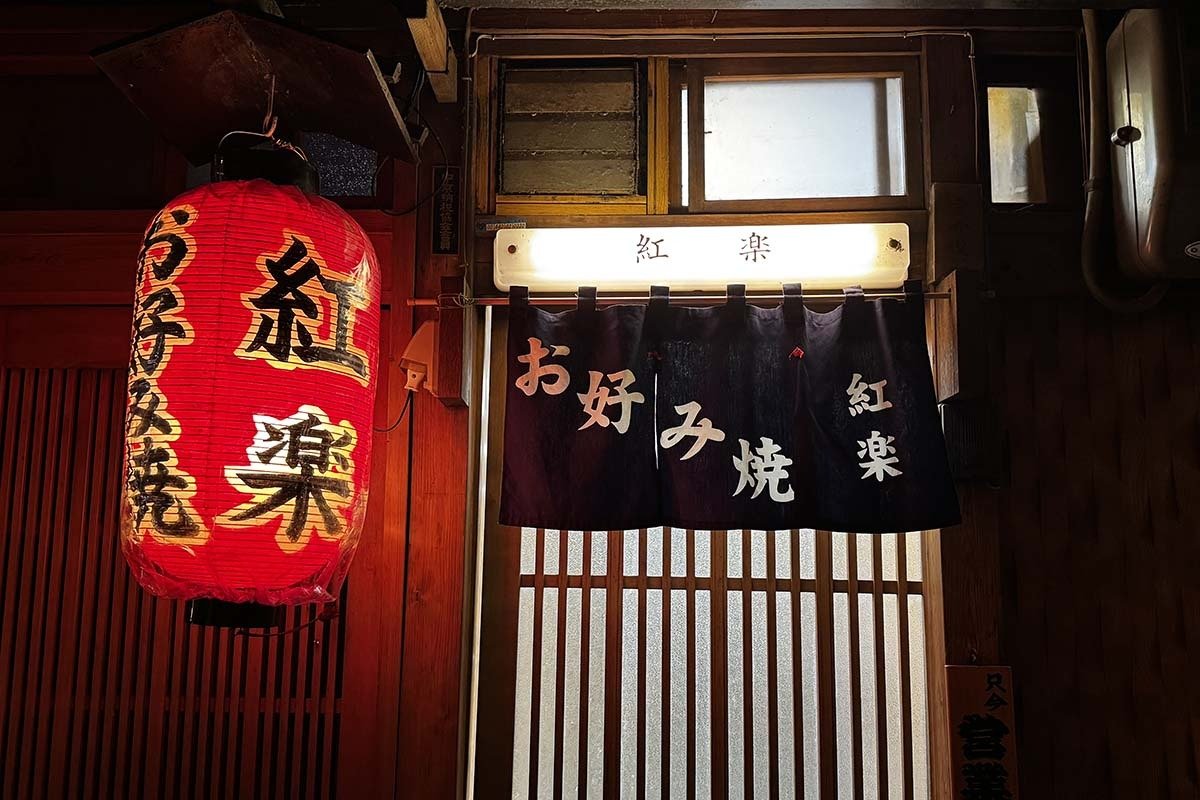
End in Pontochō, the narrow lantern-lit dining lane beside the river. It is worth walking after dark even if you ultimately eat elsewhere, because the evening atmosphere differs completely from the quick daytime glimpse on Day 1.
Do not assume the most picturesque lane guarantees the best meal. Small menus, high prices, queues, and mixed reviews can make the search frustrating for groups. Inspect options before hunger becomes urgent and keep nearby downtown alternatives in reserve.
Come for the setting, then let quality and comfort determine dinner. A short walk through Pontochō followed by a better restaurant outside the lane is not a compromise; it is often the smarter finish.
Across four days, this route balances Kyoto’s essential landmarks with food, neighborhoods, an excursion, and participatory culture. The quieter stops matter because they create contrast: without them, bamboo, golden pavilions, torii gates, and old streets can blur into one continuous crowd. Most importantly, build moments when nobody is navigating or photographing. Sit beside a garden, watch a shrine routine, or choose a snack. Those pauses are what transforms an itinerary into a memorable trip.
If you gain a fifth day, spend longer on Fushimi Inari’s upper trails, add another specialized activity, or revisit Higashiyama before breakfast. Otherwise, follow the plan with permission to cut a stop. Kyoto consistently rewards attention far more than speed. The order can also be reversed within individual days when reservations demand it. Preserve the neighborhood grouping, not every clock time. That distinction makes the plan durable: you can adapt to a closure, a tired traveler, or unexpected weather without rebuilding the entire four-day journey from scratch.