

Recent Posts










A neighborhood-first guide to choosing the right Barcelona base, with hotel ideas for first visits, family trips, food-focused weekends, nightlife, beaches, and quieter local stays.
Barcelona is compact enough to explore by metro and on foot, but the experience changes noticeably from one neighborhood to another. A room among the lanes of the Gothic Quarter feels completely different from an apartment in Gràcia or a hotel facing the sea in Barceloneta.
For a first visit, location usually matters more than a long list of hotel facilities. A beautiful room can become inconvenient if every morning begins with a crowded transfer, while a simpler property in the right district can make the city feel effortless.
The best area is therefore not the one with the most famous name. It is the one that matches your preferred pace, bedtime, sightseeing priorities, transportation needs, and tolerance for street noise.
The Short Answer
| Traveler | Best starting area | Why it works |
|---|---|---|
| First visit | Eixample or Plaça de Catalunya | Central, easy to navigate, and well connected. |
| Historic atmosphere | Gothic Quarter | Medieval lanes, landmarks, restaurants, and evening energy. |
| Food and nightlife | El Born | Bars, restaurants, galleries, and access to the old city. |
| Local neighborhood feel | Gràcia | Residential squares and a calmer rhythm. |
| Architecture and shopping | Eixample | Modernista landmarks, broad avenues, and excellent transport. |
| Art and edge | El Raval | Creative venues, multicultural food, and central access. |
| Beach priority | Barceloneta | Fast access to the beach, harbor, and waterfront walks. |
How to Choose Your Barcelona Base
Where you sleep determines which version of Barcelona you meet first each morning. In the old city, you step directly into narrow lanes and historic squares. In Eixample, the streets are wider and navigation is simpler. In Gràcia, breakfast may happen beside commuters and residents rather than tour groups. Near the beach, the sea becomes part of the daily routine, but several major monuments sit farther away.
Start by marking the places you consider essential. If most are around Barcelona Cathedral, the Picasso Museum, the waterfront, and La Rambla, the old city is logical. If your list revolves around Casa Batlló, La Pedrera, the Sagrada Família, shopping, and restaurants, Eixample will reduce unnecessary travel.
Next, think about evenings. Barcelona remains active late, especially around restaurant streets, bars, plazas, and busy pedestrian corridors. A central address can be an advantage during the day and a disadvantage at 2 a.m. Read recent room-specific comments about soundproofing instead of relying only on a hotel’s overall rating.
Finally, compare the total price. Barcelona accommodation often carries taxes or surcharges collected separately from the advertised rate. The city and Catalonia changed overnight tourism levies in 2026, so confirm the final amount for your dates and accommodation category before paying. See the 2026 Reuters report.
Understanding the Main Price Levels
Barcelona prices are highly seasonal. A simple central room during a conference, festival, holiday weekend, or summer peak can cost more than an upscale hotel on quiet winter dates. Instead of relying on one citywide average, compare several properties for your exact nights.
Budget accommodation includes hostel dormitories, private hostel rooms, small hostals, and compact rooms with limited services. Check whether the bathroom is private, whether the building has a lift, and whether air-conditioning is included.
Mid-range hotels normally provide private bathrooms, housekeeping, reception services, and convenient transportation. This category often offers the best balance between location and comfort, although rooms in historic buildings can still be small.
Upscale and luxury properties may add rooftop terraces, pools, larger rooms, landmark views, spas, or destination restaurants. Barcelona’s rooftop pools are frequently designed for cooling off rather than serious swimming, so inspect current photographs if that amenity matters.
The Historic Core: Gothic Quarter and El Born
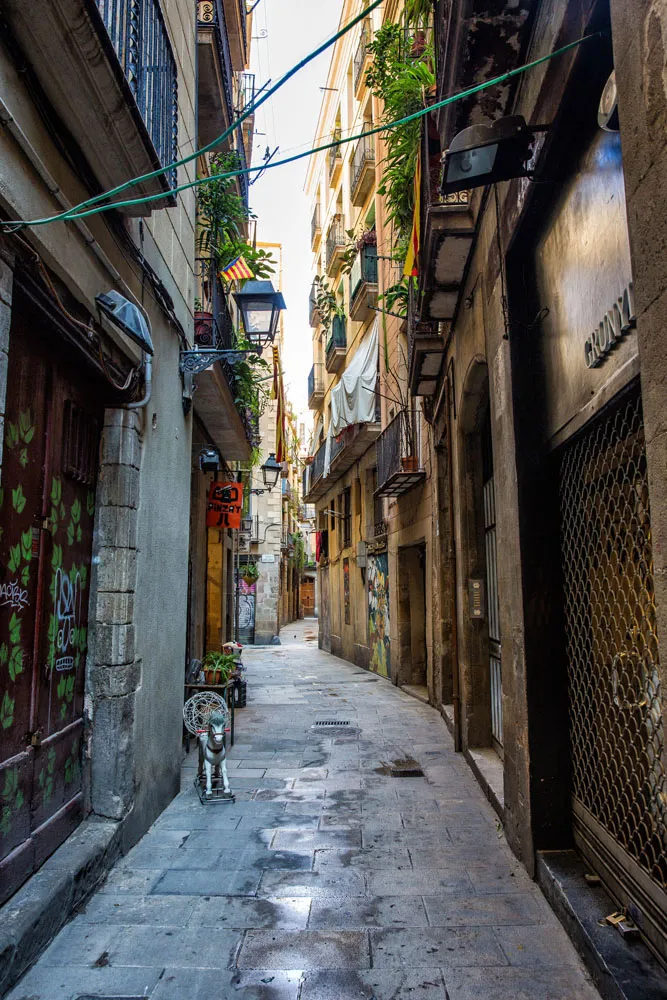
Old Barcelona offers the city’s strongest historic atmosphere. Streets twist around Roman remains, Gothic churches, small plazas, cafés, shops, and bars. This is an excellent place to abandon a fixed route and simply walk, but it is also where room size, street noise, taxi access, and luggage handling require the most attention.
Gothic Quarter: Best for History
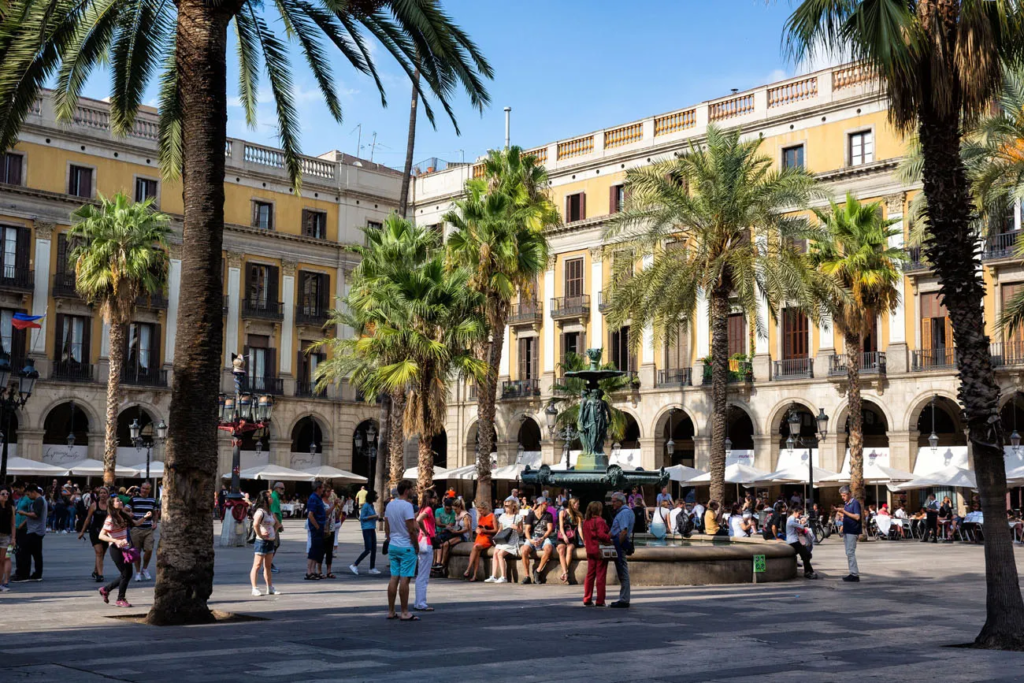
The Barri Gòtic is a strong choice for travelers who want the historic city outside the hotel door. Barcelona Cathedral, Plaça Reial, Plaça Sant Jaume, La Rambla, and the waterfront are close, while Jaume I and Liceu metro stations connect the district with more distant attractions.
The romance comes with compromises. Some lanes receive little daylight, taxis cannot reach every entrance, and nighttime sound travels through stone streets. The southern and western edges near La Rambla can feel especially busy.
Choose the Gothic Quarter if: atmosphere, history, walking access, and late dinners matter more than large rooms or complete silence.
Luxury — Mercer Barcelona: A small luxury property occupying a historic setting close to the cathedral. Official website.
Upscale — H10 Madison: A centrally positioned hotel near the cathedral, with a rooftop terrace and pool.
Value strategy: Search for a highly rated hostal around Jaume I rather than directly beside La Rambla, and confirm lift access.
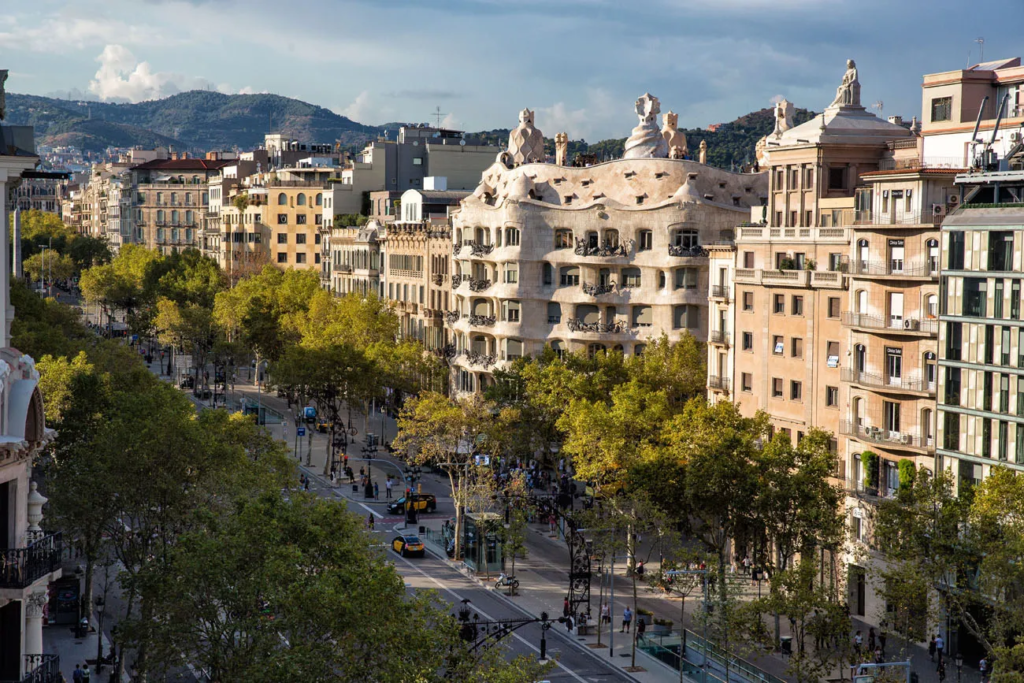
El Born: Best for Food and Evening Atmosphere
El Born sits between the Gothic Quarter and Parc de la Ciutadella. It feels historic without being identical to the Gothic Quarter: independent shops, cocktail bars, tapas restaurants, cultural venues, and intimate squares share the neighborhood with Santa Maria del Mar and the Picasso Museum.
This is one of the most enjoyable bases for couples and food-focused travelers. The beach, cathedral area, Arc de Triomf, and Parc de la Ciutadella are all reachable on foot. Nightlife is part of the neighborhood’s appeal, so a room facing a lively restaurant street may be unsuitable for light sleepers.
Choose El Born if: you want historic surroundings with a creative, restaurant-driven personality and do not mind energetic evenings.
Luxury — The Barcelona EDITION: Positioned near Santa Caterina Market, close to both El Born and the Gothic Quarter.
Boutique — chic&basic Born: A design-oriented hotel inside the neighborhood. Official website.
Rooftop option — Uma House by Yurbban Trafalgar: North of the historic core, offering access without the busiest lanes.
The Easy Center: Plaça de Catalunya and Eixample
Central does not always mean atmospheric, but it can make a short Barcelona visit much easier. Plaça de Catalunya and Eixample provide straightforward streets, excellent metro connections, airport transportation, shopping, restaurants, and walkable links to both the old city and Gaudí landmarks.
Plaça de Catalunya: Best for a Short First Visit
Plaça de Catalunya occupies the seam between the historic center and Eixample. La Rambla begins here, Passeig de Gràcia runs north, and numerous transport connections make the square a practical base.
The immediate area feels more like a transport and shopping hub than a residential neighborhood. Traffic, buses, visitors, and large storefronts dominate the surroundings. Its advantage is efficiency: travelers can walk south into the Gothic Quarter, north toward Casa Batlló, or use the metro for the Sagrada Família and farther districts.
Choose Plaça de Catalunya if: this is your first visit, you have only a few days, or you want the simplest possible transportation base.
Upscale — Olivia Plaza Hotel: Located directly on the square, with room categories overlooking Plaça de Catalunya. Official website.
Design-focused — H10 Metropolitan: Just north of the square, placing Passeig de Gràcia and the old city within walking distance.
Boutique — Hotel Pulitzer: Near the western side of the square and suitable for travelers who prefer a smaller urban-hotel atmosphere.
Eixample: Best Overall Choice
Eixample is the safest default recommendation for many first-time visitors. Its grid is easy to understand, streets are generally wider, and accommodation ranges from simple design hotels to landmark luxury properties.
The district is large, so location within it matters. The central area around Passeig de Gràcia and Rambla de Catalunya is best for shopping, Modernista architecture, restaurants, and walking access to the old city. Dreta de l’Eixample places visitors closer to the Sagrada Família, while the western side can offer better value and convenient access to Sant Antoni.
Restaurants and cafés are distributed across the district instead of being concentrated in a single tourist corridor. This makes Eixample particularly suitable for longer visits, business trips, and travelers who want lively streets without the intensity of the oldest neighborhoods.
Choose Eixample if: you want the best balance of transportation, architecture, dining, comfort, and straightforward navigation.
Luxury — Almanac Barcelona: A polished luxury property close to Passeig de Gràcia.
Upscale boutique — H10 Casa Mimosa: Near La Pedrera, with garden and rooftop spaces. Official website.
Mid-range design — Praktik Bakery: Built around a working bakery and suited to travelers who value location and personality over extensive facilities.
More Local or More Intense: Gràcia and El Raval
For travelers who do not need to sleep beside the principal monuments, Gràcia and El Raval offer two sharply different alternatives. Gràcia feels residential, intimate, and village-like. El Raval feels central, multicultural, creative, and rougher around the edges.
Gràcia: Best for a Neighborhood Rhythm
Gràcia was once separate from Barcelona, and its identity remains visible in its plazas, narrow streets, neighborhood markets, independent shops, and evening café culture. It feels removed from the tourist center even though the metro reaches central Barcelona quickly.
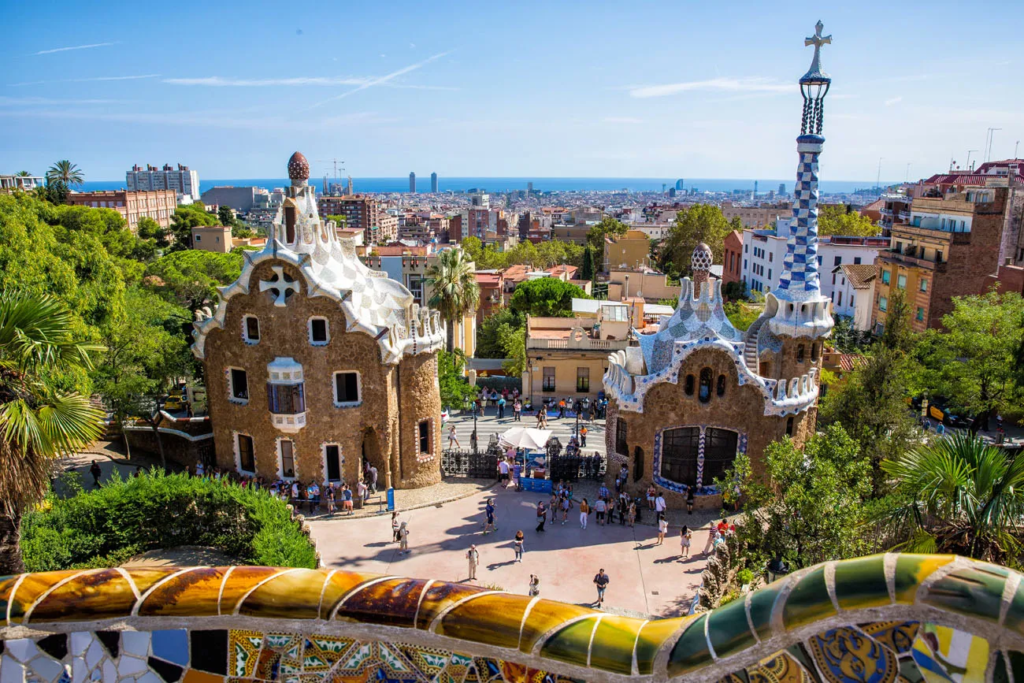
The southern part near Diagonal and Fontana provides the easiest balance between local atmosphere and transportation. Staying much farther north can be peaceful but adds time to daily sightseeing. Park Güell sits above the neighborhood, although the uphill distance is greater than it first appears on a map.
Choose Gràcia if: you prefer residential streets, local plazas, and independent restaurants to immediate access to La Rambla.
Luxury landmark — Hotel Casa Fuster: A Modernista landmark where Gràcia meets Passeig de Gràcia. Official website.
Apartment-style convenience — Aparthotel Silver: Close to Fontana metro, with kitchenette-equipped rooms.
Social and flexible — Casa Gràcia: Private rooms, shared accommodation, apartments, and communal spaces near Diagonal.
El Raval: Best for Art and Urban Energy
El Raval lies west of La Rambla and contains contemporary art, historic buildings, immigrant communities, bars, restaurants, and independent businesses. MACBA, the CCCB, Palau Güell, and La Boqueria are among the nearby attractions.
The neighborhood is not uniform. Its northern and eastern edges are convenient for the center, while some streets feel much rougher late at night. Study the exact block, recent reviews, and the route from the nearest metro station instead of choosing solely because a property is described as central.
Visitors who enjoy energetic cities may find El Raval fascinating. Travelers who want polished streets, quiet evenings, or an effortless first introduction to Barcelona may be happier in Eixample or Gràcia.
Choose El Raval if: you value contemporary culture, diverse food, nightlife, and a strong urban personality—and are comfortable using normal big-city awareness.
Boutique — Casa Camper Barcelona: A design-oriented stay close to MACBA and northern El Raval. Official website.
Panoramic rooftop — Barceló Raval: Recognizable by its cylindrical design and rooftop terrace with broad city views.
La Rambla boundary — Hotel 1898: Offers Raval access while remaining directly on the city’s best-known pedestrian avenue.

Barceloneta: A Beach Stay Inside the City
Barceloneta offers something the other recommended districts cannot: the ability to reach the beach in minutes. The former fishing quarter has narrow streets, seafood restaurants, waterfront promenades, and access to Port Vell.
This area makes sense when swimming, running beside the sea, or a relaxed family beach day is central to the trip. It is less convenient for repeated visits to the Sagrada Família, Park Güell, and upper Eixample. Summer brings beach crowds, and rooms close to restaurant streets can be noisy.
The neighborhood changes significantly between its interior residential lanes, harbor side, and broad beachfront. Check the exact address rather than assuming every “Barceloneta” hotel sits directly on the sand.
Choose Barceloneta if: the Mediterranean is a priority and you are willing to trade some sightseeing convenience for morning and evening access to the waterfront.
Luxury beachfront — W Barcelona: Occupies the sail-shaped building at the end of the beach promenade.
Smaller harbor stay — Hotel 54 Barceloneta: Near Port Vell and suitable for travelers who prefer a compact property.
Nearby resort-style alternative — Sofitel Barcelona Skipper: Located toward Port Olímpic, with beach access and a conventional luxury-hotel layout.
Best Neighborhood by Travel Style
Rather than choosing a hotel first, reduce the city to two suitable neighborhoods and compare properties only within those areas. This prevents a discounted room from pulling the entire journey toward an inconvenient location.
For First-Time Visitors
Choose central Eixample for the most balanced experience, or Plaça de Catalunya when efficiency is the highest priority. Both provide simple navigation and straightforward access to the old city and Gaudí attractions.
For Couples
El Born works well for restaurants, intimate streets, and evening atmosphere. A quieter Eixample boutique hotel is better for couples who want refined rooms, architecture, and simple taxi access.
For Families
Eixample generally provides wider sidewalks, easier taxi pickups, lifts, supermarkets, and apartment-style accommodation. Gràcia can also work for families seeking plazas and a residential atmosphere.
Verify room-occupancy rules carefully. A “triple room” does not necessarily accommodate two adults and two children, and some properties require two separate rooms.
For Solo Travelers
Gràcia and Eixample are comfortable bases for independent exploration, while El Born offers a more social evening scene. A reputable hostel near a metro station may be more useful than the cheapest dormitory on an isolated block.
For Nightlife
El Born and parts of El Raval place bars and late restaurants close to the hotel. The Gothic Quarter also remains active, particularly around major plazas and La Rambla. Choose an interior-facing room if sleep matters.
For Luxury
Central Eixample has the widest range of high-end hotels, particularly around Passeig de Gràcia. The Gothic Quarter offers smaller historic luxury properties, while Barceloneta specializes in waterfront views.
For a Lower Budget
Search near the outer edges of Gràcia, Eixample, Sant Antoni, or Poble-sec instead of insisting on a La Rambla address. A metro journey of ten or fifteen minutes can produce better rooms without making sightseeing difficult.
For the Beach
Choose Barceloneta only when beach time is genuinely important. Travelers who merely want one afternoon beside the sea can stay centrally and travel to the waterfront when needed.
Booking Details That Matter
Photographs and star categories do not reveal every detail that affects a Barcelona stay. Before booking, inspect the exact room type, cancellation terms, final taxes, street position, and recent comments about noise and maintenance.
Check the Exact Address
Neighborhood labels on booking platforms can be broad or optimistic. A hotel advertised as “near El Born” may sit across a major road or in another district. Put the complete address into a map and inspect the walking route to the nearest metro station.
Read Room-Specific Reviews
One property may contain renovated rooms, older rooms, street-facing rooms, and dark interior rooms. Search recent reviews for the exact category you plan to reserve. Pay particular attention to air-conditioning, soundproofing, lift access, bathroom privacy, window type, nearby construction, mattress comfort, and luggage storage.
Understand Historic Buildings
Old-city charm can mean narrow staircases, small lifts, irregular floor plans, limited taxi access, and compact rooms. If mobility or heavy luggage is a concern, Eixample usually provides an easier arrival.
Verify Apartment Legality and Services
For an apartment, confirm that it is legally registered and understand the check-in procedure. Apartments may offer kitchens and washing machines but lack daily cleaning, staffed reception, flexible arrival times, and luggage storage.
Compare the Final Price
Look beyond the first nightly figure. Breakfast, tourism taxes, municipal surcharges, cleaning charges, additional-person fees, and nonrefundable conditions can completely change which property offers better value.
Reserve Early for High-Demand Dates
Major congresses, festivals, holidays, football matches, and summer weekends can reduce availability throughout Barcelona. A sensible strategy is to reserve a cancellable option early and compare prices again before the cancellation deadline.
Do Not Overvalue a Rooftop Pool
Barcelona’s rooftop terraces are appealing, but many hotel pools are small plunge pools. Opening dates, hours, bar access, and rooftop availability may also be seasonal, so confirm current details directly with the property.
Consider the Arrival and Departure
A central property can simplify an early departure, but the nearest station is not always the most useful one for the airport. Check the actual route with luggage, including transfers, stairs, and the operating hours of the service you plan to use.
Match the Room to the Season
Effective air-conditioning matters during warmer months, while winter visitors may care more about heating and natural light. Balconies and terraces add value only when their orientation, privacy, and street noise suit the way you intend to use them.
Final Recommendation
For most first-time travelers, central Eixample is the strongest all-round choice. It provides excellent transport, attractive streets, major Modernista architecture, restaurants, and simpler hotel access than the oldest districts.
Choose the Gothic Quarter when historic atmosphere is the reason for the trip. Choose El Born for restaurants and nightlife, Plaça de Catalunya for maximum efficiency, Gràcia for a more local rhythm, El Raval for creative urban energy, and Barceloneta when the beach belongs at the center of the itinerary.
The right Barcelona hotel is not necessarily the highest-rated property in the city. It is the property that supports the way you intend to spend each day—and still lets you sleep comfortably when that day is over.
Hotel operations, amenities, prices, taxes, and neighborhood conditions can change. Verify all time-sensitive details with the property and relevant authorities before booking.