

Recent Posts






Fungi homes – and more ways biology could sustain life beyond Earth
Building a permanent home beyond Earth may depend less on transporting everything from our planet than on learning how to grow what astronauts need after they arrive. In this lecture, delivered in San Francisco in October 2025, the US astrobiologist Lynn Rothschild explores how synthetic biology could help solve one of space settlement’s most persistent challenges: producing durable materials in environments where every kilogram launched from Earth comes at enormous cost.
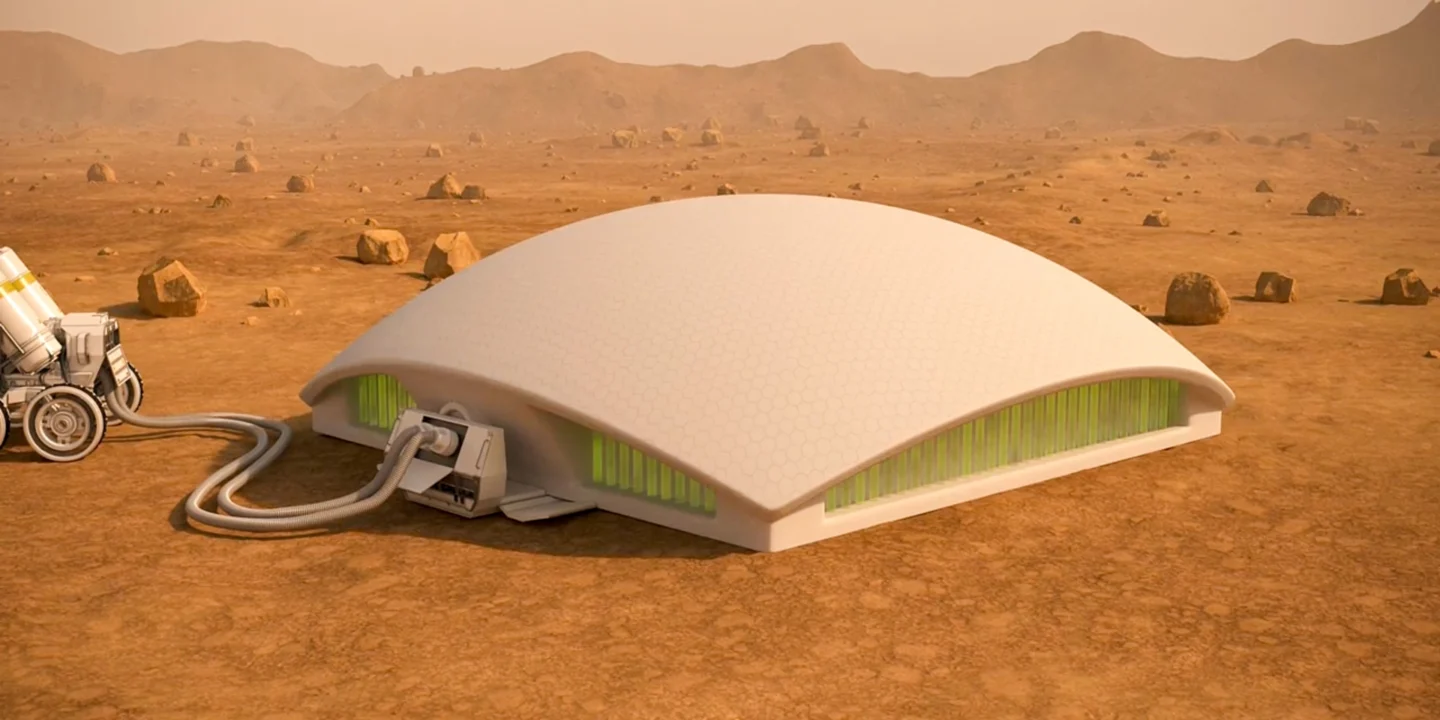
Drawing on research conducted with NASA, Rothschild presents living cells as a vast “genetic hardware store”, containing biological tools that might be adapted to manufacture structures, recycle waste and support human survival. Fungi, for example, could potentially be used to grow lightweight building materials, while engineered organisms might produce useful chemicals or respond to the extreme conditions of the Moon and Mars.
Some of these possibilities are already being tested; others remain highly speculative. Together, however, they suggest a broader shift in how space exploration might be imagined. Rather than treating biology merely as fragile cargo that must be protected from alien environments, future missions could use living systems as active partners in shaping those environments.
As with many technologies developed for spaceflight, the benefits may not remain beyond Earth. Biological manufacturing designed for resource-scarce settlements could also inspire cleaner construction, more efficient recycling and lower-impact production on our own planet.
Video by the Long Now Foundation