

Recent Posts








Museums teach visitors a familiar routine: walk quietly, keep a respectful distance, and never place a hand on the art. The rule protects fragile surfaces from pressure, moisture, skin oils, and accidental damage. It also defines the visitor’s role. The artwork is preserved and observed, while the audience remains safely outside it.
Yet during the 1960s, a number of artists began questioning whether looking was enough. They produced works that depended on movement, participation, and physical contact. Instead of presenting art as something already complete, they allowed the audience’s actions to become part of its meaning.
Yoko Ono’s Painting to Be Stepped On (1960–61) captures this change with striking simplicity. Placed on the floor, the work invited people to walk across it. Dust, footprints, creases, and gradual wear were not merely damage; they became records of the encounters that shaped the artwork over time.
Such works create a difficult question for museums. An institution is expected to preserve an object for future visitors, but it must also respect the artist’s intention. Preventing contact may protect the material while weakening the work’s meaning. Allowing participation may preserve the idea while shortening the object’s physical life.
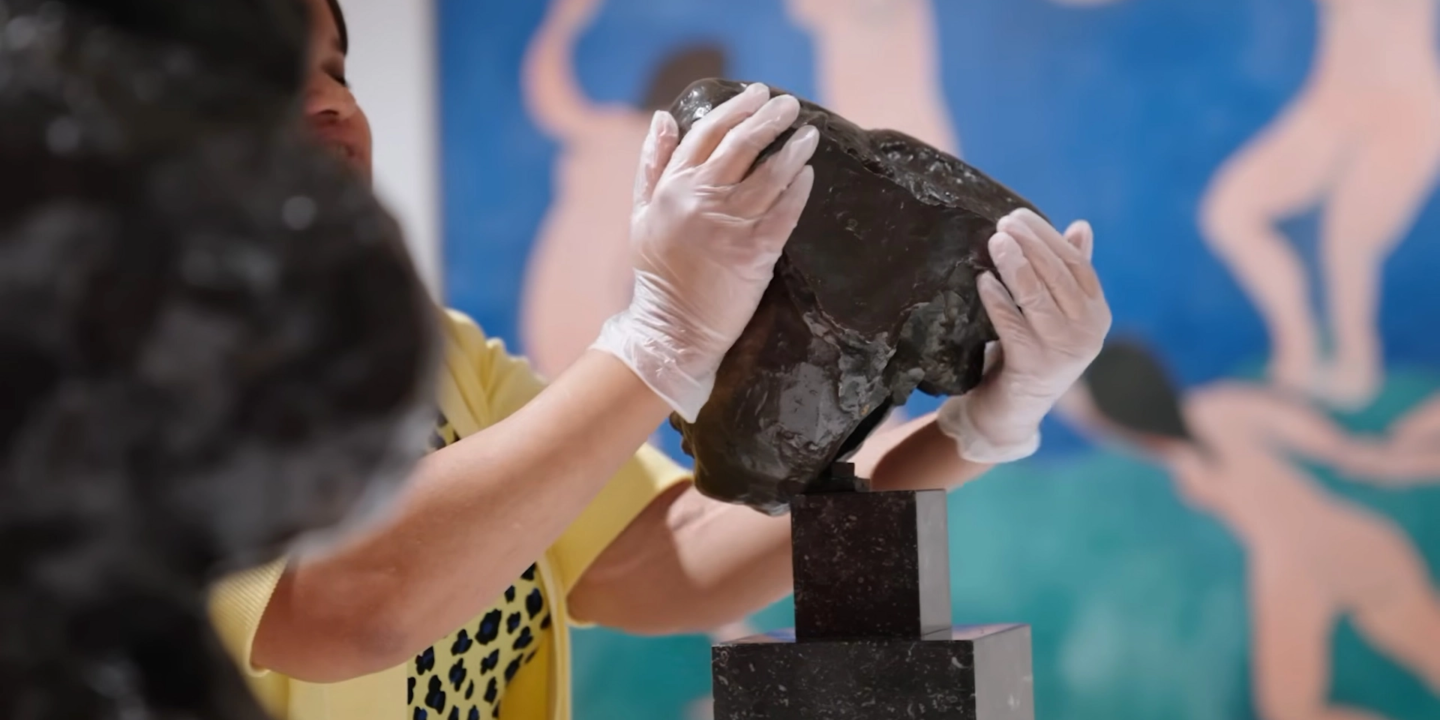
But touch is not only an artistic provocation. For blind and low-vision visitors, it can provide access to information that visual descriptions cannot fully communicate. During carefully guided tactile tours, texture, weight, temperature, scale, and form become ways of understanding a selected artwork.
Not every object can or should be handled. Some are too fragile, culturally sensitive, or unsafe. Still, participatory works and tactile programmes challenge the assumption that vision is the only serious way to experience art.
If art is a form of communication, touch can become part of its language. A hand, a footstep, or a trace of wear allows the visitor to answer the artwork—and sometimes to leave behind evidence of that reply.