











POLITICAL VOICE, CIVILITY & DISSENT
Mary Astell and Catharine Macaulay understood that a demand for calm, agreeable debate need not be neutral when some speakers are already treated as intruders. Their alternative was not empty fury, but committed argument that refuses to purchase harmony with silence.
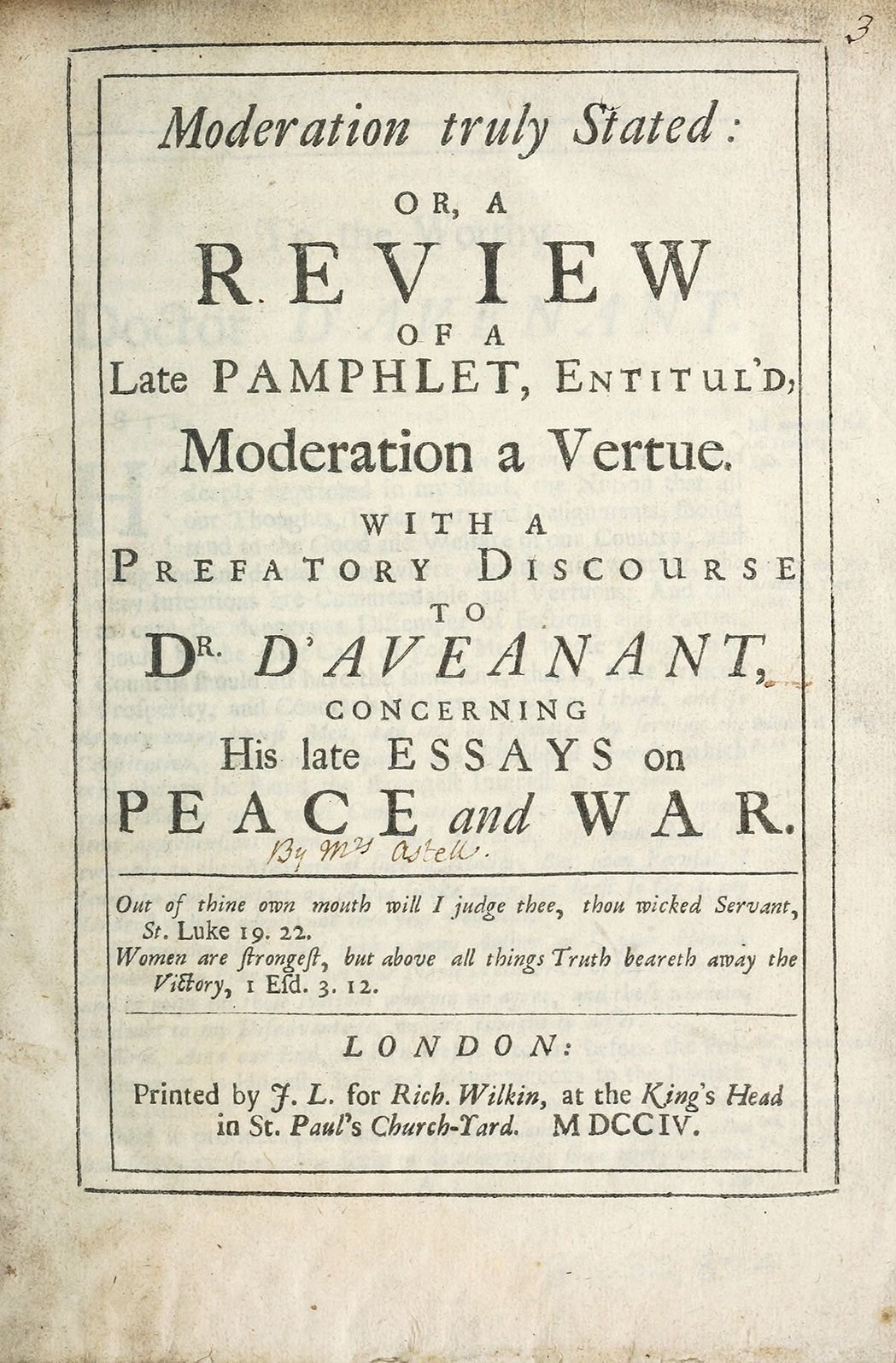
In 1706, Mary Astell borrowed a newly written sermon from Francis Atterbury, a politically connected clergyman whose wife was her friend. He may have expected a courteous response. What came back was a manuscript crowded with objections and proposed corrections. Atterbury complained that Astell’s language was indecent and alarming, and confessed that the prospect of answering her made him uneasy.
The encounter is more than a colourful story about an exacting reader. It reveals a recurring manoeuvre in political argument: when a critic is difficult to answer, attention can be shifted from the force of her claims to the discomfort of her manner. A person whose standing is already uncertain is especially vulnerable to this move. Her bluntness becomes the issue, while the powerful person she challenged is spared the trouble of a reply.
Astell had encountered this treatment before. She was a Tory, a defender of the established Church and monarchy, and also a formidable advocate of women’s intellectual equality. In pamphlets written during the first decade of the 18th century, she criticised Whig writers, including John Locke, as readily as she rebuked men on her own side. James Owen dismissed her as “verbose and virulent” rather than meeting her reasoning in comparable detail.
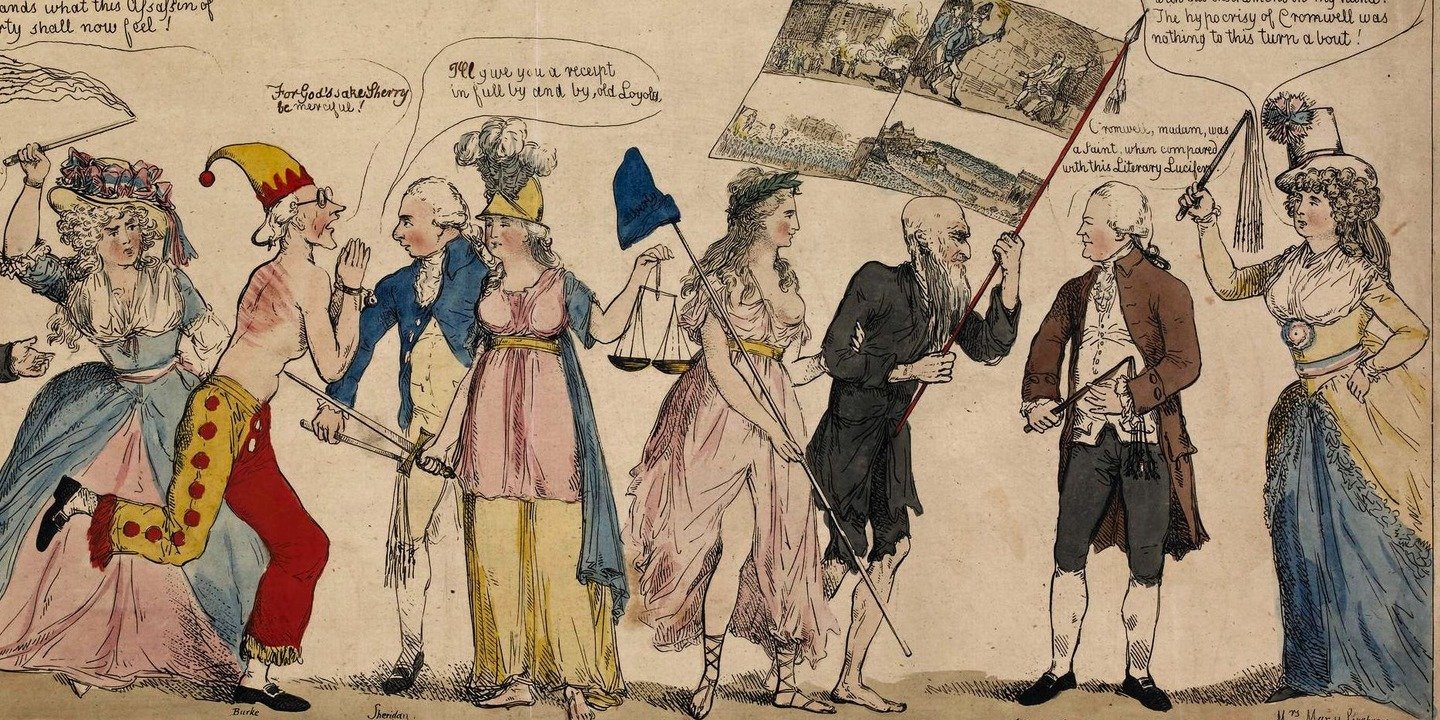
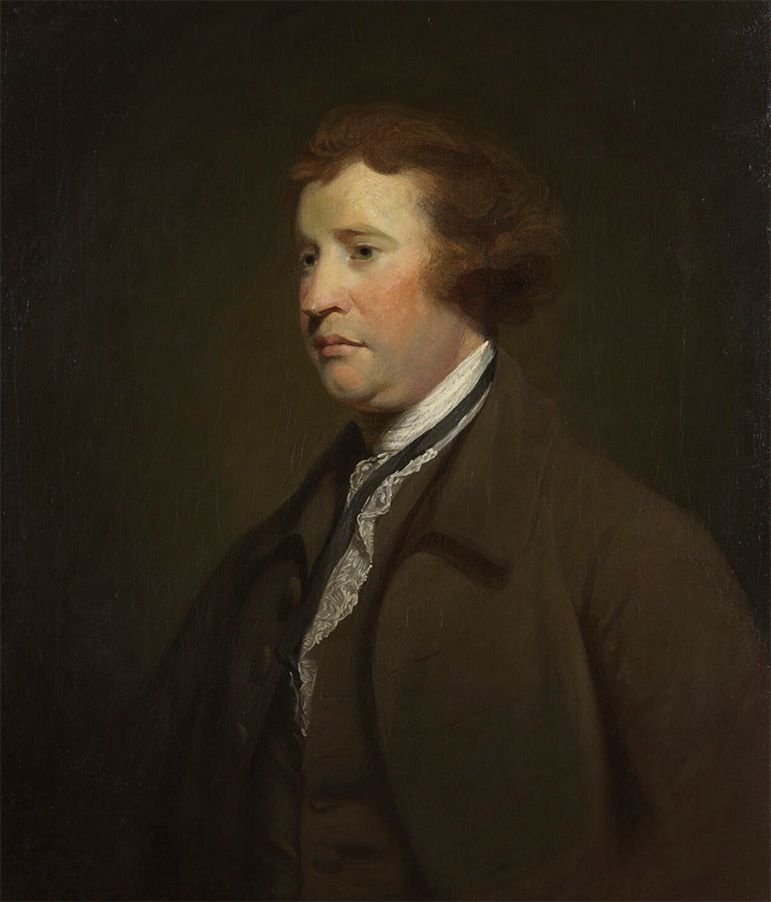
In 1770, the historian Catharine Macaulay faced a strikingly similar response. Her politics could hardly have been further from Astell’s. Macaulay was a republican radical who defended popular liberty, toleration and the possibility of revolution. Yet when she published a sustained criticism of Edmund Burke’s account of political parties, Burke answered privately with gendered ridicule. He pictured her as a scolding warrior woman and admitted that he was reluctant to engage her.
Two thinkers divided by party, religion and political ends thus met the same barrier. Both reached readers in print, yet their authority as political partisans remained contested. Their reception suggests that participation became more precarious when they unsettled conventions set by men who could vote, hold office and treat politics as their proper sphere. Their shared response was radical: they did not deny the charge of zeal. They asked why zeal should count against them at all.
Two Outsiders, Opposite Parties
It is tempting to treat Astell and Macaulay as early members of a single ideological tradition. They were not. Astell defended Anglican orthodoxy, monarchy and passive obedience. Macaulay celebrated republican liberty and distrusted inherited authority. Agreement between them is therefore significant precisely because it cannot be explained by a common programme. One plausible explanation is their shared position as partisans excluded from formal national politics.
Neither could sit in Parliament or vote in national parliamentary elections. Writing, association and public controversy were among the few ways they could influence political life. That distance may have sharpened each thinker’s view of the rules governing admission to debate. Men at the centre could describe moderation as a universal virtue because the existing arrangements already recognised them as legitimate participants. For women, a call to moderation could mean accepting a settlement that excluded them and then presenting that acceptance as good character.
Macaulay’s dispute with Burke makes the conflict unusually clear. Burke defended a durable party connection among people joined by principle. Yet his ideal also carried a social image: political cooperation looked like loyal friendship among reasonable, broadly like-minded gentlemen. Such associates would agree most of the time, restrain their differences and preserve concord. Macaulay’s unsparing pamphlet did not fit that model. It introduced a voice from outside the circle and refused to make the circle’s comfort its measure of success.

Burke’s mockery was not merely an unguarded insult. On this interpretation, it reveals a boundary implicit in his account of political fellowship. A critic could be rejected not because her interpretation of party was false, but because her speech disrupted the harmony through which respectable partisans recognised one another. Politeness became both a style and a credential. Those already inside could decide whether an outsider possessed it.
The Political Ideal of Concord
Burke was part of a wider 18th-century effort to tame partisan conflict. David Hume associated parties of principle with greater zeal and fury, and thought their members would find agreement with fellow citizens harder. The third Earl of Shaftesbury promoted serene and sociable manners as an antidote to political warfare. In different ways, these thinkers hoped friendship, ease and moderation would make disagreement compatible with a stable common life.
There is wisdom in that ambition. Politics conducted only through humiliation and threat can make collective rule impossible. People must sometimes bargain with opponents, revise a demand, and continue living beside neighbours whose convictions they dislike. Courtesy can lower the personal cost of disagreement. A norm against cruelty may protect vulnerable speakers more effectively than it protects powerful ones. Nothing in Astell’s or Macaulay’s challenge requires us to celebrate harassment, dehumanisation or violence.
The trouble begins when a useful restraint is enlarged into a complete theory of legitimate speech. Words such as reasonable, civil and moderate sound as though they describe conduct impartially. In practice, their meaning is judged inside social relationships. A familiar gentleman’s irony may be received as wit; the same sharpness from a woman, servant or dissenter may be called aggression. The ideal can be applied unevenly even when its defenders sincerely believe that the rule is the same for everyone.
Concord, then, has a politics of its own. Harmony describes the absence of audible conflict, not necessarily the presence of justice. A room can become quiet because everyone has been heard and reached an honest settlement. It can also become quiet because the people most burdened by the settlement have learned that objection will cost them respect, employment or safety. From the centre, both rooms may look equally peaceful.
This is why Astell’s question—who gets to judge?—cuts deeper than a defence of rudeness. Standards of manner need interpreters, and interpreters occupy positions within the order they assess. Shaftesbury could endorse ridicule when exercised within his norms of good manners. Astell doubted that a woman or domestic servant would be granted the same licence when speaking upward to a household master. The rule’s apparent neutrality concealed unequal permission to use it.
In Mere Civility (2017), political theorist Teresa Bejan argues that demanding forms of civility in the early modern world could exclude dissenters by setting a threshold that insiders were best placed to satisfy. Her thinner ideal of “mere civility” aims to preserve the possibility of common political life amid fundamental disagreement without demanding warmth or consensus. Astell and Macaulay push the challenge further. Even a minimally civil exchange can remain unfair if it assumes that every participant ought to value reconciliation equally, regardless of what the existing agreement asks them to endure.
When Moderation Guards the Gate
For a person already recognised as a political equal, compromise may be a prudent way to share power. For a person whose equality is the disputed question, compromise can ratify the very hierarchy under examination. Imagine a debate in which one side’s standing is secure and the other side must bargain over whether she counts as a competent speaker. A midpoint between those positions is not neutral. It can preserve part of the exclusion and call the result balance.
Macaulay encountered this problem in Burke’s distinction between practical politicians and speculative thinkers. Burke suggested that people immersed in government understood the means of political action, while observers at a distance could be naive about how institutions actually worked. The distinction contains an important truth: administration develops knowledge that abstract theory can miss. But it also favours those whom the system has already admitted, allowing political access to become evidence that its holders deserve authority.
Macaulay reversed the argument. Distance from office, she maintained, could expose interests that participants had learned not to see. The practical gentleman might possess experience, but he could also be shaped by patronage, ambition and loyalty to colleagues. Exclusion did not automatically make an outsider correct. It did give her a different angle on the system and fewer reasons to mistake its conventions for natural limits.
Astell and Macaulay therefore refused to defend themselves by proving that they were mild after all. Astell openly acknowledged the satire and invective in her pamphlets. She preferred an abrasive truth to flattering language that left a falsehood intact. Macaulay likewise saw a partisan’s task as saying truths likely to offend. In their view, honesty, not social ease, was the first obligation of controversy.
That priority can be misused. People routinely call an insult “just honesty” or claim moral urgency as permission to disregard another person’s humanity. Astell and Macaulay offer no reason to accept every performance of anger as righteous. Their work instead changes the test. We should ask what a speaker is arguing, what relation of power surrounds the exchange, whether the speech addresses evidence, and whether the demand for a softer tone would leave a serious wrong conveniently undisturbed.
What Zeal Is Good For
Zeal, in this account, is not volume for its own sake. It is sustained attachment to a cause judged important enough not to trade away for approval. Eighteenth-century critics often used the term for excessive enthusiasm, narrowness and an unwillingness to bend. Astell deliberately reclaimed those features. On fundamental questions, she believed that a conscience should not change direction merely because fashion, advantage or polite company exerted pressure.
Macaulay similarly praised political attachment animated by conviction rather than convenience. Both women thought public action required taking sides. Their claim was not that a partisan must never change her mind. Astell could say that someone persuaded by the opposing case ought to join it. The target was a shallower flexibility: abandoning a position before its reasons have been tested, or splitting a difference simply so that all participants can leave feeling agreeable.
Such firmness is especially valuable when custom does much of injustice’s work. Astell described inherited convention as a force that carries judgement along before reflection begins. Claims about women’s lesser reason appeared self-evident because they had been repeated, embodied in institutions and protected from contradiction. Macaulay likewise saw established arrangements acquiring authority from familiarity. If custom is the opponent, a moderate request to preserve most of it may never reach the assumptions that need to change.
Social reform often depends on people willing to become inconvenient. The histories of abolition, labour organising, women’s suffrage and civil rights combine patient organisation and coalition with participants who rejected the timetable preferred by defenders of the status quo. In The Case for Rage (2021), contemporary philosopher Myisha Cherry defends “Lordean rage”: inclusive, anti-racist anger directed toward structural change rather than revenge.
The relevant contrast is therefore not reason versus emotion. Conviction gives a person reasons to continue when the audience with power would prefer fatigue. Anger can direct attention toward an injury; evidence can explain it; organisation can turn the judgement into action. Emotion without discipline may scatter. Discipline without felt urgency may accept delay forever. Righteous zeal names their possible alliance.
None of this makes offence an achievement. A cruel phrase does not become politically useful because it provokes. Zeal earns democratic value when it remains connected to a defensible object, treats persuasion or accountability as possible, and accepts standards of truth. The purpose is to prevent etiquette from deciding who can be heard, not to replace etiquette with domination by whoever can shout longest.
Firm Conviction Can Still Listen
The most interesting evidence for Astell and Macaulay’s model lies in how they argued. Their fierce pamphlets did not float above their opponents’ claims. They worked through particular texts, cited passages, followed lines of reasoning and identified points of disagreement. Astell gave Owen’s case the detailed attention that he declined to give hers. Macaulay wrote at length against Burke, while Burke’s private ridicule avoided the substance of her challenge.
This pattern unsettles the assumption that moderation produces listening and zeal prevents it. A person who wants to persuade an opponent must understand what the opponent believes. By contrast, someone primarily committed to the comfort of a recognised circle can dismiss an unfamiliar voice as improperly mannered. The first speaker may sound severe while remaining intellectually engaged; the second may sound gracious while refusing an encounter.
Commitment and open-mindedness are compatible if open-mindedness is defined carefully. It cannot require treating every position as equally plausible in advance. Philosopher Jeremy Fantl instead treats open-mindedness toward an argument as a conditional willingness to be significantly persuaded when, after sustained attention, its steps remain compelling and no flaw can be found. His broader account also recognises that not every counterargument merits engagement. An open mind, on this view, need not be empty or endlessly undecided.
Philosopher Lea Ypi has likewise argued that durable partisan association can sustain political commitment across time, both motivationally and epistemically, while acknowledging a possible trade-off with individual independence. Collective projects extend through setbacks. They depend on people who can distinguish a serious refutation from unpopularity, a strategic adjustment from abandonment, and doubt from defeat. The partisan who revises at every hostile reaction cannot sustain a movement. The partisan who refuses every possible correction turns conviction into dogma. The difficult virtue lies between those failures.
Astell supplied a demanding version of that balance. Do not accept an authority’s opinion merely because he asserts it; examine the reasoning. Yet if examination shows the other side to be right, change sides. This is not centrism. A person may move from one firm position to another rather than settling permanently in the middle. What matters is that allegiance follows considered judgement instead of social pressure or the wish to appear agreeable.
Polite Friendship Has Its Own Risks
A politics organised around friendship promises trust, loyalty and cooperation. It can also protect a group from correction. Friends often know how to preserve one another’s dignity, when to leave a premise unchallenged and which disagreement might threaten belonging. Those sensitivities make relationships possible. In a party or governing circle, however, the same habits can turn into flattery and groupthink.
Astell distrusted associates who expected loyalty to their principles and passions whether right or wrong. People surrounded by agreeable allies might never hear about their errors because nobody wished to offend them. Her alternative was not permanent hostility. It was a preference for an identifiable opponent over a companion whose apparent goodwill concealed disagreement or self-interest. An honest adversary can provide a form of scrutiny that a loyal friend withholds.
Both women also challenged people on their own side. Astell criticised the Tory writer Charles Davenant; Macaulay publicly disagreed with the radical John Wilkes. These disputes matter because they show zeal as attachment to principles rather than automatic obedience to a team. Partisan identity can organise action, but it should not confer immunity. A movement unable to criticise its champions becomes another polite circle guarding its internal peace.
The distinction helps clarify modern polarisation. Ideological polarisation means that political positions move further apart. Affective polarisation concerns dislike, distrust and social hostility between camps. The two can reinforce each other, but they are not identical. Strong disagreement does not by itself end democratic argument. Refusing to regard opponents as people worth answering may do more immediate damage, even when everyone speaks in professionally measured language.
Their model suggests a response: intensify engagement rather than blur every difference. State the conflict accurately, defend the principle openly, study the opposing case and remain willing to discover an error. This may increase visible disagreement while reducing the temptation to retreat into insulated groups. It replaces the fantasy of effortless consensus with a more strenuous respect—the respect involved in taking another person’s argument seriously enough to answer it.
A Democratic Standard Beyond Tone
Today, appeals for civility arrive from many political directions. Some answer genuine deterioration: threats, targeted abuse, conspiratorial accusation and dehumanising speech make participation dangerous and drive people from public life. A defence of zeal should not obscure those harms. Democratic argument needs boundaries that protect persons, access and the possibility of reply.
But tone cannot carry the full burden of judgement. A serene argument can defend a brutal arrangement; an angry one can expose a fact everyone else has learned to avoid. The proper questions begin after noticing the manner. Is the claim true or well supported? Does it identify a real injustice? Is the speaker criticising conduct and institutions, or denying the humanity of a group? Does the intervention invite answer, demand accountability, or aim only to terrorise?
Power must be part of the assessment. The same interruption can carry different weight when used by an official who controls the room and by a person whom procedure has repeatedly excluded. This does not give marginalised speakers a blank cheque, nor does it make identity a substitute for evidence. It recognises that formal equality of rules can reproduce unequal results when participants begin with radically different authority, exposure and risk.
Institutions can respond without appointing taste as the guardian of dissent. Meetings and platforms can enforce clear rules against threats, personal harassment and discriminatory abuse while allowing direct criticism, moral anger and persistent questioning. Moderators can focus on whether contributions address the issue and leave room for response rather than whether a speaker sounds sufficiently pleasant. Procedures can distribute time, make reasons public and create routes to challenge the people who set the agenda.
Listeners have obligations too. Calling a critic shrill, divisive or uncivil should never substitute for identifying the flaw in her claim. Before judging temperature, an audience can ask what experience produced it and what would remain unspoken if calm were the price of admission. Equally, a zealous speaker can ask whether the language chosen clarifies a wrong, strengthens collective action and keeps persuasion possible. Righteousness is a discipline, not a mood exempt from reflection.
Astell and Macaulay do not provide a universal licence for political fury. They offer a warning about any public culture that mistakes comfort for fairness. Their cases illustrate how easily insiders can turn preferred manners into evidence of merit, then describe outsiders’ resistance as proof that exclusion was justified. They also show that fierce conviction can coexist with textual care, intellectual accountability and a real willingness to answer an opponent.
Their most durable lesson is that democratic inclusion may sound disorderly. When people previously treated as spectators enter an argument, they do not merely add more voices to an unchanged conversation. They challenge its subjects, its priorities and its standards of respectable conduct. The resulting friction is not automatically democratic health, but neither is it democratic failure. Sometimes it is the audible sign that a gate has opened.
In a perfectly equal public sphere, zeal might lose some of its necessity. No one would need unusual force merely to establish a right to speak, and no group could set the terms of reasonableness in its own image. Many present-day institutions still fall short of that ideal. Where voice and standing remain unequal, insisting on moderation can preserve harmony among the already included by transferring the cost of that harmony to everyone else.
A stronger democratic ideal would protect people from cruelty without protecting power from discomfort. It would welcome commitment without confusing stubbornness with truth, and encourage revision without making compromise a ritual. Above all, it would judge political speech by the seriousness of its reasons and the world it asks us to share. Under that standard, righteous zeal is not the enemy of debate. Properly disciplined, it is one way excluded people enter debate and require it to become real.
The argument in one sentence: democratic debate needs safeguards against abuse, but it also needs principled, persistent dissent that refuses to let the comfort of insiders define the limits of political voice.