











SMART RENOVATION
Six popular kitchen upgrades deserve a closer look before they become expensive, permanent parts of the room.
Kitchen renovations are full of seductive ideas. A dedicated coffee station promises smoother mornings, handle-free cabinets look impeccably modern, and richly veined stone can make a mood board feel complete. A beautiful photograph, however, cannot show how a room will handle wet hands, hurried dinners, crowded counters, and years of daily use. Renovation choices are different from accessories: once plumbing, stone, or custom cabinetry is installed, changing direction becomes costly.
The better question is not whether a feature looks current, but whether it supports the way the household actually cooks. Before committing, consider how often it will be used, what it costs to install and maintain, and whether it limits future changes. Think about cleaning, replacement parts, and the amount of usable space the idea takes away. These six choices are not automatically wrong; they simply ask for more scrutiny than their polished appearance suggests.
Start With the Long View
Before approving any permanent upgrade, imagine an ordinary Tuesday rather than the finished reveal. Who cooks, where groceries land, which appliances earn counter space, and what gets touched with messy hands? A worthwhile renovation should reduce friction on that average day. If an idea needs a special routine to justify its cost, a flexible alternative may be the smarter investment.
1. Build In Convenience Carefully
Specialty ice makers, integrated espresso machines, trash compactors, and single-purpose beverage centers can feel luxurious. They also claim cabinetry, require plumbing or electrical work, and may be expensive to repair. Check the expected service life, warranty access, and whether a standard-size replacement could fit the opening. In a compact kitchen, every fixed appliance competes with storage and work space, so enthusiasm should be measured against realistic weekly use.
Coffee lovers do not have to abandon the idea of a station. A concealed niche with outlets, adjustable shelves, and doors can keep supplies together while remaining useful later. If habits change, the same cabinet can become breakfast storage, a baking zone, or a place for small appliances rather than an obsolete monument to one routine.
2. Give Sleek Cabinets Something to Grab
Hardware-free fronts create an uninterrupted line, but the kitchen is a demanding place for a touch-only finish. Fingers carry water, oil, flour, and sauce; repeated contact concentrates grime on the same edges. Over time, push mechanisms can also need adjustment, while painted lips and beveled edges may show chips where hands grab them most. Even a small alignment problem becomes noticeable across an otherwise seamless bank of doors.
Minimal hardware offers much of the same calm look with less direct wear. Slim edge pulls or discreet tabs protect the cabinet face, are easier to clean, and can be replaced without rebuilding the doors.
Match Materials to Real Life
3. Choose Counters You Can Live With
Countertops receive heat, spills, knives, grocery bags, and constant wiping, so maintenance matters as much as beauty. Marble develops etching and stains easily unless the household is comfortable with patina. Butcher block adds warmth, yet it needs regular oiling or sealing and extra attention around water, hot pans, and strongly colored foods.
For a lower-maintenance work surface, compare durable options such as quartzite and quartz, then study the care instructions for the exact product. Take large samples home and test them against common spills, daylight, and the cleaners you actually use. A delicate material can still play a supporting role on a small serving ledge or low-traffic section, where its character is visible without asking the busiest counter to behave like furniture.
4. Put Painted Cabinetry Where It Lasts
Painted cabinets bring immediate color, but lower doors and drawers take the hardest knocks. Shoes, bags, pets, vacuum cleaners, and dropped utensils all meet them at close range. When paint chips, a pale primer or substrate may become more obvious than a small dent in naturally finished wood.
A mixed approach can preserve the idea. Use color on upper cabinets, a tall pantry, or another less exposed area, then choose a forgiving finish below. Ask for a labeled touch-up sample before installation so small damage can be matched later. The room still gains personality, while the surfaces closest to daily traffic are easier to maintain.
Protect the Kitchen’s Future
The most costly mistake may be the one that quietly removes options. Once storage, counter area, or adaptable cabinetry disappears, recovering it usually means another round of construction. A renovation should make the kitchen work harder now without narrowing what it can do later.
5. Do Not Trade Storage for a Photograph
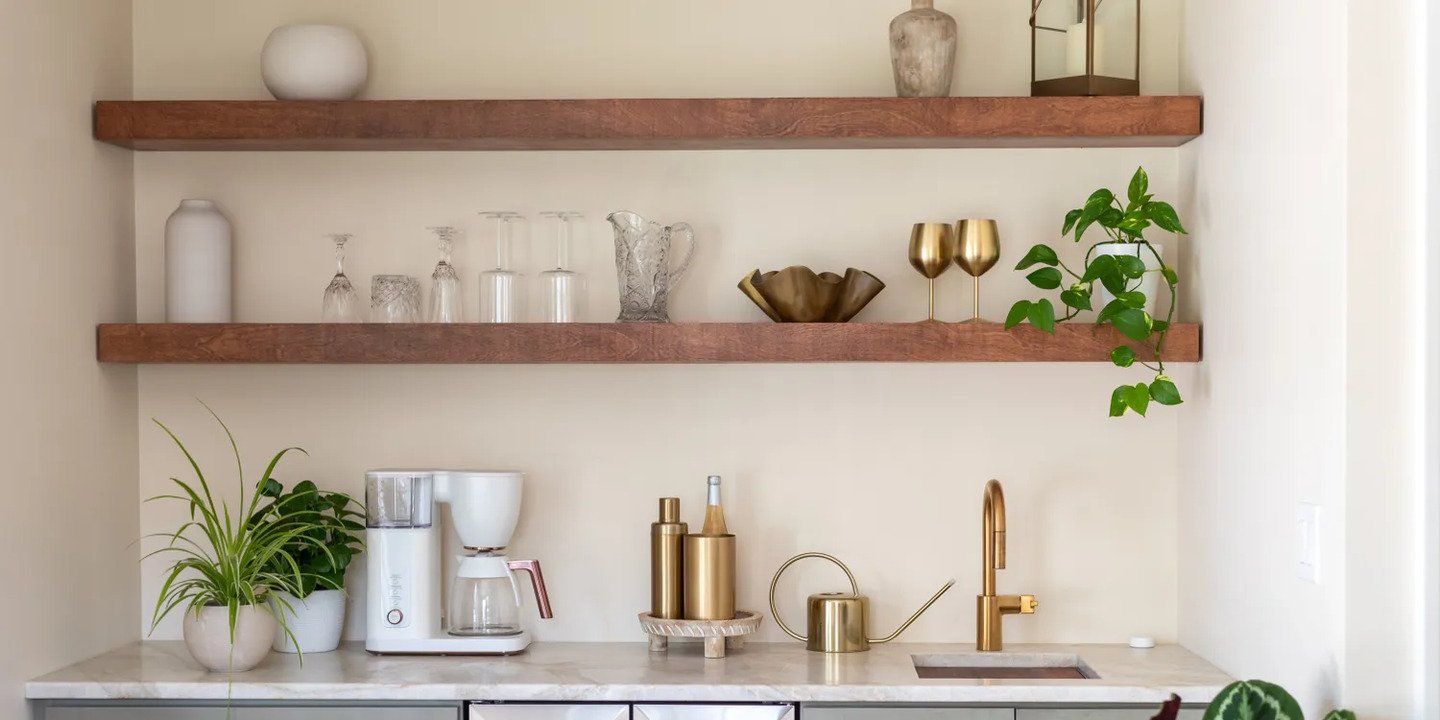
Open shelves can make a wall feel lighter, but replacing closed cabinets with them also exposes dishes to dust and reduces the room available for less attractive necessities. Single-purpose organizers and oversized display zones can create the same problem, especially when they displace pantry goods, cookware, or preparation space. The lost capacity may be greater than it appears once doors, drawers, and adjustable shelves are removed.
Inventory the kitchen before changing the layout. Measure what must return, keep frequently used items near their point of use, and add open display only after practical storage is secured. A few shelves can be charming; a shortage of cabinets rarely is.
6. Keep Trends on the Replaceable Layer
Bold finishes can make a new kitchen memorable, yet the fastest-moving trend is risky when it covers the most expensive elements. Cabinet boxes, flooring, and countertops are disruptive to replace, so they benefit from materials and proportions that can support several styles over time.
Bring the current mood through paint, pendants, stools, hardware, art, and small accessories instead. Those layers can carry strong color or an unusual shape, and changing them later does not require demolition. This approach also makes it easier to refresh the room gradually rather than replacing several costly surfaces at once. Timeless does not have to mean bland; it means giving personality a practical exit route.
The best kitchen investment is not the feature that photographs most dramatically. It is the collection of choices that still feels useful, durable, and adaptable after the novelty fades.