











SEASONAL RESET
Seven thoughtful shifts can make familiar rooms feel richer, softer, and ready for the cooler months—without a full redesign or a cart full of seasonal decorations.
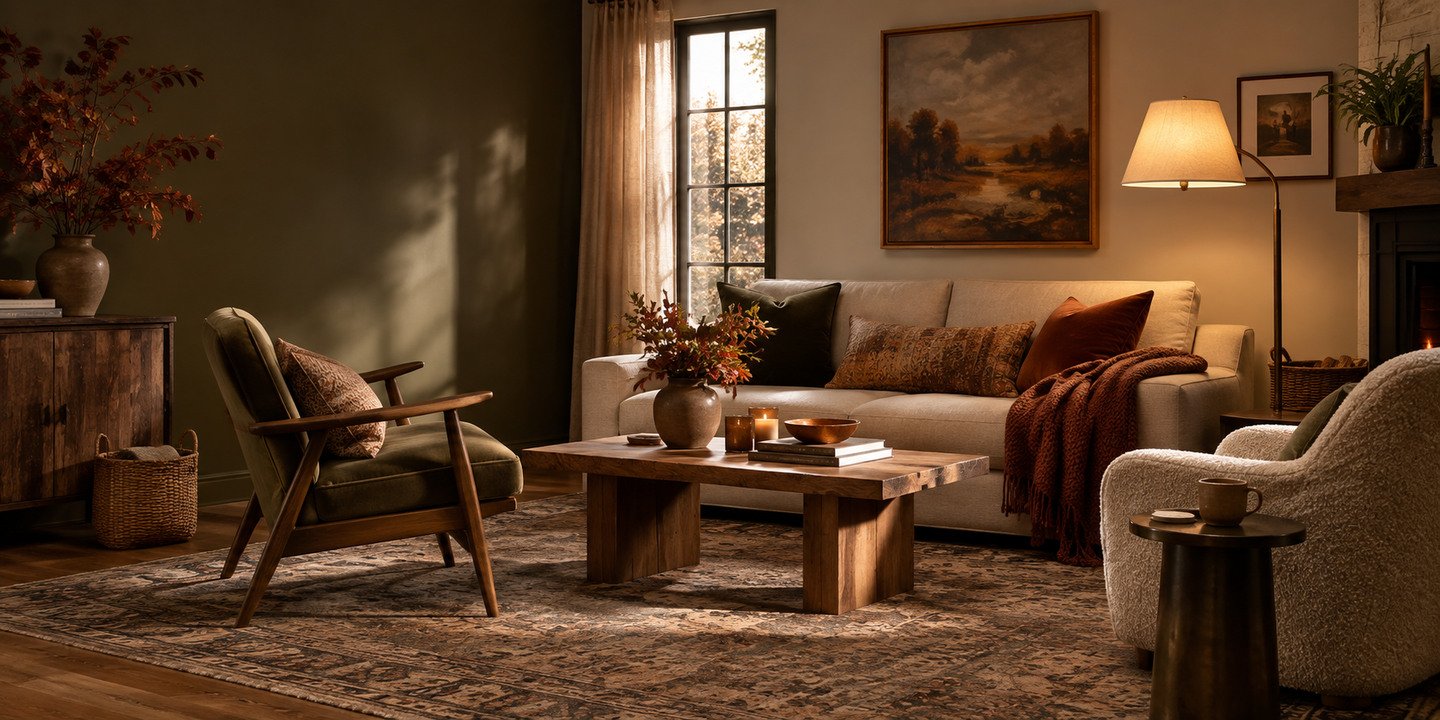
Fall decorating is often treated like an invitation to add more: more pillows, more pumpkins, more objects on every open surface. A convincing seasonal change can be much quieter. Moving a lamp, changing the direction of a chair, or bringing a wool throw out of the bedroom can alter the atmosphere of a room while keeping it recognizably yours.
The aim is not to rebuild the house for a few months. Instead, help familiar spaces feel warmer as daylight shortens through deliberate changes to color, light, surfaces, and seating.
Begin With a House-Wide Edit
Start by walking through your rooms before buying anything. Look for pieces that already carry the mood you want: a dark ceramic vase, a wooden bowl, a substantial blanket, or a leather tray. Moving them into the living room or another busy space gives them a new role and creates an autumnal feeling at no cost. This is also a useful moment to put away lightweight accents that make the room feel visually busy.
1. Let Color Travel
Artwork can do more seasonal work than novelty decor. Bring pieces with olive, rust, wine, tobacco, or deep brown tones into the rooms where you spend the most time in fall. They do not need to match the upholstery. Repeating one or two colors elsewhere—in a book spine, cushion, or vase—is enough to make the palette feel deliberate.
Change the Light Before the Decor
2. Move Lamps Where Evenings Happen
As evenings arrive earlier, lighting becomes one of the strongest mood-setting tools in the house. Relocate a table lamp to a dark corner, or place a floor lamp near the chair where someone actually reads. Several low, gentle pools of light usually feel more welcoming than one bright ceiling fixture.
3. Give an Existing Lamp a New Shade
A lampshade swap can deepen that effect without replacing the lamp itself. Consider a woven shade, a toile or patterned fabric, a pleated edge, or subtle fringe. A lantern-style lamp can also introduce a rustic note while keeping the overall look clean. Choose warmth and character, but make sure the light remains useful.
Edit the Surfaces You See Most
4. Simplify the Coffee Table
Rather than filling a coffee table with seasonal accessories, remove a few things and compose one compact arrangement. A short stack of books, a candle, and a stoneware bowl may be all the table needs. Materials such as wood, ceramic, stone, aged metal, and thick glass add weight and texture, so a small grouping can feel more grounded than a crowded display.
5. Carry the Mood Into the Kitchen
The kitchen is an easy place to make fall visible in daily life. A warmer hand towel, softly scented soap, colored glassware, or an earthy serving tray can introduce the season without reducing workspace. For a stronger accent, choose something useful after autumn, such as a sculptural Dutch oven, sturdy platter, or versatile serveware. Practical objects feel less like temporary props.
Arrange the Room for Gathering
6. Make the Seating Feel Social
Furniture placement changes the emotional temperature of a room. Angle accent chairs toward the sofa instead of the television, or bring them slightly closer together to make conversation feel natural. Keep a pouf or stackable stool nearby for an extra guest, and leave enough open space for people to move comfortably. The goal is intimacy, not a cramped floor plan.
Finish With Texture, Not Theme
7. Shop the Softest Parts of Your Home
Wool, velvet, leather, wood, and heavier weaves naturally suggest shelter and warmth. Use them in a few touchable places—a throw over the sofa, a velvet cushion on a chair, or a wooden object on the table—rather than repeating an obvious fall motif throughout the house.
When lighting, color, seating, and texture support one another, the seasonal shift feels calm and collected. Best of all, the room can move into winter with only a few small adjustments.