











GAMES, CULTURE & CREATIVE DIRECTION
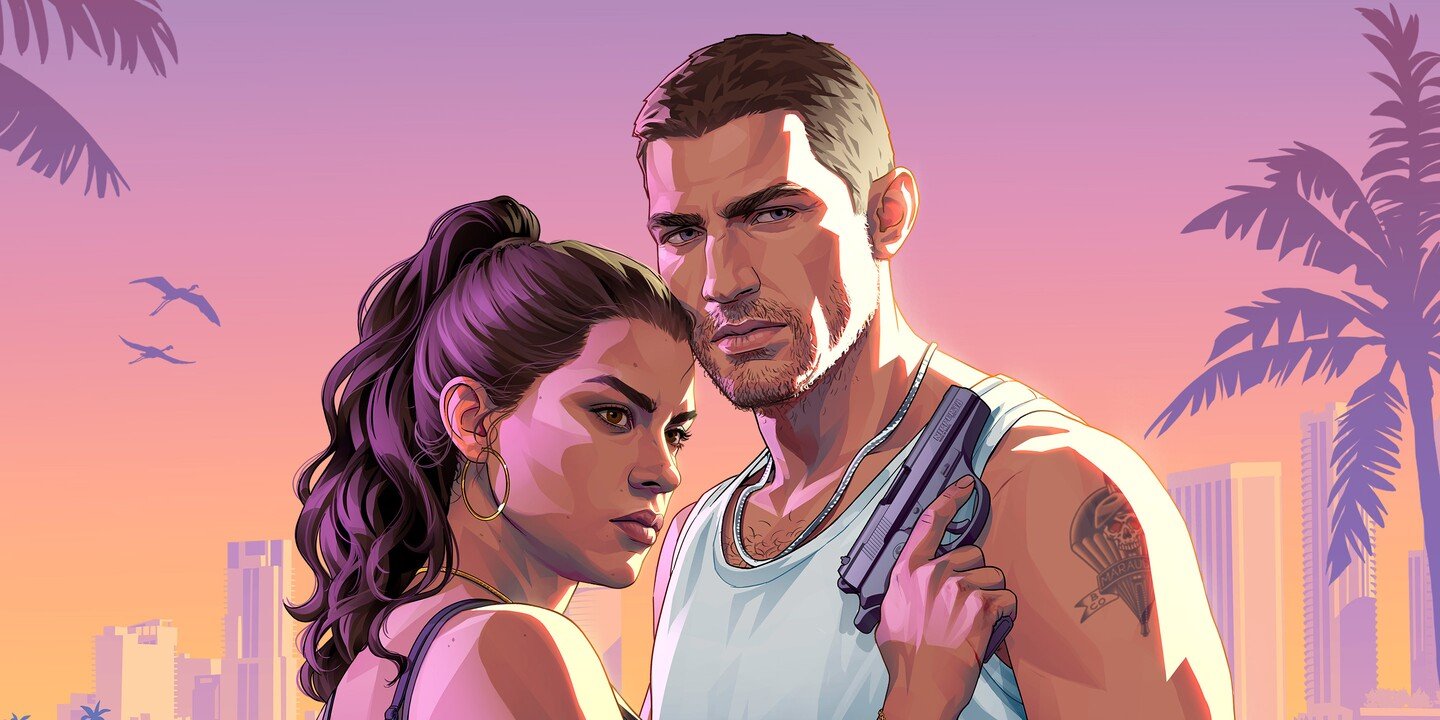
Rockstar’s extended look at GTA 6 presents more than a return to Vice City. Through Lucia, a richly observed Florida and a launch built at blockbuster scale, it shows how one game can become a test of representation, world-building and creative ambition.
Grand Theft Auto has always sold a fantasy of freedom: take the car, ignore the rules and discover what happens when a city becomes a playground. Yet for many players, the freedom promised by GTA 5 came with a conspicuous limit. Its three single-player story protagonists were men; although GTA Online allows women player-characters, the campaign offered no comparable woman lead. Anyone looking for a woman’s perspective in the story had to supply it from outside the game.
GTA 6 changes that centre of gravity. Lucia Caminos shares the lead with Jason Duval, and Rockstar’s nearly 27-minute Extended Look—premiered on Netflix and later published on Rockstar’s official YouTube channel and website—puts their partnership at the heart of the story. The result does not automatically settle every criticism the series has accumulated. It does, however, alter who gets to drive the action, whose decisions shape the plot and which audience can see itself occupying the most important seat.
The significance is amplified by the size of the property. Take-Two reported in May 2026 that GTA 5 had sold in nearly 230 million units worldwide, and the next instalment is being treated as a global entertainment event rather than a specialist games release. A protagonist in a project of this reach becomes more than one design decision. She influences advertising, fan art, streaming, commentary and the visual language that will circulate for years.
That makes the available material worth reading as a creative document. Two major trailers, key art and the longer showcase reveal how Rockstar is framing character, place and tone before players can test the final work. Rockstar and Take-Two name 19 November 2026 as the release date for PlayStation 5 and Xbox Series X|S; no PC release date has been announced. Promotional footage cannot tell us how every mission will feel, but it offers a substantial view of what the studio wants the game to mean.
A Different Centre of Gravity
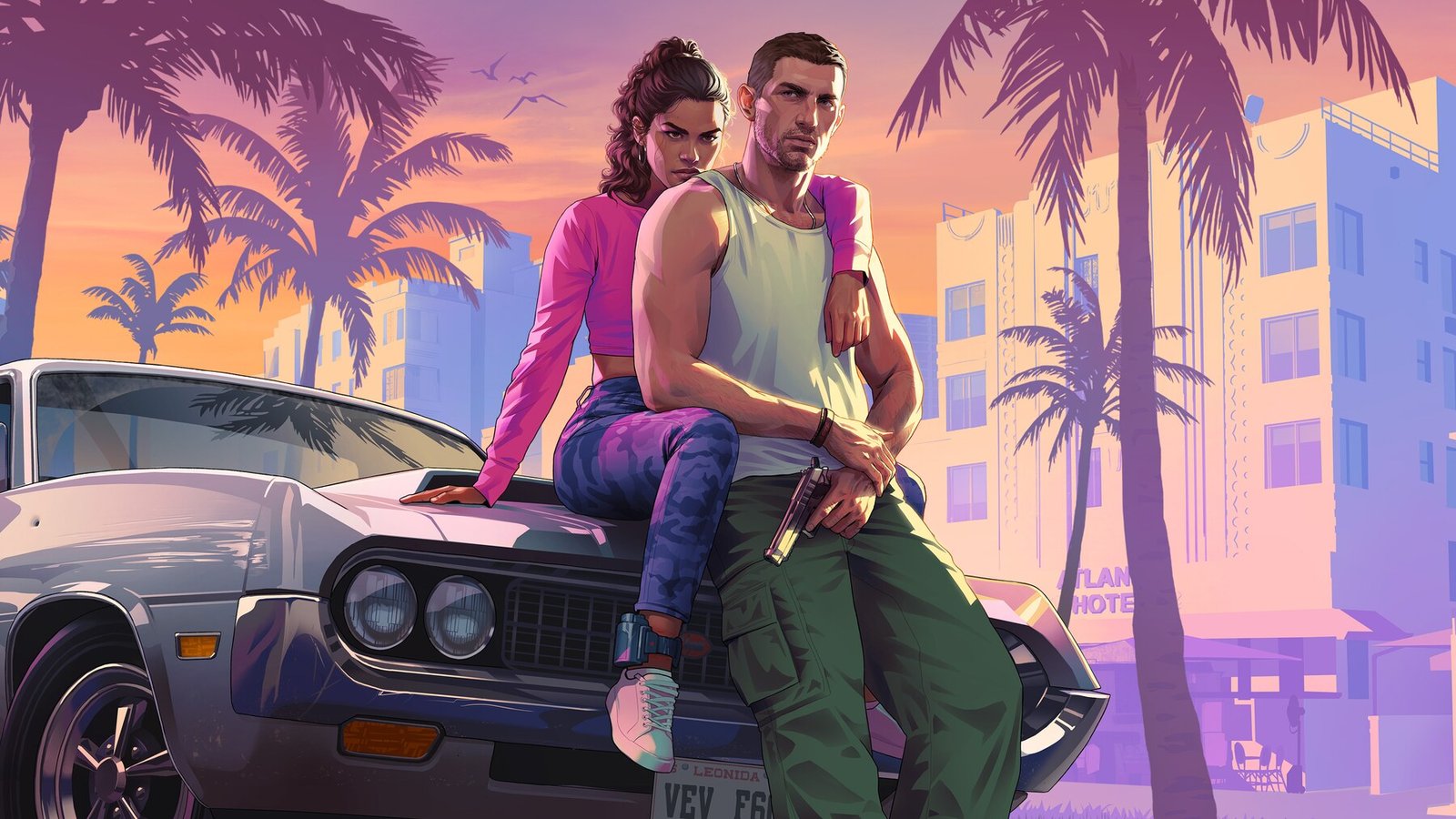
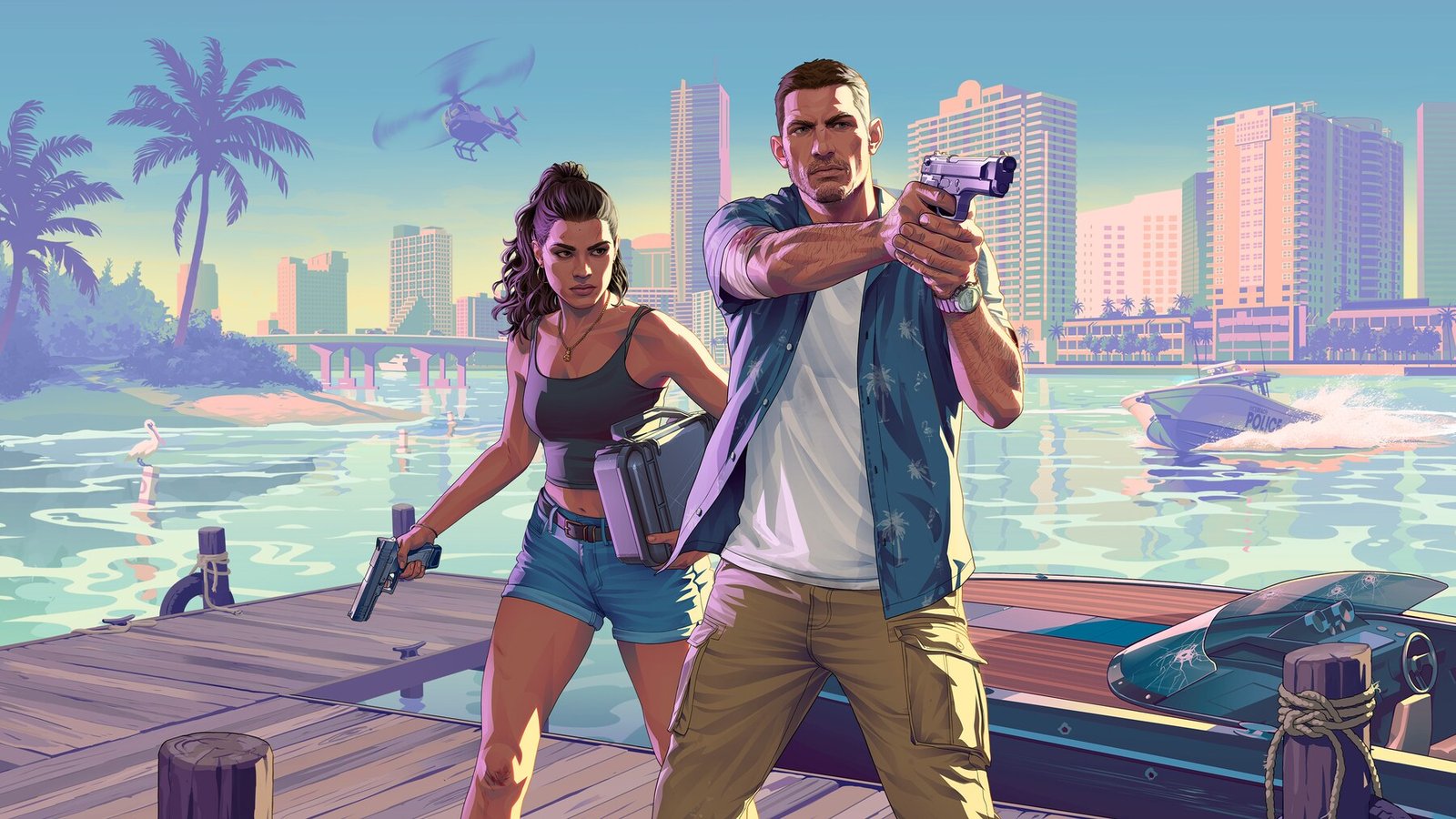
Lucia is not presented as an accessory waiting at the edge of Jason’s adventure. She commits crimes, makes plans, fights and negotiates the emotional stakes of their relationship. Rockstar presents Lucia and Jason as dual protagonists, although the finished game will determine how their playable roles and switching system actually work. Even at the level of promotion, placing her within the central pair changes the established silhouette of a GTA hero.
Representation at this scale matters because games do not merely reflect popular culture; they help manufacture its images. Previous instalments used women heavily as scenery, jokes and symbols of excess. GTA 6 still operates within a world full of bodies, nightlife and deliberate provocation, so the male gaze has hardly disappeared. Lucia is conventionally attractive, often styled for glamour, and some promotional compositions appear to place Jason in the visually dominant position.
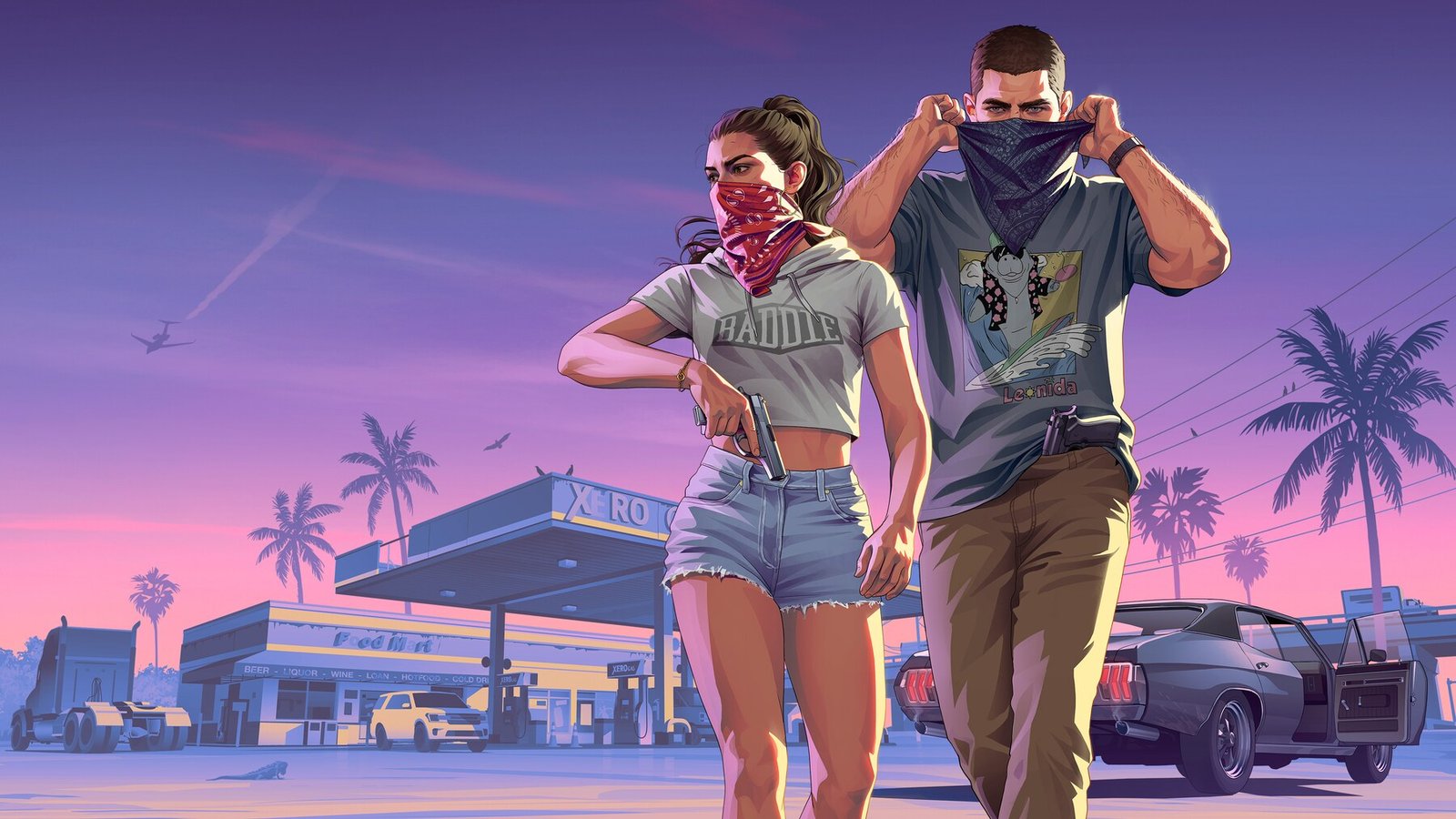
Even so, glamour and agency are not mutually exclusive. The footage gives Lucia a criminal history, an electronic tag, a temper and a clear appetite for action. Her relationship with Jason appears to provide the narrative framework rather than a romantic subplot attached after the fact. The creative question is therefore not whether she looks feminine, but whether the story allows her desires, mistakes and contradictions to direct what happens.
Character Before Symbol
But a prominent woman is only the beginning of the test. A character can carry enormous symbolic weight and still feel thin once the story starts. What makes the extended footage encouraging is its attention to behaviour: Lucia can be forceful during a confrontation, playful while preparing to go out and vulnerable in private moments with Jason. Those shifts suggest a person rather than a demographic assignment.
One sequence places the couple in a saturated pink apartment while Lucia considers what to wear for drinks at a rooftop venue. In another, she handles an attacker at close range. The contrast may sound minor beside robberies and car chases, but it widens the available register. Domestic comedy, intimacy and ordinary indecision can reveal character just as effectively as a spectacular set piece.
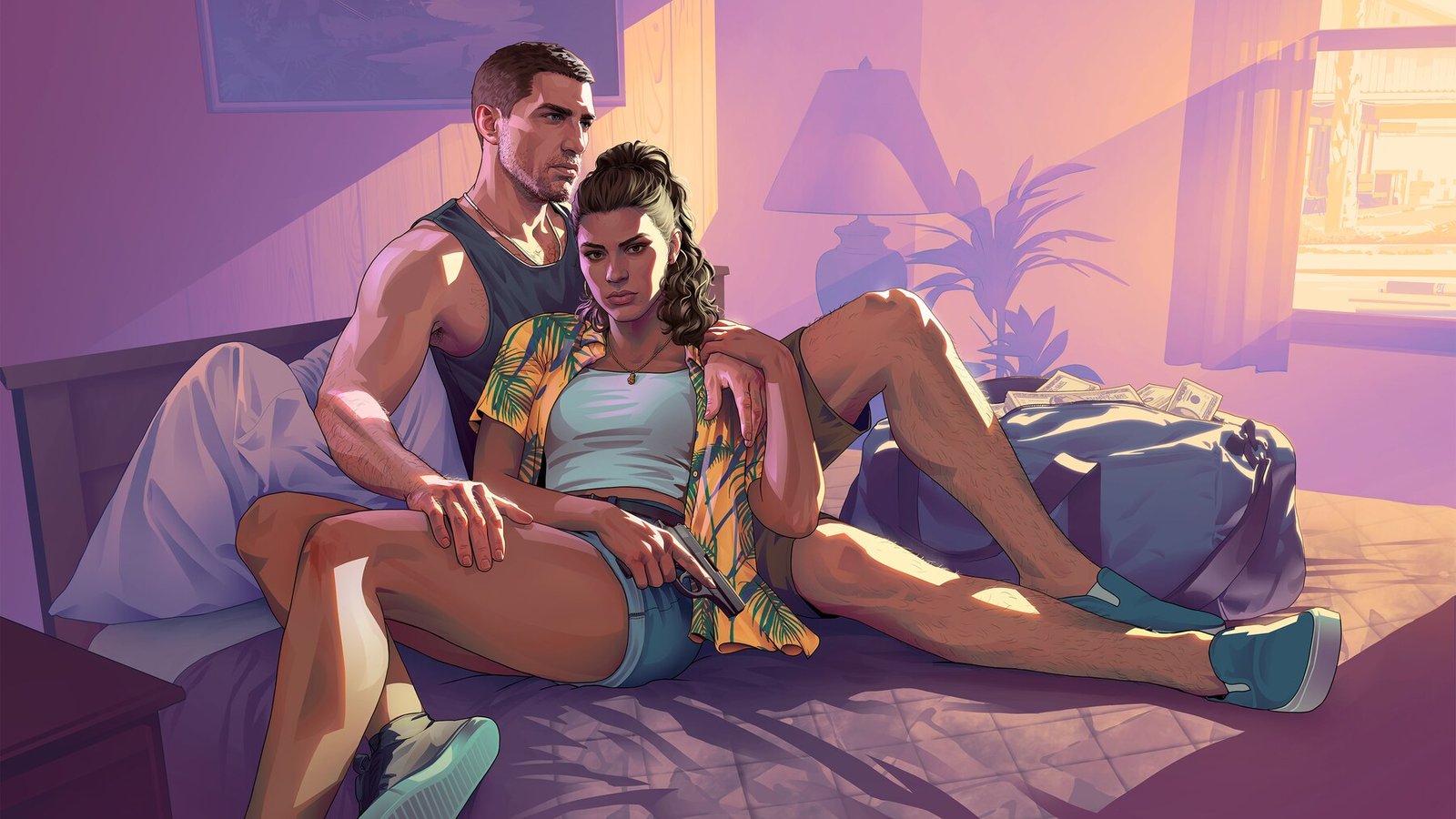
The final two-person structure concentrates conflict. Two people can share loyalties, conceal information, quarrel over risk and force the player to interpret the same event from different positions. The familiar outlaw-couple template gives Rockstar an immediate dramatic engine, but the quality will depend on whether both partners remain fully realised.
The visual craft supports that ambition. Faces catch and lose light subtly, hair responds to movement and clothing appears to possess convincing weight. None of these advances is valuable simply because it is technically expensive. Their purpose is expressive: a glance, hesitation or physical distance between two figures can communicate something the dialogue leaves unsaid. High fidelity becomes storytelling when the detail helps a player read emotion.
The Conversation Around the Controller
Discussion surrounding GTA 6 has not evolved as quickly as the cast. A prominent strand of trailer analysis concentrates on vehicles, firearms, strip clubs and map dimensions. Those subjects belong to the franchise and there is nothing inherently wrong with enjoying them. The imbalance becomes visible when Lucia is reduced to Jason’s girlfriend even though the marketing repeatedly presents them as co-leads.
Launch humour tells a similar story. Memes imagine men abandoning partners and jobs for release week, usually while a weary woman watches from a doorway. The joke depends on recognising a familiar domestic arrangement, but it also assumes who holds the controller. Women accounted for 46% of U.S. players in the Entertainment Software Association’s 2026 survey, although participation varies by genre and platform, and a female lead may invite some who felt little interest in GTA 5 to reconsider the series.

The surrounding culture cannot be separated from gaming’s record of hostility toward women. Contemporaneous reporting documented harassment and threats against women in games during the 2014 Gamergate campaign, including Zoë Quinn, Anita Sarkeesian and Brianna Wu. That history turns an apparently small question—who is assumed to be waiting for GTA 6?—into a question about belonging.
This does not mean every male fan is excluding someone, or that a joke about taking leave from work carries malicious intent. Culture is often reproduced without a conscious gatekeeper. Repeated images, habits and assumptions define the default audience until alternatives appear unusual. The most useful response is not to police every meme, but to notice when the conversation describes a narrower public than the game itself is trying to reach.
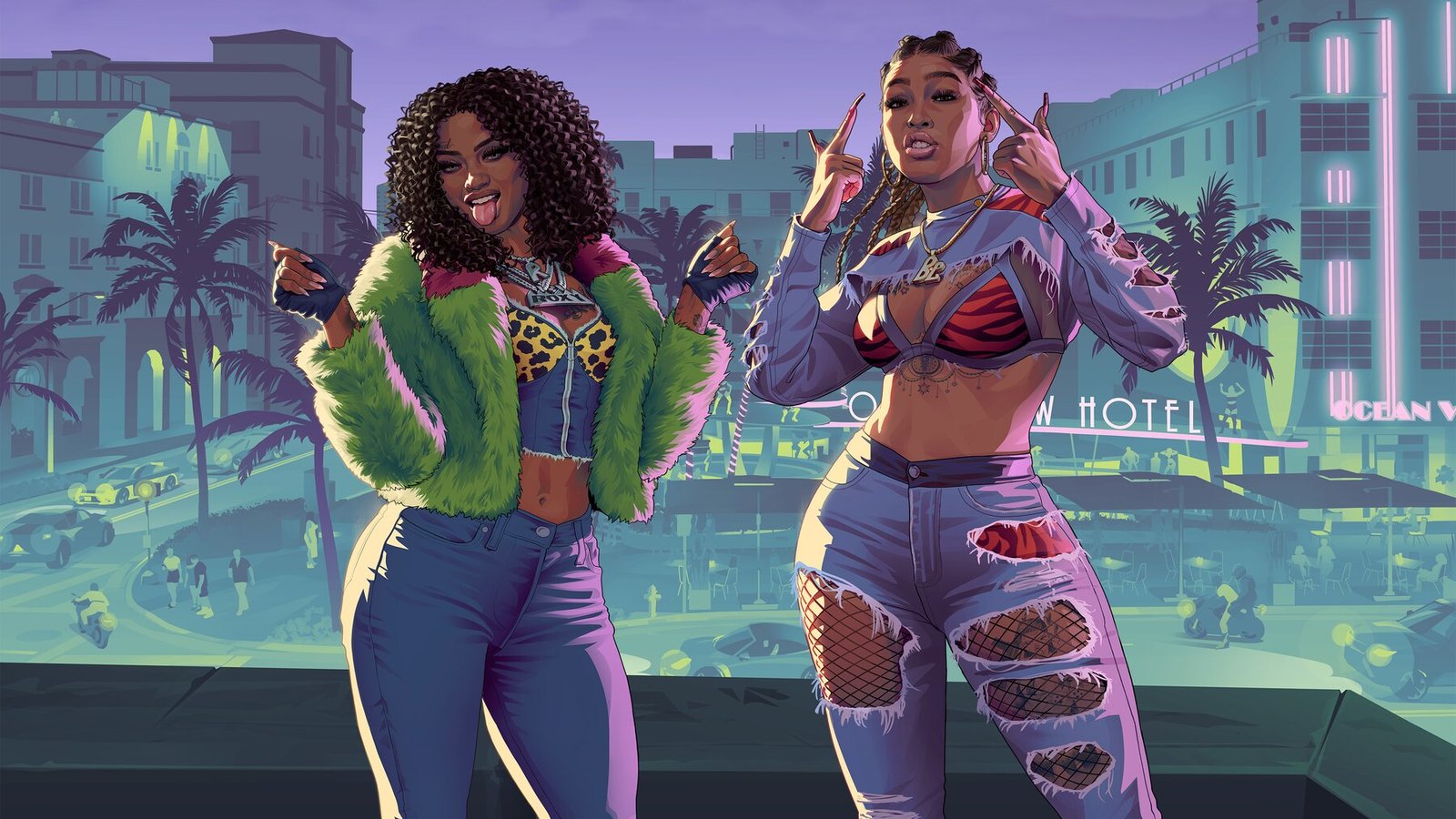
Lucia therefore has a role beyond representation inside the fiction. She gives broadcasters, reviewers, illustrators and players a chance to broaden the language used around the launch. If coverage continues to treat her as an appendage, the limitation belongs partly to that coverage. If she becomes a serious subject of analysis, one of entertainment’s largest releases could help make female participation feel less like an exception that requires explanation.
Whether the final narrative earns that response remains open. Advertising can foreground a character while the game gives her fewer consequential choices, and satire can repeat an image even when it claims to mock it. The sensible position is neither automatic celebration nor advance condemnation. It is to recognise the promise, then judge the finished work by how much agency Lucia actually possesses.
Florida, Rebuilt as a Design System
Vice City pulls the analysis outward from one protagonist to an entire designed environment. The game takes place in Leonida, Rockstar’s fictional version of Florida, with its best-known metropolis at the centre. The trailers move through beaches, causeways, wetlands, suburbs, clubs and convenience stores, building a state from a sequence of instantly readable regional cues.
Fans have already compared frames with real locations around Miami. Art Deco façades recall Ocean Drive, mural-covered districts evoke Wynwood, and long bridges reproduce the visual rhythm of the island causeways. Elsewhere, the Grassrivers present an Everglades-like wetland region populated by alligators, birds and airboats. These correspondences are not proof of a one-to-one map, but they show how observation anchors the fantasy.
Water is especially important to the new image of Vice City. Reflections, boats, humid skies and pale turquoise shallows appear throughout the promotional material. The way the footage depicts light and reflections helps establish climate and atmosphere without requiring assumptions about the final game’s rendering systems. A street does not only look Floridian because of its architecture; it feels Floridian when sun, haze, vegetation and water interact consistently.
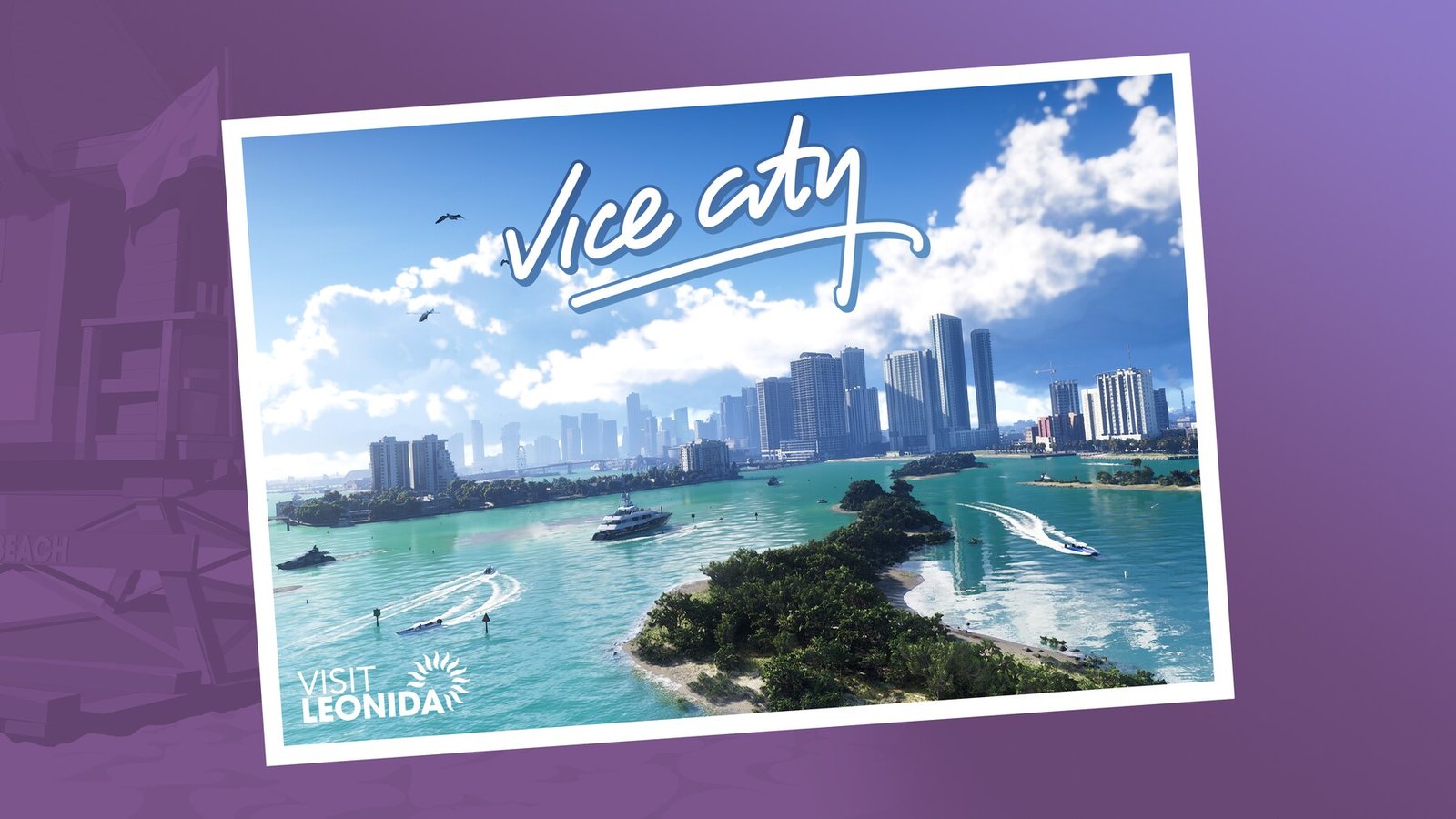
Rockstar’s fictional brands add another layer. Luxury labels, beer, fast-food outlets, broadcast graphics, currency and roadside advertising all participate in the joke. Designers working on such a world must create hundreds of identities that are legible for seconds yet coherent enough to suggest functioning businesses. Each logo has to feel native to Leonida while still giving the player an immediate clue about the real-world target of the parody.
The social-media sequences perform the same task in motion. Vertical clips, captions and impulsive spectacle translate contemporary scrolling into an in-world format. This is risky territory because specific platforms and trends can age faster than architecture. The trailers suggest Rockstar is responding by parodying behaviours—public performance, outrage, self-promotion and voyeurism—rather than tying every joke to one short-lived reference.
For graphic designers, that density may be as compelling as the missions. A television commercial glimpsed in an apartment, the lettering on a bar awning or a package sitting behind a shop counter has to survive close inspection from players who can pause, crop and share any frame. World-building at this level is an enormous identity programme whose components must appear accidental even though almost nothing is.
Memory Without Standing Still
The return to Vice City also requires Rockstar to manage nostalgia. Its key art uses the tiled montage associated with GTA since the early 2000s, arranging characters, vehicles and symbols around the main logo. The new version speaks in the pinks, violets and warm skies of Florida, while familiar ingredients—a speedboat, a helicopter, a performance car and local wildlife—signal the pleasures expected from the setting.
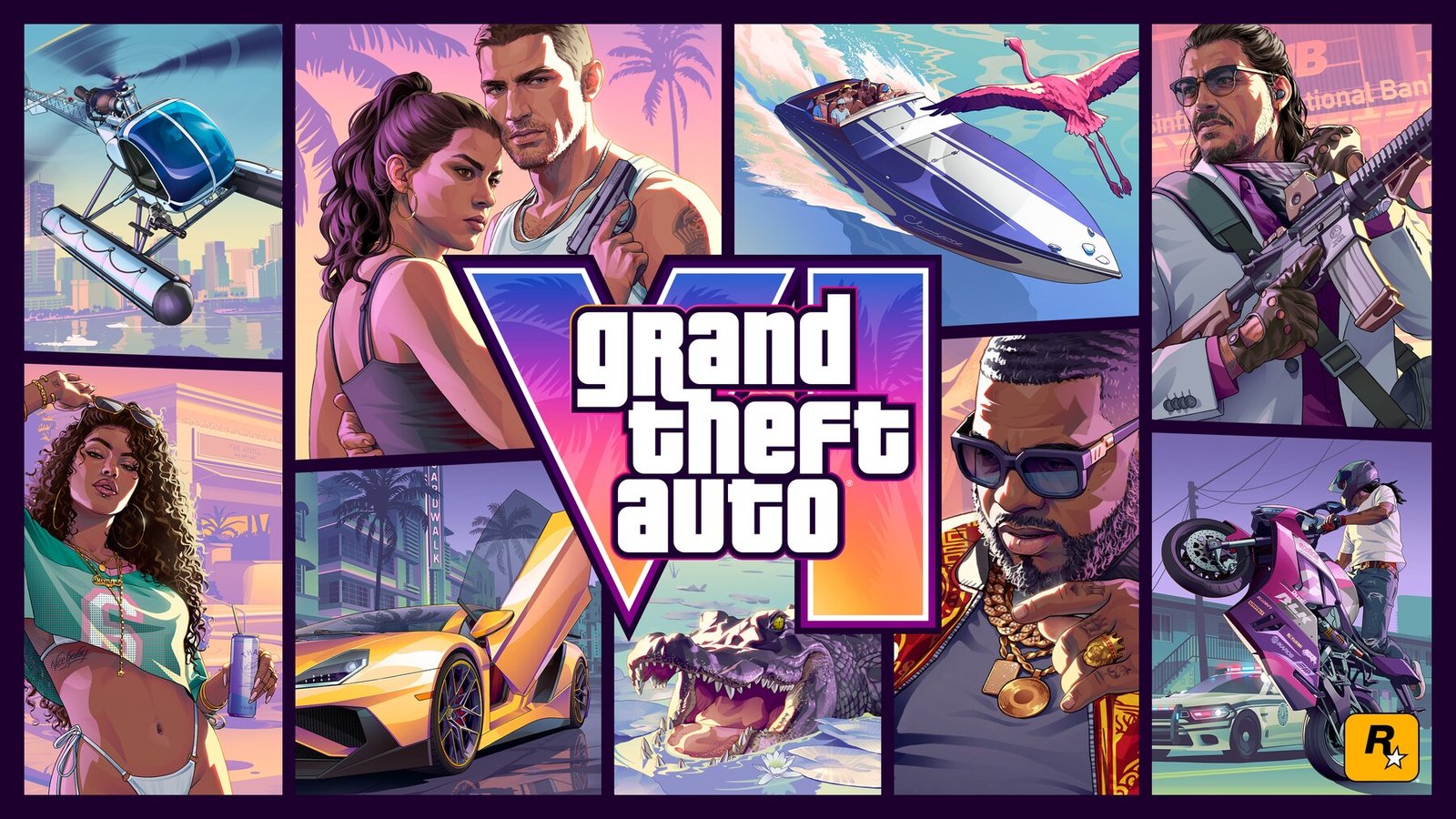
The balance offers a lesson beyond entertainment. Heritage works best when designers identify which structures carry meaning and which merely reflect old production habits. The panel system, heavy wordmark and satirical imagery remain useful assets. Rendering, typography and composition can evolve around them. The result feels continuous without pretending that two decades of visual culture have not passed.
Nostalgia also changes the emotional temperature of the release. Many players who explored the earlier Vice City are now middle-aged, while a younger audience knows its imagery through clips, music and references. The new campaign must address both groups without becoming a museum piece. It sells recognition to one generation and discovery to another, using the same sunlit skyline as a bridge.
When a Launch Becomes a Cultural Event
For all the pleasure of studying logos and landscapes, the extraordinary scale of the launch changes how every creative choice is judged. Take-Two reported that the second trailer generated more than 475 million views across platforms in its first 24 hours. Rockstar and Take-Two have not disclosed a development or marketing budget, so widely circulated billion-dollar estimates remain speculation rather than settled accounting.
Forecasts deserve the same caution. Analytics firm Newzoo modelled $3.25 billion to $5.2 billion in cumulative global sales by the end of launch week. Two scenarios it quantified equated to roughly 37 million and 51 million units, using an assumed $88 average selling price; these are modelled outcomes, not guaranteed sales.
Behind the spectacle is a more serious argument about time and craft. The project has taken many years and involved a very large workforce. Rockstar postponed it twice—from its original 2025 window to 26 May 2026, then to 19 November 2026—a decision that raises costs but protects a launch on which immense expectations depend. Delay does not guarantee quality, and no audience owes a company gratitude for basic polish. It does signal that the publisher sees readiness as more valuable than meeting a previously announced date.
Kinda Funny reported after a preview conversation with Rockstar North co-studio head Rob Nelson that the launch single-player game has no real-money monetisation and that generative AI was not used to create its content. Those claims do not establish the business model for any later GTA Online product, but they position the campaign around authored work. In an industry debating automation, ownership and endless monetisation, emphasising human-made characters, environments, performances and animation is itself part of the creative message.
Ambition does not remove the series’ moral unease. GTA is built around theft, gunfire, drugs and the comic permission to behave terribly. As the images grow more convincing, the distance between slapstick and brutality narrows. The franchise has faced arguments about violence since its earliest releases, and realistic faces, crowds and physics will almost certainly renew them. A female lead does not make the world gentle, nor is gentleness what most players expect from it.
That contradiction is central to GTA’s appeal. Players who behave responsibly in ordinary life enjoy its temporary suspension of consequence. They can wreck a sports car, provoke the police and restart after disaster. The pleasure is not necessarily a concealed wish to harm real people; it is the freedom to explore a rule system designed for transgression. Better graphics intensify the fantasy while also making its boundaries more uncomfortable to discuss.
The final game will have to hold all these tensions at once: Lucia as both character and cultural symbol; Florida as observed place and comic invention; nostalgia as reassurance and material for renewal; technical achievement alongside questions about labour, violence and scale. No trailer can resolve them. The campaign succeeds because it makes those tensions feel like reasons to look closer rather than problems to hide.
When release day arrives, rumours about maps, bodies, ageing and countless hidden systems will finally meet software that players can test. Some theories will disappear within hours. The more durable question will be whether Rockstar has used its resources to build a story with emotional weight, not merely a larger catalogue of activities. Spectacle can command an opening weekend; character and structure determine whether a world remains worth revisiting.
GTA 6 is therefore already instructive as a launch, even before a verdict on the game is possible. It demonstrates the power of a recognisable visual system, the reach of a protagonist who redraws an established franchise and the attention created when a studio reveals a world slowly. The event is enormous, but its most persuasive moments are often small: a look between two people, light moving across water, or a familiar logo reorganised around someone new.
The creative lesson: scale attracts attention, but a cultural launch earns meaning by connecting its spectacle to character, place and a point of view audiences have not been offered before.