











PHOTOGRAPHY, CRAFT & IMAGINATION
Benji Reid and Zana Masombuka demonstrate that a fantasy can feel emotionally true without disguising the hands, materials and histories that brought it into being.
Many surreal photographs are finished by erasing their own construction. Supports disappear, skies are replaced and separate elements are blended until the final scene appears to have arrived without effort. The result may be seamless, yet the process that gave the image its character is often made invisible.
The work of Benji Reid and Zana Masombuka offers another route. Brought together at October Gallery in London, their photographs do not ask viewers to forget that a scene was staged. Reid leaves enough of his improvised theatre in view to make its mechanics part of the pleasure, while Masombuka builds meaning through costume, pigment, beadwork and ritual. Their worlds are invented, but their physical foundations remain unmistakably present.
That shared position is useful far beyond gallery photography. It suggests that credibility does not always come from perfect simulation. An imagined world can persuade us because its choices are consistent, its materials matter and its makers understand what every visible object is doing.
When the Stage Enters the Picture
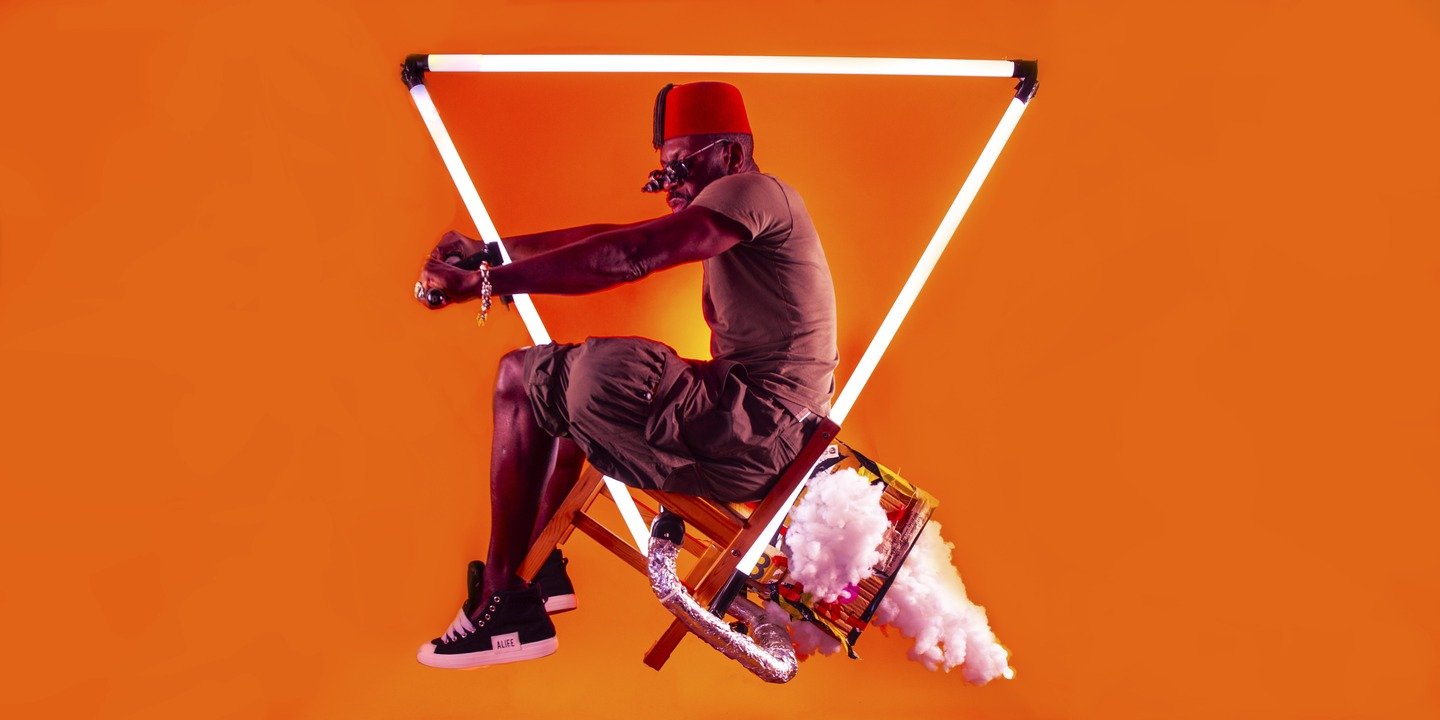
Reid calls his practice “Choreo-Photolism” and describes himself as a Choreo-Photolist, bringing theatricality, choreography and photography together in the image. The term fits because performance is not an accessory to the picture: it is the route by which the picture comes to exist. He designs a physical situation, places his own body inside it and holds an improbable pose long enough for the camera to turn action into a still.
In The Proposition, a plain crate, a fixed stool and a toy pigeon on a lead form a strange airborne narrative. Going Home places Reid over a cotton-like cloud with a paddle and sparkler, his body angled as though movement could defeat gravity. The materials never become entirely convincing as natural phenomena, and that is precisely why the pictures work. We recognise fabric, timber and effort while also accepting the emotional condition they create.
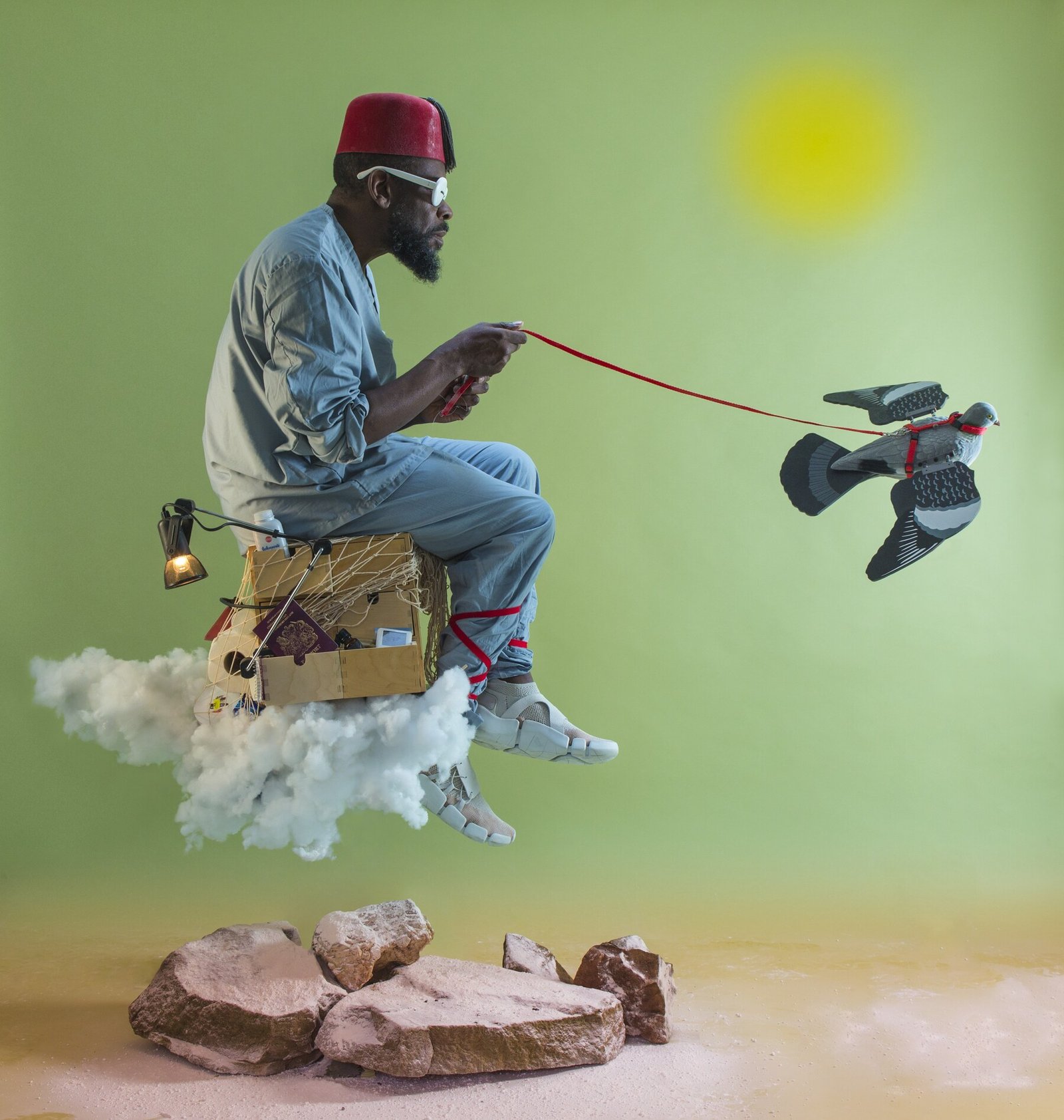
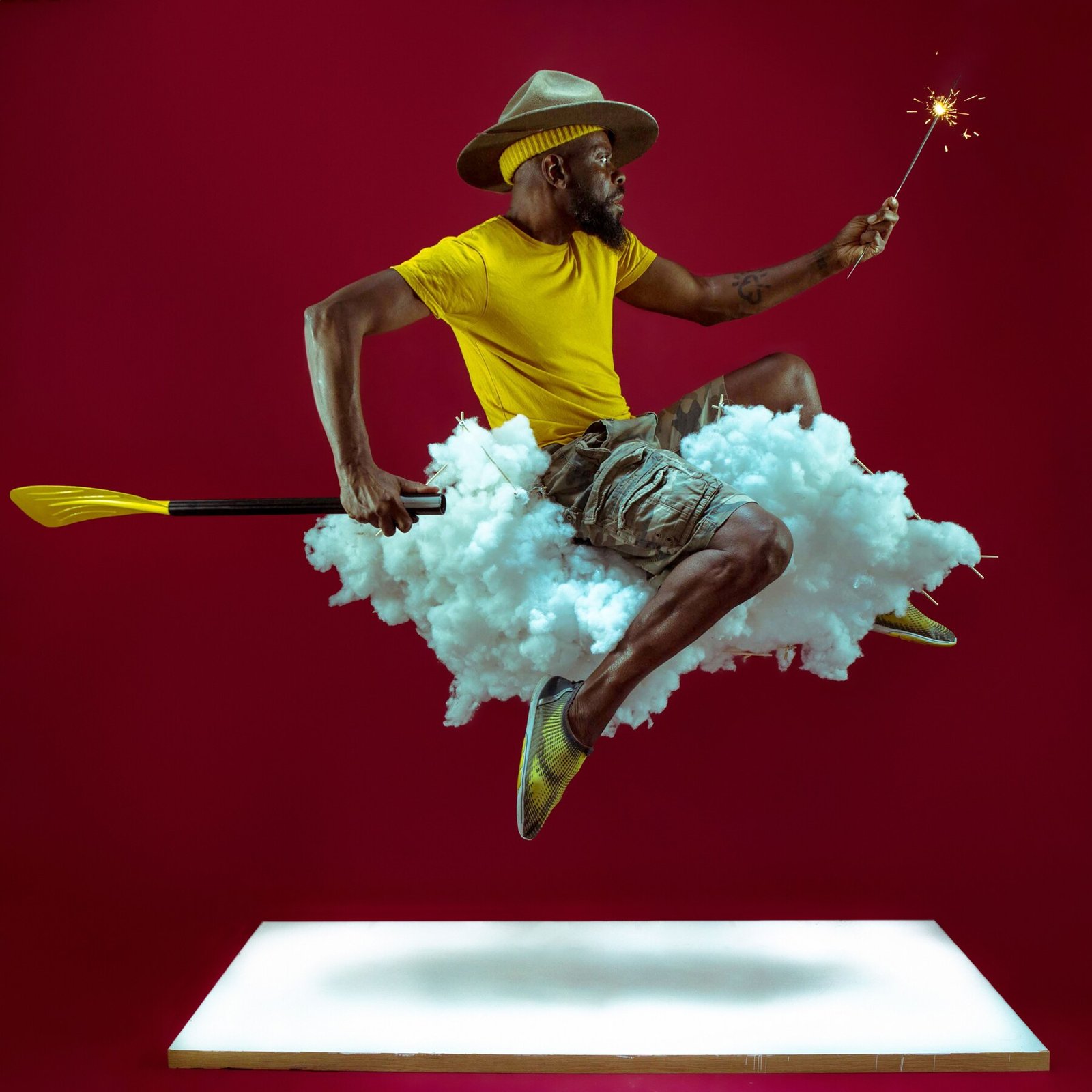
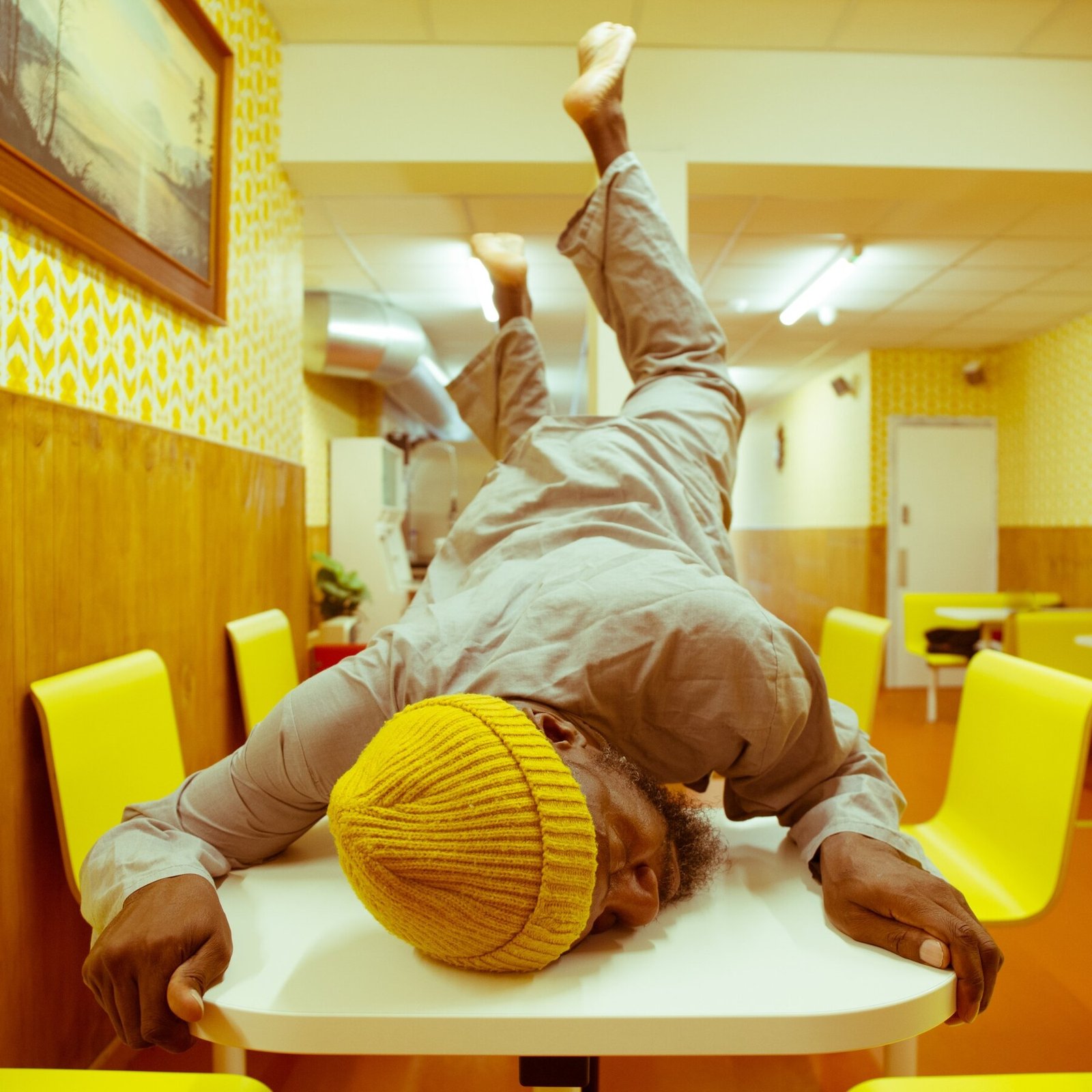
For a creative team, the distinction is important. A fabricated scene does not have to masquerade as documentary evidence. It needs a visual grammar that viewers can follow and an idea strong enough to justify the artifice. Reid lets us see how flight was attempted, and the visible attempt gives the fantasy its tenderness.
Materials That Carry Their Own Meaning
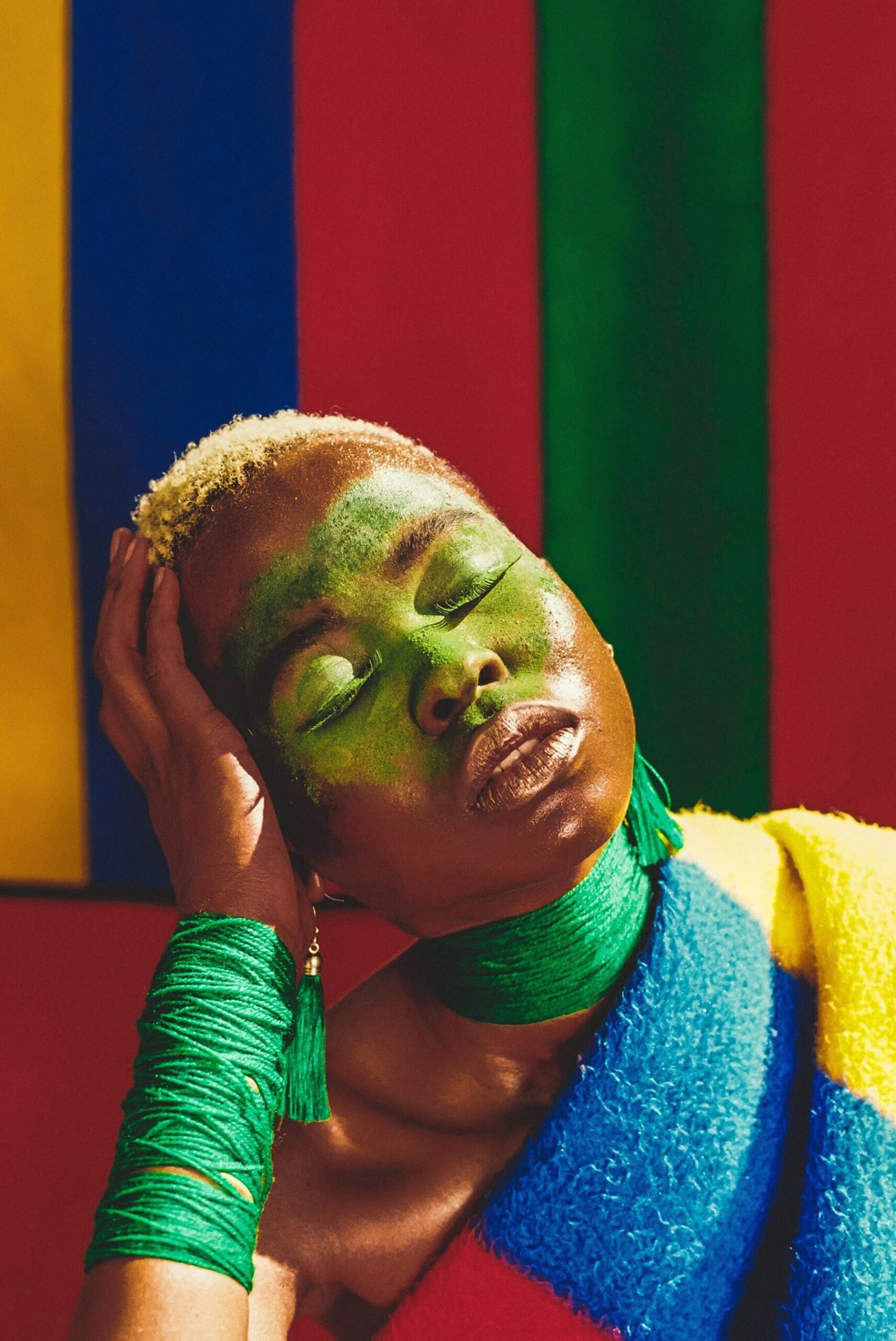
Masombuka begins with a different vocabulary. Drawing on her Ndebele heritage, she treats dress, colour, landscape and ceremonial forms as bearers of knowledge rather than styling applied at the end. The labour of selecting, making and wearing an object belongs to the content of the photograph.
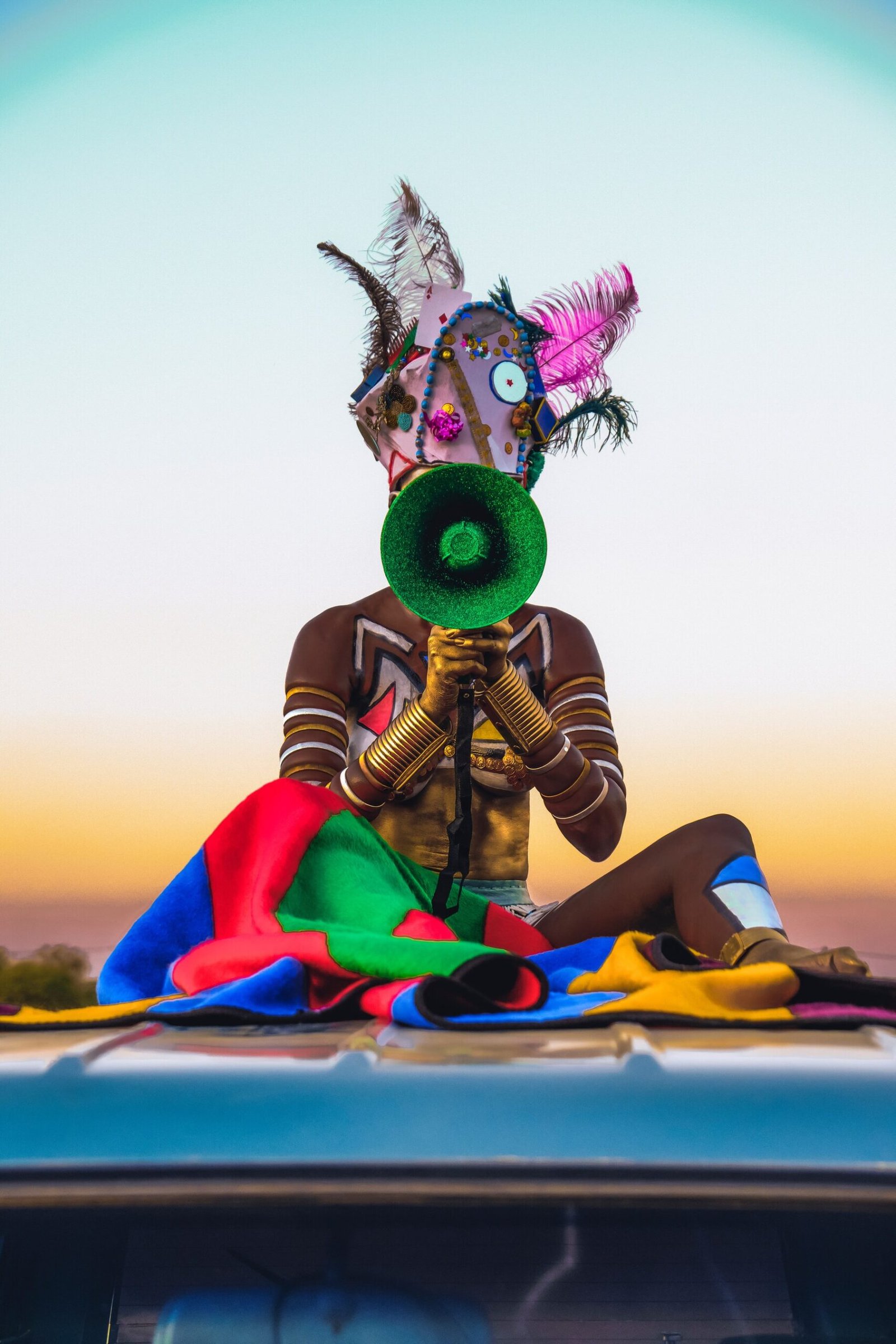
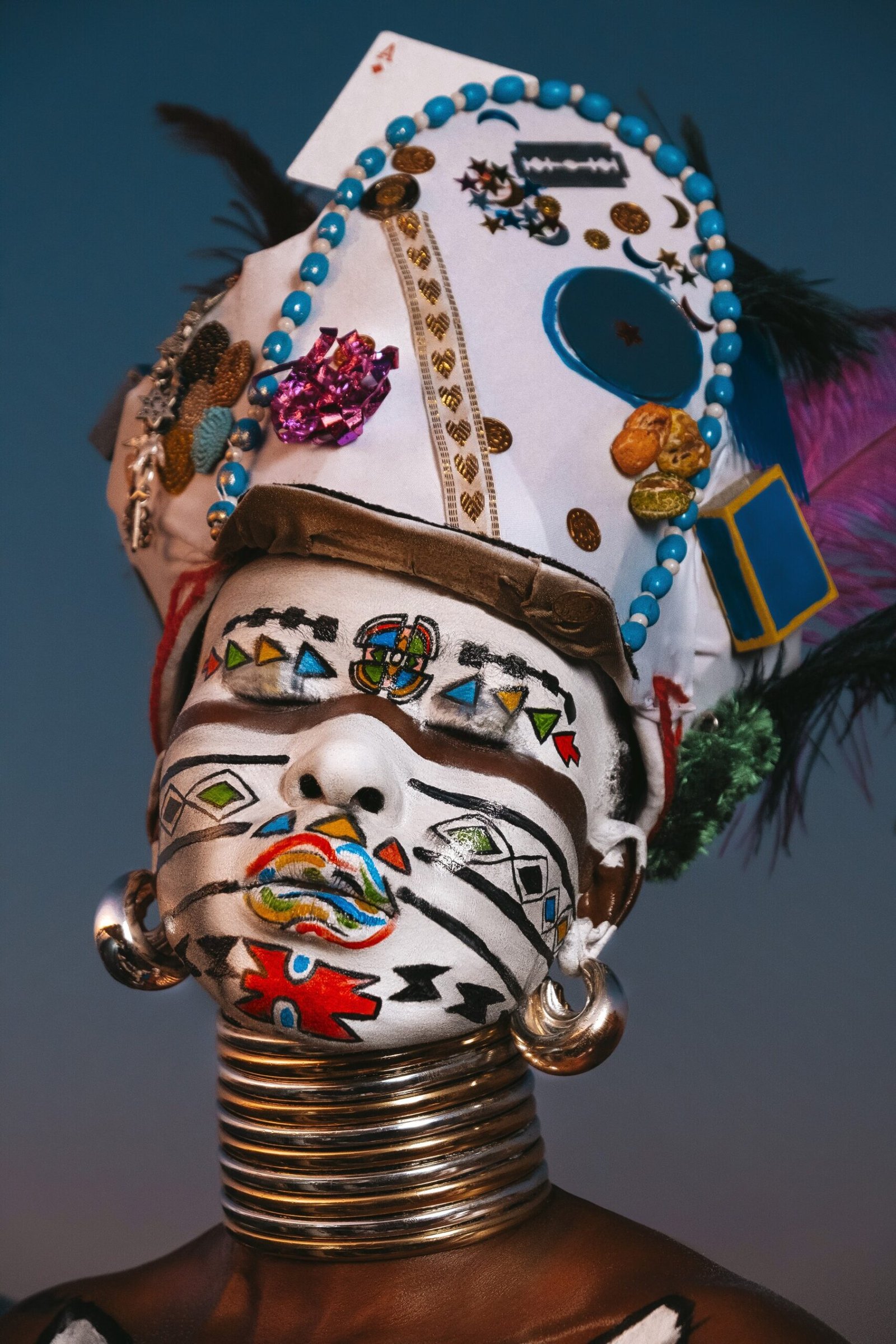
Nges’rhodlweni: Is’memo 3 shows a figure poised on a car roof, enveloped by constructed regalia and partly hidden behind a green megaphone. Its headpiece demands attention not only as a silhouette but as an accumulation of beads and objects. In Masombuka’s practice, the prop is not a shortcut to symbolism; its visible construction helps produce the symbolism.
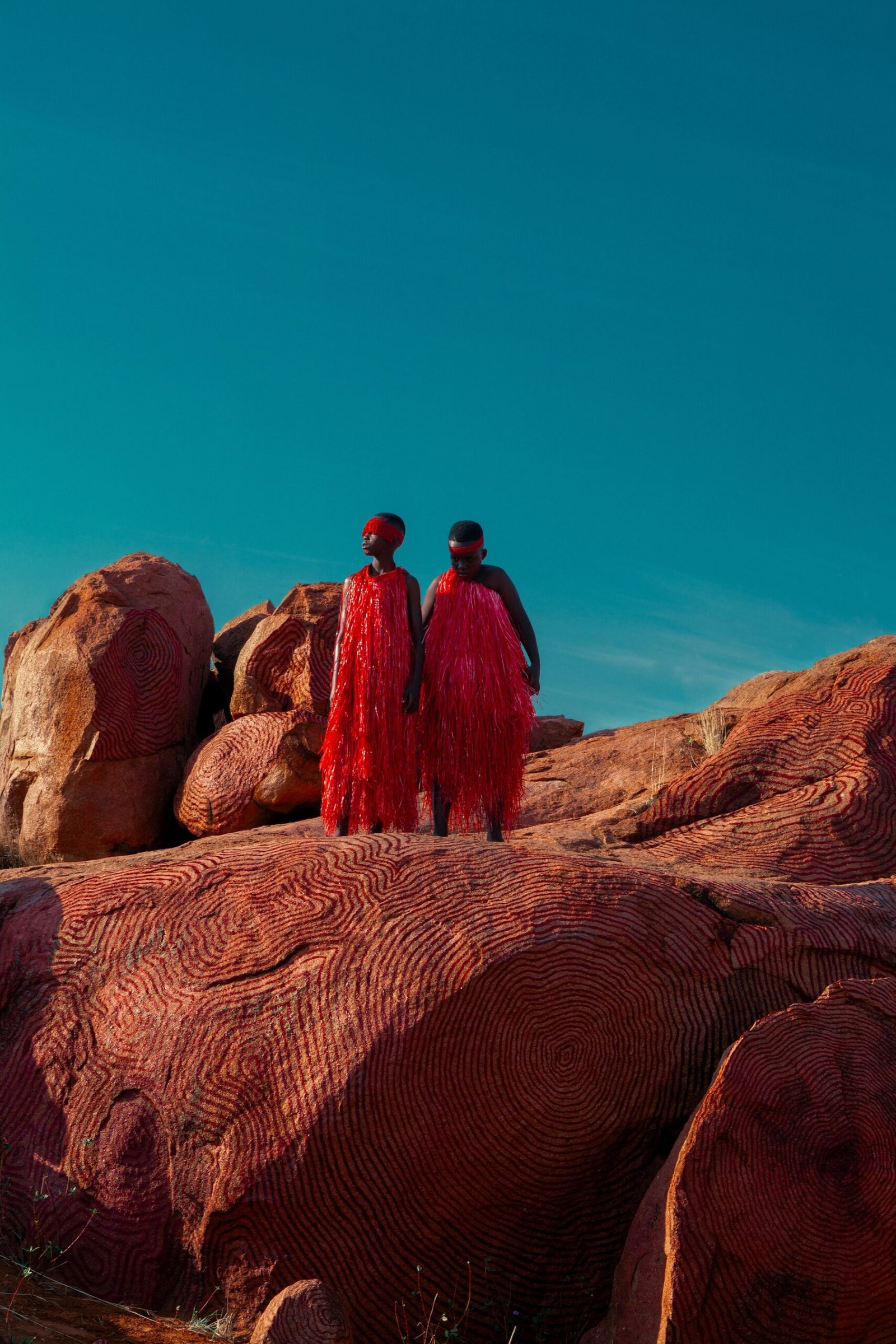
The relationship between place and colour is equally direct in Ubonani: What Do You See? Red garments meet the ochre geology of KwaNdebele, with natural earth pigment and dramatic lighting supplying an intensity that software might otherwise imitate. The images make a persuasive case for beginning with what a location already contains. When the land informs the palette, colour carries context as well as impact.
Two Ways of Photographing Time
Time adds another connection between the two practices, although each artist approaches it from a different direction. In Masombuka’s Time: Gadesi S’khathi, lemons become modest markers of change, decay and knowledge carried between generations. Her newer Akhulumile Amabhudango: Scenes from Dreams combines photographs with sculptural beadwork to stage an imagined exchange with her late grandfather. Memory is not merely represented; it is given an object-like presence.
Reid brings time forward into the room. After years away from live work, he returned to performance in 2023 with Find Your Eyes, allowing an audience to witness photographs being assembled rather than encounter only their finished surfaces. October Gallery records a 2024 Venice presentation during the 60th Venice Biennale; the production later reached Sadler’s Wells East in London in 2025. Studio preparation becomes an event, and the instant of capture becomes part of a longer public experience.
What Creative Teams Can Borrow
Seen together, the artists offer a practical alternative to frictionless image-making. Neither rejects illusion. Instead, both make the conditions of invention legible: a support can stay visible, a bead can retain its texture and earth pigment or lighting can preserve evidence of a particular place. Their pictures feel convincing because technique, subject and intention point in the same direction.
This matters in an era when polished images can be produced or altered with increasing speed. Viewers may not need every method explained, but they can sense when a surface has no relationship to lived material or deliberate labour. Reid and Masombuka show that wonder survives disclosure. Sometimes the most generous choice is to let the audience notice the join and understand why it belongs there.
Exhibition Details
Zana Masombuka / Spotlight: Benji Reid runs from 3 September to 3 October 2026 at October Gallery, 24 Old Gloucester Street, London WC1N 3AL.