

Recent Posts










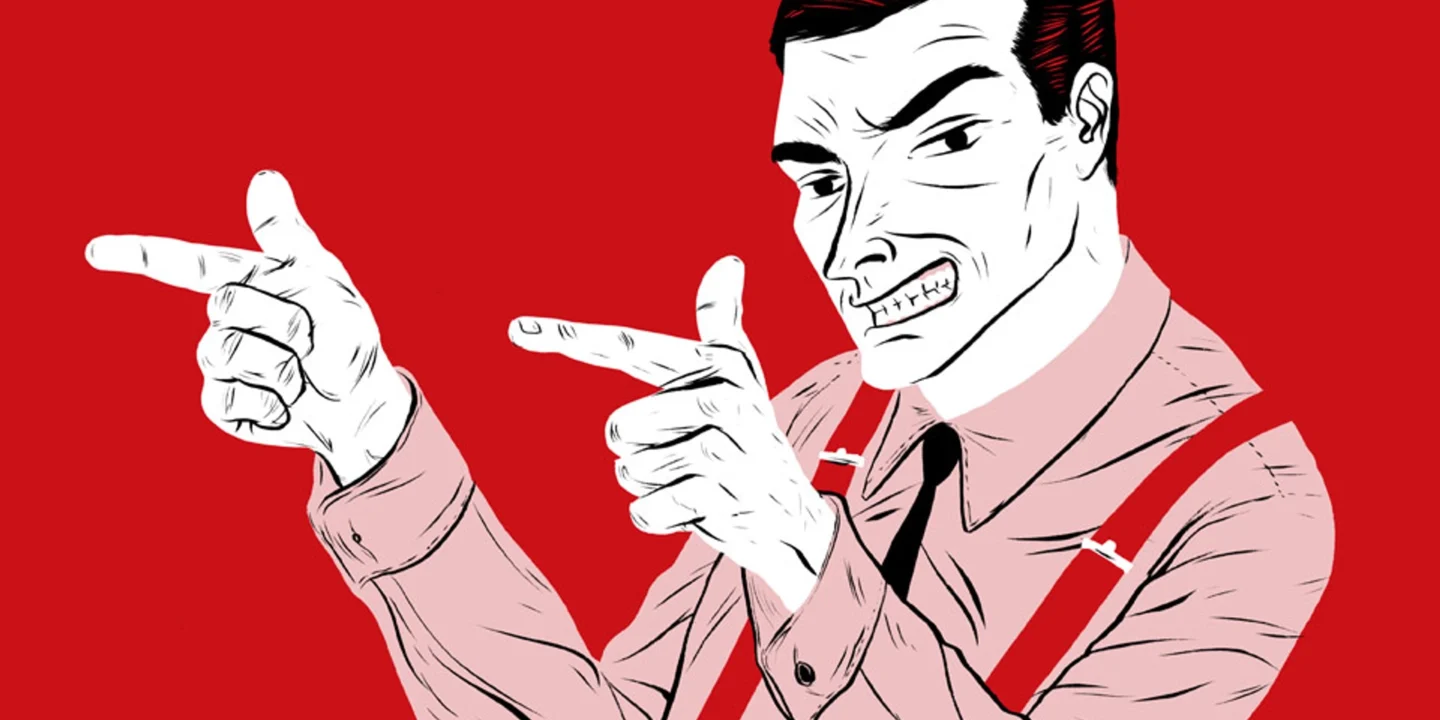
Imagine, for a moment, that you are looking out from behind the eyes of the jerk. The people waiting ahead of you at the pharmacy are not people with colds, children, prescriptions, worries, or private histories. They are an obstruction. Their slowness has the flavor of an insult. The woman at the airline counter is not a tired employee trying to reconcile a broken schedule, a crowded terminal, and a computer system designed by someone safely elsewhere. She is the face of a machine that has inconvenienced you, and therefore she deserves whatever impatience you can make her absorb. The janitor who asks you to step around the wet floor is officious. The intern who misunderstands your instructions is hopeless. The driver who hesitates at the green light is a fool placed on earth to test your endurance.
We need a theory of jerks.
We need one, first, because ordinary life gives us plenty of field observations but very little taxonomy. A theory might let us observe the jerk with the coolness of a biologist crouching in the reeds: “Here we see the jerk in the conference-room habitat. Notice how he expands his shoulders when challenged by a junior colleague, then retreats into procedural language when confronted by someone senior.” And we need a theory, second, because the specimen under examination might not always be safely outside the glass.
But let us not rush. The word “jerk” has not always meant exactly what it now means. In older uses, the jerk was often merely a dope, a sap, a rustic, a person lacking polish or sophistication. He was laughable more than blameworthy. The word carried a faint odor of class contempt: the worldliness of travelers, entertainers, salesmen, and city people directed against the provincial. A “jerkwater” place was the sort of stop too minor for a proper station, the kind of town where the train might pause only because the engine needed water. The jerk, in that older sense, was someone imagined as having come from such a place: not evil, not vicious, just socially unfortunate.
Words, however, are restless things. They carry old stains into new rooms. Over time, “jerk” migrated from a judgment of polish to a judgment of character. Something similar has happened to many terms of social ranking. Words that begin by naming low birth, rough manners, or lack of refinement often drift toward moral condemnation. “Rude,” “vulgar,” “villain,” “base”: the social sneer and the ethical accusation have long been close cousins. The jerk who interests me here is not the innocent bumpkin. He is not merely awkward, uncultivated, or slow to understand the etiquette of a wine list. He is morally defective in a recognizable way.
Why should philosophy concern itself with such a word? Isn’t “jerk” a casual insult, better suited to a parking-lot argument than a seminar table? Perhaps. But our everyday terms of abuse often reveal more about our values than our official moral vocabulary does. A society’s insults are little moral fossils. They preserve, in rough form, the shapes of things people have found intolerable. To study them is not to abandon philosophy for slang; it is to look for philosophy where ordinary speech has already begun its work.
Here is my proposal. The jerk is someone who culpably fails to appreciate the perspectives of the people around him. He sees others not as centers of experience, not as bearers of reasons, feelings, knowledge, and projects, but as obstacles, instruments, competitors, inferiors, or idiots. The jerk’s defect is not simply selfishness, though he is often selfish. It is not simply arrogance, though arrogance suits him well. It is a failure of moral imagination joined to a failure of intellectual humility.
The jerk does not merely want his own way. We all want our own way, sometimes fiercely. The jerk treats the wants of others as having only derivative significance: they matter if they interfere with him, flatter him, serve him, threaten him, or provide material for his irritation. He also treats the thoughts of others as having little independent weight. If they disagree, they misunderstand. If they object, they are oversensitive. If they know something he does not, their knowledge is either irrelevant or suspicious. He may listen, but not in the way one listens to an equal. He listens as a prosecutor listens, as a manager listens to a malfunction report, as a chess player watches the opponent’s move.
The opposite of the jerk is not exactly the saint. Saints are too rare, too luminous, too burdened by religious and literary expectations. The everyday opposite of the jerk is the sweetheart. The sweetheart is not necessarily sentimental or soft. He may argue vigorously, refuse unreasonable requests, fire an incompetent employee, or tell a friend a hard truth. But he does these things while retaining a live sense that other people have perspectives from which the world appears meaningfully different. He can imagine the cashier’s fatigue, the student’s panic, the colleague’s hidden competence, the stranger’s private grief. He does not always yield, but he registers.
The sweetheart, in debate, feels the possibility of being wrong as a genuine possibility. The jerk treats the same possibility as a theatrical concession. “Of course I could be wrong,” he says, in the tone of someone allowing that lightning could strike a duck in January. The sweetheart is vulnerable to correction because he grants that other minds may see what he has missed. The jerk may be corrected by force, by failure, by embarrassment, or by someone too powerful to ignore, but not ordinarily by the mere presence of another person’s reasons.
A few qualifications are necessary. No one is a jerk in every moment, and no one is a sweetheart in every moment. Our characters are more weather systems than statues. Travel, illness, status anxiety, professional competition, and lack of sleep all bring out different fronts. A person may be tender with children, brutal to service workers, generous with friends, contemptuous of strangers, patient in intellectual life, and monstrous in traffic. It would be foolish to imagine jerkitude as a simple substance uniformly distributed through the soul.
Nor is every failure to appreciate another perspective blameworthy. Young children, certain disabled people, and people under extreme distress may lack capacities that ordinary moral judgment presupposes. Nor do all perspectives deserve equal solicitude. The racist, the sadist, the enthusiastic torturer of cats: one need not treat every outlook as a delicate flower. Still, even here, the deepest sweetheart might attempt understanding without endorsement. The point is not that every view is worthy. The point is that the jerk’s disregard is not a principled refusal aimed at the vicious. It is a habitual narrowing of concern around himself.
It is possible for the complete jerk to admit, lightly and uselessly, that he is a jerk
The next question is the most uncomfortable one. How would you know if you were a jerk?
This is harder than it appears. People are often decent judges of their own visible, morally neutral traits. Ask someone whether she is talkative, tidy, easily startled, or fond of planning, and her answer may not be perfect, but it will often bear some relation to what her friends would say. Such traits are public enough and not especially damning. There is no deep psychological cost in admitting that one speaks quickly or hates camping.
But ask whether one is unfair, stupid, vain, cruel, ungenerous, cowardly, or lacking in imagination, and the instruments of self-knowledge begin to malfunction. The evidence is easy to reinterpret. I was not unfair; I was maintaining standards. I was not vain; I was presenting myself professionally. I was not cruel; I was direct. I was not cowardly; I was prudent. Moral self-assessment is conducted in a courtroom where the defendant, judge, and defense attorney are all the same person.
Jerkitude is especially resistant to self-detection because the very condition interferes with the best available evidence. To learn that you are a jerk, you would need to take seriously the testimony of people who experience you as one. But the jerk is disposed not to take such people seriously. Their criticism appears to him as whining, resentment, stupidity, bad faith, political correctness, professional jealousy, or emotional weakness. He cannot see the warning light because part of his defect consists in having painted over it.
This does not mean that the jerk never says, “I’m a jerk.” He may say it often. He may even make a little brand of it. “I’m just a jerk, what can I say?” he announces, with a grin that expects admiration for its candor. But this confession has no moral bite. It is like saying, “I’m terrible with names,” while making no effort to remember anyone’s. The words function as advance permission. They relieve rather than burden him.
A genuine recognition of jerkitude would sting. It would involve seeing, at least briefly, that another person’s humiliation, impatience, fear, or irritation was not merely an unfortunate by-product of one’s efficiency, brilliance, or honesty, but something one had failed to count properly. The sweetheart, for this reason, is more likely than the jerk to worry about being a jerk. He replays a conversation, winces at his tone, considers whether the waiter’s expression changed after that joke, wonders whether the graduate student fell silent because the criticism was useful or because it was crushing. The anxiety is not proof of innocence, but it is evidence of moral permeability.
There is a paradox here. To worry sincerely that one might be a jerk is already to depart, in that respect, from perfect jerkitude. But if you congratulate yourself on this fact and settle comfortably into reassurance, you may lose the very openness that made the reassurance plausible. Moral self-knowledge is a room whose door closes when you admire yourself too loudly for having entered it.
The jerk’s blindness is not usually total. He often knows very well how to behave when the audience matters. He can be charming in interviews, deferential to clients, attentive to famous people, gracious to donors, and exquisitely sensitive to the moods of those who can help or harm him. His failure is selective. It falls most heavily on those below him in status, those anonymous enough to be consequence-free, and those trapped by circumstance into absorbing his behavior.
This is why the classic jerk kisses up and kicks down. The senior partner finds him energetic. The visiting dignitary finds him witty. The chair of the department finds him frank and intellectually serious. The receptionist, the adjunct instructor, the assistant, the hotel clerk, the younger sibling, the driver in the next lane, and the person cleaning the restroom know otherwise. Jerkitude is often invisible from above and unmistakable from below.
The hierarchy matters not because all jerks are powerful, but because power gives jerkitude room to grow. When no one is obliged to tolerate you, your badness receives feedback. When many people are obliged to tolerate you, your badness is cushioned. The powerful person’s impatience is called decisiveness. His rudeness is called candor. His inability to listen is called vision. His tantrums become part of the weather.
To think oneself important is a wonderfully convenient reason not to notice other people
The jerk’s central fantasy is simple: “I am important, and the people around me are not quite real.” Sometimes he would never state this, even to himself. Sometimes he dresses it in institutional language. “My time is valuable.” “Standards must be maintained.” “Some people simply don’t get it.” “You have to be tough.” “I can’t be expected to manage everyone’s feelings.” Each sentence may be true in some circumstances. The jerk’s talent is to make such truths serve as curtains.
Importance is intoxicating because it can be measured. Salary, title, office size, publication count, follower count, invitations, seating arrangements, assistants, airport lounges: the world supplies props for the self’s little monarchy. Once furnished with these props, the jerk finds it easier to believe that his preferences deserve acceleration through the ordinary frictions of life. Other people must wait because waiting is what less important people do.
The judgment that others are fools is equally useful. If the people around you are incompetent, sentimental, lazy, slow, conventional, naive, or morally confused, then their objections need not trouble you. Their pain becomes evidence of their weakness. Their disagreement becomes evidence of their stupidity. Their silence becomes consent. Their anger becomes confirmation that you were right to be firm.
As one rises, the environment itself may collaborate in the illusion. Honest critics disappear or learn caution. Subordinates laugh at jokes that are not funny. Meetings become smoother because people stop raising objections. The jerk mistakes the absence of resistance for the presence of wisdom. Around him grows a climate of edited speech, and he breathes it as if it were clean air.
This helps explain a familiar hypocrisy. The jerk demands punctuality while arriving late. He condemns sloppiness while sending error-filled instructions. He insists that others accept criticism maturely while treating criticism of himself as betrayal. He lectures about accountability while distributing blame like confetti. These are not merely inconsistencies; they are symptoms of a missing act of imaginative parity. The jerk does not naturally ask: What would this look like if done by someone else to me?
Embarrassment, too, depends on the imagined gaze of others. To be embarrassed is to feel oneself seen in a diminished or ridiculous light by people whose view matters. The jerk may fear exposure before superiors, rivals, or admired peers. But before underlings, strangers, and people he has already classified as negligible, embarrassment weakens. Why be ashamed before furniture? Why blush before weather?
This is one reason jerkitude can harden with success. Success does not merely reward the existing jerk; it can manufacture new ones. A person who begins with ordinary moral weaknesses may gradually be trained by privilege into disregard. Every convenience becomes evidence of desert. Every inconvenience becomes an outrage. Every person paid to assist becomes part of the scenery. The child who once apologized to a waiter may become the adult who snaps his fingers because no one important has corrected him in years.
Of course, the causal story is not simple. Some jerks may climb because they push shamelessly where sweeter people hesitate. The sweetheart’s virtues can be strategically costly. He sees the rival’s point of view, sympathizes with the exhausted committee, hesitates to seize credit, and feels bad about crushing others in pursuit of his own project. The jerk has fewer such internal brakes. Yet even if jerkitude sometimes helps people rise, rising also helps jerkitude. The ladder not only selects; it educates.
The moralizing jerk deserves special mention. He does not merely disregard others; he gives his disregard a halo. He has principles, policies, standards, doctrines, theories, slogans, sacred causes. The moralizing jerk can explain why compassion is indulgence, why impatience is rigor, why cruelty is honesty, why his own privilege is responsibility, why the people below him must suffer for their own improvement.
Literature is crowded with such figures: the schoolmaster whose discipline is vanity, the reformer whose love of mankind does not extend to the maid, the preacher who sees sin everywhere except in his own appetite for domination, the bureaucrat who breaks a family with a clean conscience because the form has been completed improperly. These characters are comic because they are exaggerated, but their exaggeration is diagnostic. We laugh because the outline is visible in miniature around us and within us.
The moralizing jerk’s favorite word is “should.” Others should work harder, speak more carefully, complain less, toughen up, follow the rules, accept consequences, respect the process, appreciate the opportunity. Again, each “should” may be defensible in isolation. The trouble lies in the direction of its force. His principles flow outward and downward. They rarely return home.
Whatever the jerk loves, he is tempted to treat other loves as evidence of stupidity
The moralizing jerk is often wrong not only because he is selfish, but because he is epistemically cramped. To understand human value, one must be capable of seeing that goods appear differently from different lives. There is value in music one does not enjoy, sports one does not follow, rituals one finds odd, scholarship one finds dusty, fashion one finds vain, solitude one finds bleak, parties one finds shallow, pets one finds inconvenient, children one finds noisy, prayer one finds obscure, and hobbies one finds absurd. The sweetheart does not need to share every enthusiasm. He only needs to recognize that the map of value extends beyond his own neighborhood.
The jerk does not recognize this easily. The austere scholar sneers at manicures and television. The elegant socialite sneers at archive dust and Latin verbs. The athlete sneers at indoor people. The activist sneers at private pleasures. The entrepreneur sneers at contemplation. The practical person sneers at art. The artist sneers at practicality. Whatever the jerk happens to care about becomes the standard by which other lives are measured and found wanting.
This matters morally because mercy depends on breadth of vision. Ordinary life is a parade of imperfection. People are late, tired, inarticulate, overdressed, underprepared, vain, distracted, clumsy, sentimental, cheap, extravagant, repetitive, defensive, slow, and wrong. They send emails with typos. They forget names. They make weak arguments for causes they nevertheless care about. They fail to laugh at the right moment. They buy foolish things, love foolish songs, and tell stories badly.
A livable morality cannot treat every imperfection as a crime. Much of decency consists in letting things pass: not because nothing matters, but because people are finite, burdened, and unevenly gifted. The sweetheart’s mercy is often quiet. He does not announce that he is forgiving the waiter’s awkwardness, the child’s interruption, the colleague’s anxious rambling, the friend’s late arrival. He simply leaves room around the fault.
The jerk’s mercy is poorly calibrated. He is severe where he should be generous and indulgent where self-interest, vanity, or identification softens him. He forgives the ambitious because he sees himself in ambition. He excuses the rude when their rudeness resembles his own. He is patient with the important and exacting with the powerless. He treats some small failures as revelations of character and some large failures as understandable complications.
Yet the jerk is not always wrong about everything. This is important. If he were merely stupid, our theory would be easier and less useful. A jerk may defend a just cause, expose real corruption, produce excellent work, maintain high standards, or perceive cowardice where others prefer comfort. Sometimes movements need people with sharp elbows. Sometimes institutions are so complacent that only the abrasive person says what should have been obvious. Sometimes the sweetheart’s charitable imagination dulls his capacity for necessary opposition.
But being right about a cause does not cure jerkitude. In fact, a grand cause can become one of its most elegant shelters. Abstract love of humanity may coexist with contempt for every actual human being in the room. One may sacrifice money, time, sleep, and reputation for justice while humiliating assistants, dismissing allies, and treating disagreement as treason. The moralizing jerk can be sincerely devoted to principles and still fail at the immediate moral task of seeing the person before him.
This is why the jerk’s danger is not confined to selfishness. A selfish jerk is easy to name. The principled jerk is harder. He arrives armed with reasons, perhaps good reasons, and surrounds his disregard with the vocabulary of duty. To oppose him may feel like opposing the cause. His critics hesitate, and he takes their hesitation as proof of his authority.
What, then, should one do with the possibility that one is a jerk?
Direct introspection is unreliable. Sitting alone and asking, “Am I a jerk?” invites the mind to produce exhibits for the defense. You remember the time you helped a stranger carry groceries, the donation you made, the apology you offered, the friend who says you are generous. These things may be real. They may also be beside the point. The question is not whether you have ever been kind. Nearly everyone has. The question is whether there is a pattern in the people you fail to count.
Second-person inquiry is better: ask those who know you. But this method has its own danger. You may choose only safe witnesses. You may ask in a tone that makes honesty costly. You may interpret criticism as pathology. “She has always been sensitive.” “He misunderstands pressure.” “They don’t know what leadership requires.” To receive moral testimony, one must already possess some of the virtues the testimony may reveal one lacks.
The most promising method may be indirect and third-personal. Look at your world as it appears to you in ordinary moments. Are most people fools? Are service workers generally incompetent? Are colleagues mostly obstacles? Are students lazy, drivers idiots, strangers masses, critics enemies, and subordinates children? Is your first impulse, on being delayed, contradicted, corrected, or inconvenienced, to locate the defect entirely outside yourself?
If so, there is reason for concern.
Not proof, of course. Sometimes people really are incompetent. Lines really are badly managed. Systems really are absurd. Critics really can be foolish. Sweethearts are not required to dissolve all judgment into mist. But if the world habitually appears populated by inferiors, if irritation feels like your basic relation to the human environment, if respect flows upward and contempt downward, if apology feels like humiliation and correction like insult, then the theory may have found its subject too close to home.
There is also a smaller test. When you imagine the jerk’s view of the world—the post office full of fools, the flight attendant as corporate puppet, the clerk as obstacle, the disagreeing colleague as enemy—does it feel alien, or does it feel embarrassingly familiar? If it feels wholly alien, you may be unusually sweet, or you may be unusually self-deceived. If it feels familiar and produces a small inward wince, that wince is useful. It means that some part of you is still available to the perspectives of others.
None of us is pure sweetheart. Few of us are pure jerk. We move in and out of the posture. We shrink and expand. We notice and fail to notice. We grant reality generously in one room and withdraw it in another. The jerk’s world is recognizable because it is not the world of a monster from another species. It is one of our own possible worlds, waiting for fatigue, status, fear, or praise to invite us in.
The task is not to declare oneself innocent. The task is to keep the door back out of that world unlocked.