

Recent Posts
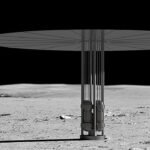









No matter how much neuroscientists and cognitive psychologists improve their instruments, expand their samples, or draw ever more detailed maps of the nervous system, they will never find a copy of Beethoven’s Fifth Symphony inside the human brain. They will not find the original file of a word, the backup of an image, the document containing a grammatical rule, or a complete internal copy of any stimulus from the outside world. Of course, the brain is not literally empty. It is complex, active, and constantly changing. But it does not contain the things we casually imagine it contains. Even “memory,” one of the most familiar words we use to describe the mind, might not exist in the brain in the way we usually suppose.
Our misunderstanding of the brain does not come from any special stupidity of the modern age. It has deep historical roots. Human beings have always been inclined to explain themselves through the most advanced and astonishing technologies of their time. After computers appeared in the 1940s, this tendency became especially powerful. For more than half a century, psychologists, linguists, neuroscientists and many other researchers of human behaviour have spoken of the brain as if it were a computer, of thought as information processing, of memory as storage, and of consciousness as software running on neural hardware.
To see why this way of speaking is problematic, it helps to begin with the brain of a baby. A newborn is not a blank piece of material with no preparation for the world. Through a long history of evolution, human infants, like the newborns of other mammals, arrive already equipped with basic capacities for interacting with their environment. Their vision is still blurry, yet they are especially sensitive to human faces. They do not understand language, yet they prefer human voices to ordinary noise. They cannot speak, yet they can already distinguish certain basic differences between speech sounds. In other words, from the very beginning, human beings do not exist in isolation. We are born as creatures shaped for connection.
A healthy newborn also comes with many reflexes necessary for survival. When the cheek is lightly touched, the baby turns toward the stimulus and instinctively searches for something to suck. When an object is placed in the palm, the baby grasps it with surprising strength. When the body is submerged in water, the baby can briefly hold its breath. These responses are not decisions made after reflection, nor are they programs later written into the brain. They are forms of preparation left by life’s long evolutionary history, capacities carried by the infant before any deliberate encounter with the world.
More importantly, babies also possess powerful mechanisms for learning. Human beings are not limited to the kinds of environments in which their distant ancestors once lived. After birth, they can change rapidly in response to new worlds. Different families, languages, cultures, climates, foods, sounds and social relations all shape the infant in some way. It is this capacity for learning that allows human beings to live in deserts, on islands, in cities, in apartments, on farms and among digital screens. We do not survive by means of a preinstalled package of knowledge. We survive because body and world remain in continuous interaction, and because we are changed through that interaction.
Senses, reflexes and learning mechanisms — these are what human beings truly possess at birth. They might sound simple, but they are already astonishing. Without senses, we could not encounter the world. Without reflexes, we would have difficulty surviving the most fragile stage of life. Without learning mechanisms, we could not adapt to an environment that never stops changing. Life does not begin with abstract data. It begins with concrete, embodied, world-facing capacities.
What we do not possess at birth are the things people so often force into the image of the “brain-computer”: information, data, rules, software, dictionaries, models, algorithms, programs, images, symbols, buffers, encoders, decoders, or memory files. These concepts are useful for describing digital computers, but they do not necessarily describe living organisms. More importantly, we do not gradually develop these things inside our brains as we grow up. We do not grow a hard drive. We do not build an internal folder system in which copies of the external world are stored.
We do not store words in the brain and then retrieve them one by one when we speak. We do not convert visual stimuli into internal images, place them first in a short-term memory buffer, and then transfer them to a long-term storage warehouse. We do not retrieve words, pictures or information from some register in the brain. Computers really do such things, because they were designed to do them. But organisms are not computers, and human behaviour is not simply a process of moving information around.
Computers process information in a very literal sense. Numbers, letters, formulas, images and sounds must be translated into formats that computers can recognise: sequences of zeros and ones, or bits. These bits are arranged into bytes, and different patterns represent different characters, colours, pixels or instructions. In a computer, the letter d, the letter o and the letter g can each be represented by a different byte pattern. Placed together, they can form the word dog. A photograph works in a similar way. It can be converted into a large data pattern, stored in memory or on a hard drive, and marked by a specific format that tells the computer this is an image file rather than ordinary text.
Computers also really do move data from one location to another. They can copy files, compress images, correct manuscripts and rewrite code. Data are stored in physical regions, and programs specify how those data should be read, modified, combined and output. When multiple programs work together, they form the applications we know so well. Whether we are using a stock-trading platform, a photo-editing tool, a social media app or a search engine, these systems depend on explicit mechanisms of storage, retrieval, transformation and execution.
It is important to describe computers this plainly because there is an easy confusion here: computers really do manipulate symbolic representations. They really do store and retrieve data. They really are governed by algorithms. They really have memory in a physical sense. For computers, “processing information” is not a metaphor. It is fact. They are machines built precisely for such tasks.
Human beings are not like that. We never were, we are not now, and we will not become so in the future. Given this, why do so many researchers, writers and ordinary people continue to speak so naturally of the brain “processing information,” “storing memories” and “running programs”? Why has a metaphor so obviously born from the computer age become the foundation on which we try to understand the human mind?
The Computer-Age Metaphor: When the Brain Became a Digital Machine
The artificial intelligence researcher George Zarkadakis once traced the history of human attempts to explain intelligence. Over the past two thousand years, he noted, people have repeatedly used different metaphors to understand the mind. Every age has its own most powerful technological imagination, and people tend to project that imagination onto the brain and the soul.
In the oldest religious narratives, human beings were formed from clay or dust and then infused with spirit by a god. In this way, the question of why people could think, feel and judge seemed to receive an answer: the body itself was merely material; what truly gave human beings intelligence was a sacred breath. This did not provide a scientific explanation, but within the language and worldview of its time, it at least offered a framework for understanding ourselves.
Later, as hydraulic engineering and knowledge of fluid motion developed, people began to explain body and mind through the idea of “flow.” Ancient medicine’s theory of the humours held that the balance or imbalance of several bodily fluids determined a person’s health, temperament and mental state. This hydraulic metaphor lasted for a very long time, shaping medical practice and limiting medical observation. Today, we no longer believe that the proportions of bodily fluids can explain wisdom and personality. But in its own age, the idea once seemed entirely natural.
By the Renaissance and the early modern period, automata, clocks, springs and gears began to astonish people. The human body and mind were then imagined as a complex machine. Thinkers such as Descartes used mechanical systems to explain bodily movement, while Hobbes understood thought as the result of tiny motions in the brain. At that time, the most advanced things were mechanical, and so the human being was explained mechanically.
Later still, with the rise of electricity, chemistry and communication technology, the brain was compared to circuits, chemical devices and telegraph systems. Nineteenth-century observers saw that telegraphs could transmit messages, and it became easy to understand the nervous system as a set of communication lines. Each technological renewal offered human beings a new way of imagining themselves. We believed we were discovering the essence of the brain, when often we were merely retelling old problems with new tools.
So after computers appeared in the 1940s, it was almost predictable that the brain would be described as a computer. Computers could perform logical operations, store data and run automatically according to programs. Soon people began to say: the brain is hardware, thought is software; neurons are circuits, memory is storage; learning is input, behaviour is output; thinking is computation.
The rise of modern cognitive science is closely connected with this idea. In the mid-twentieth century, some psychologists and linguists began to study the mind using concepts from information theory, computation and linguistics. They hoped to move away from vague introspective description and toward a stricter, more formal understanding of language, memory and reasoning. This effort had real historical significance and did lead to important research. Yet it also embedded the metaphor of “information processing” deeply into discussions of the human mind.
The mathematician John von Neumann went further in The Computer and the Brain, drawing comparisons between the human nervous system and the computing machines of his time. Although he admitted that people still knew very little about how the brain produced reasoning and memory, he nevertheless boldly suggested that the nervous system was, in some sense, digital. He repeatedly established parallels between computer components and brain structures, as if a sufficiently complex computer might help us understand the brain.
As computer technology developed rapidly and neuroscience expanded, this metaphor became more and more influential. Many researchers began to regard human intelligence as an information-processing system, cognition as the manipulation of internal representations, learning as model updating, and memory as data preservation. This framework attracted enormous funding, papers, laboratories and interdisciplinary projects. It also shaped the public imagination of the brain.
In popular culture, this view is everywhere. We say the brain “loads” knowledge. We say someone is “slow to respond,” as if their computer has frozen. We say we are “out of memory,” or that an experience is “stored in the mind.” Futurists enjoy talking about brain algorithms, consciousness uploading and digital immortality. Humanity seems to have found a modern, powerful metaphor for its most mysterious part.
But the information-processing metaphor is still only a metaphor. It is not a proven fact. It is a convenient way of telling a story. We use it to organise problems, design experiments and describe behaviour, but that does not mean the brain actually operates like a computer. The hydraulic, mechanical and telegraph metaphors of the past all once gave people the illusion of explanation. Today’s information-processing metaphor might simply be the latest and stickiest version of the same habit.
It is sticky because we can hardly live without its language. Try to discuss thinking without words such as “input,” “output,” “encoding,” “storage,” “retrieval,” “processing,” “program” and “information,” and you will find it surprisingly difficult. It is not that we are unaware of the problem. It is that we lack alternative language. Once a metaphor penetrates scientific papers, media reports and everyday speech, it stops being merely a metaphor and becomes the default environment of thought.
Yet the logic behind the information-processing metaphor is weak. It runs roughly as follows: computers can display certain intelligent behaviours; computers are information processors; therefore, all things that display intelligent behaviour are information processors. The first two premises might be reasonable, but the conclusion clearly does not follow. Birds fly, and airplanes fly, but this does not mean that birds have engines inside their wings. The fact that computers can perform certain intelligence-like tasks does not prove that human intelligence must operate by the same mechanism.
If this metaphor is ever genuinely abandoned, future generations might look back on us as we look back on humoral medicine and mechanical theories of man. They might find our explanation crude and deeply marked by its own age. They might wonder why so many intelligent people took so seriously the idea that the human mind could be explained in computer terms.
The problem is that we have leaned on this intellectual crutch for too long. Without it, how else can we explain memory, learning, language, imagination and behaviour? If the brain does not store images, retrieve information or run programs, what exactly is it doing? More importantly, how much has this metaphor helped us over the past several decades, and how much has it held us back?
To understand the problem, consider a simple classroom exercise. Suppose I ask a student to stand before a blackboard and draw, in as much detail as possible, a banknote he knows very well. Most people have seen money countless times and may use it every day. It seems natural to assume that the brain must contain a clear image of the banknote, and that, if one wishes, one can simply “call it up.”
But when the student actually begins to draw, the result is often embarrassing. He might remember the general shape of the note and know that it contains numbers, a portrait, borders and some writing, but the details will be blurred. The position of the patterns, the content of the words, the direction of the decorative lines and the ornaments around the portrait will become confused. A person may have seen something thousands of times, but that does not mean the brain contains an exact copy of it.
Then, if the real banknote is placed on the blackboard and the student is asked to draw it again, the second drawing will usually be far more accurate. The difference between the two drawings can be striking. In the absence of the object, the student produces only a rough impression. In the presence of the object, he can capture many details. This result is not surprising, but it is enough to shake our intuition that memory is the storage of images inside the brain.
So the question arises: if there really is an internal representation of the banknote in the brain, why can we not simply retrieve it and draw from it? If memory is stored somewhere like a computer file, why can it not be opened like an image file? If we truly copy the world into the brain, why is recall so crude while recognition is relatively easy?
Clearly, there is no picture of the banknote waiting somewhere in the brain to be retrieved. No matter how refined neuroscience becomes, researchers will not find such an image file hidden in neural tissue. The reason is not that the instruments are still too weak. The reason is that no such thing exists there in the first place. We have been changed by the banknote, and therefore we can to some extent imagine it, recognise it and describe it. But this does not mean we have stored a copy of it.
Memory Does Not Live in a Single Neuron: The Brain Changes Us; It Does Not Store the World
A large body of brain research shows that even ordinary acts of memory often involve multiple brain regions and sometimes broad neural networks. When memory carries strong emotion, the brain regions and neural activities involved become even more complex. Fear, trauma, love, shame, surprise, music and smell can all stimulate different layers of neural change. Memory is not a little box, nor a secret hidden in a single neuron.
Some have suggested that particular memories might somehow be stored in individual neurons. This sounds bold, but it merely pushes the problem into a more absurd space. If a memory really resides in a single cell, in what form does it exist? As a molecular structure? As an electrical pattern? If it is inside the cell, where exactly is it? If the neuron dies, does the memory disappear with it? Such questions do not truly explain memory. They merely stuff the metaphor of “storage” into a smaller container.
A more reasonable way of speaking might be this: experience changes us. A person has seen banknotes before, so his visual system, language system, motor system and related neural structures have all been shaped in some way by past experience. Because of this change, he can roughly imagine the banknote when it is absent, and recognise it quickly when it appears again. What we call “recall” is not the opening of an internal file. It is the reactivation, reorganisation and partial re-experiencing of the effects left by the past in the present situation.
This also explains why imagination is far less accurate than direct perception. When an object is not in front of us, we can only rely on the changes left by past experience to reconstruct its general feel. When the object is present, we can use current visual information directly. Recall is an unstable re-enactment, while recognition is a comparatively easier judgment of familiarity. We are better at recognising a friend’s face than drawing that face from memory. We may recognise a song without being able to write down every note.
Someone might object that the student drawing the banknote simply had not deliberately memorised its details. If he had trained himself, the result would surely have been different. There is some truth in this objection. Training can indeed make a person better at drawing a banknote accurately. But that still does not prove that the brain contains a stored image of the note. Training simply changes the person further, making him more capable of performing a particular task under particular conditions. In the same way, a pianist can learn to play a piece fluently through practice, but this does not mean that he has absorbed a physical copy of the sheet music into his brain.
From here, we can begin to move away from the computer metaphor and attempt a way of understanding the mind that is closer to life. The brain is not blank; of course it has structure, activity and change. But it is at least not a container filled with files, pictures, programs and information packets. It is not a warehouse. It is a living system in constant transformation.
Throughout a human life, we are continuously changed by experience. We see other people act, hear music, receive instructions, read words, look at images, experience praise and criticism, encounter danger and receive rewards. These things are not copied into the brain unchanged. Rather, they alter us in some way, making it more likely that we will perceive, judge and act in certain ways in the future.
Some experiences come from observation. We see how others dress, speak, argue, cooperate, cook, drive and play instruments, and our own behaviour may be shaped without our noticing. Other experiences come from association. A sound, smell or scene that was originally neutral can become meaningful because it is connected with something important. A siren might be just a sound, but if it repeatedly appears alongside police cars, danger or tension, we begin to respond to it differently. Still other experiences come from reward and punishment. A behaviour that brings approval is more likely to be repeated; one that brings pain or humiliation is more likely to be avoided.
These changes make us more effective in life. We learn to recite poems, sing songs, use tools, follow traffic rules, recognise danger, understand facial expressions, remain silent in some situations and speak boldly in others. We can do these things not because the brain stores countless clear instruction manuals, but because the body and nervous system have been changed in an orderly way by experience.
Although many popular science headlines like to announce that scientists have “found where memories are stored” or “decoded the brain’s memory files,” no one actually knows, in any complete sense, how the brain changes after we learn a song or memorise a poem. We know that neural activity changes, that synaptic strengths alter, and that molecular and cellular processes are involved. But this is not the same thing as saying that the song has been stored in the brain. The song does not move into the head. The poem is not saved as a file. We are simply changed to such a degree that, under the right conditions, we can sing or recite.
When a person sings, he is not retrieving a song file from a brain warehouse. When a person recites a poem, he is not calling a text from a memory register. He is singing now. He is reciting now. When we tap our fingers on a table, the finger movements are not taken out of some internal action library. The action happens because the whole system organises itself under particular conditions.
This does not mean the brain is unimportant. On the contrary, the brain might be more important than the information-processing metaphor suggests. It is not a cold machine. It is a living, changing organ. It is embedded in the body, in the environment and in the history of a person. To understand memory, we should not merely search for the place where “memory files” are stored. We must understand how experience changes the whole organism.
Some cognitive scientists and psychologists have already begun to reject the idea that the human brain works like a computer. They argue that intelligent behaviour does not necessarily require internal representations and computational models. Many behaviours in humans and other animals can be understood as direct, continuous interactions between organism and environment. In other words, mind is not an isolated calculation taking place inside the skull. It is a capacity that appears when the body acts in the world.
A baseball player catching a fly ball is a classic example. According to the information-processing model, the player would seem to need to estimate the force, angle, speed, spin and air resistance of the ball, construct an internal model of its flight, calculate where it will land, and then constantly adjust his body to intercept it. This explanation sounds scientific and precise. It also fits the computer-like imagination very well.
But real players might not need such complex calculations. Another account suggests that the player simply needs to keep moving in such a way that the ball maintains a stable visual relation to the ground, the stands, home plate and the surrounding background. If this visual relation is maintained properly, the player will gradually move to the right position to catch the ball. The process does not require a complete trajectory model in the brain, nor a computer-like calculation of a parabola. Real-time coordination among body, eyes, environment and action is enough.
This kind of explanation might seem less grand at first, even too simple. But that is precisely what makes it important. It reminds us that life’s intelligence often does not need to be translated into internal computation. Much of the time, we do not first reconstruct the world inside the brain and then act according to an internal map. We act directly in the world, adjusting ourselves as we go.
Such views have not yet become mainstream. Cognitive science, neuroscience and artificial intelligence still rely heavily on the language of information processing. Many research projects and future predictions also continue to assume that the brain is like a computer. Yet more people are beginning to realise that this assumption might limit us. It makes us believe that if only we find the right data structures and algorithms, we will explain the human mind. It also makes us believe that if only our scans become precise enough, we will be able to copy a person.
The Human Mind Cannot Be Uploaded: We Are Not Downloadable Software
One of the most seductive extensions of the information-processing metaphor is the fantasy of “mind uploading.” If consciousness is software and the brain is hardware, then in theory, once we can scan the brain and copy its structure and state into a computer, a person’s mind could continue to exist apart from the body. Science fiction films, futurists and certain technological optimists have all been fascinated by this idea: human beings will escape the ageing body, gain greater intelligence inside machines, and perhaps even achieve immortality.
The idea is attractive because it offers a technological solution to death. We would no longer need to accept the limits of life. We could simply back up, upload or migrate consciousness and continue to exist. Films and novels often use this premise to create drama: a scientist’s mind is uploaded to the internet, gains godlike powers, and eventually threatens the human world.
But if there is no copyable consciousness software in the brain, this whole vision is shaken at its foundation. We cannot download the human mind into a computer not merely because the technology is not yet advanced enough, but because the problem itself may be wrongly framed. Consciousness is not an executable file. Memory is not a database. Personality is not a packet of data that can be copied and pasted.
The deeper difficulty is that every person’s brain is irreplaceably unique. Because the brain is not a warehouse that stores copies of the external world, but a living system continuously shaped by experience, there is no reason to believe the same experience will produce the same change in two people. You and I may listen to Beethoven’s Fifth Symphony at the same time, and both our brains will change. But those changes will almost certainly not be the same. Your musical history, emotional background, childhood memories, cultural habits, bodily state and present mood are different from mine. The same music enters two different lives and stirs changes within two different histories.
This is also why two people who hear the same story often retell it differently. The longer the time passes, the greater the difference becomes. It is not that each person stored an original copy of the story in the brain, and that some retrieve it accurately while others retrieve it poorly. More likely, each person was changed in a particular way by hearing the story. Later, when retelling it, that person does not read a file. He reorganises and regenerates the story he once experienced in the present situation.
This fact is both exhilarating and discouraging. It is exhilarating because it means each person is truly unique. Our uniqueness comes not only from our genes, but also from the ways in which experience has changed us. No two people have exactly the same life history, and no two brains are shaped by the world in exactly the same way. The human mind is not a standardised product. It is the result of a singular history.
It is discouraging because it makes the task of neuroscience extraordinarily difficult. If the brain were like a computer, understanding it might mean finding the code, the storage structure and the operating mechanism. But if every brain has been changed in different ways by a lifetime of experience, then researchers are not dealing with one standard machine. They are dealing with countless unique living systems. A lesson, an accident, a relationship, a piece of music, a language or an illness can all leave different changes in different brains.
More troublesome still, even if one day we could record the state of every neuron in a person’s brain and simulate those states in a computer, that would not necessarily mean we had copied the person. The brain does not exist in isolation. It belongs to a body, to a life history, to a social environment. A pattern of neural activity has meaning because it is embedded in the living whole that produced it. Detached from that body and history, even the most detailed snapshot of brain activity might be nothing more than complex but empty data.
Computers can preserve exact copies. A file can be copied to another machine, and as long as the format and system are compatible, it can still be opened. Even when the power is off, the data on a hard drive can remain unchanged for a long time. But the brain is not such a storage medium. The brain sustains our thought and personality only while it is alive, metabolising and continuously exchanging with the body and the environment. There is no simple switch that can pause it and then restore it. When the brain stops functioning, we, as that particular person, disappear.
To truly understand how the brain sustains the human mind, the difficulty goes far beyond “mapping connections.” We might need to know the states of tens of billions of neurons, the strengths of tens or even hundreds of trillions of connections among them, the activities of countless molecules and proteins at each connection point, how these activities change over time, and how bodily states, hormones, the immune system, sensory input, social relationships and life experience all influence them.
Going further, perhaps to understand a brain, we must understand how it became what it is. A person’s childhood, language, trauma, education, intimate relationships, social class, cultural environment and daily habits might all participate in shaping the brain in some way. Looking only at a neural snapshot is like looking only at the ink marks on one page of a book while knowing nothing of the language, plot or history of the whole work.
For this reason, grand projects that attempt to simulate the entire human brain with supercomputers often seem both exciting and worrying. They are exciting because they reveal humanity’s ambition to understand itself. They are worrying because, if they are built on the wrong metaphor, they may greatly overestimate what they can achieve. Simulating the activity of many neurons is not the same as understanding the human mind. Copying a complex structure is not the same as copying a living person.
Over the past several decades, vast sums of money have been invested in brain research around the world. Some of this investment has been extremely valuable, advancing medicine, psychology and neuroscience. But some projects have relied on exaggerated promises: as if building a sufficiently large model would quickly decode consciousness, cure complex brain diseases, simulate the full human brain, or open the door to digital immortality. Such promises may sound inspiring, but they can also mislead the public and direct funding toward false expectations.
The real issue is not that we should stop studying the brain. It is that we should study it more carefully. We need to admit our ignorance, acknowledge the limits of our existing metaphors, and recognise that the human mind may not be reducible to information processing. The most dangerous point in science is often not ignorance itself, but failing to know that we are ignorant — and mistaking a metaphor popular in our own age for a fact.
We are organisms, not computers. We live among air, language, family, society, smell, sound, pain, desire and time. We do not copy the world into the brain. We are continually changed within the world. We do not open memory files. We reorganise, in the present, the traces left by the past. We do not run consciousness software. We exist through the whole body and the whole history of a life.
Accepting this does not make the human brain less wondrous. On the contrary, it makes the brain even more astonishing. A truly remarkable brain does not need to store files like a computer in order to let us sing, write, long for someone, fear, recognise, learn and create. It is not great because it resembles a machine. It is great because, as a living organ, it is already complex, flexible and irreplaceable.
The information-processing metaphor once helped us ask certain questions and gave cognitive science a language. But it has ruled our imagination for too long. It has led us to think of memory as files, thought as programs, and the human being as a data object that can be copied and uploaded. Perhaps now we need not strengthen this metaphor further, but slowly step back from its language.
The future science of the brain might need fewer myths of “storage,” “encoding,” “retrieval” and “downloading,” and more research into body, experience, action, environment and life history. We need a more humble theory, one that does not rush to force human beings into the model of a machine. It might not be as neat and elegant as the computer metaphor, but it may be closer to the truth.
If the brain is “empty,” it is not empty of activity, capacity or complexity. It is empty of the files, images, dictionaries, programs and algorithms we imagine to be stored inside it. It is not a warehouse full of copies. It is a living system continually shaped by the world and continually responding to the world.
We should stop imagining ourselves as computers.
Perhaps the first step toward understanding humanity is to let go of that modern-looking but heavy metaphor. We do not need to search the brain for a copy of Beethoven’s Fifth Symphony. We do not need to search for an internal picture of a banknote. We do not need to search for consciousness software that can be uploaded to the cloud. What we need to understand is this: how a living body is changed through a unique life, and how, because of those changes, it can sing again, recognise again, remember again and act again.
That is what makes the brain truly astonishing.
It does not store the world.
It lets us live in it.