

Recent Posts









I grew up in the 1950s. Back then, my friends and I were receiving two kinds of education at the same time. One was school education, though school had not yet been inflated into the almost sacred institution it has become today. The other was something I would rather call a hunter-gatherer education.
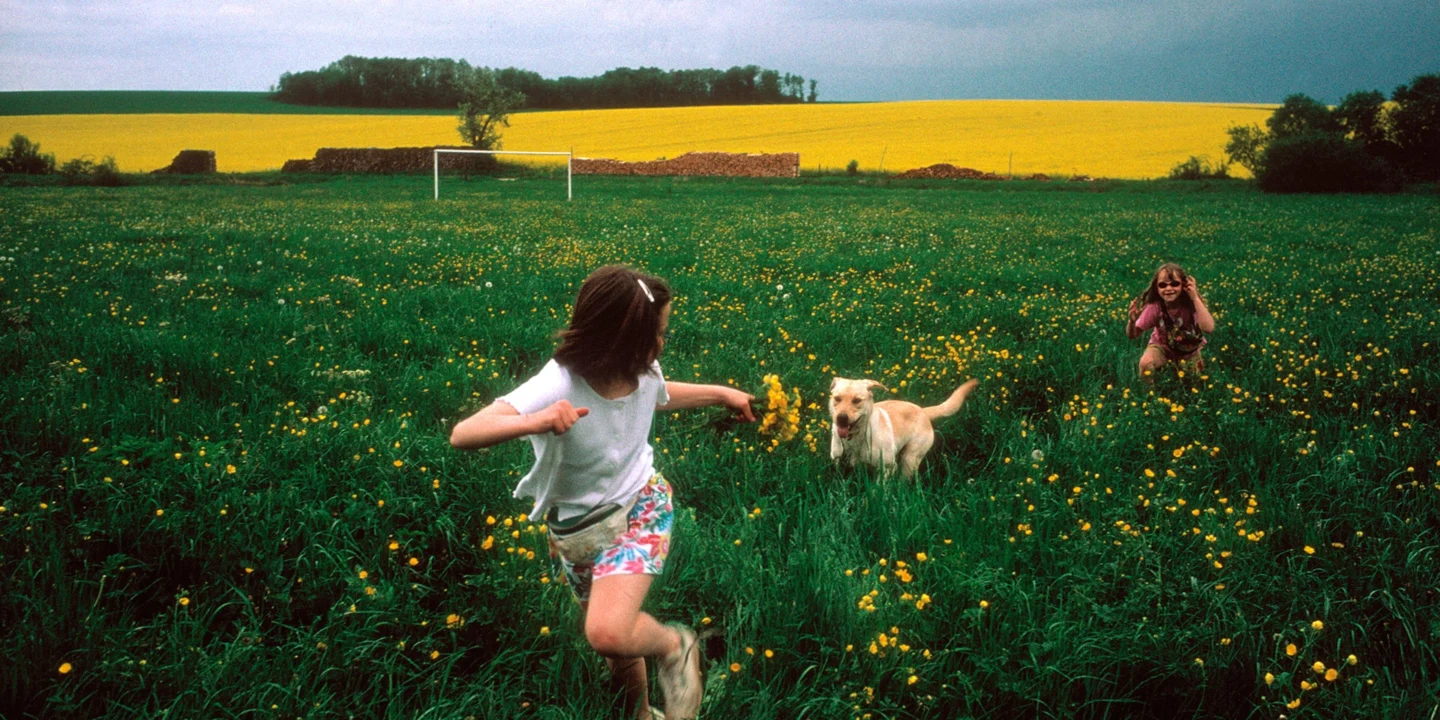
After school, we went outside to play. Not the kind of play arranged by parents, not extracurricular activities one had to register for, and not the kind of play in which adults stood nearby keeping score, blowing whistles, and correcting movements. It was play organised by children themselves. Older kids and younger kids mixed together. Neighbourhood children, friends of friends, whoever happened to pass by could join. We often played until dark. We played on weekends. We played all summer. We had long stretches of time to explore, to daydream, to become bored, and then to figure out how to climb out of boredom ourselves. We got into trouble, and we learned how to get ourselves out of it. We developed hobbies. We read comics and whatever else we wanted to read, rather than only the books assigned, checked, and tested by adults.
Later, I became increasingly convinced that this hunter-gatherer education shaped my adult life more deeply than anything school taught me. I suspect that if others of my generation thought carefully about it, they too would find that they learned how to live mostly outside the classroom.
Over the past half-century and more, children’s opportunities for free play in the United States have steadily declined. The same pattern can be seen in many other countries. The historian Howard Chudacoff once called the first half of the 20th century the golden age of children’s free play. By around 1900, the demand for child labour had fallen, and children gained a substantial amount of free time.
But beginning around the 1960s, adults began taking that freedom back piece by piece. Children spent more time on schoolwork. More importantly, even when they were out of school and not doing homework, their freedom to go out and play on their own was increasingly restricted. The spontaneous neighbourhood games once organised by children were replaced by adult-run sports. Personal hobbies were replaced by classes, lessons, training sessions, enrichment programmes, and improvement courses. Parents’ anxieties rose, and they became less and less willing to let children leave home and play with other children without adult supervision.
There are, of course, many reasons for these changes. Urban space changed. Family structure changed. Academic competition changed. Media-driven fear changed. But whatever the reasons, the result is clear: for decades, children have had less and less time to play, explore, and take risks in ways of their own choosing. And the decline has been dramatic.
At the same time, children’s mental health problems have increased.
This is not merely because we are better at diagnosis now, or because we have noticed problems that used to be overlooked. Clinical questionnaires measuring anxiety and depression have been given, in essentially unchanged form, to standard samples of American schoolchildren since the 1950s. The results show an almost linear rise in anxiety and depression among young people across the decades. By today’s diagnostic standards, rates of generalised anxiety disorder and major depression are five to eight times higher than they were in the 1950s. Over the same period, the suicide rate among 15- to 24-year-olds has more than doubled, and the suicide rate among children under 15 has quadrupled.
This is not a small problem. Nor can it be explained away by saying that children today are simply too fragile.
As opportunities for play have declined, other changes have appeared as well: empathy has declined, while narcissism has risen. Both have been measured with standard questionnaires given to college-student samples since the late 1970s. Empathy is the ability to see from another person’s point of view and to understand that person’s emotional experience. Narcissism is inflated self-regard, combined with a lack of real concern for the needs and feelings of others.
If children lack abundant opportunities for free social play, such results should not surprise us. Children do not learn empathy by listening to lectures. They do not learn cooperation by taking tests. School is essentially an authoritarian environment, not a democratic one. It asks children to obey schedules, accept evaluation, and compete with one another. Children there do not have a real right to leave. Even if others fail to respect them, even if the rules make no sense to them, they cannot simply walk away as they can in play.
Free play is different. It requires children to negotiate, compromise, speak up, listen, and control themselves. That is why, when we deprive children of play, we are not merely depriving them of entertainment. We are depriving them of one of the most important forms of social learning.
In my book Free to Learn, I documented these changes and argued for one central point: the rise in childhood mental disorders is closely connected to the decline in children’s freedom. If we truly love children, and if we truly want them to grow in healthy ways, we should give them more time and space to play, not less.
Yet policymakers, education reformers, and influential philanthropists continue to push us in the opposite direction: more school hours, more tests, more standardised curricula, more adult organisation, more supervision, and less free play.
I once took part in a radio debate with someone from an organisation that advocated longer school days and a longer school year. Her argument was clear: if children are to be prepared for the competitive world of today and tomorrow, they need to spend more time in school. This view is entirely consistent with the language used by many politicians and education officials. The host opened the debate with a simple question: “Do students need more time to learn, or more time to play?”
Learning or playing.
That opposition sounds natural to many people. Almost instinctively, they assume that learning happens in school, or perhaps in activities designed, supervised, and evaluated by adults. Play, at best, is a break from learning. It is recess. It is summer vacation. It is the little sweetener added to restore energy before the serious business resumes. From this point of view, summer vacation is merely an overlong recess, perhaps one that ought to be shortened.
But there is another view, one that should be obvious and yet is often ignored: play itself is learning.
Children learn the most important lessons of life through play, and precisely these lessons cannot be directly taught in classrooms. To learn them well, children need a great deal of play. Not a little bit. Not half an hour a day. Not “gamified learning” arranged by adults. They need long, sustained, free play, with minimal adult interference.
I am an evolutionary psychologist. That means I am interested in human nature, in how human nature relates to the nature of other animals, and in how these traits were shaped by natural selection. The subject that especially interests me is play.
All young mammals play. But why? Why should they spend energy, and even risk injury or death, chasing, pouncing, wrestling, climbing, and tumbling, when they could quietly hide in a burrow and conserve strength?
That is exactly the kind of question evolutionary psychologists like to ask. The German philosopher and naturalist Karl Groos was one of the first to address it seriously from a Darwinian perspective. In The Play of Animals, he argued that play was preserved by natural selection because it helps young animals practise the skills they will later need for survival and reproduction.
This practice theory of play is now widely accepted by researchers. It explains why young animals play more than adults: they have more to learn. It also explains why animals that depend more on learning and less on fixed instinct tend to play more. If you know what abilities an animal must master in adulthood, you can roughly predict how it will play in youth. Lion cubs, wolf pups, and other young predators play at stalking, pouncing, and chasing. Young zebras, deer, and other prey animals play at fleeing, dodging, and turning quickly.
Do We Need More People Who Can Memorise Answers, Obey Orders, and Never Ask Questions?
Groos later wrote The Play of Man, extending his insights about animal play to human beings. He noted that humans have far more to learn than any other species, and therefore human beings are the most playful of all animals. Unlike the young of other species, human children do not merely need to learn a relatively fixed set of skills. They must learn the ways of life, tools, rules, and values of the particular culture in which they grow up.
For that reason, Groos argued, natural selection preserved in human children a powerful impulse: to observe what adults do, and then transform those activities into play. Children play not only at skills needed by humans everywhere, such as walking, running, and climbing, but also at skills that matter especially in their own culture: shooting arrows, herding animals, cooking, building boats, trading, arguing, and telling stories.
My own research builds on Groos’s pioneering work. One branch of that research concerns childhood in hunter-gatherer societies. Before agriculture appeared, human beings lived as hunter-gatherers for an immensely long period of time. Even in recent times, some groups continued to live this way and were studied by anthropologists. I read as much as I could find about hunter-gatherer childhoods, and I also surveyed ten anthropologists who had lived among different hunter-gatherer cultures.
The results were strikingly consistent: hunter-gatherer societies have nothing like modern schools. Adults generally believe that children learn by observing, exploring, and playing, so they give children almost unlimited time to do those things. From around the age of four, children are considered responsible enough to go off with mixed-age groups of other children, away from adults. From then until their mid- or late teenage years, most of their waking hours are available for free play. Only gradually, and on their own initiative, do they begin taking on adult responsibilities.
Karen Endicott, who studied the Batek people of Malaysia, once reported that children there were free to play nearly all the time. No one expected them to do serious work until their late teens.
This fits perfectly with the practice theory of play. These children were not “learning nothing”. Quite the opposite. They were constantly playing at the very things they would need later in life. Boys played endlessly at tracking and hunting. Boys and girls alike played at finding edible roots, digging plants, climbing trees, cooking, and building shelters. They played at making dugout canoes, crafting tools, imitating adult debates, and even testing whether they could reason better than the adults had around the fire the night before. They danced traditional dances and sang traditional songs, but also invented their own. They made musical instruments and played them. Even small children handled knives and fire, and adults allowed them to do so, because how else were they supposed to learn to use these things?
The crucial point is that these activities were not assignments from adults. There was no timetable, no homework, no grades, no lesson called “survival skills”. Children did these things because they were fun. They did them because, deep in their bodies and minds, there was an impulse preserved by long ages of evolution, urging them to practise culturally meaningful activities through play, and thereby become skilled, capable, knowledgeable adults.
Another branch of my research concerns a radically alternative school: the Sudbury Valley School, not far from my home in Massachusetts. It is called a school, but it is almost entirely unlike what most people mean by that word. The students range in age from four to nineteen, and each day they are free to do whatever they wish, so long as they do not break the school’s rules. Those rules have nothing to do with academic performance. They exist only to maintain peace and order within the community.
To most people, this sounds absurd. How can children possibly learn that way?
Yet the school has existed for many years and has many graduates. These graduates have done well in the real world, not because the school taught them in the conventional sense, but because it allowed them to learn what they truly wanted to learn. And the results are consistent with Groos’s theory: when children in a modern culture are free, they naturally turn toward skills that are valued in that culture. Sudbury Valley students learn reading, calculation, computer use, music, writing, social organisation, and many other things with the same playful energy. They may not say, “I am learning.” They may simply say, “I am playing,” or “I am doing this.” But learning is happening all the same.
Even more important than the specific skills are the attitudes they develop. They learn to take responsibility for themselves and for their community. They learn that life can be interesting, even — perhaps especially — when it involves difficult things.
Sudbury Valley School and a hunter-gatherer band are, of course, very different. But they are similar in one crucial respect: both provide the necessary conditions for children’s self-education. Both assume that education is the child’s responsibility, not something adults impose on children. Both give children freedom to play, explore, and follow their interests. Both give children access to the tools of the culture. Both give children contact with caring, knowledgeable adults who are helpers rather than judges. Both allow children to mix freely with people of different ages. Mixed-age play is especially important, because it promotes learning more powerfully than play among children all at the same level.
In both settings, children also live within a stable moral community. They learn not only “what I want to do”, but also “how we live together”. They develop a sense of responsibility toward others, not merely toward their own interests.
I do not expect to persuade most people anytime soon to abolish schools as we know them and replace them with centres for self-directed play and exploration. But at the very least, we should be able to persuade most people that free play outside school matters. We have already taken far too much away. We must not take more.
Those who advocate more conventional schooling and more standardised testing say they want children to be prepared for the future. But what kind of preparation does the future require? Do we need more people who can memorise answers and reproduce them on tests? Do we need more people who simply do what they are told and never ask questions? Schools are quite good at producing such people, because the modern school system was designed, in large part, to train obedience, punctuality, repetition, and compliance.
But surely the world now needs something else. It needs people who can ask new questions, find new answers, think critically, act creatively, take initiative, and learn under their own power when no one is guiding them step by step. Nearly every education leader will say, at least in public, that these capacities matter more than ever. The trouble is that schools are especially bad at cultivating them.
For more than two decades, education leaders in the United States, Britain, and Australia have often urged us to learn from Asian schools, especially those in Japan, China, and South Korea. Children there spend more time studying and score higher on international standardised tests. The irony is that many educators within those countries have already begun to recognise serious problems in their own systems. Their schools are excellent at producing high test scores, but poor at producing young people with real creativity, curiosity, and love of learning.
In Chinese education, there is a common phrase for this result: high scores, low ability. Students spend nearly all their time studying and preparing for exams, and therefore have little opportunity to create, take initiative, or develop physical and social skills. In short, they have little opportunity to play.
Unfortunately, as we rely more and more on standardised curricula and fill more of children’s time with school tasks, we are moving toward a similar result. Long-term studies of American children’s creativity already show significant decline. Data from the Torrance Tests of Creative Thinking indicate that, since the 1980s, American children have declined on many measures of creativity. They have become less emotionally expressive, less energetic, less humorous, less imaginative, less unconventional, and less able to see things from different angles.
This is not accidental.
Creativity Cannot Be Taught; It Can Only Be Allowed to Blossom, and It Blossoms in Play
Creativity is not produced by direct instruction. You cannot teach creativity the way you teach multiplication tables. What you can do is provide the conditions in which it can blossom naturally. And children’s creativity blossoms most readily in play.
Before school, children are naturally creative. They turn chairs into ships, cardboard boxes into castles, sticks into swords, wands, fishing rods, or royal sceptres. They do not first ask whether the answer is correct. They do not first worry about how others will grade them. They try, combine, pretend, fail, and try again.
Many great innovators are simply those who somehow preserve this childhood capacity into adulthood. Einstein once described his work in theoretical physics and mathematics as “combinatorial play”. This was not merely a charming metaphor. It captured the real condition of creativity. A person is most able to combine freely, take risks, and discover hidden connections when engaged in something like play.
A great deal of psychological research supports this. People are more creative when they experience a task as interesting in itself, not as something to be judged, ranked, rewarded, or punished. By contrast, attempts to increase creativity through prizes, contests, and external evaluation often have the opposite effect. It is difficult to be creative when you are anxious about how others will judge you.
School is saturated with judgment. Children’s answers are graded, their work compared, their performance ranked, their time chopped into pieces by bells. In such an environment, children readily learn to do what others ask of them. But they have little opportunity to practise deep, sustained, free exploration of an interest that truly belongs to them.
When my colleague and I studied graduates of Sudbury Valley School, we asked what activities they had most loved as students and what careers they later pursued. In many cases, the relationship was direct. Those who became musicians had spent much of their student life immersed in music. Those who became computer programmers had spent long hours playing with computers. One woman who became captain of a cruise ship had spent much of her childhood playing on the water, first with toy boats and later with real ones. A man who became a machinist and inventor had spent his childhood taking things apart and building things, trying to discover how they worked.
These people did not first receive assignments and then discover their interests. On the contrary, they discovered their passions in free play, pursued them deeply, and eventually made them part of their adult lives.
Standard schools rarely allow this. In standard schools, everyone must do the same thing at the same time. Even if a child develops a genuine interest in something, the bell rings and he must stop and move to the next subject. The timetable does not care whether curiosity has just begun to burn. It cares only that time is up.
In the past, children at least had time outside school to pursue their interests. Today, that time is increasingly filled with homework, tutoring, training, lessons, and adult-arranged activities. Children rarely have the chance to spend long, uninterrupted stretches immersed in what they truly love. Without immersion, there is little depth. Without freedom, there is little creativity.
Beyond creativity, play also teaches children how to live with other people. To have a happy marriage, stable friendships, or good working relationships, a person must know how to understand others, express himself, negotiate conflict, and control impulses. This may be one of the most important skills any child must learn in order to live well.
And social play is the academy in which these skills are learned.
Play is powerful because it is voluntary. Players can always leave. If a child becomes too bossy, the others may stop playing. If he ignores everyone else’s feelings and insists on his own rules, he may quickly find himself left alone. So, in order to keep the game going, each child must learn a difficult lesson: satisfy your own wishes, but also attend to the wishes of others.
This is far more effective than adult preaching.
If a child named Betty tries to make all the rules and command everyone else, her playmates may simply walk away and start another game elsewhere. That gives Betty clear feedback: if you want to keep playing with others, you must listen to what they want. The children who leave may learn something too: if they still want to play with Betty, they will need to express their own wishes more clearly next time, rather than silently enduring until they explode.
Social play is full of negotiation and compromise. Preschool children playing “house” often spend more time deciding how to play than actually playing. Who will be the mother? Who will be the baby? Who gets which object? How will the story unfold? They are not wasting time. They are practising social life itself. A skilled little player may even turn a command into a request: “Let’s pretend this necklace is mine, okay?” If the answer is no, discussion begins.
We Are Not Equally Strong, Equally Clever, or Equally Healthy; But We Are Equally Worthy of Respect
A mixed-age pickup baseball game offers the same lesson. A pickup game is play because it is managed by the players themselves, not by coaches, umpires, and adult institutions. The children must choose teams, negotiate rules, and decide what counts as fair. They must cooperate with teammates, and also with opponents. More importantly, they must take into account the needs and abilities of different players.
Big Billy may be the best pitcher, but if others want a turn pitching, he had better let them try, or they may quit. When he pitches to little Timmy, who is just learning to hit, he should toss the ball gently into a place Timmy can reach, or even his own teammates may think he is mean. But when he pitches to Wally, who hits hard and well, he should throw his best, because Wally would feel insulted by anything less.
In such a game, winning is not the only point. Keeping the game going, and keeping it fun for everyone, matters far more than victory.
The golden rule of social play is not simply “treat others as you would like to be treated”. The real rule is harder: treat others as they would like to be treated. To do that, you must enter another person’s perspective and understand another person’s needs.
Children practise this constantly in play.
Equality in play does not mean that everyone is the same. Children know perfectly well that some run faster, some are stronger, some are timid, and some are less experienced. But play asks them to treat every person’s needs as important. This may be the best interpretation of the idea that all people are created equal: we are not equally strong, equally clever, equally healthy, or equally quick, but we are equally worthy of respect, and our needs should be taken seriously.
Of course, I do not want to idealise children. There are bullies among children. There are children who are cruel, controlling, or unwilling to cooperate. Still, free social play is by far the most effective setting for learning these lessons. Anthropologists have found that hunter-gatherer groups show remarkably little systematic bullying or domination. These societies are often highly egalitarian. They have no chiefs, no hierarchical authority. They share resources, cooperate intensely, and make decisions through long discussions aimed at consensus.
I believe one important reason they can do this is that they enjoy abundant social play in childhood. The skills practised in such play — negotiation, empathy, self-control, respect for difference, care for others — are precisely the skills required for life in an egalitarian community.
Today, a person may be able to survive without these capacities. But it is difficult to live happily without them.
Play also teaches children how to handle fear and anger. Researchers who study animal play argue that one of play’s major functions is to help the young practise coping with danger, emotionally as well as physically. Young mammals of many species repeatedly place themselves in situations that are somewhat dangerous and somewhat frightening. They leap in ways that make landing difficult. They run along edges. They swing between branches. They engage in play fights, taking turns putting themselves in vulnerable positions and then escaping.
Human children do the same when they are free to play. Mothers often become nervous watching them, but children are giving themselves small doses of fear. They climb, jump, chase, wrestle, and test the edge of what they can tolerate. In doing so, they learn to manage fear.
But this practice must be controlled by the child. It must not be forced by adults. Forcing a child to confront a fear he is not ready for is cruel. Think of gym classes in which every child is required to climb a high rope or swing between high bars. Such coercion does not build courage. It may produce panic, shame, and embarrassment, making the child more fearful in the future.
Tantrums May Work with Parents, But They Never Work with Playmates
Children also experience anger in play. Someone pushes them. Someone teases them. Someone refuses to follow their plan. Someone fights over a role or a prop. Anger appears; that is normal. But if children want the game to continue, they must learn to control that anger. They can object. They can assert themselves. But they cannot simply lash out.
Because tantrums may work with parents, but they never work with playmates.
Parents may give in when a child cries or screams. Playmates will not. They will leave. They will play somewhere else. They may stop inviting you. So children learn that emotion cannot become command, and anger must be governed by rules. This lesson is difficult, but it is essential. The young of other animals also learn to regulate aggression through social play, and human children do the same.
In school and other adult-controlled environments, adults make decisions for children and solve children’s problems. Children in these settings are small, managed, and evaluated. But in play, children make their own decisions, solve their own problems, and face the consequences. The world of play is the child’s practice world for adulthood.
We often think of play as childish. But for children, play is precisely the experience of adult power: self-control, responsibility, rule-making, conflict management, risk-taking, and care for others. When we deprive children of play, we deprive them of the chance to practise adulthood. The result may be people who grow up with a sense of dependence and victimhood, feeling that some authority somewhere should tell them what to do and solve their problems for them.
That is not a healthy way to live.
Animal studies show the damage caused by play deprivation. Researchers can raise young rats and monkeys in ways that allow other forms of social interaction but prevent play. When these animals reach young adulthood, they are emotionally impaired. Placed in a mildly unfamiliar and frightening environment, they freeze in fear and fail to explore as normal animals would. Placed with an unfamiliar peer, they may cower, or lash out with inappropriate aggression, or do both.
Over the past several decades, our society has been conducting a similar experiment in play deprivation on children.
Of course, today’s children have not been deprived of play as completely as laboratory animals. But compared with children 60 years ago, they have far less of it. Compared with children in hunter-gatherer societies, they have pitifully little. The results are becoming increasingly clear: play deprivation harms children. It is connected to anxiety, depression, suicide, narcissism, declining empathy, and the loss of creativity.
We always say we want children to be prepared for the future. But if the future requires people who can create, cooperate, manage themselves, face fear, handle conflict, and learn on their own initiative, then we cannot continue depriving them of the best way to practise these capacities.
Children do not grow by being endlessly managed.
Children grow through play.
It is time to end this experiment.