

Recent Posts










Pistachios have moved far beyond the snack bowl. Their bright green color now appears in chocolate bars, pastries, ice cream, sauces, and social-media recipes. Yet popularity alone does not tell us whether a food deserves a regular place in a healthy diet.
In the case of pistachios, the answer is encouraging. They combine protein, fiber, and unsaturated fat in a compact serving, while also providing several vitamins, minerals, and protective plant compounds. Research has connected regular pistachio intake with small improvements in certain markers of heart and metabolic health.
The important word is “small.” Pistachios are not a treatment, and adding them to an otherwise unbalanced diet will not transform health. Their value comes from using them as one component of a varied eating pattern—especially when they replace a less nourishing snack.
What are pistachios?
Pistachios come from the Pistacia vera tree, which originated in Central Asia and the Middle East. Although they are grouped with nuts in cooking and nutrition, the edible part is technically a seed.
Humans have eaten pistachios for thousands of years. They remain central to many traditional dishes, including baklava, pilafs, and savory sauces, but their mild sweetness and rich color also make them popular in modern desserts.
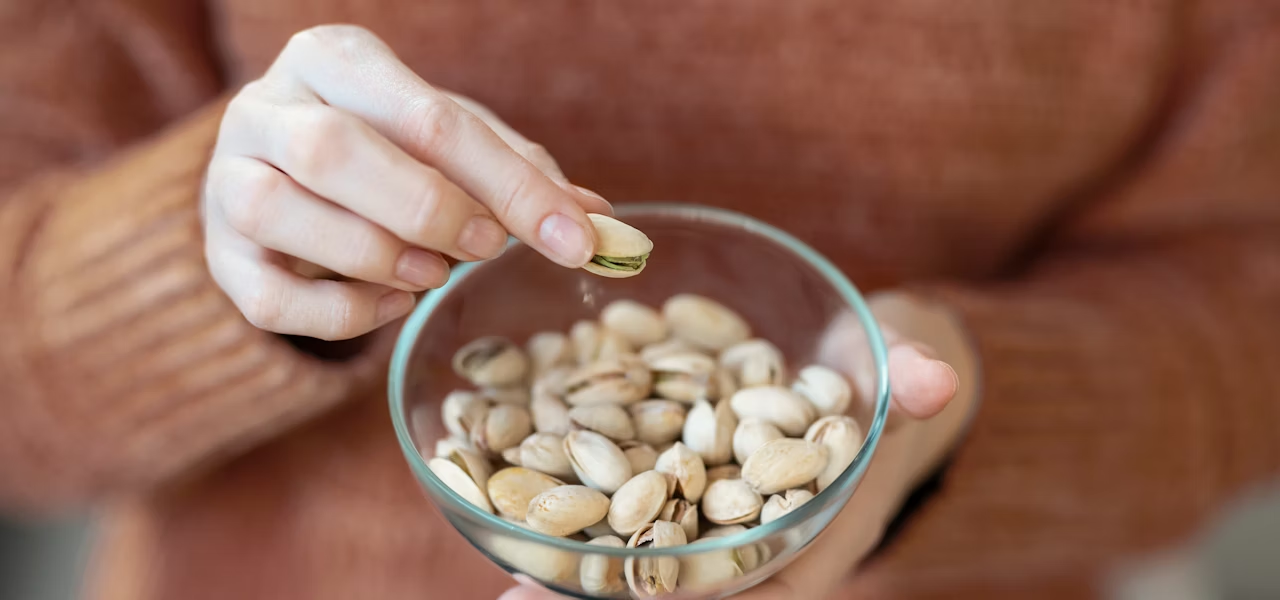
The shell usually splits naturally as the seed ripens. Eating pistachios in their shells slows the process down, which may make it easier to notice how much you have eaten compared with consuming a bowl of shelled nuts quickly.
What is in a serving of pistachios?
A typical 30-gram handful provides approximately:
- 174 calories
- 6.1 grams of protein
- 14.2 grams of fat
- 5.2 grams of carbohydrate
- 3 grams of fiber
Most of the fat is unsaturated. Pistachios also provide copper, phosphorus, manganese, potassium, vitamin B6, and other micronutrients. Their protein contains all nine essential amino acids, although the amount in a normal serving is lower than in a full protein-rich meal.
The green and purple colors come partly from carotenoids and polyphenols. These compounds can help protect cells from oxidative damage, but describing pistachios as “antioxidant-rich” does not mean they can prevent disease on their own.
Nutrition numbers describe what pistachios contain; clinical research asks whether eating them produces meaningful changes in people. Nuts as a group have been studied more extensively than many individual foods, and pistachio trials have generally reported neutral or favorable results.
There is an important limitation. A substantial portion of pistachio research has received support from grower or industry organizations. Industry funding does not automatically invalidate a study, and many findings agree with wider research on nuts. Still, funding, sample size, study design, and duration should all be considered when judging the strength of a claim.
1. Pistachios and heart health
The most established benefits of pistachios relate to cardiovascular risk factors. Controlled trials and research reviews suggest that including pistachios in the diet can lead to modest reductions in total cholesterol and LDL cholesterol.
Several components may contribute. Monounsaturated and polyunsaturated fats can replace saturated fats when pistachios are used instead of foods such as pastries or processed snacks. Pistachios also contain phytosterols, plant compounds that resemble cholesterol and can reduce the amount absorbed in the intestines.
Evidence concerning blood pressure is less consistent. Some analyses report a small reduction in systolic blood pressure, while others find no clear effect. Choosing unsalted pistachios is sensible for anyone trying to limit sodium, because heavily salted varieties can work against a blood-pressure-friendly eating pattern.
Pistachios should complement—not replace—prescribed medication, physical activity, sufficient sleep, and the rest of a heart-healthy diet.
2. Pistachios and blood sugar
Pistachios contain carbohydrate, but their mixture of fiber, protein, and fat slows digestion. As a result, they have a low glycemic index and are less likely to cause the rapid rise in blood glucose associated with refined carbohydrate foods eaten alone.
Studies have examined what happens when pistachios are added to meals containing foods such as white bread, rice, or pasta. In some cases, the combined meal produces a gentler post-meal glucose response than the carbohydrate food by itself.
A systematic review of randomized trials reported reductions in fasting glucose and insulin among people at elevated cardiometabolic risk. It did not find a clear improvement in every measure of insulin resistance, and the included studies were relatively small. The results are promising, but they do not prove that pistachios can prevent or treat diabetes.
For someone managing diabetes, portion size and the composition of the entire meal still matter. Pistachios can be included in an appropriate diet, but medication or monitoring plans should not be changed without professional advice.
3. Pistachios and weight management
Despite their calorie density, pistachios are not consistently associated with weight gain when eaten in normal portions. Most intervention studies report either no meaningful weight change or a small improvement when pistachios replace another snack.
There are several possible explanations:
- Protein and fiber can make a snack more satisfying.
- Chewing and shelling take time, which can slow eating.
- Discarded shells create a visible reminder of the amount consumed.
- Some fat remains trapped within plant cell walls and is not fully absorbed.
One 12-week trial found a larger reduction in body mass index among participants who ate pistachios than among those given a pretzel snack. A single study is not enough to classify pistachios as a weight-loss food, especially because results depend on what the nuts replace and how total energy intake changes.
Even when weight remains stable, switching from a low-nutrient snack to pistachios may improve intake of fiber, unsaturated fat, potassium, copper, and B vitamins. That can be worthwhile without any change on the scale.
4. Pistachios and the gut microbiome
Beyond cholesterol and blood sugar, researchers are beginning to examine how pistachios interact with the gut microbiome. Their fiber is not completely digested in the small intestine, and some of it reaches the colon, where microbes can use it as fuel.
Pistachio polyphenols also interact with gut bacteria. During fermentation and metabolism, microbes may produce compounds such as short-chain fatty acids. Butyrate, one of these compounds, supplies energy to cells lining the colon and helps support the intestinal barrier.
Early human studies suggest that regular pistachio intake may shift the relative abundance of certain microbial groups. However, this is an emerging area, and much of the mechanistic evidence still comes from laboratory and animal research. A change in microbiome composition is not automatically beneficial; researchers must also show that it produces a meaningful health outcome.
Pistachios can contribute to a gut-friendly diet, but diversity remains more important than one food. Vegetables, fruits, legumes, whole grains, seeds, herbs, and other nuts provide different fibers and plant compounds for the microbial community.
5. Pistachios and eye health
Pistachios contain lutein and zeaxanthin, two carotenoids that accumulate in the retina. They form part of the eye’s natural defenses by filtering some high-energy light and helping neutralize oxidative stress.
These carotenoids are associated with healthy visual function and are being studied for their possible role in reducing the risk of age-related macular degeneration. That association does not mean that pistachios alone can prevent eye disease.
In a small 12-week study, adults who ate approximately 56 grams of pistachios each day increased their blood lutein levels. This shows that pistachios can contribute bioavailable lutein, but longer studies are needed to determine whether the change leads to measurable protection of vision.
Are there any risks or disadvantages?
For most people, pistachios are a safe and nourishing food, but “healthy” does not mean suitable for everyone or unlimited in quantity.
Tree-nut allergy
Pistachio allergy can cause reactions ranging from itching and hives to life-threatening anaphylaxis. People with a known tree-nut allergy should follow medical guidance and read labels carefully. Pistachios are botanically related to cashews, so cross-reactivity can occur.
Added salt
Flavored and roasted varieties may contain a significant amount of sodium. Unsalted or lightly salted products make it easier to control intake, especially for people with high blood pressure or those advised to limit sodium.
Digestive discomfort
Fiber and fermentable carbohydrates can trigger gas or bloating when intake rises suddenly. Begin with a small portion if you rarely eat nuts or other fiber-rich foods. People with irritable bowel syndrome may tolerate different amounts and should follow individualized advice if symptoms are troublesome.
Portion size
Pistachios are energy-dense. A handful of about 30 grams is a useful reference serving, although individual needs differ. Eating from a measured bowl rather than a large package can make portions easier to notice.
Practical ways to eat pistachios
Choose plain, unsalted pistachios for everyday use. They can be eaten alone or added to meals in small amounts:
- sprinkle chopped pistachios over natural yogurt or oatmeal
- add them to salads, roasted vegetables, or grain bowls
- blend them with herbs, olive oil, and lemon for a savory sauce
- use them as a crust for fish, tofu, or chicken
- add a modest amount to baking rather than relying on heavily sweetened pistachio fillings
The health impact depends partly on what pistachios replace. Substituting them for candy, chips, or a refined snack is different from adding them on top of an already adequate diet without adjusting anything else.
Summary
Pistachios are nutrient-dense seeds that provide protein, fiber, unsaturated fat, and a broad range of micronutrients and plant compounds. Research suggests modest improvements in LDL cholesterol and some aspects of blood glucose regulation. Normal portions generally do not appear to cause weight gain.
Evidence for gut and eye health is interesting but less mature. Small studies suggest possible changes in the microbiome and increased lutein levels, yet neither finding proves that pistachios prevent disease.
For most people, a small handful of unsalted pistachios can be a satisfying addition to a varied diet. Their greatest value is not as a miracle food, but as a practical replacement for snacks that contain less fiber, protein, and unsaturated fat.
Frequently asked questions
Are pistachios good for weight loss?
They are not proven to cause weight loss, but they can support satiety and generally do not promote weight gain when eaten in appropriate portions. Their effect depends on total intake and what they replace in the diet.
Can you eat pistachios during pregnancy?
Pistachios are generally suitable during pregnancy for people without a tree-nut allergy. They provide protein, healthy fat, iron, and folate. Choose safe, properly stored products and consult a healthcare professional if you have an allergy or a pregnancy-related dietary concern.
Are pistachios good for the skin?
Pistachios contain vitamin E, zinc, unsaturated fats, and antioxidants that contribute to normal skin function. Direct research showing a unique skin benefit from pistachios is limited, so they should be viewed as part of an overall nutritious diet rather than a skin treatment.