
Recent Posts










Eating more plants is familiar advice, but eating a wider variety of plants may be just as important as increasing the amount on your plate. That idea has inspired a simple weekly goal: try to eat 30 different plant foods.
Thirty can sound intimidating at first. However, the target includes much more than fruits and vegetables. Whole grains, beans, lentils, nuts, seeds, herbs, spices, tea, coffee, and cocoa all come from plants and can contribute to dietary diversity.
The purpose is not to create another rigid food rule. It is to encourage experimentation, make meals more varied, and provide the microorganisms living in your gut with a broader range of nutrients.
This guide explains where the 30-plant target came from, how plant diversity may support health, what foods can be included, and how to increase variety without dramatically changing the way you eat.
The Main Ideas
- A varied plant-rich diet can support a more diverse gut microbiome.
- Different plants contain different fibers and plant compounds.
- The number 30 comes from microbiome research, but it should be treated as a helpful target rather than a strict medical requirement.
- Fruits and vegetables are only part of the count. Legumes, whole grains, nuts, seeds, herbs, and spices matter too.
- Small additions can make a large difference over an entire week.
- People who are not accustomed to eating much fiber may need to increase their intake gradually.
Why Focus on Variety?
Traditional healthy-eating advice often concentrates on portions. Recommendations such as eating five servings of fruits and vegetables each day remain useful because they encourage people to consume more nutrient-rich foods.
The 30-plant approach asks a slightly different question: How many different plants are you eating?
Someone might eat generous portions of bananas, carrots, peas, potatoes, and broccoli every day. These are all nutritious foods, but repeating the same five plants provides less variety than rotating through berries, leafy greens, beans, seeds, grains, herbs, and other vegetables.
Plant diversity matters because no single food contains every type of fiber, vitamin, mineral, or polyphenol. Expanding the range of foods you eat can broaden the nutrients and bioactive compounds available to both your body and your gut microbes.
The goal is not necessarily to eat larger meals. It is often possible to increase diversity by combining small amounts of several plants in meals you already enjoy.
Your Gut Is an Ecosystem
Inside the digestive system lives a large community of bacteria and other microorganisms known collectively as the gut microbiome. These organisms interact with food, the immune system, and one another.
Many plant foods contain prebiotics. These are substances that pass through the upper digestive system and become fuel for microorganisms in the gut. Prebiotics include several types of fiber, resistant carbohydrates, and certain plant compounds.
Plants also contain polyphenols. These compounds contribute to the colors, flavors, and protective properties of many fruits, vegetables, herbs, spices, tea, coffee, and cocoa.
Because every plant has a different nutritional profile, different foods can support different groups of microbes. A varied diet therefore creates more opportunities for a range of beneficial microorganisms to thrive.
Microbiome diversity is not the only measure of gut health, and scientists are still learning what an ideal microbiome looks like. However, a richer and more varied microbial community is generally associated with a healthier, more resilient digestive environment.
Plant-rich dietary patterns, including Mediterranean-style diets, are also associated with benefits beyond the gut. They have been linked with better heart and metabolic health and a lower risk of several long-term health conditions.
These benefits cannot be credited to a weekly plant count alone. The overall pattern—including fiber intake, food quality, activity, sleep, and other lifestyle factors—still matters.
Where Did the Number 30 Come From?
The target became widely known following findings from the American Gut Project, a large citizen-science project published in 2018.
More than 10,000 participants from the United States, the United Kingdom, and Australia contributed information about their diets and provided stool samples for analysis.
Researchers found that participants who reported eating more than 30 different plant foods each week tended to have more diverse gut microbiomes than those who ate 10 or fewer. The groups also differed in some of the microbial compounds detected in their samples.
This does not prove that exactly 30 plants will create perfect gut health. The study was observational, meaning it identified associations rather than establishing that plant variety directly caused every difference.
Thirty is not a biological switch that turns health benefits on at plant number 30. Someone who increases their weekly variety from eight plants to 15 is still making meaningful progress.
It is best to view the number as a motivating and memorable challenge—not a pass-or-fail test.
What Can Be Counted as a Plant?
A broader definition of “plant food” makes the challenge much more achievable. Nearly every meal offers an opportunity to add another type.
Vegetables
Try rotating among different vegetable families instead of purchasing the same selection each week.
Possible choices include:
- Asparagus
- Broccoli
- Cabbage
- Carrots
- Cauliflower
- Eggplant
- Kale
- Mushrooms
- Onions
- Spinach
- Sweet potatoes
- Zucchini
Different parts of plants count too. You might eat roots such as carrots, leaves such as spinach, flowers such as broccoli, and bulbs such as onions or garlic.
Fruits
Fresh, frozen, and unsweetened dried fruits can all add variety. Foods commonly used in savory cooking, such as tomatoes and avocados, are botanically fruits as well.
Examples include:
- Apples
- Avocados
- Bananas
- Blueberries
- Figs
- Grapes
- Kiwis
- Oranges
- Pears
- Raspberries
- Tomatoes
Fruit juice is not nutritionally equivalent to whole fruit because much of the fiber has been removed. For this reason, whole fruit is usually the more valuable choice.
Beans, Lentils, and Other Legumes
Legumes are useful sources of fiber, plant protein, folate, and minerals. They are also inexpensive, filling, and easy to store.
Try experimenting with:
- Black beans
- Butter beans
- Chickpeas
- Edamame
- Green peas
- Kidney beans
- Lentils
- Pinto beans
- Soybeans
Using a mixed-bean product can add several plant types to a salad, soup, stew, or grain bowl at once.
Whole Grains
Grains count as plants, but whole-grain versions usually retain more of the original grain’s fiber and nutrients than highly refined alternatives.
Options include:
- Barley
- Brown rice
- Buckwheat
- Bulgur wheat
- Oats
- Quinoa
- Rye
- Whole wheat
You do not need to replace every familiar food immediately. Start by alternating grains or combining them—for example, mixing brown rice with barley or adding quinoa to a salad.
Nuts and Seeds
Nuts and seeds provide fiber, plant protein, minerals, and unsaturated fats. Because portions can be small, combining several varieties is an easy way to increase your weekly total.
Nuts to consider include:
- Almonds
- Brazil nuts
- Cashews
- Hazelnuts
- Pistachios
- Walnuts
Seeds might include:
- Chia seeds
- Flaxseeds
- Hemp seeds
- Pumpkin seeds
- Sesame seeds
- Sunflower seeds
A homemade jar containing several chopped nuts and seeds can be sprinkled over oatmeal, yogurt, soups, salads, and roasted vegetables.
Herbs and Spices
Fresh and dried herbs and spices are plant ingredients too. Although they are usually eaten in smaller quantities, using them regularly can add flavor and dietary variety without requiring larger meals.
Useful herbs include basil, cilantro, mint, oregano, parsley, rosemary, sage, and thyme.
Spices might include black pepper, cinnamon, cumin, ginger, nutmeg, paprika, saffron, and turmeric.
Rather than relying on salt alone, try combining herbs and spices to create different flavor profiles throughout the week.
Other Plant-Based Foods
Tea and coffee come from plants and contain polyphenols. Extra virgin olive oil, cocoa, and dark chocolate with a high cocoa content also provide plant compounds.
They can contribute to a diverse diet, but they should not replace fiber-rich whole foods. A cup of coffee and a piece of dark chocolate do not provide the same nutritional benefits as beans, whole grains, vegetables, or fruit.
Does Color Make a Difference?
Color can provide clues about the plant compounds present in food. Red cabbage, purple carrots, green peppers, and orange peppers do not contain precisely the same mix of polyphenols and other nutrients.
Different colors of the same plant may not always be counted as entirely separate foods in an informal plant challenge. Still, varying color is worthwhile.
Rather than worrying about the scoring rules, aim to make your shopping basket and dinner plate visually diverse. “Eating the rainbow” is a simple reminder to rotate colors, textures, and plant families.
Eight Easy Ways to Reach 30 Plants
Reaching 30 plants rarely requires 30 separate recipes. The easiest strategy is to upgrade everyday meals with small additions.
1. Choose mixtures
Buy mixed seeds, mixed nuts, frozen vegetable blends, mixed berries, or cans containing several bean varieties. One product can introduce multiple plants.
2. Build a more interesting breakfast
Instead of eating plain oatmeal, add an apple, blueberries, walnuts, chia seeds, and cinnamon. A familiar breakfast can contain six different plants with very little extra work.
3. Add toppings
Keep jars of seeds, chopped nuts, herbs, and spices nearby. Sprinkle them over yogurt, salads, soups, pasta, or roasted vegetables.
4. Use your freezer
Frozen fruits and vegetables are convenient, last longer than fresh produce, and can reduce waste. They are especially helpful when certain foods are expensive or out of season.
5. Keep beans in the cupboard
Canned chickpeas, lentils, and beans can quickly be added to salads, curries, soups, pasta sauces, and stews. Choosing a mixed-bean can increases variety even further.
6. Make salads more substantial
A basic bowl of lettuce and tomato can become a complete meal with chickpeas, avocado, carrots, apples, herbs, seeds, and a whole grain.
7. Rotate rather than eliminate
You do not need to abandon foods you like. If you usually buy apples, add pears one week and berries the next. Alternate rice with barley, quinoa, or bulgur.
8. Plan one plant-led meal
Choose one meal each week in which vegetables, beans, or lentils take the leading role. A lentil curry, mixed-bean stew, or vegetable tray bake can contribute several varieties at once.
Plant-Rich Meal Inspiration
The following ideas demonstrate how quickly the numbers can add up.
Breakfast
- Oatmeal with apple, blueberries, walnuts, pumpkin seeds, and cinnamon
- Plain yogurt or kefir topped with raspberries, almonds, chia seeds, and oats
- Whole-grain toast with avocado, tomato, radish, sesame seeds, and black pepper
Lunch
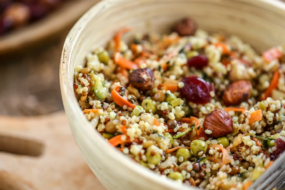
- Quinoa salad with chickpeas, cucumber, tomato, spinach, red onion, parsley, and pumpkin seeds
- Vegetable omelet with mushrooms, onions, peppers, and spinach, served with a bean salad
- Hummus and roasted vegetable wrap with cabbage, carrots, herbs, and mixed leaves
Dinner
- Lentil pasta sauce with tomatoes, carrots, onions, garlic, mushrooms, and wilted greens
- Mixed-bean stew with sweet potato, peppers, spinach, cumin, and paprika
- Brown rice bowl with edamame, broccoli, cabbage, avocado, sesame seeds, and ginger
Snacks
- Apple slices with peanut or almond butter
- Mixed nuts and seeds
- Roasted chickpeas
- Berries with plain yogurt
- Hummus with carrots, peppers, and cucumber
- A small amount of dark chocolate with hazelnuts
You do not have to eat every ingredient in a large portion. The focus is variety across the week while still eating enough food to meet your nutritional needs.
Make the Challenge Affordable
Eating a wider variety of plants does not have to mean buying large amounts of expensive fresh produce.
Budget-friendly strategies include:
- Buying dried or canned beans
- Rinsing canned foods when you want to reduce added salt
- Using frozen vegetable and fruit mixtures
- Choosing seasonal produce
- Purchasing small quantities of nuts and seeds in bulk
- Using dried herbs and spices
- Planning meals around ingredients already in the kitchen
- Freezing leftovers before they spoil
Waste can increase when people purchase too many unfamiliar foods at once. Begin with a few additions and use ingredients across several meals.
For example, spinach can go into an omelet, salad, pasta sauce, soup, and curry. Chickpeas can become hummus, a salad topping, a roasted snack, or part of a stew.
Increase Fiber at a Comfortable Pace
Eating more plants often means consuming more fiber. This is beneficial for many people, but a sudden increase may lead to gas, bloating, or changes in bowel habits.
If your current diet contains relatively little fiber, increase plant variety gradually. Drink enough fluids and give your digestive system time to adjust.
People with irritable bowel syndrome, inflammatory bowel disease, food allergies, or medical conditions requiring a specialized diet may not tolerate every plant food. Individual needs matter more than reaching a particular number.
A doctor or registered dietitian can help adapt the idea safely when digestive symptoms or health conditions are present.
Progress Is More Important Than a Perfect Score
A weekly target should make healthy eating feel interesting, not stressful. There is no need to restart the challenge because you counted something incorrectly or only reached 22 plants.
You can use a simple list on your phone, mark ingredients on a weekly meal planner, or count casually while cooking. Repeated plants remain nutritious even though they only add one new variety to your weekly total.
The most useful question is not “Did I score exactly 30?” It is “Am I eating a broader selection of plant foods than I used to?”
Moving from a narrow diet toward greater variety is already a positive change.
The Bottom Line
Eating 30 different plants each week is a practical way to think about dietary diversity. The target grew from research showing an association between greater plant variety and a more diverse gut microbiome.
It is not limited to vegetables. Fruits, legumes, whole grains, nuts, seeds, herbs, spices, tea, coffee, and cocoa can all contribute.
There is also no need to treat 30 as a strict threshold. Start from your current diet, introduce new foods gradually, and prioritize whole or minimally processed plant sources.
Simple habits—using mixed beans, adding seeds to breakfast, rotating grains, keeping frozen vegetables nearby, and cooking with more herbs—can make a surprisingly large difference.
The best version of the challenge is one that brings more color, flavor, and flexibility to your meals while remaining affordable and enjoyable.
Frequently Asked Questions
What may happen if you eat 30 plants a week?
Eating a wide variety of plants can increase your intake of fiber, vitamins, minerals, and polyphenols. Research has associated greater plant diversity with a more varied gut microbiome, although individual results differ.
Do I need to eat 30 full portions?
No. The goal concerns the number of different plant foods consumed across a week, not 30 full servings. Portion size and total nutritional balance still matter.
Do herbs and spices count?
Yes. Both fresh and dried herbs and spices come from plants and provide useful plant compounds. Because portions are small, use them regularly rather than depending on a single pinch.
Can frozen and canned foods be included?
Yes. Frozen vegetables, frozen fruit, canned beans, and canned lentils are convenient ways to increase variety. Check for unnecessary added sugar or salt where relevant.
Do tea and coffee count?
Tea and coffee are plant-derived and contain polyphenols, so they can contribute to plant diversity. However, they should complement rather than replace whole, fiber-rich foods.
Do I have to become vegan or vegetarian?
No. The challenge is about increasing plant variety, not necessarily removing animal products. It can be adapted to vegetarian, vegan, pescatarian, or omnivorous diets.
What if I cannot reach 30?
Eat as many different plants as is realistic for your circumstances. Increasing your weekly total gradually is still worthwhile, even if you do not reach 30.