










CLIMATE TECHNOLOGY · MANUFACTURING
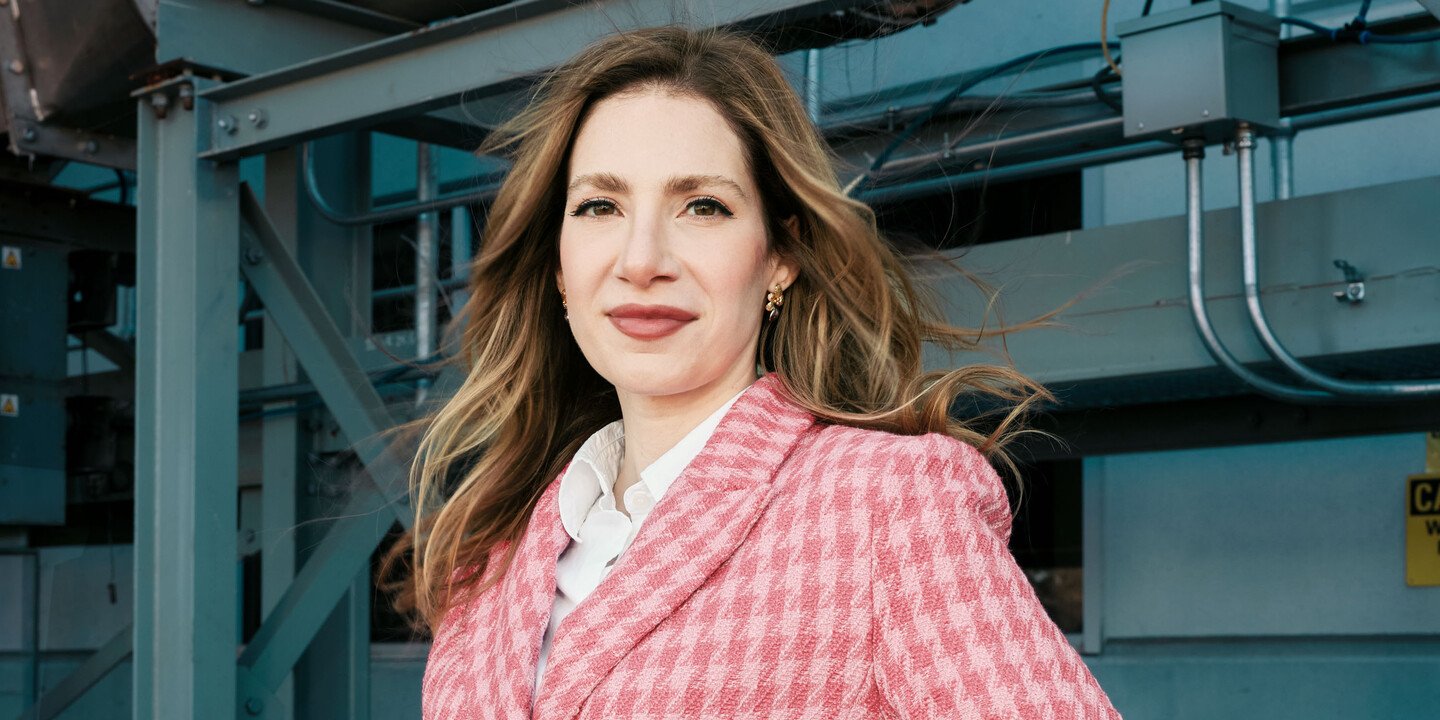
Laureen Meroueh’s compact furnace promises to turn iron ore into finished liquid steel at lower cost, while cutting the process’s climate impact by at least half.
Steelmaking has changed surprisingly little since modern methods for purifying iron ore emerged in the 1850s. Most producers still heat solid ore to extreme temperatures in enormous blast furnaces, expose it to reactive gases that remove oxygen, and then refine the resulting material again before it becomes rebar, vehicle frames or other products.
Coal powers the central chemical reaction, making the industry responsible for roughly 7% of the carbon emissions driving climate change—about the same share attributed to fashion. Replacing that system has been difficult. Steelmakers operate on narrow margins, while furnaces are expensive assets designed to remain in service for decades.
That combination creates a formidable standard for climate technology: a cleaner process must work at industrial temperatures and volumes, but it also has to compete on price. A solution that depends on companies accepting permanently higher costs is unlikely to spread fast enough to reshape a global commodity business.
A One-Step Furnace
Meroueh believes Hertha Metals has found a practical answer. The furnace she developed converts iron ore directly into refined molten steel in one stage, removing part of the conventional production chain. It also replaces coal with natural gas. She says the combined changes lower emissions by at least 50% and reduce production costs by 25% against standard steelmaking.
The value is not limited to carbon. According to Iryna Zenyuk, who directs the fuel-cell research center at UC Irvine, one advantage lies in shrinking an industrial system that is normally vast, inefficient and hungry for energy. Even an efficiency gain alone could be a major advance at steel’s scale, given the volumes involved.
The Path to Hertha
Risk has long been familiar to Meroueh. At 12, she entered a Florida Atlantic University pilot program that allowed her to take college-level classes instead of following a conventional secondary-school route. Engineering quickly captured her attention, from calculus to the possibility of harvesting energy from ocean waves.
The demanding academic schedule did not separate her from the outdoors. She also spent long stretches surfing and sitting in trees, experiences that deepened her attachment to nature and her conviction that it deserved protection. That concern eventually became a guide for the industrial problems she chose to pursue.
Now 34, Meroueh holds a doctorate in mechanical engineering from MIT. She ran a green-hydrogen startup before establishing Hertha in 2022. As a first-generation Lebanese American raised in an entrepreneurial family, she viewed starting a company less as an extraordinary leap than as a familiar way to put an idea into practice.
Hertha’s pilot operation in Conroe, Texas, north of Houston, can make one metric ton of steel each day. Rajesh Swaminathan, a partner at investor Khosla Ventures, considers that output a meaningful scale-up, especially given the company’s spending. Hertha had raised about $20 million by July 2026; he says rivals have produced much less steel after raising $50 million or even $100 million.
Progress Before Perfection
Hertha is deliberately addressing what steelmakers can change now rather than waiting for a perfectly carbon-free system. Several green-steel strategies use hydrogen to separate oxygen from iron ore, a route that may ultimately remove most or all process emissions. Meroueh is keeping natural gas in the current design because it is affordable enough to protect the cost advantage.
That choice is not intended to lock the technology into fossil fuels. Meroueh says the plant could move to a fully decarbonized process without a major hardware redesign once clean hydrogen becomes inexpensive. The near-term furnace is meant to deliver substantial reductions immediately while leaving a route to deeper cuts later.
Scale is next. Hertha plans a second facility beside its plant, designed to make 10,000 metric tons of steel at high purity each year and reach full production by the end of 2027. Meroueh then wants a third site to lift companywide production to 500,000 metric tons a year by 2030.
That target remains small beside the approximately 80 million metric tons the United States produces each year. Yet making even a single ton through a new process is a serious technical achievement, Zenyuk argues, and each scale increase supplies evidence that laboratory chemistry can become dependable manufacturing.
Meroueh starts from the assumption that societies today will not stop needing steel. Her question is how to manufacture indispensable materials with greater intelligence, lower expense and less long-term damage. Hertha’s wager is that an imperfect technology adopted soon can accomplish more than an ideal one that remains commercially out of reach.