









How many sights in the world make us believe in love more readily than a mother bending over to nurse her child? It is a posture that almost explains itself: one body opening itself to another life, surrendering nourishment, warmth, time and sleep all at once. No wonder so many civilisations have turned mother and child into sacred images. The Madonna holding the infant Christ seems to gather into one frame nearly everything human beings want to believe about tenderness, sacrifice and unconditional giving.
But take that idea of giving to its extreme, and the picture becomes less serene. In Australia lives a spider called Diaea ergandros. Through the summer, the female feeds and fattens herself. When winter comes, her young begin to drink from the joints of her legs. As they feed, she weakens. They do not stop because she is weak. They climb over her body, inject her with venom, and finally consume their mother as they would any other prey.
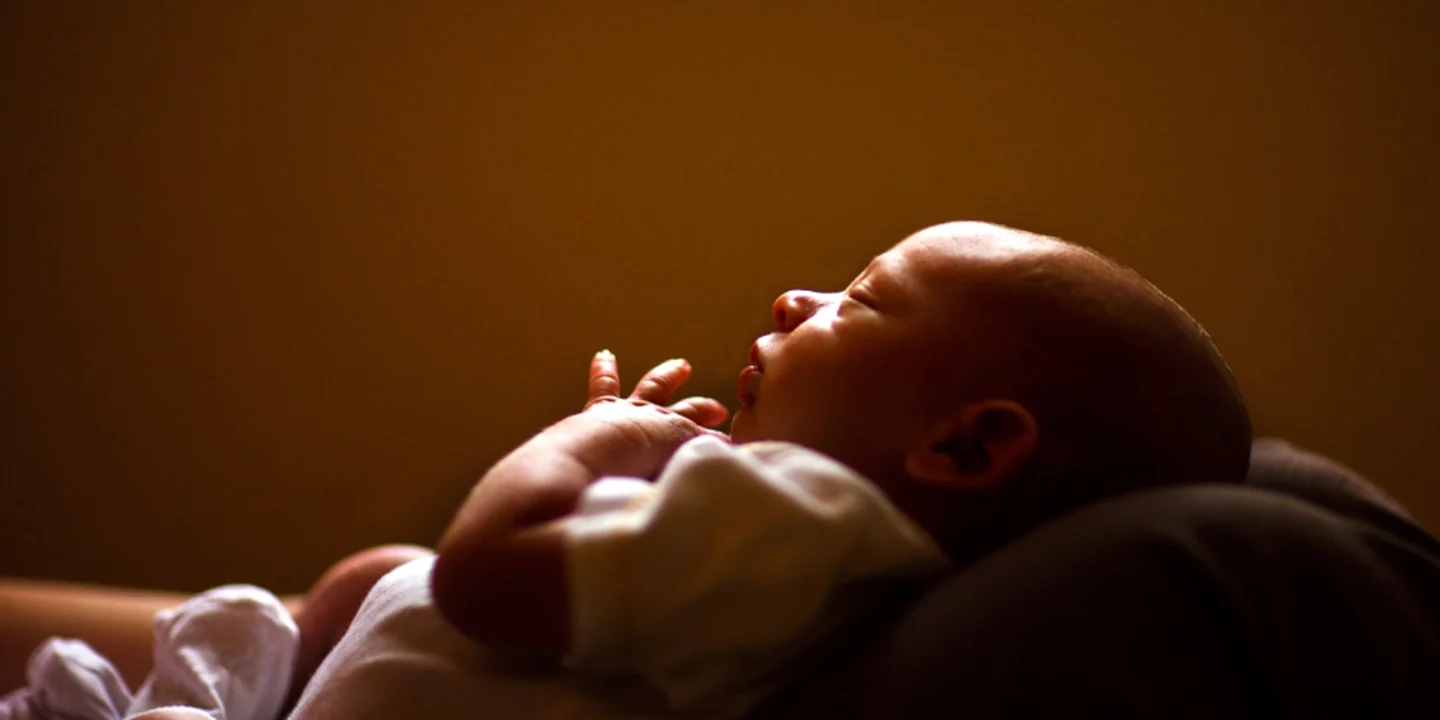
It sounds like a grotesque natural horror story. We might prefer to believe that mammalian children are not so cruel. After all, a human infant is soft, helpless and wailing; it hardly looks like a tiny predator preparing to devour the body that made it. But the truth is not that infants are without greed. It is that mammalian mothers have not evolved to let their offspring spend them without limit. They give resources, but they set boundaries. The child demands; the mother resists. The conflict does not always show itself in teeth and venom, but it is just as real. Just as fierce. And often far better hidden.
The first theatre of that conflict is not the dinner table, the nursery, or the bitter struggle of weaning. It is the womb.
This is an unwelcome way to speak about pregnancy. We are more comfortable imagining the uterus as a warm room, a cradle nature has prepared for the embryo. Medical language sometimes preserves this softer picture, describing the uterine lining as an environment designed to support new life. But the actual tissue is far less sentimental. The human endometrium is not a soft mattress laid out for a guest. It is more like a guarded frontier. Its cells are tightly packed. Its barrier is firm. Its interior is patrolled by immune cells. It is not eager to admit whatever arrives.
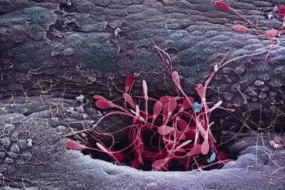
Early researchers noticed long ago that an embryo is not simply received by the mother. It invades. It digests. It pushes into the uterine lining. In the early 20th century, scientists were already using military language to describe implantation. The place where maternal tissue meets the embryonic trophoblast does not resemble a garden. It resembles a front line. There is damage there, resistance there, and death of tissue on both sides.
The metaphor of war is not merely literary. Scientists once tried to grow mouse embryos outside the womb. They expected that, deprived of the uterus, the embryos would fail. Instead, when embryos were placed in the brain, testis or eye of a mouse, placental cells displayed a startling aggressiveness. They spread through surrounding tissue, damaged what they met, and searched for blood vessels like an uncontrolled mining crew digging toward the richest source of fuel. It is no coincidence that many genes active in embryonic development are also implicated in cancer. The uneasy resemblance between placenta and tumour reminds us that the beginning of life is not always gentle.
If pregnancy is a conflict, where does the conflict begin?
The answer lies in a fact so simple that it feels brutal: even your closest relatives are not you. You share many genes with your siblings, but not all of them. You depend on the same mother, the same household, the same limited set of resources. The people most closely related to you are often also your most immediate competitors. Natural selection does not stop calculating merely because the relationship is intimate.
In the 1970s, Robert Trivers brought this family conflict into the centre of evolutionary biology with his theory of parent-offspring conflict. Later, David Haig saw that mammalian pregnancy provided an especially intricate stage for this struggle. A mother’s genes are favoured when resources are distributed among all her offspring, including possible future children. But a father’s genes may not face the same future. The father of one child is not necessarily the father of the mother’s later children. From the perspective of paternal genes, it can therefore pay to make the current fetus draw more heavily on the mother. From the perspective of maternal genes, excessive investment in one fetus may endanger the mother and reduce what remains for future offspring.
So the paternal and maternal genes inside the fetus begin to pull against one another. Some genes are silenced; others are activated. Some signals encourage placental growth; others restrain it. The embryo is not an internally harmonious little life. It carries two sets of genetic interests that overlap, but do not perfectly agree. Haig’s theory of genomic imprinting was developed to explain precisely this sort of phenomenon: the same gene can behave differently depending on whether it came from the father or from the mother.
Even after medicine has advanced so far, pregnancy still takes the lives of hundreds of women every day
The balance is delicate. Normal mammalian development requires fine coordination between the paternal and maternal genomes. They stand like two sides of a tug-of-war: each exerts force, and the result, strangely enough, is a kind of dynamic stability. If one side suddenly lets go, the system can collapse. Some developmental disorders, placental diseases and childhood conditions are linked to this imbalance of imprinted genes. This also helps explain why cloning mammals is so difficult, and why one genetic source alone cannot easily produce a normal individual. Mammalian birth is not simple replication. It is a dangerous negotiation.
The Australian spider whose children eat her does not face this particular problem. She produces only one brood, so there are no future young to protect. There is no need to hold anything back. She can become the final meal. Mammalian mothers, by contrast, usually reproduce more than once, and sometimes with different males. That uncertainty about the future is enough to make unlimited generosity a poor strategy. A mother must survive. She must preserve her body. She must leave room for children who do not yet exist.
In many mammals, this conflict does not turn pregnancy into catastrophe. A pregnant deer still runs. A pregnant wolf still hunts. A pregnant mouse still builds, hides and forages. Birth may be painful, but it is not usually surrounded by the systematic dangers that shadow human reproduction. There are exceptions. Female spotted hyenas, for example, give birth through a highly impractical penis-like structure, and first deliveries can be deadly. But even so, pregnancy itself is not usually as complicated and hazardous for them as it is for us.
Among primates, the picture begins to change. Primate embryos are more invasive. If an embryo implants in the Fallopian tube rather than the uterus, it does not politely recognise that it has chosen the wrong site. It continues to burrow toward the richest blood supply it can find, sometimes with lethal consequences. Among apes, the dangers grow greater still. And in humans, those dangers seem magnified almost to the point of perversity.
Preeclampsia is one of the darkest examples. A pregnant woman develops high blood pressure; protein appears in the urine; blood vessels, kidneys, liver and brain can all be threatened. It seems sudden, but it is deeply tied to the relationship between placenta and maternal arteries. And preeclampsia is only one item in a long inventory of human reproductive hazards: placental abruption, gestational diabetes, severe pregnancy sickness, cholestasis, miscarriage, birth injury. Pregnancy is not a minor physiological condition. It is a whole-body renegotiation. Even in the age of hospitals, antibiotics, blood transfusion, caesarean section and intensive care, pregnancy still kills large numbers of women. In the absence of modern medicine, childbirth has long been one of the most dangerous undertakings in a woman’s life.
This leaves us with a puzzle. Maternal-fetal conflict is not rare in nature. Why, then, are humans so unlucky? Why, among mammals, has our pregnancy been pushed so close to the edge? The answer may be connected to another feature that makes us unusual: the brain.
In most mammals, the mother acts as a gatekeeper, deciding where nourishment may go
In many mammals, the placenta does not allow the fetus direct access to the mother’s blood. A thicker tissue barrier separates mother and fetus, and nutrients pass through an interface the mother largely controls. Here, the mother is more like a gatekeeper. The fetus cannot simply open maternal arteries or remodel the mother’s circulation for itself. The mother gives, but the amount she gives is mainly hers to decide.
Primates and some rodents are different. Their placentae are more invasive. Placental cells cross the uterine lining, enter maternal tissue, and remodel the mother’s spiral arteries. These vessels, normally small, coiled and capable of constriction, are widened and relaxed under placental influence. They become broader, more open and better suited to delivering large volumes of blood to the placenta. The fetus thereby receives a steady and generous supply of oxygen and nutrients.
This is not always a temporary encounter. Fetal cells can sometimes cross beyond the placenta, enter other parts of the mother’s body, and remain there for years, even for life. They may be found in blood, liver, skin, brain and other tissues. A mother is no longer, in the strict genetic sense, a wholly separate individual. She becomes a subtle chimera. Pregnancy is not an event that simply ends after nine months. It leaves cellular aftershocks.
Direct contact with maternal blood may also have supplied the conditions for the expansion of the primate brain. Brains are expensive organs. They consume extraordinary energy, and much of their crucial growth happens before birth. If a fetus is to build a nervous system larger and more complex than that of most mammals, it needs a stable and abundant source of resources. A deeper invasion of the maternal blood supply may have provided just that.
Apes have larger brains than most primates, and their placentae appear to remodel maternal arteries more extensively. Humans go further still. The human placenta establishes an intimate relationship with maternal blood early, allowing the fetus to receive oxygen and nutrients in abundance during crucial stages of development. From this angle, our brain was not a free gift. It may have been built on a dangerous form of pregnancy. We use intelligence, language, social organisation and medicine to reduce the risks of childbirth, but those very capacities may have been financed by the high-risk placental system that made them possible.
Direct access to maternal blood may be the price of the primate brain’s costly growth
Once the fetus gains direct access to maternal blood, however, the matter is no longer merely nutritional. It also gains a route for sending chemical messages into the mother. The fetus can release hormones that affect her blood sugar, blood pressure, appetite, immune response and metabolism. The mother, of course, does not simply accept these messages. She adjusts her own hormones, lowers blood sugar, blocks certain fetal signals, and tries to keep resource transfer within tolerable limits. But the relationship is asymmetrical. The fetus can pour signals into maternal blood; the mother cannot freely enter fetal circulation in return. Placental membranes keep her out. Her defence is limited to regulating her own body.
As pregnancy progresses, the fetus’s demand for resources increases, and the chemical negotiation grows more intense. Fetal signals can raise maternal blood sugar so that more glucose reaches the placenta. They can increase maternal blood pressure so that more blood flows past it. They can alter the mother’s immune system so that the fetus is not rejected. The mother responds in the opposite direction, trying to prevent her metabolism from being dragged into danger. Most of the time, the conflict reaches a tolerable balance. The fetus receives enough; the mother survives enough; both make it to birth.
But normality is often just the name we give to a conflict that has not yet gone wrong.
Gestational diabetes can be understood as one outcome of this metabolic tug-of-war. The fetus needs glucose; maternal tissues become less responsive to insulin; blood sugar rises. If the system remains controlled, the fetus receives what it needs to grow. If it escapes control, both mother and child are endangered. Preeclampsia follows a similar logic. If the placenta fails to remodel maternal arteries adequately, the fetus may be starved of oxygen. The placenta may then release stronger signals to force maternal blood pressure upward and improve blood flow. But that attempted rescue can damage the mother’s vessels, causing hypertension, organ injury and even stroke. The signals a fetus sends in order to survive are not designed with the mother’s safety as their sole objective.
This sounds cruel, but it is consistent with the cold logic of evolution. Natural selection does not design harmonious families in advance. It preserves mechanisms that, under particular conditions, are good enough to keep genes moving into the future. The interests of mother and fetus overlap profoundly, but they are not identical. The fetus must live; the mother must live. The fetus benefits from more; the mother must hold something back. Pregnancy becomes a continuing negotiation precisely because neither side can be allowed total victory.
This view also helps explain why miscarriage is so common among primates. For the mother, accepting an embryo is no trivial matter. Once an embryo has truly invaded and begun to remodel blood vessels, ending the pregnancy can involve bleeding and danger. Strict screening before implantation is therefore a maternal defence. The uterine lining does not open easily. The embryo must prove that it is healthy, vigorous and worth the investment. Its way of proving this is to implant with all the strength it has. The mother’s way of testing it is to make implantation difficult.
It is a job interview, but the interview is not conducted with a résumé. It is conducted through biomechanics and hormonal signals. The embryo must demonstrate its capacity for growth; the mother looks for signs of abnormality. Many embryos fail at this stage, so early that a woman may never know she was briefly pregnant. Menstruation can also be understood in this framework. The primate endometrium thickens, prepares and sheds each cycle not merely to receive a fertilised egg, but also to prevent an unaccepted embryo from taking control. In the absence of continuous and effective signals from a healthy embryo, the whole lining is dismantled and rebuilt. For the mother, tearing down the entire frontier and raising it again may be safer than negotiating on territory already compromised by invasion.
Menstruation, then, is not simply a by-product of the reproductive cycle. It is a kind of preventive clearing. By periodically dismantling the uterine lining, the mother ensures that no embryo can occupy the site for long without permission. There is no romantic cradle here. There is a checkpoint, repeatedly rebuilt.
Modern genetics has made this picture more concrete. Since the Human Genome Project, researchers have identified increasing numbers of genes associated with genomic imprinting. These genes are linked to placental growth, fetal development, metabolic disease, childhood growth disorders and some cancers. Prader-Willi syndrome and Angelman syndrome are classic examples of how abnormal expression from paternal or maternal genetic sources can produce very different conditions. Gestational diabetes, fetal growth disorders, childhood obesity and some psychiatric or developmental conditions are also suspected to involve this kind of genetic conflict. We are still far from fully understanding these mechanisms, but the direction is clear: many diseases that once seemed isolated may be connected to the ancient negotiation among mother, placenta and fetus.
Preeclampsia shows especially well how evolutionary theory can help medicine organise its clues. It is not simply “high blood pressure in pregnancy”. It may be the result of placental development, maternal vascular response, fetal demand and imprinted gene imbalance converging in one dangerous process. Some maternally expressed genes are closely involved in early placental growth. If their expression is abnormal, the placenta may fail to remodel maternal arteries properly. The fetus receives too little oxygen; the placenta releases stronger stress signals; maternal vessels constrict or suffer damage; blood pressure rises; the kidneys leak protein; danger spreads through the circulation.
Evolutionary theory has not made pregnancy gentle, but it has made its disorder intelligible
None of this means the fetus is malicious, or that the mother is an enemy. Nature has no moral script. The embryo has no plan. The placenta has no consciousness. The mother is not a cold tyrant. Yet small differences in genetic interest, filtered through long evolution, are enough to shape tense and intricate physiological systems. Maternal love is not made false by these facts. If anything, it becomes more astonishing. A mother does not bring a child into the world through a system that is naturally mild, safe and cooperative. She does so through a system of risk, pressure and cost.
This also makes human mythology feel strangely perceptive. Many cultures link knowledge, pain and birth. Eve eats the fruit of knowledge and is told that pregnancy and childbirth will bring suffering. The ancients knew nothing of placental cells remodelling arteries, nothing of imprinted genes regulating hormones, nothing of preeclampsia injuring blood vessels. But they clearly knew this much: human life does not enter the world easily. Wisdom and pain seem to have been entangled from the start.
Our large brains allow us to understand the dangers of pregnancy. They also allow us to invent obstetrics, anaesthesia, blood transfusion, antibiotics, fetal monitoring and intensive care. But that same large brain may have been nourished by the dangerous placental machinery that makes pregnancy so hazardous. We use the brain to save mothers and children, while the birth of the brain itself may have exacted a severe price from both. Evolution is often ironic in this way: every gift arrives with an invoice attached.
If we want to reduce the death, trauma and fear that pregnancy can bring, the way forward is not to retreat into sweet myths of motherhood. Myths can comfort, but they cannot stop bleeding, lower blood pressure, repair a placenta, or predict which pregnancy will suddenly turn dangerous. The only real path is to understand the war more deeply: the placenta, the endometrium, genomic imprinting, maternal immunity, and the ways blood vessels are remodelled or driven into failure.
There is, of course, love between mother and child. But before love, before names, embraces and cradles, there is something older: cells testing one another, blood vessels being negotiated, genes pulling against genes. Life does not begin in peace. It finds its footing in conflict, and only later learns to be called love.