
Recent Posts









Getting enough protein without meat is rarely a matter of finding one perfect substitute. It is about giving several ordinary foods a more deliberate place on the plate.
Protein has become the nutrient that people most often worry about when considering a vegetarian diet. Remove meat and fish from the menu, and an immediate question appears: what will take their place?
The concern is understandable. Protein helps form and repair tissues, supports the immune system and supplies the raw materials used to produce enzymes, hormones and neurotransmitters. It is also important for maintaining muscle, especially during ageing, illness, weight loss or periods of increased physical activity.
Yet protein is not exclusive to meat. Legumes, soy foods, grains, seeds, nuts, dairy products and eggs can all contribute meaningful amounts. Even vegetables add smaller quantities that accumulate across the day.
The real challenge is not discovering whether vegetarian protein exists. It is learning how to build meals in which protein is substantial rather than accidental.
Protein is a pattern, not a single ingredient
Every protein is made from amino acids. The human body can produce some of these, but nine essential amino acids must come from food.
Animal proteins generally contain all nine essential amino acids in proportions that closely match human requirements. This is why they are often described as “complete.” Some plant proteins contain lower proportions of one or more essential amino acids. Legumes, for example, tend to contain less methionine, while many grains are relatively low in lysine.
This difference has produced the enduring idea that vegetarians must carefully combine specific foods—such as beans and rice—at every meal.
That level of precision is normally unnecessary. The body maintains an amino acid pool, and proteins eaten at different meals can contribute to it. A varied diet that supplies enough total energy and protein across the day can generally provide all the essential amino acids a healthy adult needs.
Beans and rice still make an excellent combination, but they do not need to arrive on the same fork. Lentils at lunch and whole grains at dinner can contribute to the same daily pattern.
Soy foods such as tofu, tempeh and edamame have particularly favourable amino acid profiles. Quinoa, amaranth, dairy products and eggs also provide broad combinations of essential amino acids. However, labelling a few foods as “complete” should not make the rest seem inferior. Variety matters more than building every meal around a nutritional technicality.
Begin with a protein anchor
The easiest way to improve a vegetarian meal is to choose its main protein source before thinking about side dishes. This protein “anchor” should provide more than a decorative spoonful.
Legumes are among the most useful anchors because they combine protein with fibre, slowly digested carbohydrates, minerals and plant compounds. They are also widely available in dried, canned and frozen forms.
Lentils
A cooked cup of lentils supplies approximately 18 grams of protein, although the exact amount varies by type and preparation. Red lentils soften quickly and work well in soups, curries and sauces. Green, brown and black varieties retain more texture and can be added to salads or grain bowls.
Lentils are also rich in fibre. This gives them an advantage over many isolated protein products: they nourish both the person eating the meal and the fibre-fermenting microorganisms in the gut.
Beans
Black beans, kidney beans, cannellini beans, chickpeas and great northern beans can each serve as the centre of a meal. Depending on the variety and serving size, a cooked cup generally provides around 13–19 grams of protein.
They can replace some or all of the meat in chilli, tacos, stews and pasta sauces. Blending beans into dips or soups is useful for people who dislike their whole texture.
Canned beans are nutritionally valuable and dramatically reduce preparation time. Rinsing them can remove some of the sodium in the canning liquid.
Split peas
Cooked split peas provide roughly 16 grams of protein per cup. Their soft texture makes them especially suited to thick soups, curries and savoury purées.
Like lentils and beans, they contribute folate, iron, potassium, magnesium and fibre. A bowl of split-pea soup accompanied by whole-grain bread is not merely a vegetable starter; it can be the protein foundation of a meal.
Edamame
Edamame are young soybeans with a mild flavour and firm texture. A cooked cup of shelled edamame contains about 18 grams of protein, along with fibre, folate, iron and vitamin K.
They can be eaten as a snack, mixed into salads and noodle dishes or blended into a green alternative to hummus. Frozen shelled edamame are particularly convenient because they can be added directly to soups and stir-fries.
Soy can take more than one form
Soy is unusually versatile. The same bean becomes tofu, tempeh, soy milk, edamame and textured vegetable protein, each with a different texture and culinary purpose.
Tofu
A serving of firm tofu can provide roughly 15 grams of protein, depending on the product and portion. Some calcium-set varieties also contain a useful amount of calcium, but labels should be checked because manufacturing methods differ.
Silken tofu can be blended into soups, sauces, desserts and smoothies. Firm tofu can be marinated, baked, grilled or browned in a pan. Freezing and thawing it creates a more porous texture that absorbs sauces well.
Tofu is sometimes criticized for being bland. That neutrality is also its strength: it can carry ginger and soy sauce in a stir-fry, tomatoes and herbs in a stew, or cocoa and fruit in a dessert.
Tempeh
Tempeh is made from fermented soybeans pressed into a firm cake. A typical serving can supply around 15–20 grams of protein. Because the whole beans remain present, tempeh also retains fibre.
Its nutty flavour and dense texture make it suitable for sandwiches, grain bowls, curries and dishes that need something substantial. Steaming tempeh briefly before marinating can soften its bitterness and help it absorb flavour.
Fortified soy milk
Soy milk usually contains more protein than most oat, rice, coconut or almond drinks. Many fortified versions provide approximately 7–9 grams per cup, plus added calcium, vitamin D and vitamin B12.
Plant-based drinks are not nutritionally interchangeable. Someone choosing one as a protein source should compare the protein, added sugar and fortification shown on the label.
Let grains do more work
Grains are usually classified as carbohydrate foods, but whole grains can make a meaningful contribution to daily protein intake. On their own, they may not provide as much protein as beans or tofu. Combined with an anchor, however, they can turn a modest meal into a substantial one.
Oats
One cup of cooked oats provides around 6 grams of protein. The amount rises when oats are prepared with soy milk or dairy milk and topped with seeds, yogurt or peanut butter.
Oats also contain beta-glucan, a soluble fibre associated with improved cholesterol levels. This makes oatmeal an effective base rather than simply a bowl of carbohydrate.
Quinoa
A cooked cup of quinoa contains approximately 8 grams of protein and about 5 grams of fibre. It also provides magnesium, phosphorus and several B vitamins.
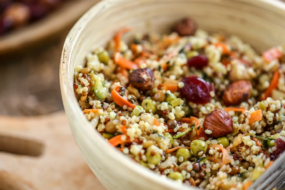
Its fluffy texture works in salads, stuffed vegetables and grain bowls. Cooking it in vegetable stock and mixing it with chickpeas or edamame can create a complete main dish.
Amaranth
Amaranth is technically a seed, although it is prepared like a grain. One cooked cup provides roughly 9 grams of protein. It has a distinctive, slightly earthy flavour and can be used in porridge, soups or grain mixtures.
Because amaranth can become sticky when cooked, combining it with another grain may produce a more familiar texture.
Teff
Teff is a tiny grain with a long culinary history in Ethiopia and Eritrea. A cooked cup supplies close to 10 grams of protein, as well as fibre, magnesium and manganese.
It can be cooked into porridge, included in baked goods or used in traditional fermented flatbread. Its small size allows it to cook relatively quickly.
Whole-wheat pasta
A cooked cup of whole-wheat pasta generally provides around 7 grams of protein. Lentil, chickpea and edamame pastas may contain considerably more, though amounts differ by brand.
A pasta meal becomes more protein-rich when paired with beans, peas, tofu, cheese or a sauce made from blended legumes.
Wild rice and Khorasan wheat
Wild rice contributes approximately 6–7 grams of protein per cooked cup. Khorasan wheat, sometimes sold under the name Kamut, may provide close to 10 grams.
Both add texture to salads and grain bowls. They can be cooked in batches and refrigerated, making it easier to assemble meals during the week.
Small foods with concentrated nutrition
A spoonful of seeds will not normally replace the main protein in a meal. It can, however, increase the total while adding unsaturated fats, minerals and texture.
Hemp seeds
Three tablespoons of hemp hearts contain approximately 9–10 grams of protein. Their mild flavour makes them easy to scatter over oatmeal, yogurt, soups and salads.
They can also be blended into sauces or smoothies. Unlike whole seeds with tough shells, shelled hemp hearts require little preparation.
Pumpkin seeds
One ounce of pumpkin seeds, or pepitas, supplies about 8 grams of protein. They are also particularly rich in magnesium, a mineral involved in muscle and nerve function, energy production and many other biochemical reactions.
Pumpkin seeds can be eaten alone, mixed into granola or used to add crunch to soups and grain dishes.
Sunflower seeds
An ounce of sunflower-seed kernels contains roughly 6 grams of protein. Sunflower-seed butter can be useful for people who cannot eat peanuts or tree nuts, although allergy advice remains important.
Choosing lightly salted or unsalted products makes it easier to manage sodium intake.
Peanut butter
Two tablespoons of peanut butter provide about 7 grams of protein. It is energy-dense, so it functions best as a concentrated addition rather than the only protein source in a large meal.
Look for products made primarily from peanuts, with little added sugar or oil. Peanut butter works beyond toast: it can form the base of savoury noodle sauces, dressings and stews.
Other nuts and nut butters also contribute protein, although their amounts vary. Almonds, pistachios and cashews can all support the wider pattern.
The useful extra: nutritional yeast
Nutritional yeast is an inactive yeast with a savoury, cheese-like flavour. Depending on the brand, a small serving can provide several grams of protein.
It can be sprinkled over pasta, popcorn and roasted vegetables or blended into sauces. The nutrition label matters because fortification varies. Some products are rich in vitamin B12, while unfortified versions may contain little or none.
Nutritional yeast should therefore not automatically be treated as a reliable B12 source. The package must specifically list vitamin B12 in a meaningful amount.
If eggs and dairy are on the menu
Lacto-ovo vegetarians can use milk products and eggs to increase protein without relying on meat or fish. These foods are convenient, but they do not need to displace legumes, grains and seeds.
Greek yogurt
A 200-gram serving of plain Greek yogurt may provide around 18 grams of protein, though brands vary. It also supplies calcium and, in many cases, vitamin B12.
Plain yogurt can be paired with fruit, oats, nuts and seeds or used in savoury dips and sauces. Flavoured varieties may contain substantial added sugar, so comparing labels is worthwhile.
Cottage cheese
Approximately half a cup of cottage cheese can provide about 14 grams of protein. It can be eaten with fruit, blended into dips, added to pasta dishes or included in egg-based meals.
Sodium content varies significantly between brands. People monitoring blood pressure may prefer a lower-sodium option.
Eggs
One large egg contains about 6 grams of protein, as well as selenium, choline and vitamins A, B2 and B12.
A single egg contributes protein but may not anchor an entire meal. Combining two eggs with beans, whole-grain toast, vegetables or yogurt creates a more substantial plate.
How much protein is enough?
Body size is a more useful starting point than a single recommendation for every adult. The standard Recommended Dietary Allowance for healthy adults is approximately 0.8 grams of protein per kilogram of body weight per day.
Using that baseline, a person weighing 60 kilograms would need about 48 grams, while someone weighing 75 kilograms would need about 60 grams. These figures represent general minimum targets intended to meet the needs of most healthy adults, not an ideal amount for every circumstance.
Needs may be higher during pregnancy, recovery from illness, muscle-building training or regular endurance exercise. Older adults may also benefit from more protein than the basic minimum, particularly when preserving muscle and strength is a concern.
Protein digestibility and amino acid availability differ among foods. For this reason, vegetarians—especially vegans with limited dietary variety—may find it useful to aim somewhat above the minimum rather than trying to meet it exactly.
Individual requirements should be discussed with a qualified professional when kidney disease, liver disease, frailty or another medical condition affects protein intake.
Distribution matters too
Consuming nearly all the day’s protein at dinner may be less practical than spreading it across meals. A protein-containing breakfast, lunch and dinner creates repeated opportunities to support muscle protein synthesis and makes the total easier to reach.
A day might begin with oats cooked in soy milk and topped with hemp seeds. Lunch could include lentil soup with whole-grain bread and yogurt. Dinner might combine tofu, vegetables and quinoa. None of these meals depends on a specialized protein product.
Vegetarian athletes or people with high requirements can use protein powders if convenient, but supplements are not automatically necessary. Soy, pea and blended plant proteins can help when appetite, scheduling or training demands make food alone difficult.
A powder should supplement the wider diet rather than replace its variety. Labels should be checked for serving size, added sugar and ingredients that may cause digestive discomfort.
Remember the nutrients beside protein
A vegetarian diet can provide sufficient protein while still falling short in another nutrient. Vitamin B12 deserves particular attention because it is not naturally present in reliable amounts in unfortified plant foods.
People following a vegan diet need a dependable source of B12 from fortified foods or supplements. Vegetarians who consume eggs and dairy may obtain B12 from those foods, but intake can still vary.
Iron, zinc, iodine, calcium, vitamin D and omega-3 fats may also require planning. This does not mean a vegetarian diet is inherently deficient. It means removing a major food category changes where certain nutrients must come from.
Fortified foods, thoughtful meal planning and appropriate supplements can fill predictable gaps. Anyone with fatigue, neurological symptoms, anaemia or concerns about deficiency should seek medical assessment rather than guessing which supplement is needed.
Build meals instead of collecting ingredients
A list of high-protein foods is useful only if those foods become actual meals. A practical formula is:
- Choose a main anchor: beans, lentils, tofu, tempeh, eggs, Greek yogurt or cottage cheese.
- Add a supporting grain: oats, quinoa, whole-wheat pasta, teff, amaranth or wild rice.
- Include vegetables or fruit for colour, fibre and micronutrients.
- Finish with a concentrated extra such as pumpkin seeds, hemp hearts, nuts or nutritional yeast.
Using this formula, a person might prepare:
- Chickpea and quinoa salad with pumpkin seeds and a yogurt dressing.
- Tofu stir-fry with edamame, vegetables and wild rice.
- Whole-wheat pasta with lentil-tomato sauce and nutritional yeast.
- Oatmeal made with soy milk, peanut butter, fruit and hemp hearts.
- Eggs with black beans, vegetables and whole-grain toast.
- Tempeh tacos with cabbage, avocado and a bean salsa.
- Split-pea soup with seeded bread and cottage cheese.
The objective is not to maximize protein in every mouthful. It is to make sure the meal has a recognisable source rather than assuming a few vegetables will provide enough.
Variety solves more than one problem
A well-planned vegetarian diet does not require exotic grains, expensive meat substitutes or constant calculations. Lentils, canned beans, frozen edamame, tofu, oats, eggs and yogurt can form an affordable and reliable foundation.
Variety improves the amino acid profile of the overall diet, widens micronutrient intake and supplies different types of fibre to the gut microbiome. It also prevents vegetarian eating from becoming repetitive.
Protein adequacy is ultimately less about replacing a piece of meat with a perfect imitation and more about changing the architecture of the plate. Legumes can become the centre rather than the side. Grains can contribute rather than merely fill space. Seeds can strengthen a meal rather than decorate it.
Once several of these foods appear regularly, vegetarian protein stops looking like a nutritional puzzle. It becomes what it has always been: an ordinary part of ordinary food.