










PRODUCT REVIEWS · DESKTOP CHARGING
TESSAN combines AC power, USB charging, a magnetic phone stand and a retractable Watch puck in one desktop hub. The result reduces charger sprawl, although it cannot make every cable disappear.
My desk has gradually become a parking lot for electronics. A laptop, phone, tablet, headphones, power banks and a smartwatch all need energy, often through different adapters. The strip below the desk hides the outlets but does little to control the cords climbing back onto the work surface.
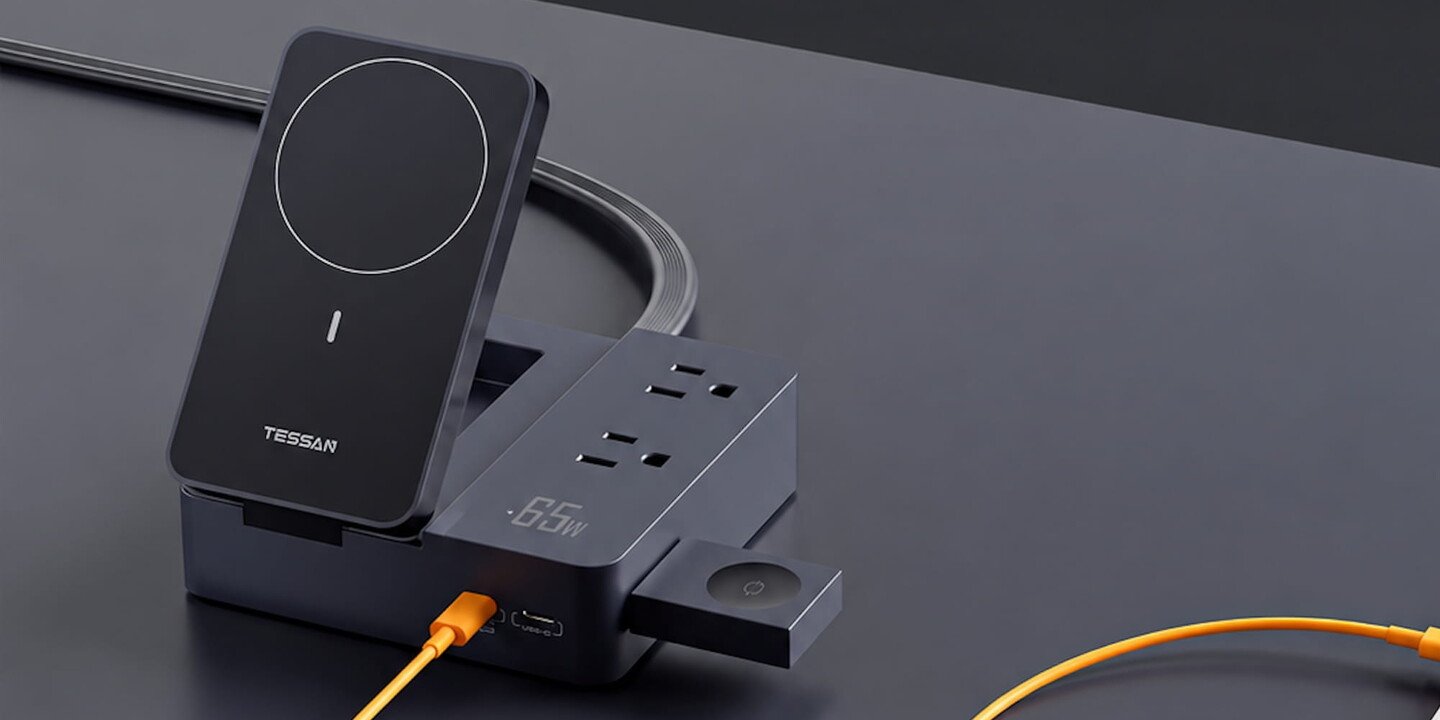
The TESSAN Magic 65W Charging Station tackles that mess by concentrating several charging methods in one unit. It combines AC sockets and USB ports with two cable-free conveniences: an adjustable magnetic phone stand and a Watch charger that slides into the body when unused.
It does not create a cordless workspace. Instead, it replaces scattered plugs, charging bricks and docks with one dependable location.
One Hub Instead of a Charger Pile
The usual danger with an organization gadget is that it becomes one more object to manage. TESSAN makes a stronger case because the station takes over jobs otherwise requiring separate accessories. It includes two AC outlets, two USB-C ports, one USB-A port, the magnetic stand and retractable Watch module.
That variety creates a shared charging point for everyday devices. A laptop or tablet can use the main USB-C connection while a phone rests on the stand, a Watch occupies its puck and another accessory connects by cable. The station takes space, but each function earns part of its footprint.
What Cable Management Really Means
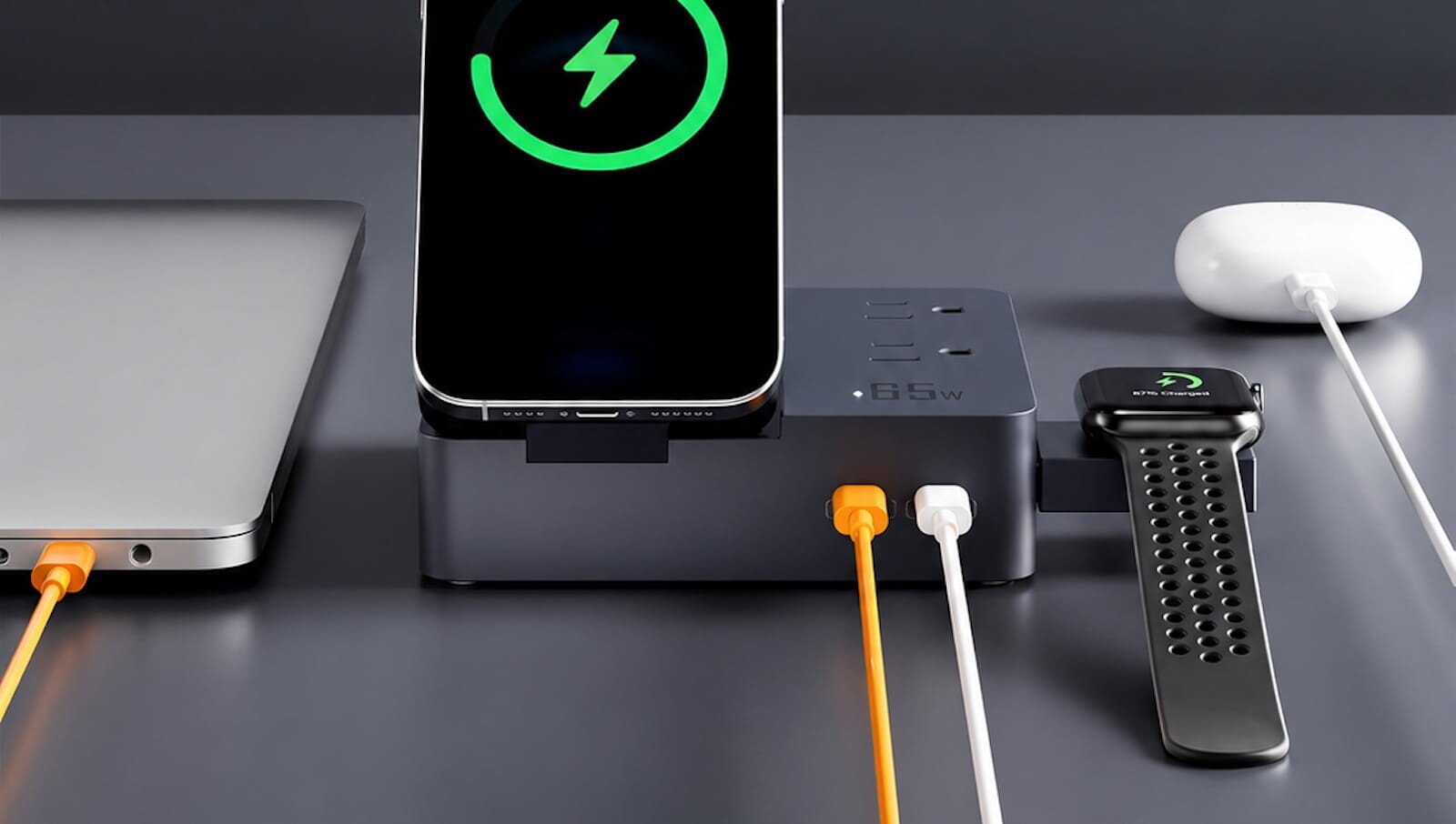
The wireless stand and Watch charger remove two loose leads, making the surface calmer. The station still needs a wall connection, and wired devices keep their own cables. It is better understood as a central charging address than as a machine that eliminates cords.
That distinction matters. Useful cable control is less about making wires vanish than deciding where they begin and end. When everything returns to one hub, adapters stop migrating between rooms and the desk is easier to reset.
A Phone Stand That Stays Useful
Wireless charging works here because the magnetic surface is also an adjustable stand. It tilts to 65 degrees, holding a phone upright instead of flat. The screen stays visible for notifications, timers or a video call while power continues flowing.
iPhones receive up to 7.5W, while supported Qi handsets can reach 15W; AirPods are also compatible. Peak speed is secondary to the stand’s real advantage: a charging phone remains visible and usable.
The Watch Charger Has a Home
A dedicated Apple Watch puck sounds modest, which is why it works. Small watch chargers are easy to misplace, leave behind furniture or carry to another room. This one sits on a retractable arm and provides up to 5W.
Pulling it out creates a permanent charging position; pushing it back keeps the station tidy. On a desk that doubles as a family command center, removing one wandering accessory can matter more than another headline specification.
65W USB-C, With a Catch
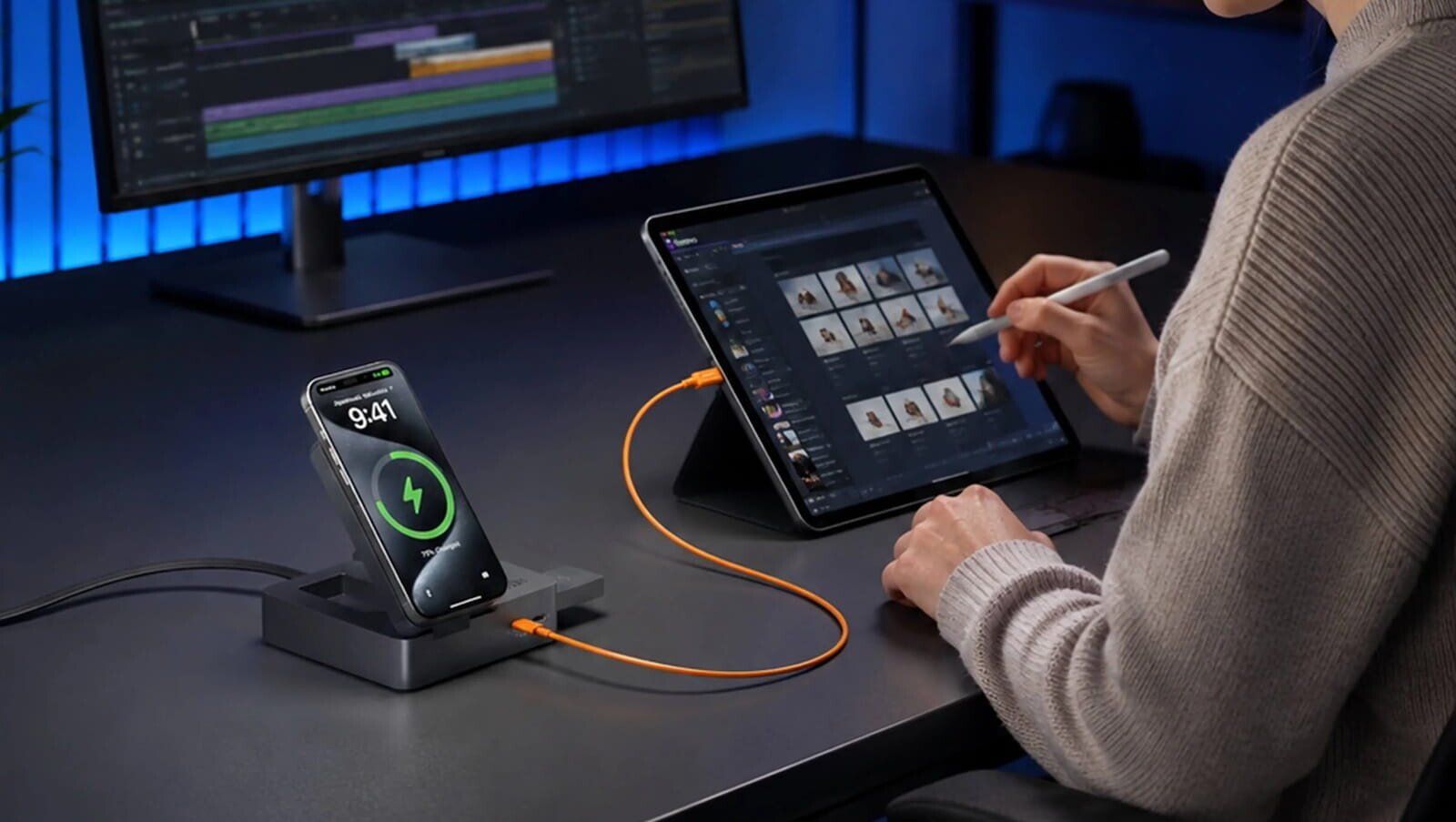
Power delivery is what moves this product beyond a phone-and-watch dock. The primary USB-C port can supply up to 65W to one device, making it suitable for a MacBook, iPad, another USB-C notebook or a fast-charging phone. That flexibility lets the same station handle both lightweight accessories and the machine doing the day’s work.
The catch is that 65W is the primary port’s maximum, not a separate allowance for every connector. When several ports work at once, the station redistributes power, so individual devices may charge more slowly than they would alone.
This is a normal compromise for a multi-device hub, but it should shape expectations. The TESSAN is strongest as an orderly all-purpose station, not as a bank of independent 65W chargers. Prioritize the laptop when speed matters, then let smaller devices share what remains.
The Flat Plug Deserves Attention
The wall end of the cable solves a less glamorous but equally common problem. Its 0.32-inch plug lies almost flush and turns at a 45-degree angle, so it can fit behind a desk, nightstand or couch without forcing the furniture far from the wall.
Because the angled body avoids covering the neighboring receptacle, home equipment does not have to surrender an outlet to the work setup. It is a tiny design decision, yet it may determine whether the entire station fits naturally into a room.
Who Should Consider It?
The clearest audience is someone who repeatedly charges several devices in one place. An Apple-centered desk with an iPhone, Watch, AirPods and MacBook is an obvious match, as is a bedside table that needs both wireless charging and occasional AC power.
People with only a phone to charge will find the station excessive. It is also better treated as a fixture than a travel accessory: the AC outlets, broad base and attached power cord make more sense at a stable desk than inside a compact luggage kit.
A Practical Kind of Tidiness
The TESSAN Magic 65W does not perform the impossible trick of removing every wire. Instead, it gives those wires rules. The magnetic stand keeps a phone visible, the retractable puck gives the Watch charger a permanent address, and the main USB-C port can power a serious work device.
Its limits are clear. Output is shared when the station is busy, and the unit occupies desk space. Yet those compromises are easier to accept when one hub replaces several adapters and makes the remaining connections predictable.
For a workspace crowded with devices, that may be enough. The desk stops acting like a charging depot and becomes a place for focused work again. That predictable routine is the real benefit: fewer decisions, fewer misplaced adapters, and a cleaner boundary between the equipment powering the day and the work itself.