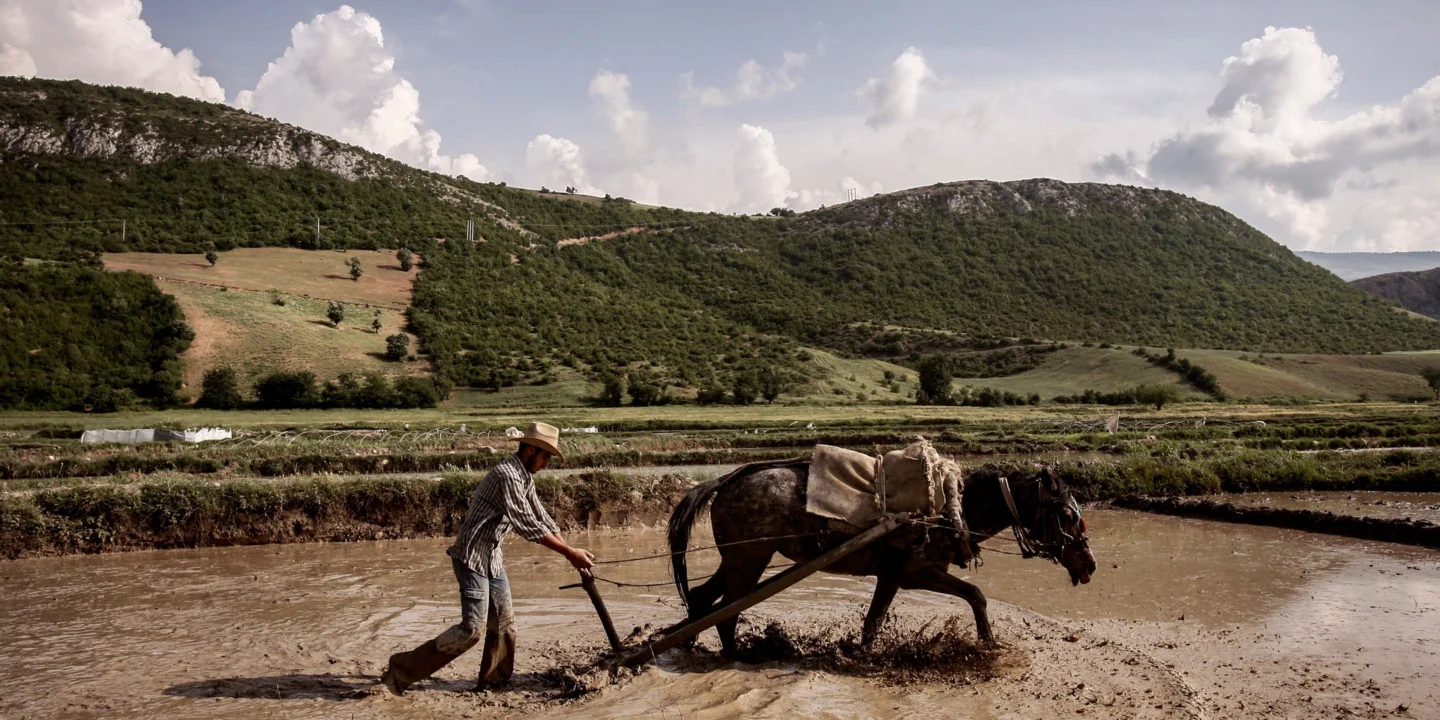











In 2007, when the United Nations released its State of the World Population report, it noted that human life was quietly crossing a tremendous threshold. By 2008, for the first time in history, less than half of humanity lived in the countryside. Today, only about 42 per cent of the human species resides in rural areas. To many city dwellers, this seems like the natural direction of progress: humanity is leaving the land and entering the city; agriculture will be taken over by machines, capital and a few large firms; the countryside will become quiet, automated and scenic, while that ancient figure — the peasant — finally exits history.
This imagination is seductive, especially to the urban middle classes. It encourages the belief that land in the future will no longer require dense human labour; food will be produced by drones, greenhouses, artificial intelligence, genetically engineered seeds and giant farms; villages will become tourist landscapes; peasants will become folklore. Modernity has long appeared to move this way: away from land, away from family, away from hand labour, toward wages, offices, factories, platforms and screens. In many languages, therefore, the word “peasant” carries insult. It suggests crudity, backwardness, ignorance and an embarrassing refusal to become modern.
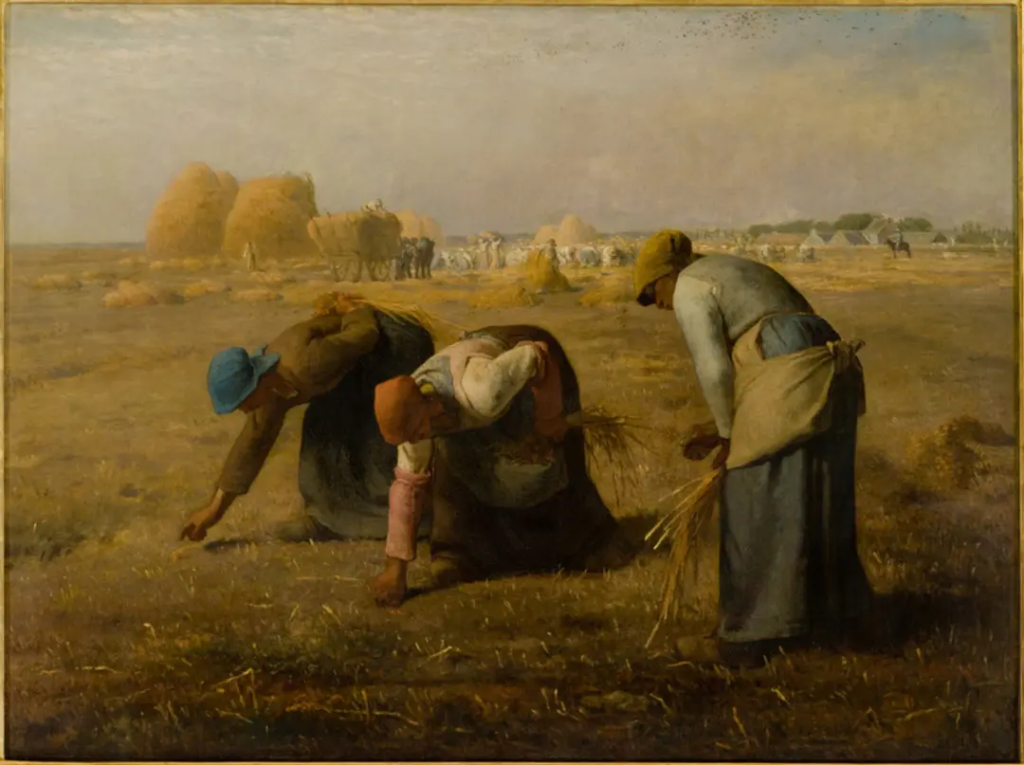
The Gleaners by Jean-François Millet (1857). Courtesy and © Musée d’Orsay. RMN-Grand Palais/Patrice Schmidt
But this judgment has been biased from the beginning. Liberal economics and socialist industrialism, though opposed in many ways, both imagined the disappearance of the peasantry. Adam Smith expected peasants to give way to landowners and market improvement. Marx imagined small peasants replaced by large-scale industry and socialist organisation. The Right often treated peasants as part of the old order; the Left often treated them as raw material for the future working class. Both assumed that modernisation meant releasing, or expelling, rural populations from the land.
The world, however, has not followed that script. Europe did destroy much of its traditional countryside between the 18th and 20th centuries, but it did not absorb all those displaced people into factories. Tens of millions of Europeans had to migrate to the Americas, Australia and other colonial spaces. European urbanisation, in other words, was not simply a story of industrial absorption. It was supported by overseas land, colonial expansion and mass migration. To treat the European path as the destiny of humanity is a dangerous historical sleight of hand.
In much of Africa, Asia and Latin America, the story is different. Urbanisation continues, but it is slowing. Many of those who can enter factories have already done so. Many who cannot enter them are offered only slums, informal labour and debt traps on the edges of cities. Rural life is not always prosperous, but it still provides a form of security that cities cannot easily replace: a plot of land, a family base, a little food grown for oneself, a life connected to relatives, ancestors and seasons. For many people, the city is not liberation. It is what remains after land has been lost.
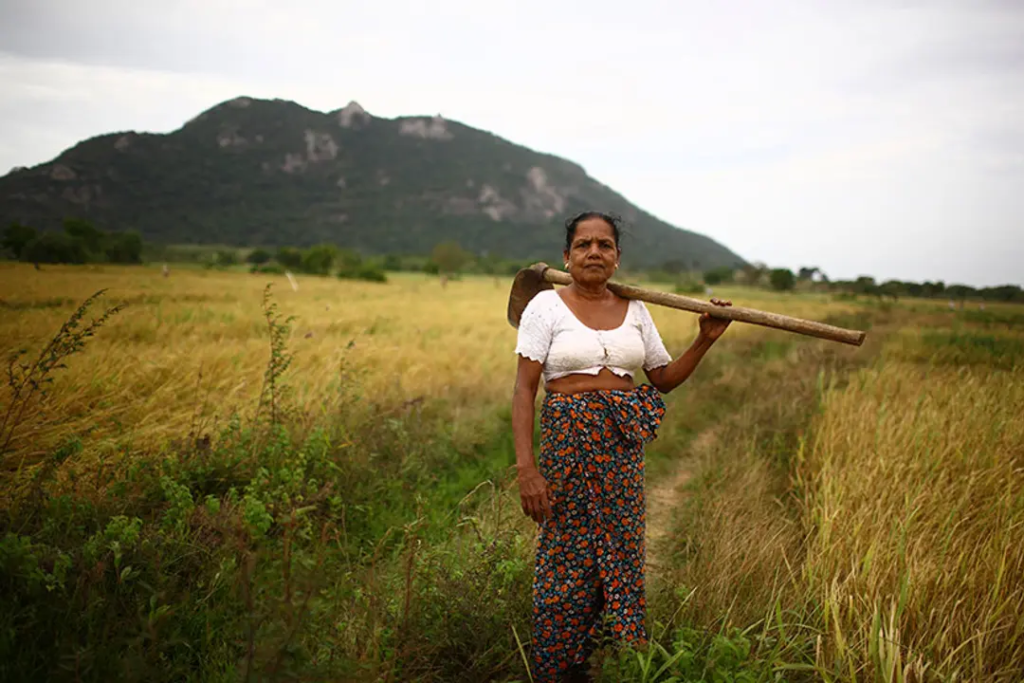
A M Menkethana, 59, returning from her rice field in Weweldigiliya, Sri Lanka. Photo by GMB Akash/Panos Pictures
This is why, after several centuries of so-called modernisation, peasants remain one of humanity’s largest social groups. The world population has multiplied since the mid-20th century, and the absolute number of rural people has not vanished. Today, in Asia, Africa and Latin America, billions of people remain closely connected to small-scale family farming. They vastly outnumber miners, assembly-line workers, taxi drivers, office employees or software programmers. The modern world often does not see them, but the modern world has not escaped them.
Peasants usually work small family farms, often only a few acres, sometimes a little more. Their production is meant both for household survival and for cash income. The labour comes mainly from family members, and much of it is unpaid. Unlike many farmers in wealthy countries, surrounded by subsidies, insurance, machinery and credit systems, peasants in developing regions are directly exposed to weather, prices, debt and political change. One good season may allow a family to repay loans; one failed monsoon, one pest outbreak, one fall in procurement prices may be enough to ruin it.
Yet these are the people who sustain the world. Sugar, cocoa, cotton, coffee, rice, vegetables, fruits, spices, and many other things we take for granted in supermarkets, factories and kitchens depend on small farmers. Although peasants control far less land than the share of the population they help feed, small-scale agriculture is highly efficient in many crops. It provides not only food, but also seed knowledge, soil memory, water experience, local varieties and biodiversity. If we look only at yield tables, we underestimate peasants. If we look at ecological systems, they are one reason humanity still stands.
This is the great misunderstanding of our age: peasants are not outside the modern economy. They are fully embedded in the 21st-century global economy, but usually from a position of extreme weakness. They produce the raw materials global industries require, yet rarely control prices. They bear climate risk, yet rarely receive climate investment. They maintain soil fertility, yet are often forced to buy inputs that damage soil. They preserve seeds and ecological knowledge, yet are pushed into dependency by intellectual-property regimes. The world cannot function without peasants, yet it systematically weakens them.
Life still depends on peasants. Their crisis, therefore, is not a rural issue but a human one. It is simply a crisis that rarely appears in public discussion at its true scale. Occasionally, peasants reach the front page. In 2020, Indian farmers staged massive protests against agricultural-market reforms; tractors and crowds blocked roads to New Delhi, and the global media finally paid attention. But such attention usually comes only when crisis erupts into blocked highways, police clashes and food-price anxiety. Most of the time, rural anger remains quiet, scattered and ignored.
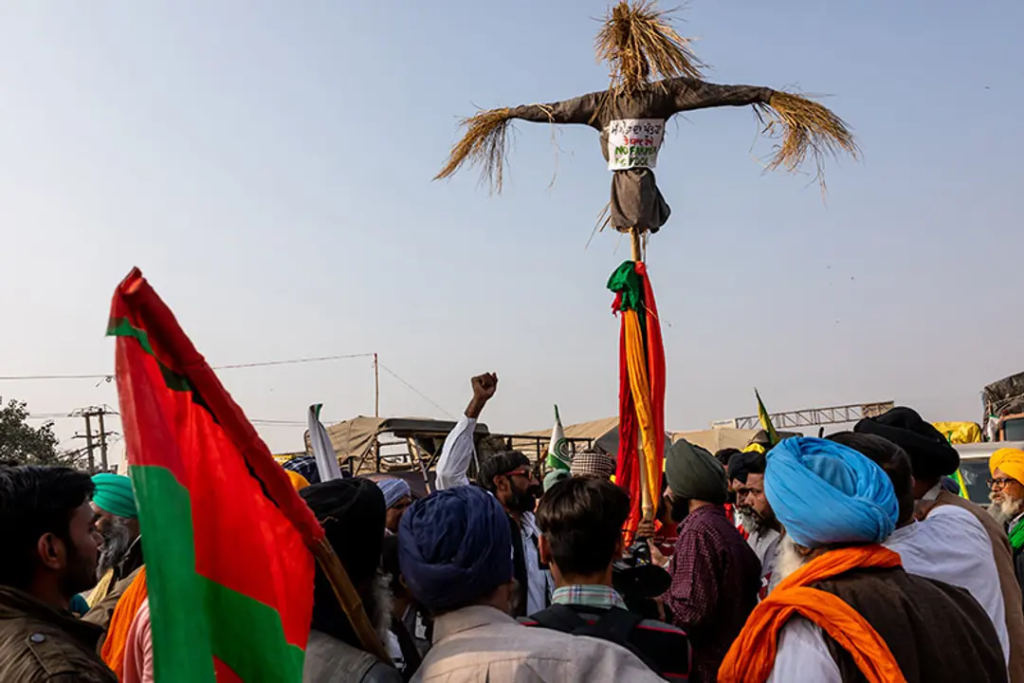
Protesting farmers burning an effigy of the farm laws at a protest site outside Delhi. Photo by Harsha Vadlamani/Panos Pictures
This anger is not confined to India. Peru, Uzbekistan, Brazil, Colombia, Ecuador, Ghana, Kenya, Indonesia, Nepal, Pakistan, the Philippines, Uganda and Iran have all witnessed farmer protests in recent years. Some have opposed corporate control of markets; some have resisted government suppression of crop prices; some have fought land seizures; some have protested monopolies over seeds and chemicals; others have simply demanded the right to sell their produce at a fair price. These struggles differ in appearance, but they share an underlying structure: states no longer protect peasants, and increasingly help capital extract income from them.
Much of what the news calls “terrorism” or “militancy” has roots buried in the collapse of the countryside.
When rural life is destroyed, the consequences do not remain rural. In the Arab Spring, discontent in many regions was linked to agrarian distress, food-price pressures and rural disorder. Along the Sahel, many armed groups recruit from farmers and herders who have lost livelihoods to desertification, climate change, closed grazing routes and agricultural decline. A farmer or herder who can no longer live from the land does not automatically become an urban worker. He may become a refugee, a low-wage labourer, part of a smuggling economy, or a recruit for armed movements. The destruction of the countryside returns to the world as urban crisis, border crisis and security crisis.
Mass migration is another symptom of the same crisis. Many of those leaving Guatemala, Honduras and El Salvador are not moving merely in search of higher wages. They are pushed by drought, violence, land loss and agricultural collapse. Similar routes exist across West Africa and the Sahel: farmers and herders move first to nearby cities, then across borders, and eventually sometimes toward North Africa or Europe. The urban world calls them migrants, but often refuses to see that they were first displaced by rural crisis.
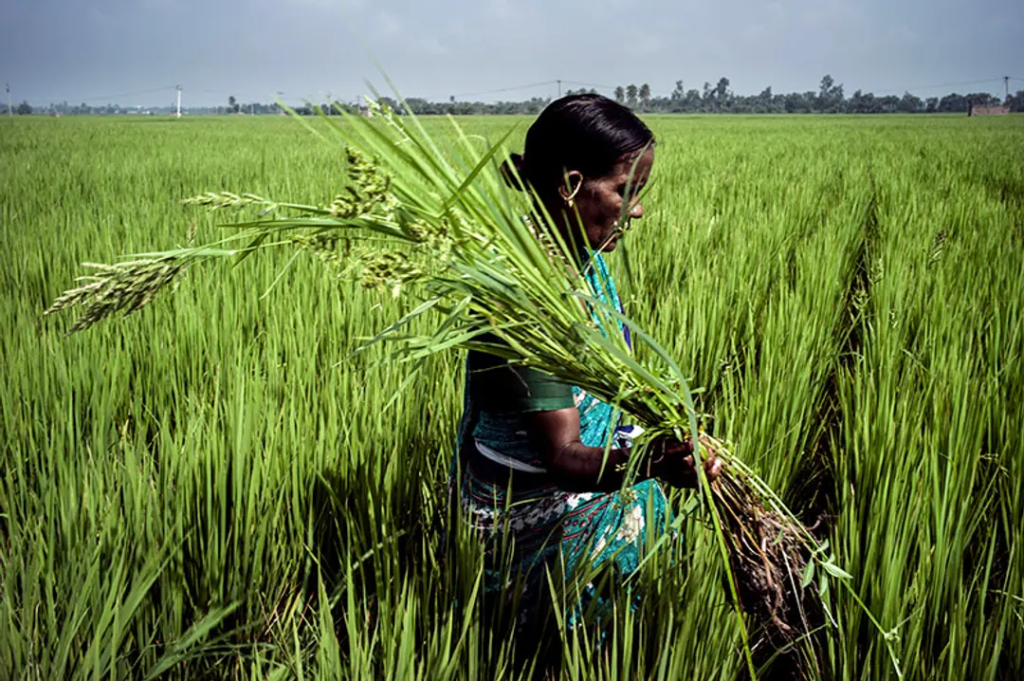
Valli Kupuswamy, 55, weeding her paddy field. Photo by Sanjit Das/Panos Pictures
Then there is suicide. In many countries, farmers are driven to despair by debt, crop failure and price extraction. The suicides of Indian cotton farmers are especially devastating. Cotton is a critical resource for the global textile industry, but the small farmers who grow it are often trapped in a chain of seeds, fertilisers, pesticides, loans and below-cost sales. One failed crop, one price fall, one pest outbreak may turn debt into fate. To a city consumer, cotton may be a cheap T-shirt. To the grower, it may be a rope around the neck.
This is the outline of the global peasant crisis in the neoliberal era. It is not simply a problem of poverty, nor a problem of technological backwardness. It is a political crisis. The historical contract between states and peasants is breaking. Once, many states at least recognised in principle that peasants were the foundation of food, security and social stability. Now, more and more states hand the countryside over to multinational agribusiness, local oligarchs, financial institutions, land speculators, mining firms and criminal networks. Peasants are no longer treated as the roots of the nation, but as an inefficient population to be reorganised by markets.
Historically, successful states could not afford to despise peasants. China, India, Persia, Egypt, Ethiopia, West African kingdoms, Andean civilisations and many other societies understood that agriculture was the basis of state revenue, population survival and political order. Effective rulers built irrigation systems, protected peasant holdings, stabilised grain prices, controlled merchants and landlords, and organised relief when harvests failed. Kings and peasants were not equal, but they were structurally interdependent: without peasants, there were no taxes, soldiers, food or kingdom.
European colonialism destroyed many such systems. Colonial governments reorganised land, taxes and crops so that agriculture served imperial markets rather than local society. After independence, many Asian, African and Latin American governments tried to restore or rebuild protections for peasants. In the middle of the 20th century, land reform, seed banks, minimum prices, state procurement, agricultural credit and rural infrastructure formed the core of many postcolonial development projects. At their best, these policies raised both output and rural living standards.
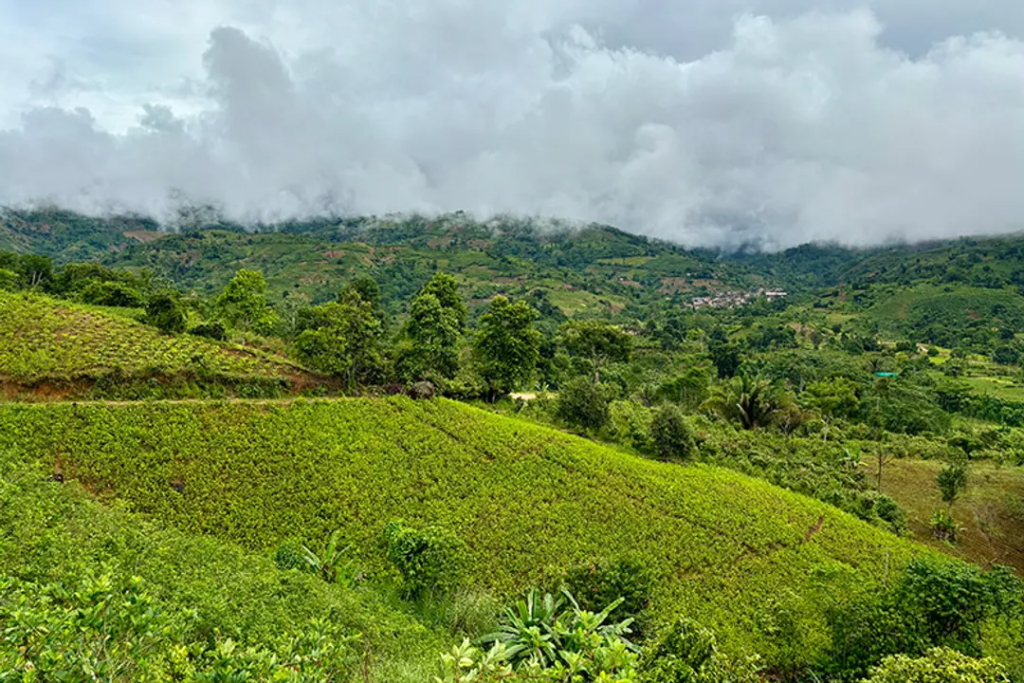
Valle de los Ríos Apurímac coca farm in Ene y Mantaro (Peru). Supplied by the author
From the 1980s onward, however, structural adjustment and neoliberal reform overturned many of these arrangements. The World Bank, the International Monetary Fund, the World Trade Organization and global agribusiness pushed states to reduce intervention, open markets, weaken price protections, privatise services and allow corporations to control more of the agricultural chain. The state did not disappear; it changed allies. It moved from being the peasant’s imperfect protector to being the manager of corporate entry into the countryside. Today’s peasant crisis grows from this change of alliance.
For many peasants, land is not an item on a balance sheet, but economic security, ancestral memory and a promise to generations not yet born.
This is what the urban world finds hardest to understand. Many ask: if farming is unprofitable, why do peasants not sell their land, move to the city and do something more lucrative? The question assumes that land is merely an asset and that peasants are simply calculating returns. But for many peasants, land is mother, inheritance, last refuge, the one guarantee that even poverty will not become complete homelessness. Land may not make money, but it still gives a family somewhere to return, a little food to grow, and a line of identity to continue.
For that reason, peasants often continue to cultivate land that loses money. Plots become too small after generations of inheritance. Soil declines from chronic underinvestment. Climate grows less predictable. Revenue may even turn negative. Still, they farm. The farm is no longer a business in the normal sense, but a kind of family public service. Family members work in cities, foreign factories, construction sites, transport services and small shops, then send money back to maintain cultivation. Many newly painted houses and bright façades in villages are paid for not by rice or cotton profits, but by remittances from distant labour.
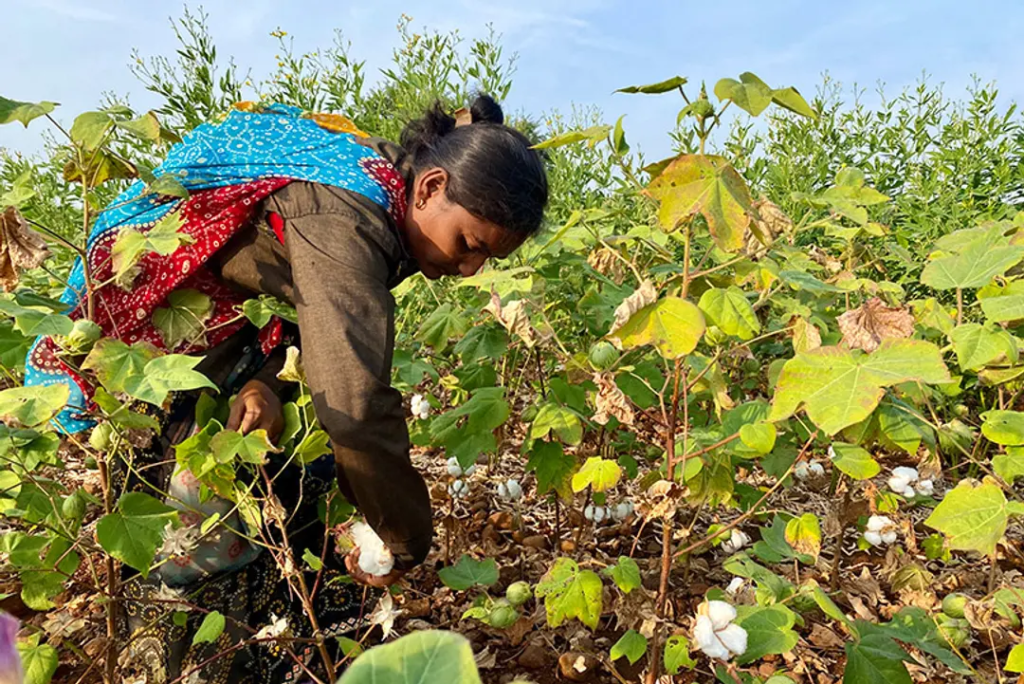
A cotton farmer harvesting in Maharashtra, India. Supplied by the author
The first achievement of neoliberal rural reform has been to turn peasants into consumers of agribusiness. Seeds are central to this transformation. In traditional agriculture, peasants saved, exchanged, improved and inherited seeds. Seeds were both a means of production and a store of cultural and ecological memory. Under intellectual-property rules, plant-variety protections and corporate patents, many countries have weakened farmers’ rights to save and exchange seeds. Corporate seeds often last only one season and must be purchased again, usually together with specialised fertilisers and pesticides. Farmers have been transformed from masters of seed into customers of seed.
The Green Revolution, with its high-yield varieties, irrigation, fertilisers and pesticides, was once celebrated as a triumph of scientific agriculture. It did raise output. But its legacy is heavy: chemical saturation of soils, depleted groundwater, adaptive pests, and ever-rising costs. As climate change intensifies, peasants genuinely need seeds that can resist drought, disease and erratic weather. But when public seed systems have been weakened and traditional seed networks disrupted, they are left dependent on corporations. The need for climate adaptation becomes a corporate business opportunity.
Industrial seeds, fertilisers and pesticides raise production, but they also transform peasant cash flow. Traditionally, small farmers tried to minimise cash expenses, relying on saved seeds, manure, family labour and local exchange. Today, before planting, they must buy seeds, fertilisers, pesticides, fuel and machine services. Additional spending continues through the growing season. Costs arrive long before harvest income. Borrowing becomes unavoidable. Formal bank loans require collateral and paperwork many peasants cannot provide; informal moneylenders charge ruinous rates. Debt ceases to be exceptional and becomes the normal condition of agricultural production.
Climate change makes this structure worse. Rains arrive late, and seeds fail to germinate. Sudden storms wash away seedlings. Drought forces replanting. Pests spread and pesticide costs rise. Each climatic irregularity means new cash expenses and new loans. Meanwhile, expenses for education, healthcare, weddings, transport and daily life are also rising. Peasants need more money than before, while the income from selling crops becomes less predictable. The countryside has been pushed into the cash economy without receiving enough cash power.
The second transformation concerns markets. Many peasants find it increasingly difficult to receive the real value of what they produce. Open markets can certainly allow large firms to suppress prices. But the story is more complicated. In many countries, the very state agencies once created to protect farmers — procurement boards, marketing boards, price-setting institutions — have become instruments for suppressing farmer income. In the name of national interest, export competitiveness or consumer-price stability, they keep farm-gate prices low, benefiting processors, exporters, urban consumers and public finances.
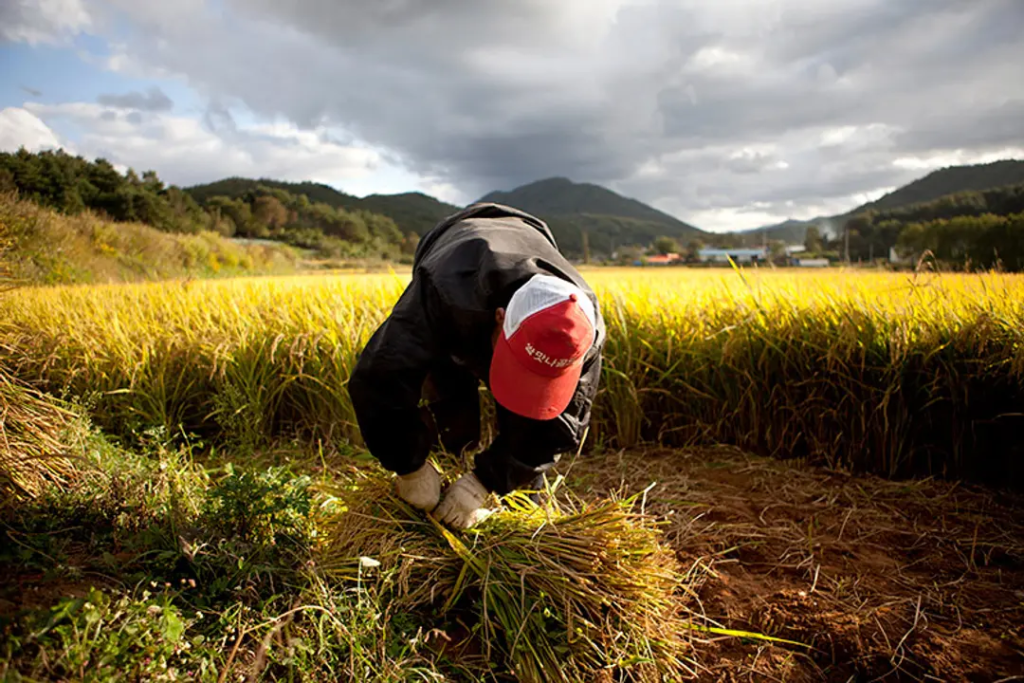
A farmer working at the rice harvest in Goseong-gun, South Korea. Photo by Björn Steinz/Panos Pictures
Cocoa is a classic example. West African farmers grow the raw material on which the global chocolate industry depends, yet receive a tiny share of the final value. When international prices rise, government pricing and intermediary institutions often limit farmer income; when prices fall, farmers bear the risk. Chocolate companies tell stories about sustainability, ethical sourcing and farmer empowerment, but most value remains in processing, branding, retail and finance. A child buying chocolate in Europe rarely sees that the family growing the cocoa may earn too little to survive with dignity.
Today’s peasants are often squeezed by two enemies at once: the predation of free markets and the decayed remains of state protection.
This makes peasant politics far more complex than urban observers imagine. Some peasants demand restored state protection, minimum prices, public procurement and seed sovereignty. Others want freedom from state agencies that suppress prices, and dream of selling directly into markets. Some follow Left-wing movements against corporations, GM seeds and agribusiness control. Others, suffering under corrupt procurement systems, demand market freedom. Peasants do not naturally belong to one ideology. They want a system that lets them survive, keep land, receive fair prices and keep debt within bearable limits.
The third battlefield is land. Land is being swallowed by mining, tourism, plantations, infrastructure, urban expansion and energy projects. Brazil, Cambodia, India, the Philippines, Ghana, Ethiopia, Honduras and many other countries have witnessed peasants forced off land. State police, private security, local strongmen, company agents and criminal networks enter the countryside together, transferring land from families to capital projects. Peasants face not only market prices, but violence.
In some regions, illegal mining, logging, armed groups and transnational crime further destroy agriculture. Gold mining poisons rivers; cyanide and heavy metals enter fields. Timber and mineral extraction damage watersheds and mountain ecologies. Armed groups occupy land, forcing farmers to pay protection or flee. City consumers see gold, timber, minerals, battery materials and tourist destinations, but rarely see the ruined farmland and displaced peasants behind them.
The two or three billion people connected to land cannot simply be relocated to cities. China’s astonishing rural-to-urban transition was exceptional. India still has a vast rural population, and many African countries’ rural populations continue to grow. The world’s manufacturing, construction and mining sectors cannot absorb so many people. We must stop treating urbanisation itself as an index of progress. In many places, urbanisation is not proof of successful development, but the disastrous result of rural destruction.
Climate change is the daily enemy of peasants, and also the enemy of us all. It alters rainy seasons, lengthens droughts, raises temperatures, expands pest pressure, and produces stronger storms and floods. Peasants need large-scale climate adaptation: more suitable crop combinations, more resilient seeds, diversified planting, water management, soil repair, local grain storage, agricultural insurance and buffers for failure. But all these require capital. Farmers most need investment precisely when they have least cash, least access to credit, and greatest exposure to debt.
The soil crisis is equally profound. Traditional agriculture returned nutrients to the land through plant residues, animal manure, human waste, composted skins, fibres and local cycles. Now agricultural products are sent to cities, where nutrients become sewage and garbage, unable to return to fields. Chemical fertilisers fill the gap, but they do not restore the life of soil. Over time, soils harden, microbial life declines, and water retention weakens. Many farmers know they are damaging the land, but have no alternative. They are not ignorant of ecology. They are pushed toward harmful practices by cash, markets and debt.
Large corporations have now learned the language of “regenerative agriculture”, “sustainable sourcing” and “climate-friendly food”. The websites of food, seed, chemical and fast-food companies display uniformed farm workers, green fields and smiling children, promising an agricultural transition. Some of these projects may indeed have value. But the past several decades should make us suspicious. It was the alliance of corporations and states that took cash, seeds, prices and land power away from peasants. To let the same forces rescue the people they have weakened requires, at the very least, scepticism.
Real regenerative agriculture will not be born in a boardroom, but in the hands of those still willing to remain with the land.
This is not to romanticise peasants. Peasants can overuse fertilisers, cut forests, oppress family members, and reproduce conservative local hierarchies. The village is not paradise. But peasants have a relationship to land that corporations find difficult to replicate. They must continue living on the same land. Their children may live there. Their ancestors lived there. For a corporation, depleted land can be abandoned and replaced. For a peasant, exhausted land means the exhaustion of family future. For this reason, peasants have the strongest incentive for ecological repair, even if they lack the resources to carry it out.
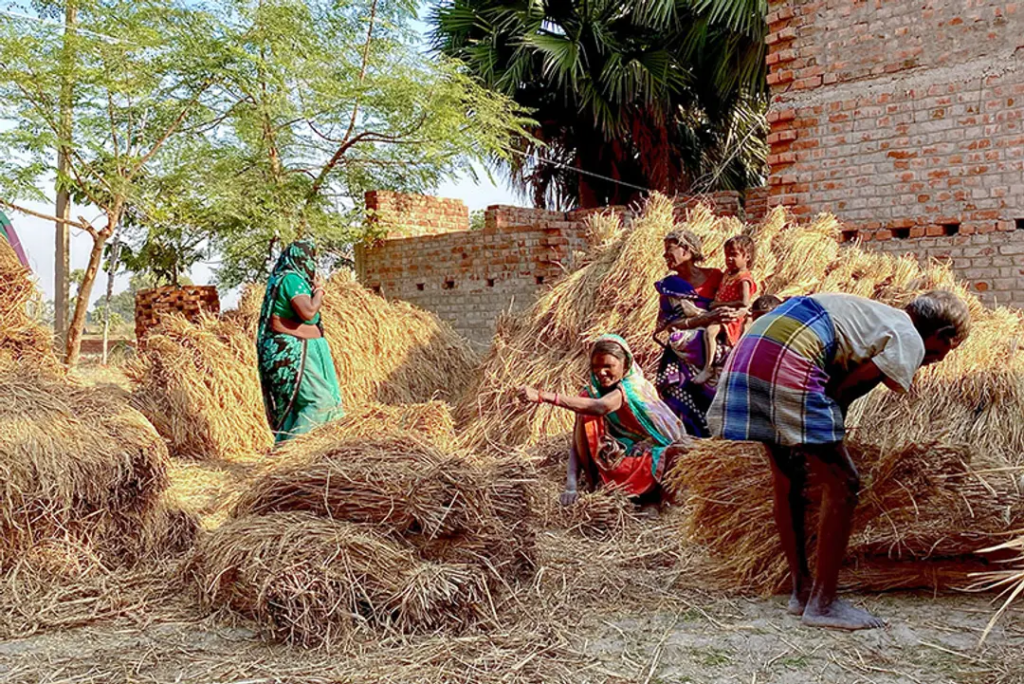
A family of rice farmers in Bihar, India. Supplied by the author
If we care seriously about climate, we cannot speak only of carbon markets, green finance and corporate pledges. We need investment in the ecological capacity of rural life: public seed systems, protection of local varieties, soil-restoration funds, water infrastructure, farmer cooperatives, fair price systems, low-interest agricultural credit, climate insurance, local processing, rural education and healthcare. Peasants do not need to be treated as objects of charity. They need to regain the power and capital required to manage land.
Small-scale agriculture is also a crucial shield against ecological collapse. It preserves crop diversity, maintains mixed cultivation, protects local knowledge, and reduces the vulnerability created by monocultures. Many peasants know what kind of cloud signals rain, what insect marks a seasonal change, what colour of soil indicates water stress. This knowledge is not folklore decoration. It is ecological science accumulated through long observation. Industrial agriculture destroys difference through standardisation; in the age of climate change, it is precisely difference, resilience and local adaptation that we most need.
The degradation of the world’s arable land should provoke far greater alarm than it does. If the peasant economies of Asia, Africa and Latin America are destroyed, the global food system will not merely become more expensive; it may lose resilience. If hundreds of millions are forced off the land, cities and borders will not absorb them. Climate refugees, hunger, armed conflict, criminal economies and political extremism will grow. The peasant crisis is not a niche development issue. It sits at the intersection of food, climate, migration, violence and democracy.
We need to put peasants back at the centre of our worldview. Not because they represent the past, but because they may decide the future. A prosperous, educated, organised and capitalised peasantry, with power over seeds and land, can help humanity resist climate degradation, maintain food security, preserve ecological knowledge and sustain local society. An impoverished, frightened, indebted, displaced and humiliated peasantry may be forced to leave the land en masse, with consequences beyond calculation.
John Berger once wrote that the peasant’s objective was to hand on the means of survival to the next generation, preferably more secure than what he had inherited. The peasant’s ideals may lie in the past, but his obligations point toward a future he will not live to see. That sentence should become a starting point for modern society’s renewed understanding of land. We city people also need to learn this sense of time: not only this year’s profit, next quarter’s price or the next round of financing, but whether the land can feed descendants, whether seeds can continue, whether water can be drunk, whether rural life can remain liveable.
The world needs peasants not because the world needs nostalgia. The world needs peasants because without them food becomes more fragile, land degrades faster, climate adaptation becomes harder, migration and violence become more difficult to control, and the last everyday relationship between humanity and natural systems is severed. The struggle of peasants is not their local struggle alone. It is a species struggle. We once thought the task of modernisation was to make peasants disappear. The clearer task now is to make it possible for peasants to remain — with dignity, capacity and power.