







I am sitting in a hospital room with my daughter, waiting for a routine procedure, when the surgeon enters and pulls up a chair. I expect the familiar choreography of medical reassurance: a description of what will happen, a summary of possible complications, a calm insistence that this is ordinary, safe and well within professional competence. Instead, he asks which of two techniques we would prefer him to use. I stare at him for a moment, unsure whether I have misunderstood. Then I say what seems to me the only honest thing: “I don’t know. I’m not that kind of doctor.”
My husband and I listen as the surgeon briefly explains the alternatives. Each has advantages; each has risks. But the explanation does not make us more capable of choosing. It only makes our ignorance more elaborate. We are not being asked to express a preference between two meals or two hotel rooms. We are being asked to participate in the distribution of medical responsibility. Eventually, we tell him that he should choose the procedure that, in his judgment, is safest and most likely to succeed. He should act, we say, as if she were his child.
The scene stayed with me because it compressed so much of contemporary life into a few minutes. The problem was not that the doctor was careless or unkind. He was following the moral grammar of our age. We live in a society that has become remarkably skilled at transforming institutional decisions into individual choices. Schools ask parents to evaluate educational risks. Retirement systems ask workers to become investors. Healthcare systems ask patients to become informed consumers. Digital platforms ask users to manage privacy, fraud and harassment through settings. Climate policy asks households to sort, offset, reduce, calculate and compensate. Everywhere, people are invited to choose; everywhere, the invitation conceals a transfer.
The transfer is usually described in generous language. We are “empowered”. We are given “agency”. We are supplied with information, menus, options, dashboards, comparison tools and consent forms. But a choice is not empowering simply because it is labelled as such. A meaningful choice requires knowledge, time, resources, social support and the ability to refuse bad options. Without those conditions, choice becomes a way of laundering responsibility. Institutions retain power, but individuals inherit the blame.
This is the deeper logic often called responsibilisation: the process by which social, political and economic risks are shifted onto individuals, who are then expected to manage them through rational calculation. The citizen becomes a consumer of risk products; the patient becomes a portfolio manager of treatment options; the worker becomes an amateur pension strategist; the parent becomes a safety officer; the user becomes the first line of defence against digital predation. In each case, the formal language is freedom. The practical effect is exposure.
F A Hayek gave one of the cleanest philosophical statements of this view when he wrote that, if an individual is to be free to choose, he must bear the risk attached to that choice. The sentence has an austere internal logic. Freedom and risk appear as twins. To protect freedom is to accept unequal outcomes. To demand security is to threaten liberty. Over time, this idea has been simplified and generalised. Freedom now often means consumer choice, and consumer choice is treated as sacred even when the consumer lacks the expertise to choose well.
But risk does not fall on a level field. The ability to evaluate risk is itself unequally distributed. A parent who knows doctors can call for advice. A worker with financial education can interpret pension options. A patient with time and confidence can challenge a diagnosis. A wealthy household can buy insurance, private tutoring, safer neighbourhoods, better lawyers, air purifiers, security systems and second opinions. The formal burden of choice may be shared by all, but the capacity to bear it is not. This is why the celebration of individual responsibility has grown alongside deepening inequality. The more society asks individuals to manage risk, the more it rewards those already equipped to do so.
The irony is that this transfer continues despite overwhelming evidence that human beings are poor risk calculators. Psychologists and economists have repeatedly shown that people misjudge probability, overreact to vivid dangers, discount ordinary hazards, fear what is dramatic and ignore what is familiar. We worry about plane crashes and terrorist attacks while underestimating driving, diet, loneliness, debt or heat. We are moved by the story more than the base rate. We are frightened by what we can picture. We are calmed by risks that have become routine.
A whole literature has emerged to correct these failures. Popular books promise to make us risk savvy. Online calculators estimate our odds of heart disease, crime victimisation, financial ruin or early death. Public agencies produce dashboards; insurers produce personalised scores; apps nudge us toward healthier behaviour; websites rank dangers with actuarial precision. The premise is always the same: if only people had better information, they would choose better. If only the anxious were more numerate, they would calm down. If only the reckless could see the odds, they would act prudently.
Yet the gap between statistical safety and lived anxiety persists. The question, then, is not simply why people misunderstand risk. It is why societies keep responding to that misunderstanding by making individuals responsible for ever more calculations. Why, after discovering that we are bad at estimating danger, do we build institutions that require us to do it constantly? What kind of subject is produced by a society that treats every person as an amateur actuary?
Risk sounds boring until one remembers what it names. It is a way of speaking about death, injury, loss, illness, old age, poverty, violence, shame and uncertainty. It concerns everything we fear may happen and everything we hope to avoid. The actuarial table may be dry, but behind it are bodies, families, hospital rooms, flooded towns, unpaid bills and failed systems. Risk is not only a number. It is a political arrangement for deciding who must live closest to danger.
In his history of risk, Peter Bernstein argued that the modern idea of risk required a belief that the future was not merely the whim of the gods. To calculate risk was to imagine that uncertainty could be measured, managed and partly controlled. In this story, risk helped make the modern world. It freed human beings from fatalism and allowed them to plan, insure, invest and govern. Probability became an instrument of agency. The future could be reasoned about.
There is truth in this story. But it is incomplete. The rise of risk thinking was not only a triumph of human freedom over superstition. It was also a shift in power. Once dangers could be counted, they could be assigned. Once probabilities could be calculated, responsibility could be redistributed. Risk management did not merely help people face the future; it helped states, markets and institutions decide who would pay for the future when it went wrong.
Early risk tables did not simply measure death; they helped create the authority to speak for it.
In 17th-century London, the weekly bills of mortality began as records of burial and disease. During plague years, they helped the wealthy decide when to flee the city. Parish clerks recorded deaths and christenings; later lists included causes ranging from fever and consumption to childbirth, old age, convulsions and accidents. These records were imperfect, biased and often crude. But they were also revolutionary. They treated death not only as a private tragedy or divine mystery, but as a population event that could be observed.
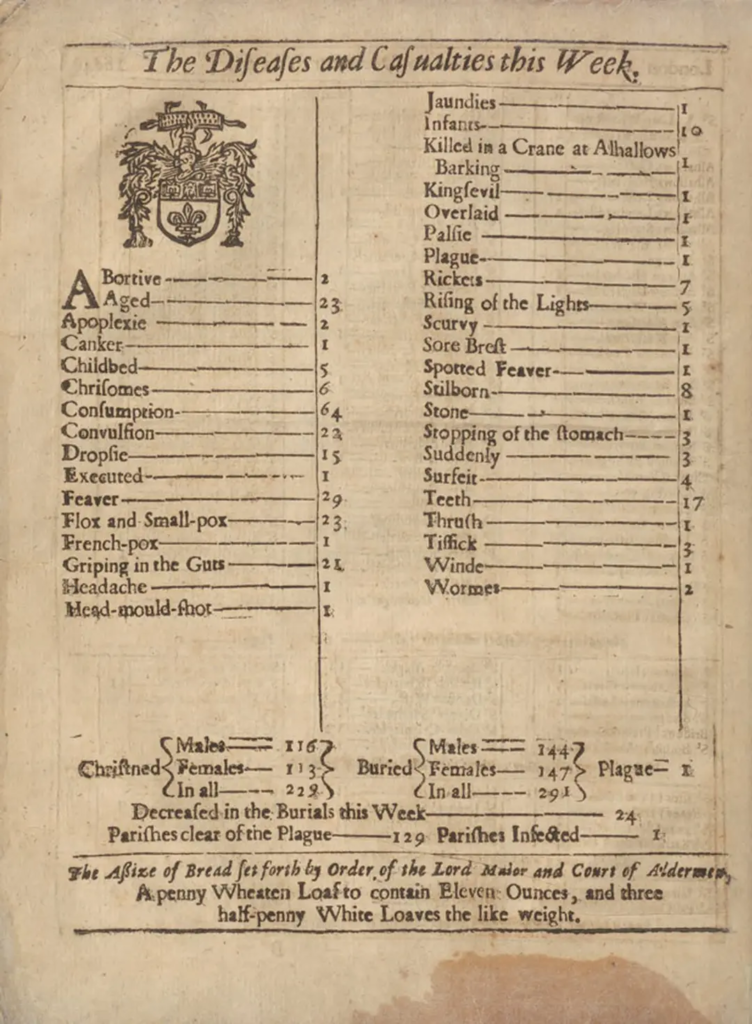
London’s Dreadful Visitation, or, A Collection of All the Bills of Mortality for this Present Year (1665). Courtesy of the Public Domain Review
John Graunt, a haberdasher turned pioneer of demographic analysis, saw that the bills could reveal patterns. In his Observations on the Bills of Mortality, he compared deaths across years and causes, estimated London’s population and calculated the likelihood of dying from particular conditions. He did not simply tell readers that their fears were exaggerated. He used numbers to claim authority over fear. Those worried about rare dangers could be shown, statistically, that their anxiety exceeded the hazard.
Here we can already see the split that still structures risk politics. On one side is judgment: the ordinary human effort to reason, fear, hope and decide amid uncertainty. On the other side is calculation: the claim that numbers can correct or replace unreliable judgment. The Port Royal Logic, published in France the same year as Graunt’s work, sought to refine practical reasoning by teaching readers to weigh harms according to their probability. Graunt went further toward the empirical authority of data. The question was no longer how to think better, but how to submit fear to the table.
This authority has only grown. During public health crises, financial crises, terrorist threats, natural disasters and pandemics, experts present numbers that promise to distinguish panic from prudence. Sometimes they do. Without statistical knowledge, we would be far more vulnerable to rumour, superstition and manipulation. But numbers do not speak by themselves. They are gathered, selected, framed and interpreted. They tell us something about likelihood, but not everything about responsibility. They can correct fear, but they can also discipline it.
During the COVID-19 pandemic, public debate repeatedly turned on this distinction. Some people overestimated the risk to vaccinated adults or to children; others underestimated the danger to the elderly, the immunocompromised and essential workers. The argument often became a contest over who was being irrational. Data journalists and commentators compared perceived risk with measured risk, pointing out that some groups feared the virus more than the numbers seemed to warrant.
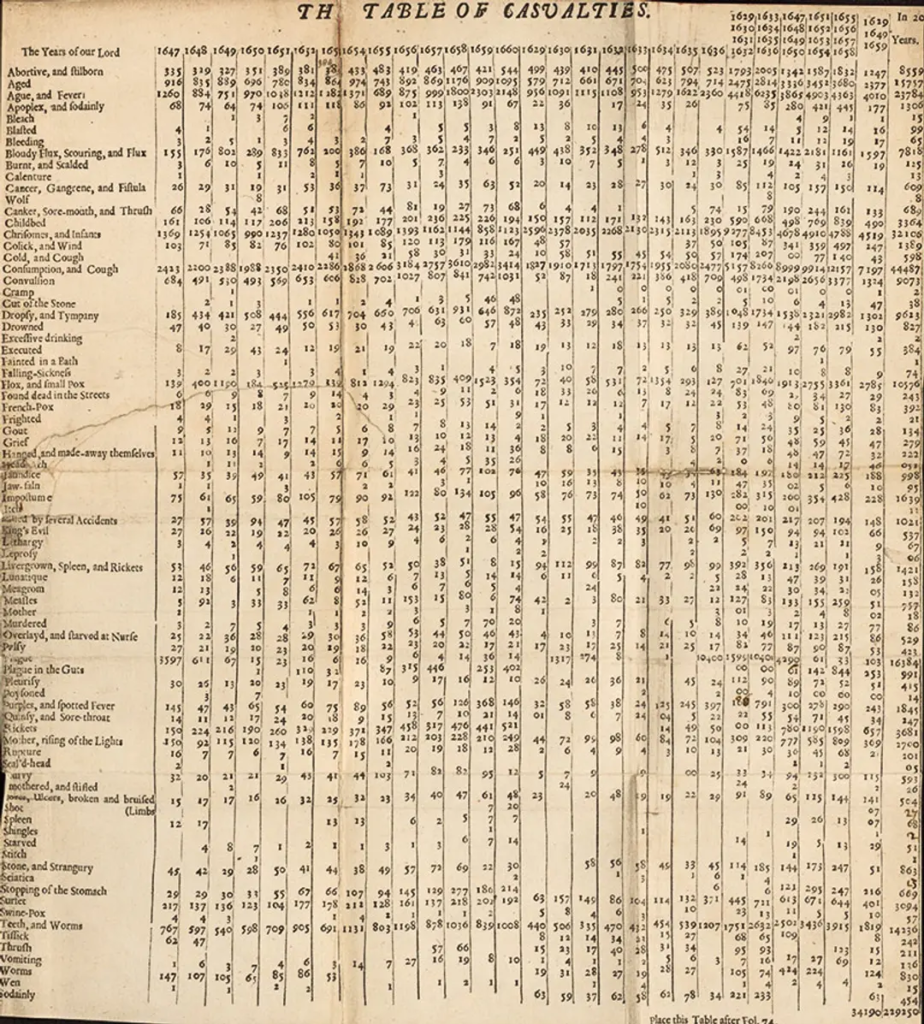
Natural and Political Observations Mentioned in a Following Index, and Made Upon the Bills of Mortality (1662) by John Graunt. Courtesy of the NIH Digital Collections
The pandemic revealed not only a gap between perceived and measured risk, but a struggle over who had the right to feel unsafe.
The problem with treating fear primarily as miscalculation is that fear is rarely only about probability. A parent deciding whether to send a child to school during a pandemic is not simply estimating the chance of death. She is thinking about long illness, grandparents, work obligations, school policy, ventilation, trust in institutions, the social costs of caution, and the possibility that official guidance may change next week. A bus driver or nurse cannot treat exposure as an abstract percentage. Risk is lived through position. The same probability does not mean the same thing for everyone.
This is what actuarial correction often misses. It can tell us that a fear is statistically excessive, but it cannot tell us whether the person fearing has been abandoned by the institutions that should have made fear less necessary. To say “your risk is low” may be true. It may also be a way of saying “your vulnerability is yours to manage.”
Behavioural economics has done much to popularise the idea that people are bad at making decisions under uncertainty. Its great achievement was to challenge the fantasy of Homo economicus, the perfectly rational, self-interested actor of neoclassical economics. Daniel Kahneman and Amos Tversky showed that people rely on heuristics, suffer from biases and depart from rational calculation in predictable ways. We anchor, overgeneralise, fear losses more than we value gains, and let vivid examples distort our sense of probability.
This critique of rational man seemed, at first, humbling. It admitted that humans are not the calculating machines economists once imagined. Yet the policy conclusions drawn from it often preserved the same individualistic structure. The unit remained the chooser. The problem was that the chooser was biased. The solution was to redesign the choice environment so that individuals would be nudged toward better outcomes without being forced. Libertarian paternalism, as Richard Thaler and Cass Sunstein called it, promised to improve decisions while preserving freedom.
Nudge theory has obvious attractions. If placing fruit at eye level helps children eat better, why not do it? If automatically enrolling workers in retirement plans increases savings, why not make that the default? If better forms and disclosures help consumers compare options, why not simplify them? Not all nudges are sinister; many are useful. The problem is the political horizon of the theory. It treats social problems as problems of choice architecture rather than power, provision or law.
A nudge can help someone navigate a bad system. It rarely asks why the system is bad. It can help a worker save for retirement, but it does not ask why retirement security depends on individual investment accounts. It can help a patient compare insurance plans, but it does not ask why healthcare is organised as a market maze. It can help consumers read mortgage terms, but it does not ask why predatory products are legal. It can encourage healthier eating, but it does not ask why cheap food is often unhealthy, why work schedules destroy cooking time, or why neighbourhoods lack grocery stores.
The language of choice architecture sounds technocratic, but it carries a political commitment: preserve the chooser, modify the environment, avoid coercion. Thaler and Sunstein are explicit in their suspicion of command-and-control regulation. They prefer disclosure, incentives and defaults to bans or mandates. In some cases this restraint may be sensible. In others, it amounts to leaving harmful structures intact while coaching individuals to survive them.
Environmental policy shows the stakes. Market-based mechanisms such as cap-and-trade are often presented as elegant alternatives to direct regulation. Rather than banning or limiting pollution through command, governments create tradable permits and let firms find the cheapest way to reduce emissions. In theory, the result is efficient. In practice, loopholes, uneven enforcement and political bargaining can allow polluters to continue or even expand harmful activity, especially in poor communities with little power.
Market solutions often turn public danger into private calculation while leaving the vulnerable closest to harm.
The appeal of such systems is that they seem to manage risk without openly confronting power. Polluters become market participants. Citizens become consumers. Regulators become designers of incentives. Everyone chooses. But pollution is not experienced as a choice by the child with asthma living near a refinery, or the family whose water is contaminated, or the neighbourhood where industrial facilities cluster. A permit system may price harm, but pricing harm is not the same as preventing it. Sometimes the just policy is not to nudge or trade, but to prohibit.
The same logic appears in finance. When banks, platforms or scammers create complex risks for ordinary people, governments often respond with education campaigns, reporting tools and better disclosures. Citizens are told to watch for fraud, compare fees, strengthen passwords, read terms, avoid suspicious links and monitor accounts. These instructions are not useless. But they convert systemic exposure into personal vigilance. If someone is deceived, the question becomes: why did you click? Why did you trust? Why did you fail to protect yourself?
Digital life has intensified this pattern. Platforms build systems that reward speed, emotional manipulation and impersonation, then advise users to be cautious. Data brokers gather and sell personal information, then consumers are told to freeze credit or monitor identity theft. Companies design opaque privacy settings, then claim consent when users accept them. The risks are industrially produced, but the remedies are individualised. We are all expected to become cybersecurity departments of one.
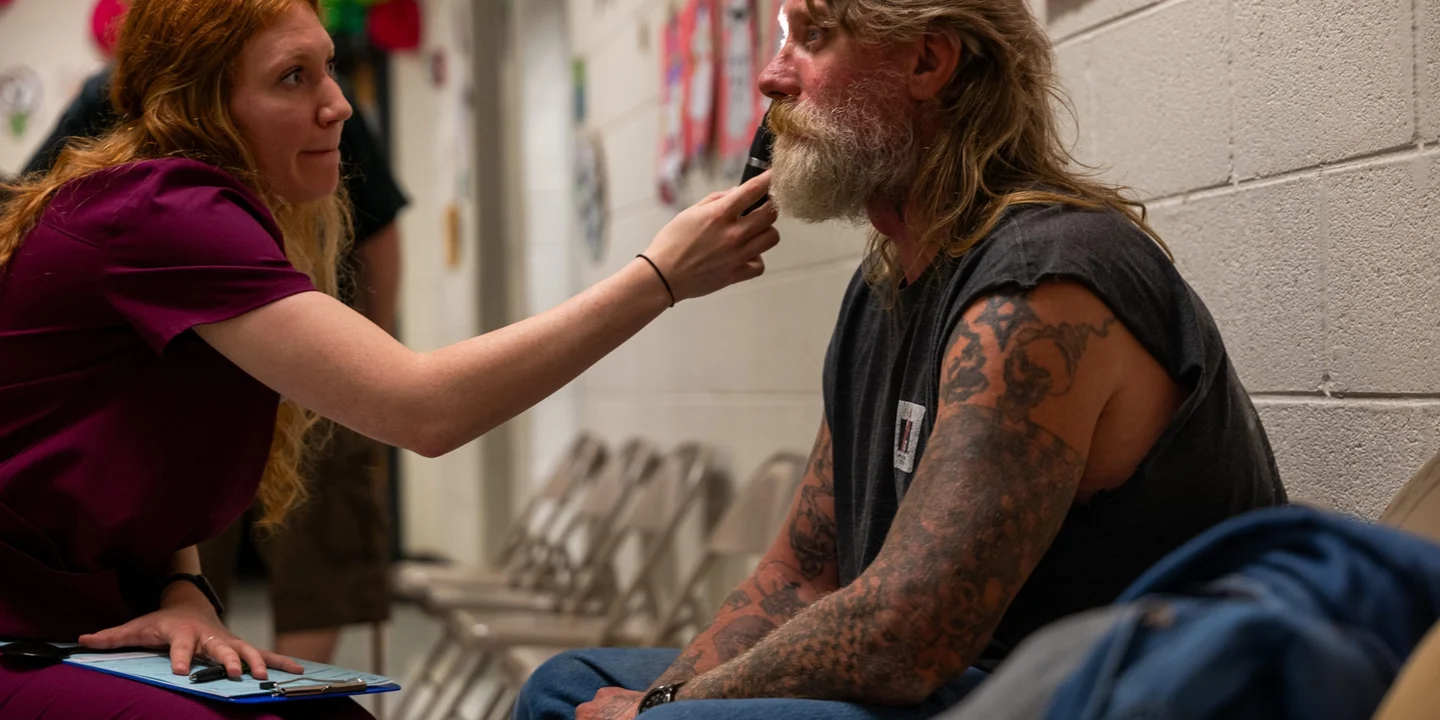
Healthcare presents perhaps the cruelest example. Patients are encouraged to become informed consumers, to compare plans, check networks, evaluate deductibles, research procedures and weigh risks. Yet the asymmetry between patient and system is enormous. Illness is not a shopping mood. A frightened person in pain cannot be expected to behave like a calm analyst of contract terms. The more complex the system becomes, the more responsibility is transferred to those least able to bear it.
The moral vocabulary of informed consent complicates this further. Consent is essential. Patients have the right to know what will happen to their bodies and to refuse unwanted treatment. But consent can also be stretched beyond its ethical purpose. When professionals ask patients to choose between technical options they cannot evaluate, consent begins to resemble liability management. The institution can say the patient chose. The patient can feel responsible for an outcome she never had the expertise to predict.
This is what I felt in the hospital room. I did not want authoritarian medicine. I did not want to be excluded from decisions about my child. But neither did I want the fiction that a brief explanation had made me competent to choose between surgical techniques. The right relationship was not blind obedience or consumer choice. It was trust structured by professional duty, institutional accountability and care.
The modern risk regime often destroys that middle ground. It imagines only two possibilities: paternalism or individual choice. Either experts decide for us, or we decide for ourselves. But democratic societies need a third possibility: institutions that are accountable enough to be trusted and humble enough to explain themselves without offloading responsibility. We need professionals who inform without abandoning judgment, governments that protect without infantilising, and systems designed so that people do not need heroic expertise to survive ordinary life.
The failures of the actuarial self are especially clear in personal safety culture. Years ago, I attended a National Rifle Association course called “Refuse To Be A Victim.” The course was less a direct argument for gun ownership than a lesson in permanent suspicion. We were taught to scan exits, distrust strangers, harden homes, vary routines, watch parking lots and think like attackers. The world it conjured was one in which violence was everywhere and safety depended on vigilance. To be harmed was not only tragic; it suggested a failure of preparation.
This is the most extreme form of responsibilisation: victimhood becomes a bad choice. The social production of violence disappears. Inequality, guns, misogyny, racism, housing insecurity, untreated trauma and public disinvestment fade into the background. The individual stands alone, responsible for calculating threat correctly. The anxious citizen becomes her own security consultant.
This logic now extends far beyond personal safety seminars. Parents track children through apps. Homeowners install cameras connected to private security networks. Neighbourhood groups circulate suspicious images. Schools rehearse active-shooter drills. Women are taught to carry keys between their fingers, avoid headphones, share locations, watch drinks and park under lights. Some of these practices may reduce danger in particular moments. But together they produce a world in which safety is privatised and fear is moralised.
Those with money can buy insulation from risk: gated communities, private schools, concierge medicine, safer cars, air filtration, legal advice, investment management, cybersecurity, therapy, remote work. Those without money are more likely to be described as risks: risky borrowers, risky patients, risky neighbourhoods, risky migrants, risky youth. The actuarial gaze does not fall equally. It protects some by classifying others.
This is the antisocial core of the actuarial self. It teaches us to see the world as a landscape of threats to be managed individually rather than conditions to be improved collectively. The stranger becomes a risk. The neighbour becomes a variable. The public becomes dangerous. The market sells protection from the very insecurity that political abandonment has helped create.
To be clear, risk calculation is not the enemy. We need epidemiologists, engineers, climate scientists, actuaries, public health officials, safety inspectors and financial regulators. We need probabilities, models, standards and warnings. The point is not to replace data with feeling. The point is to ask what happens after risk is measured. Does measurement lead to collective protection, or does it become a tool for telling individuals to protect themselves?
Consider climate change. People are advised to calculate carbon footprints, change lightbulbs, reduce meat, recycle, fly less and buy greener products. Many of these actions are worthwhile. But the greatest emissions come from energy systems, transportation infrastructure, industrial production, land use and political choices shaped by powerful firms. When climate risk is individualised, the citizen becomes a guilty consumer while the fossil economy remains structurally intact. The question shifts from “How should we transform energy, housing and transport?” to “Have you made better choices?”
The same pattern appears in health. People are urged to eat better, exercise, track sleep, monitor blood pressure and reduce stress. These are sensible recommendations. But they become absurd when detached from food deserts, poverty wages, unaffordable care, unsafe housing, pollution, long work hours and medical debt. A society that tells people to manage stress while making their lives insecure is not promoting health. It is outsourcing the costs of its own arrangements.
The actuarial self is thus not merely a psychological type. It is a political technology. It turns structural problems into personal projects. It converts public failures into private homework. It supplies a moral story in which the prepared deserve security and the unprepared deserve consequences. It allows institutions to ask, after every disaster: did you read the warning, choose the right plan, save enough, evacuate early, compare options, lock the door, check the box?
But not all risks should be chosen. Not all dangers should be priced. Not all responsibilities should be devolved. A good society does not merely produce better individual calculators. It reduces the number of situations in which ordinary people must calculate their way through danger alone.
This requires a different vocabulary. Instead of asking only how individuals perceive risk, we should ask who produces risk, who profits from it, who is protected from it, who is blamed for it, and who has the power to refuse it. The most important question is not whether people understand the odds. It is whether they should have been made to bear those odds in the first place.
A worker choosing among retirement funds is not simply exercising freedom if the alternative is poverty in old age. A patient choosing among insurance plans is not empowered if every option is confusing, expensive and incomplete. A parent choosing whether to send a child to an under-ventilated school during a pandemic is not merely evaluating risk if the real failure is public investment. A resident choosing whether to buy bottled water is not solving contamination. A woman choosing a safer route home is not solving violence. These are not private puzzles. They are public failures with individual interfaces.
The alternative is not to abolish responsibility. It is to put responsibility back where it belongs. Individuals should exercise judgment, care for one another, avoid reckless behaviour and participate in collective life. But institutions should not hide behind the language of choice when they possess the expertise, resources and authority to reduce danger at scale. A surgeon should not ask a parent to guess which technique is best. A platform should not ask users to detect scams it has helped circulate. A state should not ask citizens to shop their way out of broken healthcare. A society should not ask children to save the Earth by picking up litter while major industries continue to pollute.
The good news is that alternatives already exist. Public health, at its best, treats risk as shared. Clean water systems, sanitation, vaccination programmes, workplace safety rules, building codes, food inspection, fire regulations and pollution controls all embody the idea that some dangers should be reduced collectively before they reach the individual. Social insurance does the same for unemployment, disability, sickness and old age. These systems are imperfect, contested and often unequal, but they point toward a different political imagination: security as a public achievement.
Community-based safety offers another model. Violence prevention, housing stability, mental health care, youth programmes, street lighting, public transit, mutual aid and neighbourhood trust can reduce danger without teaching everyone to live in permanent suspicion. Climate resilience can be built through public cooling centres, flood protection, managed retreat, stronger grids, emergency planning and decarbonised infrastructure, not merely through consumer virtue. Financial security can be strengthened through regulation, public benefits, debt relief and fair wages, not merely through budgeting apps.
Such approaches do not eliminate uncertainty. Nothing does. Life will always contain accident, illness, loss and surprise. The goal is not a risk-free world, which would be neither possible nor desirable. The goal is a world in which the burdens of uncertainty are not systematically pushed downward onto those least able to carry them.
The hospital room, then, was not an isolated episode. It was a small ritual of contemporary governance. A professional institution asked a family to participate in a choice it could not meaningfully make. The gesture looked respectful. It felt like abandonment. And it revealed the central question of our age of