






“To receive from kings,” the Mahabharata warns us, “is at first honey, at the end, poison.” Honey, because who would refuse wealth placed in one’s hands by power itself? Poison, because such wealth is never truly free. The moment the gift arrives, the ledger opens. Ancient proverbs know this. Religious ethics know this. Family customs know this. Television comedies know it too. Someone invites us to dinner; we have to bring something. Flowers, wine, dessert, or at least some token of recognition. George Costanza, naturally, wants to know why. Why must a dinner invitation always come attached to this irritating little duty? Jerry Seinfeld’s answer could almost serve as the first sentence of sociology: “The fabric of society is very complex, George.”
Seinfeld is often described as a show about nothing, but it is also a remarkably sharp study of the gift. It understands that gifts are never only gifts. It understands, too, that the smallest things – whether one brings something to dinner, whether a birthday present is generous enough, who has hosted whom, who still owes whom – are often where social life becomes most exacting. We even have Seinfeld to thank for popularising the verb “to regift”. In one episode, a free dental treatment sets off a chain of exchanges. Tim Whatley, Elaine’s dentist, does not charge her for dental work. Elaine, in return, gives him a label maker. Later, Jerry gives Tim Super Bowl tickets. Tim reciprocates by regifting the label maker he had received from Elaine. Jerry, discovering this, wants the tickets back. George asks the perfectly logical question: if he can regift, why can’t you degift?
The question sounds like a joke, but it is also a serious one. Why can’t we arrive at dinner empty-handed? Why should a free dental procedure demand repayment in the form of a label maker? What hidden law sends the label maker in one direction and the Super Bowl tickets in another? Why is regifting awkward but imaginable, while degifting feels almost like a moral crime? Why do we say that gifts are given freely, when so many are offered under pressure, embarrassment, fear of judgment, or the desire to prevent a relationship from fraying? The fabric of society is complex indeed, and its complexity lies here: we insist that gifts are free while keeping remarkably careful accounts.
Nearly a century ago, the French sociologist Marcel Mauss tried to answer questions of this kind. In his classic 1925 essay The Gift, he examined gift-giving practices from across the world and asked a question that seems simple only until one tries to answer it: why do gifts require return gifts? Why does receiving something make us feel bound? Mauss was the nephew of Émile Durkheim, one of the founders of modern sociology. Born in the northeastern French town of Épinal into a Jewish family, he moved away from religious practice as a young man but remained deeply interested in religion, ritual and the ties that hold social life together. He never produced the kind of grand system-building books associated with his uncle. He wrote mostly essays, reviews and occasional studies. Yet The Gift, one of his longer works, has had a lasting afterlife in anthropology, sociology, economics and political theory because it forces us to reconsider what “economic exchange” really is.
Mauss began from an observation. Evidence from the Norse Edda, the Hindu Vedas, accounts of potlatch ceremonies in the Pacific Northwest, and a wide range of colonial-era ethnographic materials pointed to forms of exchange that could not easily be described in modern economic language. A chief hosts a feast. A family gives presents before the birth of a child. Hunters share the gains of a successful hunt. Marriage, mourning, ritual, alliance and hospitality are all accompanied by the movement of things. From one angle, these practices look like generosity: people give, share, host, bless and celebrate. From another angle, however, they are full of competition, pressure and even hostility. A gift can create friendship, but it can also create humiliation. It can seal an alliance, but it can also become a prelude to rivalry or war. No act of giving stands alone. Every gift, at some point, calls for an answer. A feast demands another feast. A favour demands another favour. A display of generosity invites a greater one. Even buying a round of drinks can become an escalating contest.
Seen in this way, gift-giving begins to look very much like an economic transaction. Yet that is precisely the problem. Our language, laws and moral habits tell us that gifts and contracts belong to different worlds. The gift belongs to kindness, affection, friendship, charity and love. The contract belongs to interest, calculation, markets and law. We imagine that the sacred heart of the donor has little in common with the cold calculation of the banker. We imagine that taxation is a burden while charity is sweet; that wages are transactions while gifts are feeling. But the ethnographic record forced Mauss to see that this division is neither universal nor natural. It is better understood as a historically specific imagination produced by modern European commercial society.
The modern contract emerged to solve a basic problem of commercial life: we depend on vast numbers of strangers for the necessities of existence. Adam Smith is often misread as a theorist of self-sufficient individualism, but he knew very well that modern people are not independent. We need bakers, brewers, butchers, sailors, weavers, miners and countless others whom we will never meet. The problem is that we cannot form intimate relations with all these people. The supply chain is too long; life is too short. Contract steps in where fellow feeling cannot reach. We do not need to know whether our trading partner is kind, whether his word is good, or whether his motives are pure. Contract law, enforced by the state, secures the terms of exchange. Sentiment, care and friendship can remain in the domestic and personal spheres. The market can be left to price, agreement and enforcement.
In The Wealth of Nations, Smith made this arrangement appear as if it grew naturally out of the earliest forms of exchange. He described a primal logic of barter: give me what I want, and I will give you what you want. Contract and market exchange thus came to seem less like historical institutions and more like the spontaneous extension of human nature. The rules of modern commercial society were disguised as the basic facts of human life. Prescription was presented as description. Political choice became natural law.
Mauss saw something different. Many exchanges were not one-off, precise or impersonal trades. They were open-ended, delayed, ambiguous and deeply embedded in personal and communal relationships. The movement of goods served many immaterial purposes: maintaining tradition, affirming identity, expressing respect, forming alliances, repairing conflict, preserving memory. Love and interest were not easily separated. Reciprocity was not a primitive version of contract, but a wider social logic.
We need things from others, both spiritual and material, just as others need things from us.
Like all powerful works of social theory, Mauss’s descriptive project carried a normative ambition. He did not merely want to introduce European readers to strange customs from elsewhere. He wanted to use those customs to unsettle modern assumptions about economic life. If apparently selfless gifts contained obligation, then perhaps apparently cold economic exchanges could be infused again with something of the spirit of the gift. His point was not to make us cynical about generosity, as if every act of kindness concealed an act of self-interest. His deeper question was different: what if taxation, wages, social insurance and public spending were also understood as forms of giving and returning within a shared life?
What if paying taxes were not merely the forced surrender of income, but a way of participating in public life? What if social insurance were not a gift from the state, but a return owed to workers after a lifetime of contribution? What if public art, festivals, hospitals, schools, parks and libraries were not simply “costs”, but gifts a community gives to itself? Mauss hoped modern society might rediscover the pleasure of public giving: the joy of generous expenditure on art, hospitality, festivals and collective life.
One consequence of separating gift from contract is that care is expelled from everyday market exchange. Contract tells us that, if both parties consent, the exchange is legitimate; once each side has fulfilled its obligation, the relationship is over. We enter contract as strangers and leave it as strangers. The contract gives us a clean ending. Gifts do not. They draw us into continuing relations. One gift demands a response, which demands another response. The account is never finally settled. Only death, rupture, distance, or the slow fading of relations over time can truly bring the exchange to an end. This is both blessing and burden.
By blurring the boundary between gift and contract, Mauss invited us to rethink work, family, welfare and public life. When he wrote The Gift in the 1920s, the French parliament was debating the expansion of social insurance. To Mauss, such legislation should not be understood merely as administration or fiscal policy. It was the modern extension of the logic of the gift. Workers give their time, strength, bodies and sometimes their lives to work. Wages alone cannot settle that debt. Illness, disability, old age and family responsibilities require broader forms of return. If labour relations should contain duties of care, then care relations in the family should also be recognised as labour. Childrearing, nursing, feeding and sustaining life cannot always be treated as unpaid love.
The Gift also offers a more fundamental lesson. We usually dislike describing personal relationships as transactions. Such language seems to cheapen intimacy, importing the vocabulary of the market into love, friendship and family. But perhaps we have the matter backwards. It may not be that “transaction” corrupts intimate life, but that modern contract has impoverished what we mean by exchange. In a broader sense, social life is an ongoing exchange: lending an ear, giving a hand, sharing food, watching children, offering shelter, accepting help, remembering kindness, calling in favours. We accumulate credits and incur debts among one another. That is why life’s uncertainties do not crush us completely. When disaster arrives, the account remains open. Somewhere, a counter-gift is on its way.
The Gift has always fascinated readers because it begins with a relatively clear sociological claim and then moves into more mysterious terrain. The first claim is easy enough to grasp: gifts resemble contracts because they require repayment. But Mauss does not stop there. He asks a more difficult question: what force makes the gift require return? Why must something received be reciprocated?
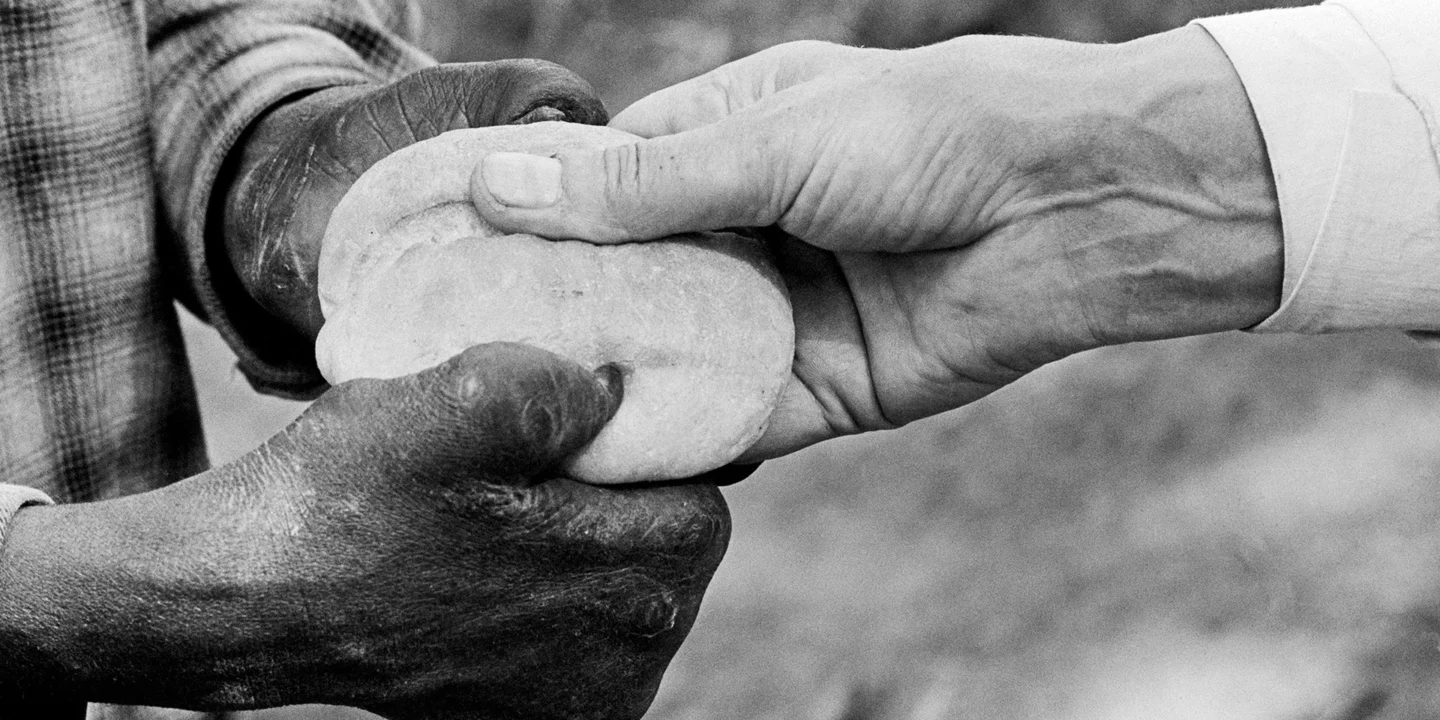
Mauss looks for an answer in Māori philosophy. He discusses the concept of hau, a difficult word to translate, which may refer to breath, spirit, life force, or a vitality that inheres in people, things and places. Mauss seems to suggest that gifts carry this force. Once an object is given, it is not dead matter. It carries something of the giver, but it also carries a pressure to return. The recipient is therefore compelled to keep wealth moving and to send something back.
Scholars have long debated what Mauss meant. Was he saying that the gift itself has a soul and wants to return to its original owner? Or was he saying that the gift contains part of the giver’s personhood, so that to accept the gift is to accept part of the giver? If the latter is true, why would another object, one that is not part of the giver, complete the repayment? Why would something different count as return?
Mauss himself seems to move between these possibilities. He writes that things sold still have a soul, that they are followed by their former owner and that they follow him too. Here, agency belongs both to persons and to things. The object is no longer passive property. It is the carrier of a relation. It keeps people tied to one another. For this reason, Mauss is not only asking us to think differently about things. He is asking us to think differently about persons. A person is not an autonomous unit sealed inside the skin. A person is partly constituted by what they have given, what they have received, what they owe and what is owed to them.
To become a person is, in part, to be made by the things one has given and received.
A person’s name, property, ancestors, reputation, debts, promises and objects do not merely surround them. They form part of them. Mauss cites a Kwakiutl story in which a chief, upon receiving objects believed to attract wealth, sings: “My name will be ‘property making its way towards me’.” Here, name, object, wealth and social standing are not separate. They form one person.
On 12 June 2020, Emery Mwazulu Diyabanza, an activist born in the Democratic Republic of Congo, entered the Musée du quai Branly – Jacques Chirac in Paris and staged a protest that was broadcast live on a smartphone. Standing before the camera, he announced: “I have come here to recover the goods that belong to me.” He then walked to an open display case, removed a 19th-century wooden funerary pole and carried it through the museum’s halls. “We are leaving with our property,” he told onlookers. “We are bringing it home.” French museums hold around 90,000 objects from sub-Saharan Africa, the vast majority of them housed at the Quai Branly.
Diyabanza was stopped and later tried on charges of attempted theft. His lawyers argued that the act was not ordinary theft but political protest. The museum’s lawyer insisted that freedom of expression could not justify the removal of objects from a museum. The court eventually ordered Diyabanza to pay a fine.
A man walks into a museum and removes an object said to have once belonged to his ancestors. We can call the act protest, retrieval, theft, performance, or a symbolic act of restitution. Whatever name we choose, it forces Mauss’s question back upon us: to whom does an object belong? Once a thing has been seized, bought, collected, classified and displayed, is it truly severed from the community from which it came? If objects carry relations, if they contain ancestors, land, death, mourning and social memory, can a museum’s certificate of ownership ever settle the account?
Here Mauss’s theory returns with a certain discomfort. Mauss himself helped train a generation of French social scientists who carried out fieldwork in colonial settings, and he placed great emphasis on the collection of ethnographic objects. He told his students that objects were proof of social facts. But how did those objects arrive in Paris? Which ones were taken under conditions of violence, colonial domination, unequal exchange and political coercion? In the French context, to use The Gift to think about restitution is not simply to apply an elegant theory to a contemporary issue. It is to make the theory face its own origins.
If something of the giver remains in the gift, then something of the dispossessed remains in the stolen object. If things follow their former owners and former owners follow things, then colonial objects in museums are not quiet exhibits. They are unsettled accounts. They do not merely lie behind glass; they summon, accuse, wait and return. The question is not only whether they legally belong to a national museum, but in what relation they were taken and in what relation their return is refused.
The American philosopher William James once wrote that, in the widest possible sense, a person’s self includes everything that they can call “mine”: body, psychic powers, clothes, house, wife, children, reputation, friends, land, horses, yacht, bank account and ancestors. Today, some of this list rightly disturbs us, especially the inclusion of wife and children as extensions of the self. But James at least saw that the boundary of the self does not simply coincide with the boundary of the body. We extend ourselves through relations, objects, memory, reputation and inheritance.
Mauss might have rewritten the point in more social terms: a person’s self is the balance of their social debts. A person is not an isolated atom, but a node in a ledger. We are made by what we have gained and lost, inherited and owed, received and failed to return. This ledger is not merely financial. It includes the language inherited from ancestors, the care received from parents, the support of friends, the labour of strangers, the losses of the dispossessed, the protection offered by the state and the harms committed by it.
Mauss later wrote an essay called “Techniques of the Body”, in which he examined how even seemingly natural bodily acts – walking, sleeping, swimming, jumping – are shaped by culture. Body, soul and society, he argued, are always entangled. In The Gift, a similar thought appears in a more hidden form. Giving and receiving do not merely occur between already formed persons. They help form persons in the first place. We are not complete individuals who occasionally exchange gifts. We are carved by exchange itself. Gifts, debts, counter-gifts, inheritances, obligations and losses shape the outline of the self.
This is the point I want to push further: the gift is not merely a decoration added to social relations, but a deeper system of social accounting. Modern contract tries to make accounts clear, deadlines precise and responsibility limited. The gift preserves another kind of account. It is often ambiguous, delayed, emotional and intergenerational, and for that reason harder to settle. Colonial plunder, unpaid care, withheld wages, the capture of public goods, silent family sacrifices: many of these debts cannot be fully handled by standard contracts. They continue to be recorded in bodies, objects, museums, memories and political conflicts.
Social life is nothing other than an unending exchange of things and favours, of food and feasts, of label makers and unpaid debts.
Seen this way, Diyabanza’s museum action was not merely expression or theft. It was an act of accounting. He temporarily reversed the movement of the object, turning a displayed thing back into a thing being claimed. He used his body to make a static collection into a moving debt. He did not succeed in carrying the funerary pole home, but he forced a public space to acknowledge that the object remained inside an unfinished exchange.
The same logic helps us understand labour. When a worker is not paid, this is not only a loss of income. It is a wound to personhood. Labour is not external to the person. Time, body, skill, exhaustion, danger and hope enter into work. Wages are not the employer’s generosity; they are the most basic return for what has been given. When wages are withheld, the account is not closed. When injuries are ignored, the account is not closed. When a lifetime of work leads to poverty in old age, the account is not closed. When care work is treated as love rather than recognised as labour, the account remains open.
In Mati Diop’s 2019 film Atlantics, a group of young construction workers in Dakar set sail for Europe after being cheated of their wages. Their boat capsizes, and they never arrive. Back in Senegal, their girlfriends begin to sleepwalk at night, their bodies possessed by the spirits of their dead lovers. Like ghosts, they appear before the boss who failed to pay the workers and demand the missing wages. The ghosts in the film are not simply figures of horror. They are the return of the ledger. The debtor thought that non-payment could end the relation, but death does not cancel the debt. The body knows the score. The ghost knows it too.
Here, gift theory meets the ghost story. What remains unpaid does not simply vanish. It returns in altered form: as protest, sleepwalking, restitution movements, strikes, family quarrels, historical trauma, or the memory, years later, that someone never returned the invitation. We often mock such accounting as petty. Who hosted whom, who gave the more expensive present, who forgot to say thank you, who failed to reciprocate – these can look like trivial social irritations. But small accounts train us to understand larger ones. They remind us that society is not made of isolated individuals, but of continuing exchanges, losses and obligations.
Of course, accounting can become cruel. The obligation of the gift can oppress. Family gratitude can be used to demand obedience. Welfare can be presented as the ruler’s gift rather than the citizen’s right. Charity can reinforce inequality. Colonisers have often described plunder as a civilising gift, violence as education, domination as protection. So the point is not simply to praise gift and condemn contract. The clarity of contract can protect the weak and help people escape endless personal debts. The problem is that contract cannot pretend to have replaced every social ledger. It can settle some debts, but not all.
We need a more honest social language, one that recognises the necessity of contract while also admitting that many relations cannot be contained by contract. We need to ask: which debts are recorded precisely, and which are deliberately forgotten? Whose losses can be converted into compensation, and whose losses are dismissed as history? Whose labour appears on a payslip, and whose labour receives only gratitude? Whose objects come with title deeds, and whose objects sit in museums while labels speak on their behalf? Who is allowed to demand repayment, and who is called ungrateful, disorderly or uncivil when they do?
The gift matters not because it makes society warm, but because it reveals that society can never be built entirely on clean settlement. We always live with unpaid things. We eat food grown by others, travel roads built by others, speak languages handed down by ancestors, depend on the labour of strangers, inherit institutions from the past and bear the consequences of past violence. We imagine that we exchange only in the present, but we are also exchanging with the past and the future.
The real question, then, is not whether we can stop keeping score. We cannot. The real question is how we keep score. Do we record only the sums written in contracts, or do we also record care, loss, plunder, inheritance and public giving? Do the powerful decide which accounts count, or can those to whom debts are owed speak their own accounts? Do we disguise gifts as freedom in order to hide obligation, or can we recognise obligation itself as the foundation of common life?
George Costanza disliked the inconvenience attached to dinner invitations. He was not entirely wrong. Gifts are inconvenient. They prevent us from pretending that we are independent, that relationships are weightless, or that receiving something leaves us unchanged. They remind us that social life is not a sequence of clean transactions, but a sticky web of accounts. We give, receive, delay, repay, miscalculate, default, get called to account and sometimes act generously enough that someone else forgets the ledger for a while.
Perhaps this is what the Mahabharata means by honey and poison. The honey of the gift is that it acknowledges our mutual dependence. The poison is that this dependence becomes debt. But without such debt, there would be no society. The truly frightening thing is not to owe, but to pretend that nothing is owed; not the pressure of return, but the power of those who take what others have given and declare the account closed.
In this sense, keeping the score is not merely petty calculation. It is the beginning of justice. Only by acknowledging that the account remains open can repayment be discussed. Only by recognising that objects still carry persons can restitution be imagined. Only by admitting that labour carries the body can wages and protections be demanded. Only by accepting that history has not ended can repair begin. We live between gift and debt. Everyone gives, and everyone receives. Everyone is creditor, and everyone is debtor. The fabric of society is very complex. The ledger is still open.