











In 1986, I left South Korea, the country where I had grown up, and arrived in Britain to study economics as a graduate student at the University of Cambridge.
It was not an easy migration. My spoken English was poor. The weather seemed to have been designed by someone with a grudge against sunlight. Racism and cultural condescension were common enough to be part of the landscape. But what surprised me most, and wounded me most regularly, was the food. Before arriving in Britain, I had not understood that food could be so persistently disappointing. Meat was cooked until it seemed to have lost all memory of the animal it had once been. Vegetables were boiled past the point of surrender. Salt was treated as a daring culinary intervention. Gravy, when good, could rescue a meal; when bad, it merely added moisture to defeat.
I developed an intense attachment to English mustard, which became less a condiment than a survival tool. Some British friends tried to defend their cuisine by arguing that their ingredients were so excellent that they did not require heavy sauces or elaborate seasoning. Sauces, they said, were what the French used to disguise inferior meat and tired vegetables. This argument lasted only until my first visit to France, where one meal was enough to reveal that the problem was not excessive French deceit but excessive British self-confidence.
British food culture in the 1980s was conservative in the deepest sense. It did not merely prefer the familiar; it distrusted the unfamiliar as if foreignness itself might upset the stomach or the moral order. There were Chinese, Indian and Italian restaurants, but many had been made so thoroughly British that they seemed less like imported cuisines than diplomatic compromises. Outside a few areas of London, anything more adventurous was rare. The chain Pizzaland, then widespread and now departed, captured the mood perfectly. It seemed to understand that pizza was already a risky foreign object, so it offered customers the option of eating it with a baked potato. This was not fusion cuisine. It was a culinary life jacket.
As always with nationalist ideas about food, the fear of foreignness became absurd as soon as one examined it. The classic British Christmas dinner includes turkey from North America, potatoes from the Andes, carrots from Central Asia and Brussels sprouts from Belgium. Tea came from elsewhere; sugar came through empire; spices arrived by trade and violence. Yet many Britons behaved as if their food culture had emerged pure and native from the damp soil of the island. Foreign food was suspect even when British food was already a museum of foreign ingredients.
The contrast with Britain today could hardly be sharper. The country, especially London, has become one of the most exciting places in the world to eat. You can have cheap Turkish kebab from a van at midnight, a delicate Japanese tasting menu that costs more than a week’s rent, fiery Sichuan noodles, Polish dumplings, Jamaican patties, Gujarati thali, Spanish tapas, Nigerian jollof rice, Korean fried chicken, Mexican tacos, Jewish bagels, French pastries, Greek grilled fish, Vietnamese pho, Peruvian ceviche and Argentinian steak. Supermarkets stock ingredients that would once have required a journey across continents. Olive oil, which a friend told me could be found in 1970s Oxford only in a pharmacy for softening earwax, now sits casually beside vinegars, pastas and preserved lemons.
My theory is that Britain underwent a collective culinary revelation in the 1990s. After foreign holidays, immigration, global media and the accumulated embarrassment of boiled vegetables, many people finally realised that their own food did not need to remain the standard by which all other food was judged. Once this happened, liberation followed. There was no need to choose permanently between Indian and Thai, Italian and Turkish, French and Mexican. You could enjoy all of them. More importantly, you could learn from all of them. British food became better not by defending its borders, but by opening its kitchen.
While my food world was expanding with almost comic speed, my other world – economics – was moving in the opposite direction.
Until the 1970s, economics contained a rich variety of schools, traditions and methods. There were classical economists, Marxists, Keynesians, neoclassicals, institutionalists, developmentalists, Austrians, Schumpeterians, behaviouralists and others. These were not merely different technical approaches to the same problem. They began from different moral intuitions, political commitments and ideas of how economies work. Some focused on class conflict, some on individual choice, some on institutions, some on innovation, some on uncertainty, some on power, some on markets, and some on the historical conditions under which markets themselves were built.
These schools argued fiercely. Sometimes the arguments were intellectual death matches: Austrians against Marxists, Keynesians against neoclassicals, free traders against developmentalists. At other times, the exchanges were more productive. Economists borrowed ideas from rivals, sometimes generously, often without attribution. Governments tried policies inspired by different traditions, and the results forced theories to adapt. Some economists produced hybrids: post-Keynesians, institutional Keynesians, evolutionary economists, structuralists and others who refused to eat from only one plate.
Economics, in that era, resembled the British food scene at its best today. There were many cuisines, each with its own history, techniques and strengths. Some were better suited to certain problems than others. A cuisine designed for preserving food through winter is not the same as one built around fresh seafood in a hot climate. Likewise, an economic theory designed to analyse market exchange is not necessarily good at explaining technological change, unpaid care, colonial dependency or financial panic. Diversity was not a decorative luxury. It was a practical necessity.
Since the 1980s, however, economics has become more like Britain before its culinary awakening. One tradition, neoclassical economics, dominates the menu. Other approaches may be mentioned in specialist corners, but the central kitchen is controlled by one cuisine. It has its virtues. Like any serious tradition, neoclassical economics can illuminate important questions. It has powerful tools for analysing incentives, prices, strategic behaviour and resource allocation. The problem is not that it is useless. The problem is that it has been treated as if it were economics itself.
The intellectual monoculture of economics has left the discipline with fewer flavours, fewer nutrients and fewer ways to imagine the world.
The story of how this happened is too large to tell fully here, but it has many ingredients. Mathematics became increasingly dominant, which brought precision and rigour but also pushed aside questions less easily formalised. Academic prestige concentrated in journals, departments and graduate programmes that favoured a narrow range of methods. The so-called Nobel Prize in economics – not one of Alfred Nobel’s original prizes, but a later prize established by Sweden’s central bank – helped define what counted as excellence. American universities acquired enormous global influence after the Second World War, and neoclassical economics had already become dominant in the United States. Meanwhile, the political climate of the late 20th century rewarded economic theories that placed markets at the centre and treated existing distributions of property, income and power as background conditions rather than subjects of inquiry.
This last point matters. An economic theory that hesitates to question who owns what, who commands whom, and who benefits from the rules will usually be more welcome among those who already own, command and benefit. It will sound objective. It will seem pragmatic. It will appear less ideological precisely because it leaves the most ideological parts of the economy untouched. A theory that begins by asking why some people own factories while others sell labour, why some countries industrialise while others remain dependent, or why unpaid care is invisible in national accounts will cause more discomfort.
The result is that, in many countries, “economics” has become almost synonymous with “neoclassical economics”. Students can pass through entire economics degrees while encountering Marx, Keynes, Polanyi, Veblen, Schumpeter, Myrdal, Kaldor, Hirschman or Elinor Ostrom only briefly, if at all. Alternative traditions are treated as history, politics, sociology or heterodox eccentricity. If they once produced useful ideas, we are told, those ideas have already been absorbed into the mainstream. Behavioural economics has taken bounded rationality. Innovation economics has taken Schumpeter. New institutional economics has taken institutions. Labour economics has taken some concern for power. The implication is that nothing important remains outside the main dish.
But these incorporations are often not genuine fusions. They are more like adding a baked potato to a pizza to reassure anxious diners. A behavioural “bias” attached to an otherwise standard model is not the same as a full theory of socially formed preferences. A small correction for market power is not the same as a theory of capitalism as a system of power. A chapter on institutions is not the same as an economics that begins from the historical construction of markets. The result is not Peruvian cuisine, with its deep blending of Indigenous, Iberian, African and Asian influences. It is a narrow base with a few imported toppings.
I am not arguing that neoclassical economics is uniquely bad. All schools of economics are partial. Each is built to see some things better than others. Marxist economics sees class and exploitation but may underplay individual agency or entrepreneurial experimentation. Austrian economics sees dispersed knowledge and spontaneous order but often neglects power and historical inequality. Keynesian economics sees uncertainty and demand but can sometimes take production structures for granted. Institutional economics sees rules and habits but can become too descriptive. Developmental economics sees structural transformation but can overtrust state capacity. Neoclassical economics sees choice, incentives and equilibrium, but often struggles with history, power, institutions and collective imagination.
A healthy discipline would teach students to ask which approach is useful for which problem. If you are studying supermarket price competition, one set of tools may help. If you are studying the rise of East Asian industrial economies, another is needed. If you want to understand climate change, unpaid care, financial crises, platform monopolies, colonial extraction or the politics of housing, you need still others. No sensible cook uses a frying pan for every dish, yet economics has trained generations to believe that one method is the kitchen.
The damage is not confined to academia. Some readers may wonder why anyone outside economics departments should care whether economists have become narrow. The answer is that economics has become the language of power. It is the vocabulary in which governments justify taxation, welfare, interest rates, trade, labour laws, industrial policy, climate policy, education, healthcare and even the arts. Economic language now wanders far beyond the economy. We are told to value universities by graduate earnings, hospitals by efficiency metrics, childcare by labour-market participation, forests by ecosystem services and museums by tourist revenue. I have even heard people defend monarchy on the grounds that it attracts visitors. Whatever one thinks of monarchy, reducing it to a tourist attraction is surely an insult to both its supporters and its critics.
If collective decisions are increasingly framed in economic terms, then citizens who do not understand economics are at a democratic disadvantage. They may vote, but they do not fully know what is being served to them. They may be asked to choose between “fiscal responsibility” and “reckless spending”, between “flexible labour markets” and “job-killing regulation”, between “free trade” and “protectionism”, between “efficiency” and “waste”. Without economic literacy, these phrases become slogans rather than arguments.
Economics is not an obscure hobby, like studying a dead language or classifying distant galaxies. It enters the rent you pay, the wage you earn, the interest on your mortgage, the quality of your job, the price of food, the availability of public transport, the security of your pension, the power of your employer, the cost of your education and the air your children will breathe. It shapes both daily life and collective possibility.
But economics does more than influence policies. It shapes people. This is a point often missed in textbook accounts. Economic theories do not merely describe human beings; they help produce them. If a society is repeatedly told that people are fundamentally selfish, calculating and competitive, more people will behave as if this is normal. If altruism is treated as naïve or suspicious, altruists will be mocked as fools or exposed as hypocrites. If cooperation is described as fragile and self-interest as natural, institutions will be designed to monitor, incentivise and punish rather than trust, cultivate and enable.
An economics that assumes selfishness does not merely describe selfish people; it helps cook a society in which selfishness tastes normal.
Other economic traditions begin from different assumptions. Behavioural economics shows that people are not perfectly rational. Institutional economics emphasises habits, norms and rules. Feminist economics highlights care, dependence and social reproduction. Marxist economics focuses on class, labour and power. Developmental economics examines how capabilities are built over time. Ecological economics reminds us that economies are embedded in nature, not suspended above it. If these traditions were more central, our common sense about human beings would be different. We might see cooperation, care, trust, imitation, solidarity, conflict and institutional design as just as important as price and choice.
Economic theories also shape people by shaping the material world in which they live. If a theory tells governments that industrial policy is futile, countries may fail to build advanced industries. If a theory tells them that markets should decide everything, public capabilities may wither. If a theory tells them that labour protections create inefficiency, workers may lose bargaining power. These changes alter not only income but character. A society of insecure workers produces different habits, fears and aspirations from a society of secure workers. A society of small farmers produces different people from a society of factory workers. A society of debt-burdened graduates produces different citizens from a society where education is publicly supported.
Industrialisation offers a clear example. People in industrial societies tend to become more disciplined by the clock because work is organised around shifts, machines and coordinated production. Factories gather workers together, making collective organisation easier and trade unions more likely. Trade unions, in turn, help create political parties and social movements that demand rights, welfare and equality. Even when factories later disappear, the institutions and expectations they helped create may remain. Economic structure shapes social imagination.
Different economic theories therefore imply different societies. A theory that encourages industrial transformation may create a society with stronger collective organisations. A theory that privatises essential services expands the market principle of one-dollar-one-vote into areas that might otherwise be governed by the democratic principle of one-person-one-vote. A theory that treats inequality as a necessary incentive may tolerate social divisions that later corrode trust and stability. A theory that ignores ecological limits may help create growth that undermines the conditions of life.
This is why economics is too important to be left to economists. The 2007-08 financial crisis should have made this obvious. So should the long stagnation, inequality and political polarisation that followed. Technical experts did not foresee the crisis, and many later explained why ordinary people had to bear the costs of saving the system. The lesson is not that expertise is worthless. The lesson is that expertise without democratic challenge becomes dangerous. Citizens need enough economics to ask better questions, resist false necessities and imagine different arrangements.
Of course, there is a gap between saying that citizens should learn economics and making it possible for them to do so. Many people are exhausted by work, debt, childcare, illness, insecure housing and everyday survival. The invitation to become an “active economic citizen” can sound like being handed another unpaid job. Learn economics, monitor policy, understand inflation, follow banking crises, compare tax proposals, evaluate public spending, decode pension reform – who has the time?
This is why economic literacy must not be imagined as a private self-improvement project. It should be part of democratic infrastructure. Schools should teach more than personal finance. Public broadcasters should explain economic controversies without treating markets as natural forces. Trade unions, community groups, libraries, adult education programmes and social movements should create spaces where people can learn together. Economic debate should not belong only to think-tanks, investment banks and newspaper columnists. It should be as common as discussion of football, food or weather.
The good news is that economics is much more accessible than many economists pretend. Much of it is common sense made to look difficult by jargon, mathematics and professional ritual. Some technical material is genuinely hard, of course, just as some cooking techniques require training. But one does not need to be a Michelin-starred chef to know whether a meal is nourishing, nor does one need a PhD to ask whether an economic policy serves the many or the few.
The mystification of economics serves a social function. If ordinary citizens believe economics is too difficult, they will leave decisions to experts. If they leave decisions to experts, those experts will often be drawn from institutions close to power. If those experts define the menu, democracy becomes a ritual of choosing between dishes already prepared elsewhere. The citizen is reduced to a diner, perhaps allowed to complain about the taste, but not invited into the kitchen.
This is where my food analogy needs to be extended. The problem with economics is not only that the menu has become too narrow. It is also that most people are not allowed to cook. We are given pre-packaged policy meals: austerity, deregulation, privatisation, competitiveness, fiscal discipline, market confidence, innovation strategy. We may choose between centre-left seasoning and centre-right seasoning, but the basic ingredients often remain the same. A more democratic economics would not merely add more dishes to the menu. It would open the kitchen.
Opening the kitchen means teaching people how economic arguments are made. What assumptions are being used? What is being measured, and what is ignored? Who gains, who loses, and over what time frame? What kind of human being does this theory imagine? What institutions does it take for granted? What moral values are hidden inside technical language? What alternatives have existed in other times and places? These are not specialist questions. They are democratic questions.
A democratic economy needs citizens who can read the recipe, question the ingredients and help decide what is cooked.
Once citizens begin asking such questions, economics becomes less intimidating. Inflation is not simply a number rising in the sky; it is a conflict over prices, wages, profits, supply chains, money, energy and expectations. Public debt is not simply a household credit-card bill; it is a claim within a monetary and political system. Productivity is not merely output per worker; it depends on technology, training, infrastructure, management, care, health and power. Markets are not natural forests; they are gardens, with rules about property, entry, contracts, competition, information and enforcement.
Learning economics is like learning a language, but also like learning to cook. At first, everything seems unfamiliar. Then patterns emerge. You begin to recognise the base ingredients: labour, capital, land, money, technology, institutions, demand, supply, power, expectations. You learn that different traditions season them differently. You see that some recipes are better for some situations than others. You gain confidence not because you know everything, but because you are no longer dazzled by professional mystery.
This also makes public debate more interesting. Talking with friends and family about wages, rent, food prices, taxes, energy bills, bank failures or industrial policy can sharpen one’s understanding. Disagreement is useful. Different people experience the economy from different positions: worker, tenant, parent, migrant, student, pensioner, debtor, small business owner, public employee. No single perspective captures the whole. Economic citizenship begins when these experiences are connected to larger structures.
There are already groups trying to make this happen. Activists, educators, unions and community organisations have created courses, reading groups, online lectures and public workshops that explain economics outside the standard textbook frame. Some teach citizens how money is created. Some explain inequality. Some focus on climate and the economy. Some teach workers to read company accounts. Some challenge austerity. Some recover forgotten economic traditions. These efforts may seem small, but they matter. Every public kitchen begins somewhere.
The aim is not to turn everyone into a professional economist. We do not demand that every citizen become a constitutional lawyer before voting, or a civil engineer before having an opinion about transport. But democracy requires enough shared knowledge to prevent expertise from becoming priesthood. Citizens need not calculate every model, but they should understand that models are made by people, for purposes, with assumptions. They should know that economic laws are often political choices wearing scientific clothes.
This matters especially now, because the problems we face cannot be solved by one school of economics. Climate change cannot be understood only through prices; it requires ecological limits, public planning, technological change and justice. Ageing societies cannot be understood only through pension markets; they require care, migration, gender equality and intergenerational solidarity. Financial instability cannot be understood only through efficient markets; it requires psychology, institutions, leverage, regulation and power. Global inequality cannot be understood only through trade theory; it requires history, colonialism, technology, debt and industrial strategy.
A single-school economics is not just intellectually boring. It is dangerous. It sends us into a storm with one map, one compass and one recipe for soup. When the world changes, the discipline then adds a patch here and a correction there, insisting that the main structure remains sound. But crises are not always requests for minor adjustment. Sometimes they reveal that we have been cooking with the wrong assumptions.
Britain’s food revival offers a hopeful lesson. Culinary cultures can change. A country can move from suspicion to curiosity, from boiled vegetables to multiple cuisines, from defensive pride to experimentation. It does not mean abandoning local traditions. The best food cultures are not those that erase their own history, but those that are confident enough to learn. A good British food culture can include roast dinners, pies and puddings, but it need not pretend that these exhaust human possibility. Likewise, a good economics can include neoclassical tools without pretending that they are the whole subject.
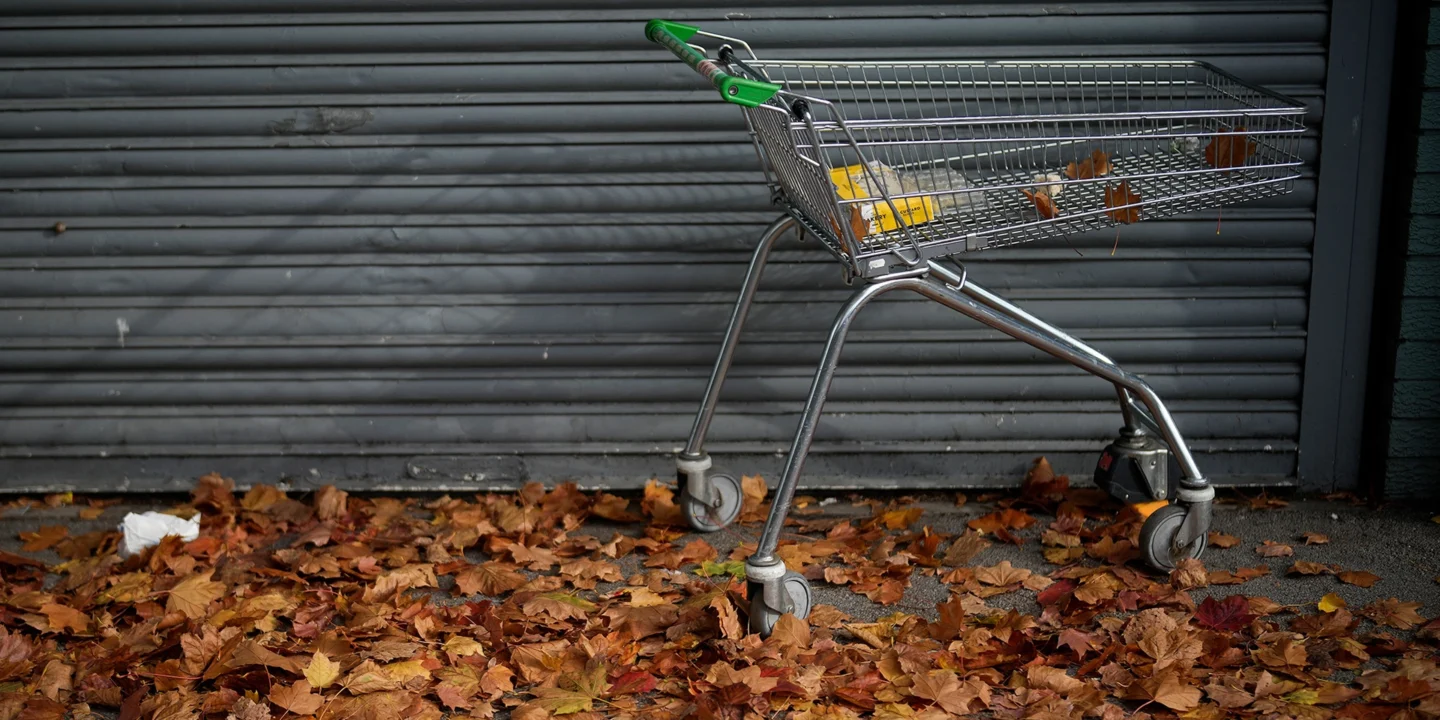
The empty basket of the title is therefore not empty because there is no food in the world. It is empty because too much of economics has forgotten to shop widely. The ingredients exist: history, power, institutions, ecology, care, class, technology, uncertainty, cooperation, conflict, money, culture and imagination. The recipes exist too, scattered across schools that have been marginalised, simplified or dismissed. What is missing is the institutional appetite to bring them back into the kitchen.
My hope is that more people will acquire that appetite. Economics need not be an austere discipline served cold by experts. It can be lively, argumentative, historical, moral and practical. It can help us ask why some societies prosper and others struggle, why some people work hard and remain poor, why useful work is undervalued, why finance becomes powerful, why public services are starved, why climate destruction is profitable, and why so many things said to be impossible have in fact been done before.
Learning economics will not automatically make the world better. Knowledge never does that by itself. But ignorance leaves the menu in other people’s hands. If we want economies that serve human flourishing rather than the other way around, citizens must become more than customers of policy. They must become cooks, critics and co-authors.
Please enjoy the meal, but do not stop there. Ask who chose the ingredients. Ask why some dishes are missing. Ask who is washing the plates. Ask who owns the kitchen. And, when necessary, bring your own recipe.