











CAMERAS · FIELD IMPRESSIONS
The X6 arrived with a one-inch-equivalent sensor story, yet its first public comparison suggested that faster transfers, quicker charging and one awkward screen tradeoff may matter more.
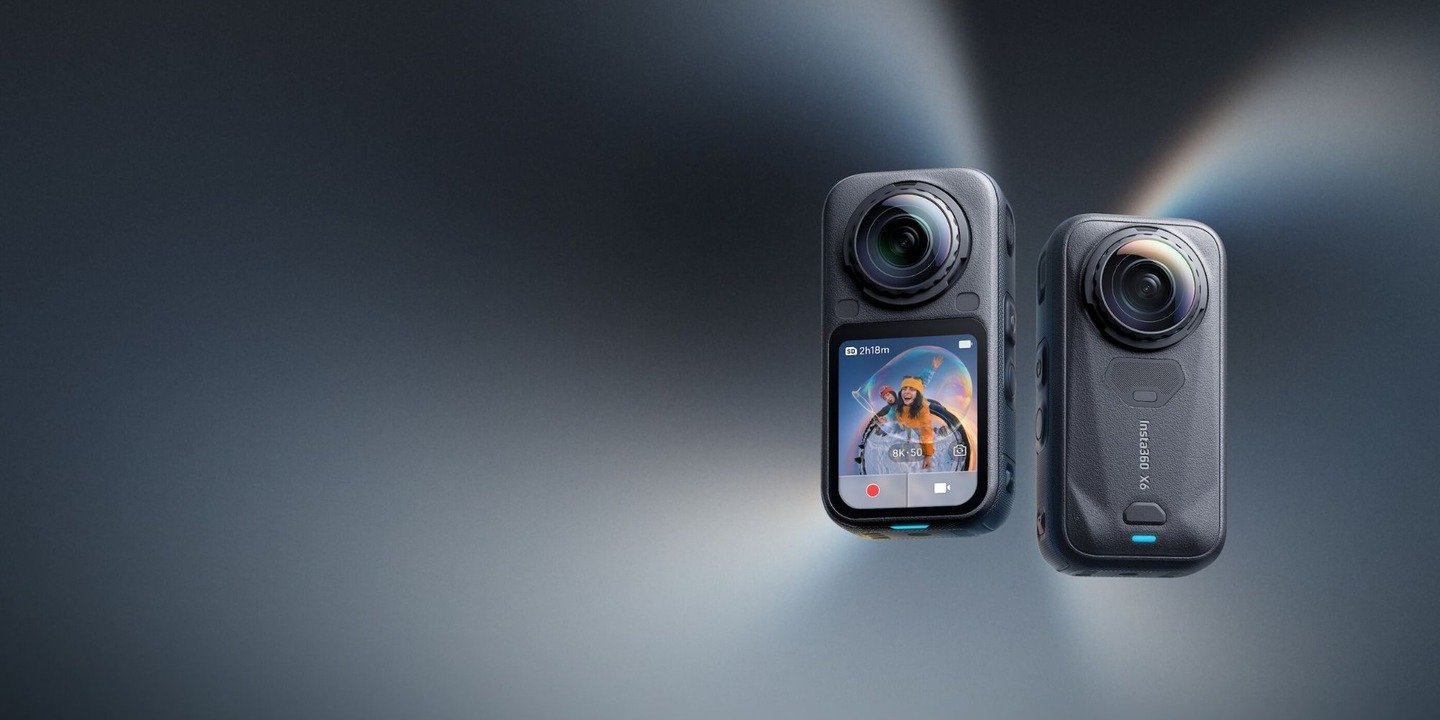
Insta360 introduced the X6 on August 12 with a headline built around sensor area. Its two custom Sony square sensors were marketed as providing a one-inch-equivalent imaging surface when both sides capture 360 footage, the largest area yet in a pocketable 360 camera. The launch page treated that claim as the foundation for nearly every other upgrade, but early use pointed elsewhere.
Why Faster Transfers Change the Day

Moving files, not sensor theory, may be the X6’s most useful improvement. In a public X5 comparison, Reddit user gshaw1967 measured transfers reaching 32 MB/s on the X6 against 17 MB/s on the older camera, with both still accelerating when the test ended. That difference could cut the wait for a full card nearly in half. For a traveler who wants to back up footage, clear storage, and leave, faster Wi-Fi returns time to the actual shoot every single shooting day.
Those file sizes explain the value. A single 120-megapixel panorama from the session occupied 59 MB, and a 360 clip at 8K/50 fps would be far larger. Faster Wi-Fi looks unremarkable on a specification sheet, but anyone copying footage to Insta360’s cloud between locations will notice it daily. Across a trip, those minutes become hours.
The Sensor Claim Still Needs the Right Scene to Matter
Still, one-inch language deserves reading. Insta360’s footnote says the equivalence describes imaging area in 360 mode, not the diagonal of a conventional one-inch sensor. Each sensor measures about 14.5 mm diagonally, far below the 25.4 mm implied by the category name. A defensible claim can still mislead expectations.
That distinction matched the first side-by-side impression. On pre-release firmware, gshaw1967 said footage from the X5 and X6 looked similar, and the new camera arrived with a substantial update waiting. The larger sensors may separate themselves after sunset, especially in PureVideo, but the initial daylight comparison did not prove it. For launch-week buyers, the clearest advantage was a faster pipeline, while the image-quality argument still needed darker scenes and finished software.
A Smaller Body Comes With a Smaller View of You
Yet shrinking the body introduced a visible compromise. The comparison made the X6 appear smaller than photography suggested, but its display showed less of its user. At the same arm’s length, the X5 preview framed its user from head to knees; the X6 stopped just above the waist. A third of the body vanished from the pre-shot check although the camera position had not changed.
That is not a cosmetic loss. When a 360 camera sits on an invisible selfie stick, the screen is the quickest assurance that the subject occupies the intended part of the frame. Seeing only the upper body means legs can disappear before recording begins, forcing more guesswork or another take. The tester preferred the X5’s larger preview, a surprising verdict against a newer flagship. Compactness helps in a pocket; reduced visual confidence can cost more time than the smaller body saves elsewhere.
Fast Charging Wins Between Busy Shoots
Finally, charging speed matters more than the headline runtime. Insta360 rates the X6 for 140 minutes at 8K/30 fps and says a fast charger reaches 80% in 24 minutes. In the comparison, a complete charge took about 20 minutes for the X6 against 30 for the X5. That ten-minute gain is useful when a battery dies between locations and the outlet belongs to a café.
Runtime looked less decisive. After 25 minutes of recording, the X6 retained 79% battery while the X5 showed 74%. Five percentage points help, but they are not transformative and may shrink in cold weather. Faster refilling is the upgrade creators can schedule around with confidence.