










SMART HOME · AI & PRIVACY
LG’s vision of a home that notices plans, coordinates appliances and removes chores sounds genuinely useful. It also asks households to share enough context for that convenience to work.
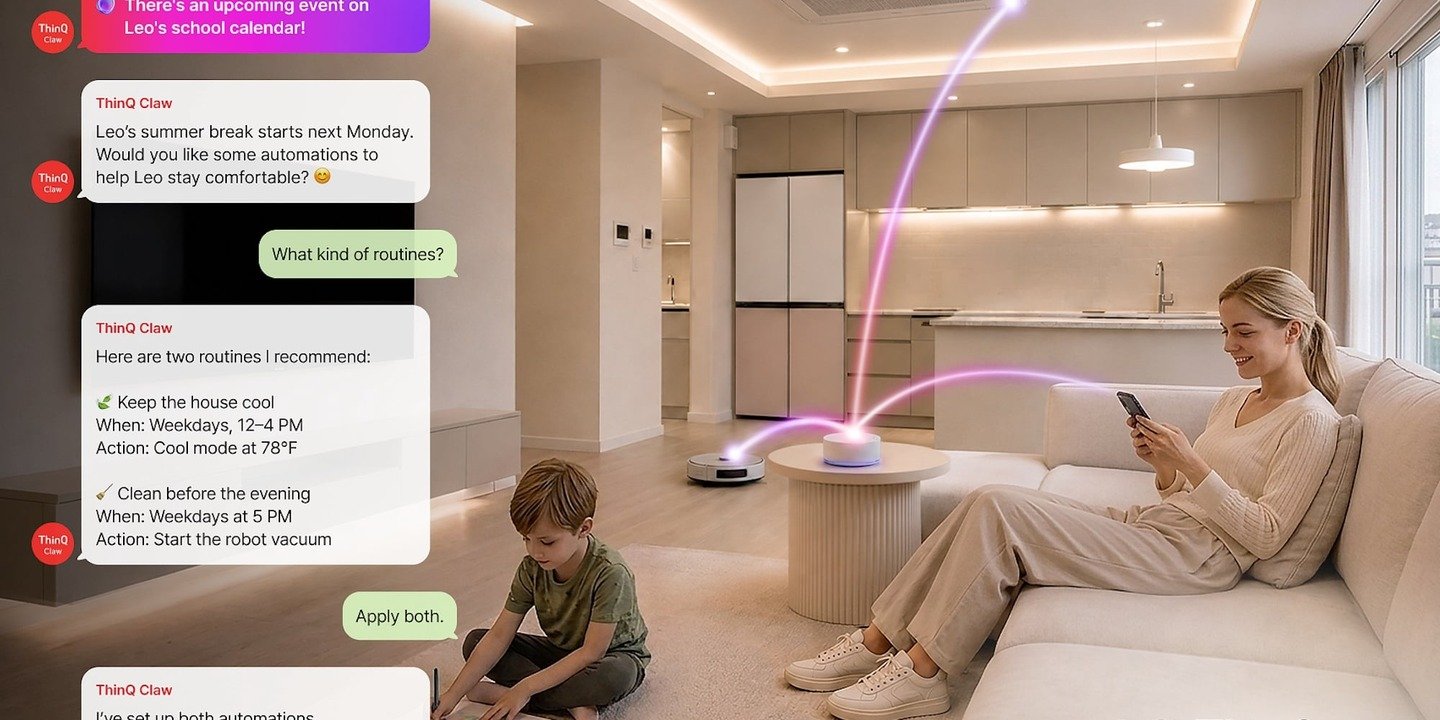
LG is presenting its next AI Home before IFA 2026, with a simple promise: the house should manage more of itself. A connected agent could notice a calendar change, prepare rooms, and start the robot vacuum before anyone returns. That is close to the smart home I have wanted for years. It is also where assistance begins to resemble observation.
The Home That Anticipates the Day
ThinQ Claw is a text-based agent meant to understand ordinary requests in context. A user could mention arriving guests rather than build automation rules; the system would then connect that plan with relevant devices and services.
LG’s examples include a cooler living room, cleaner floors, monitored air quality, or cooking appliances ready for a gathering. Calendar access gives the agent timing, while remembered preferences define what “comfortable” means in one household.
For a busy family, that sounds like reclaimed attention. Every task removed from an evening matters. An assistant that quietly handles temperature and cleaning could be more valuable than another screen demanding interaction.
Convenience Needs a Map of Your Life
But anticipation is built from intimate detail. LG says AI Home can analyze schedules, routines, the home environment, appliance behavior, and grocery purchases. To prepare correctly, it must know not only what residents request, but when they leave and how they live.
That information forms a detailed domestic portrait. A calendar reveals absences and visitors; thermostat choices show daily rhythms; shopping records suggest meals and habits. Each point looks ordinary alone, but together they describe a household’s private machinery.
This is automation’s familiar bargain, expanded. The system becomes useful by learning more and asking less. Yet the fewer prompts people see, the harder it becomes to understand what the agent inferred, retained, or shared while easing their work.
Automation Is a Question of Permission
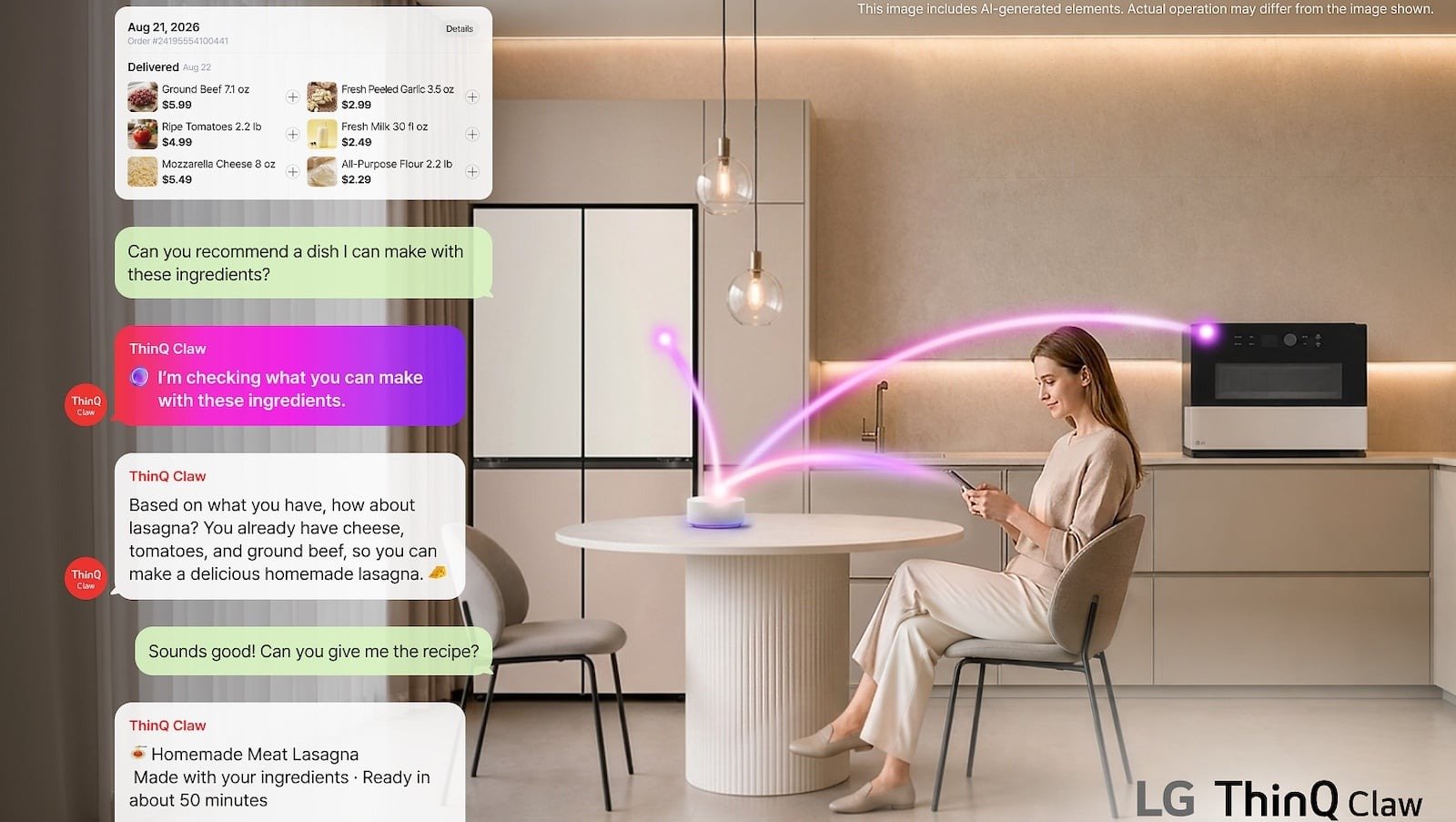
The most important line separates recommending an action from taking it. Running a vacuum in an empty room feels low-risk. Starting an oven, unlocking something, or changing a safety setting deserves explicit confirmation.
LG’s announcement explains what ThinQ Claw may coordinate, but it offers fewer public details about storage, access, retention, or how residents review the agent’s decisions. Before trusting the system, I would want controls that are understandable without reading a policy document.
Good automation should make consent visible. Households need to choose which data sources are connected, which actions require approval, and which routines can run independently. They also need a clear record of what happened and a simple way to reverse mistakes.
A Broader System Changes the Equation
Still, LG’s project is larger than one household assistant. Its IFA demonstration pairs Homey with an energy-management system that links solar panels, batteries, EV chargers, smart meters, and appliances. Coordinating consumption with generation and changing electricity prices could provide measurable value.
Homey also matters because a real home rarely belongs to one manufacturer. A platform capable of organizing devices from different brands is more useful than a polished ecosystem that works only with matching hardware. Interoperability turns the idea from an LG showroom into something closer to daily life.
ThinQ Pro extends the same approach to apartment buildings and commercial spaces, where coordinated equipment could save staff time and energy. That wider reach also raises the stakes: a mistake or unclear permission affects more people when automation moves beyond one family.
LG points to its Shield security framework as protection for appliances, services, and customer data. That is reassuring in principle. What matters next is practical detail—where processing happens, who can inspect information, how long it remains, and what owners can delete.
Helpful, Provided the Boundaries Are Clear
Ultimately, LG’s AI Home points toward the smart living that always made sense: technology that fades into the background and returns time instead of creating more administration. I would welcome a home that prepares for guests, manages energy, and clears routine chores. I would reject one whose authority or memory I cannot see. Convenience works only when every resident understands the bargain, can limit the system, and remains the final decision-maker.