






TECH NEWS · APPLE EVENT RECAP
Apple’s September event introduced its first folding iPhone, a more controllable Pro camera, longer-lasting watches, improved open-fit AirPods and the Siri overhaul that users have been waiting to test.
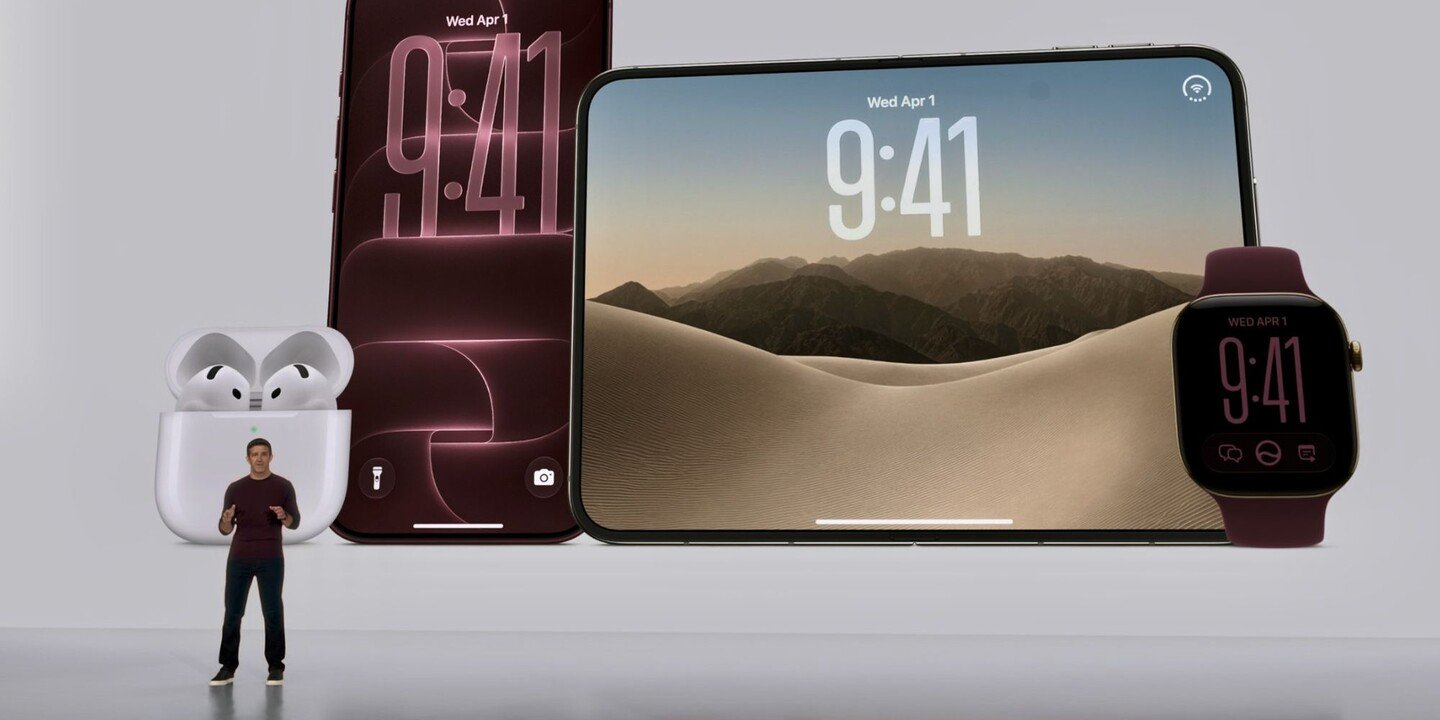
Apple’s September presentation opened with a leadership change as striking as any product. John Ternus took the stage for his first major launch as chief executive, bringing a hardware engineer’s instincts to an event built around hinges, sensors, batteries and cooling.
Tim Cook handed over a company with enormous momentum. Services now operate at major-corporation scale, while Apple Watch and AirPods are substantial businesses themselves. That success created a difficult assignment: Ternus needed more than another color or routine speed increase.
The answer was iPhone Duo, Apple’s first foldable. Yet the event reached beyond one device: iPhone 18 Pro gained variable aperture, Apple Watch focused more closely on recovery, AirPods improved open-fit noise cancellation, and iOS 27 gave Siri AI a release date.
iPhone Duo Finally Makes the Fold
Most foldables trade an awkward outer screen for a tablet-like interior. iPhone Duo takes another path. Its 7.6-inch inner Super Retina XDR display and 5.4-inch cover screen share one aspect ratio, keeping content proportional as the phone opens and closes.
Closed, the device resembles a passport more than a conventional iPhone. Opened, it becomes Apple’s largest phone canvas for reading, video and split-screen apps. A webpage, message or photo should move between displays without sudden cropping or empty borders.
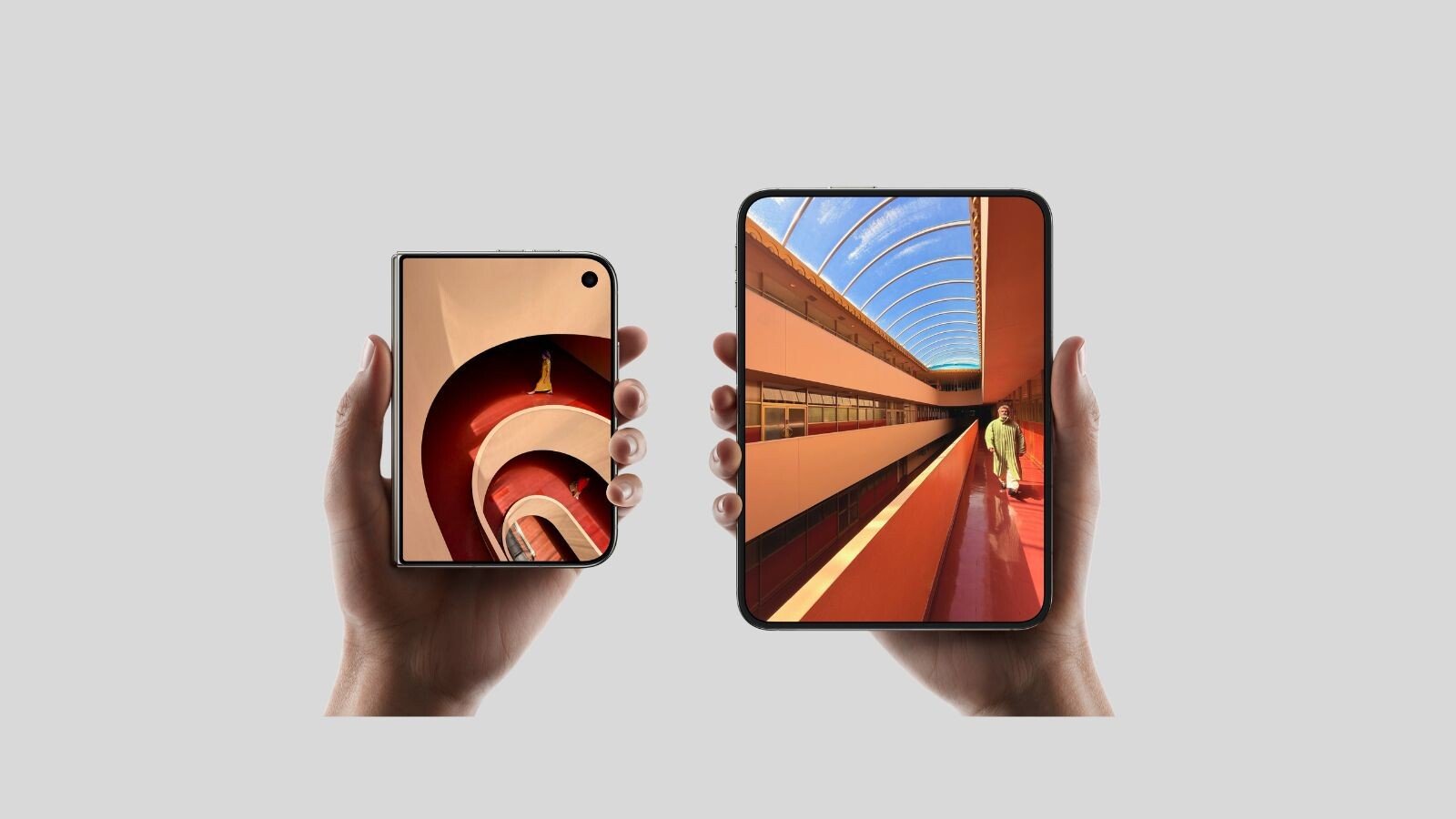
Apple treated the hinge as a precision-manufacturing problem. Its 100-plus parts are matched by algorithm to the best-fitting housing, then a confocal laser maps each unit. Up to 25 photopolymer microlayers smooth the flexible panel, carbon-fiber plates support the center and grade 5 titanium forms the frame. Ceramic Shield 2 and IP68 resistance complete an unusually elaborate durability pitch, though long-term folding wear still needs proof.
Authentication is the clearest compromise. Face ID disappears, replaced by Touch ID in the power button. Pressing to unlock feels backward after years of glance-based access. An Apple Watch can authenticate Duo, but another device is a poor substitute for hardware standard iPhones already provide.
Its Cameras Make the Shape Useful
The rear system is capable rather than Pro-class: a 48MP Fusion Main camera with an optical-quality 2x view and a 48MP Fusion Ultra Wide. Specifications are secondary here. The stronger story is how two screens and a self-supporting body reshape taking a picture.
Duo Preview shows the live frame on the outer screen so subjects can adjust before capture. Smart Take waits until a group is ready, while Kid Cue uses Peanuts animations to draw a child’s gaze toward the lens. The fold becomes a practical camera assistant instead of a mechanical party trick.
IDC expects Apple to capture 40 percent of foldable sales by 2027. Price, durability and supply will shape that result, but camera software may be Duo’s clearest argument. Better group portraits are easier to explain than a hinge admired only for engineering.
iPhone 18 Pro Gives Photography More Control
The iPhone 18 Pro’s 48MP Fusion Main camera puts six laser-cut blades around an aperture that physically opens and closes. At its widest, Apple says it gathers about 50 percent more light in darkness; narrowing it keeps deeper groups and layered scenes sharply focused.
Manual shutter speed may be equally useful. It joins white balance and a live histogram in a new Pro controls panel, letting photographers choose motion blur instead of accepting an automatic decision. Apple did not invent these tools, but it is placing them before a vast creative audience.
Apple Reference Image addresses authenticity. When enabled, the camera signs raw sensor information and uses Private Cloud Compute to create a tamper-resistant reference beside the edited photo, giving professionals evidence of what was originally recorded. The rollout is fragmented, however: capture requires an opt-in, is unavailable in China and launches disabled in the European Union, limiting its value as a universal trust layer.
A20 Pro Is More Than a Benchmark
A20 Pro uses a 2-nanometer process and a redesigned package. Apple moved memory away from the thermal path, bonded the die to a vapor chamber and tripled its surface area versus iPhone 17 Pro, producing up to 40 percent better sustained performance.
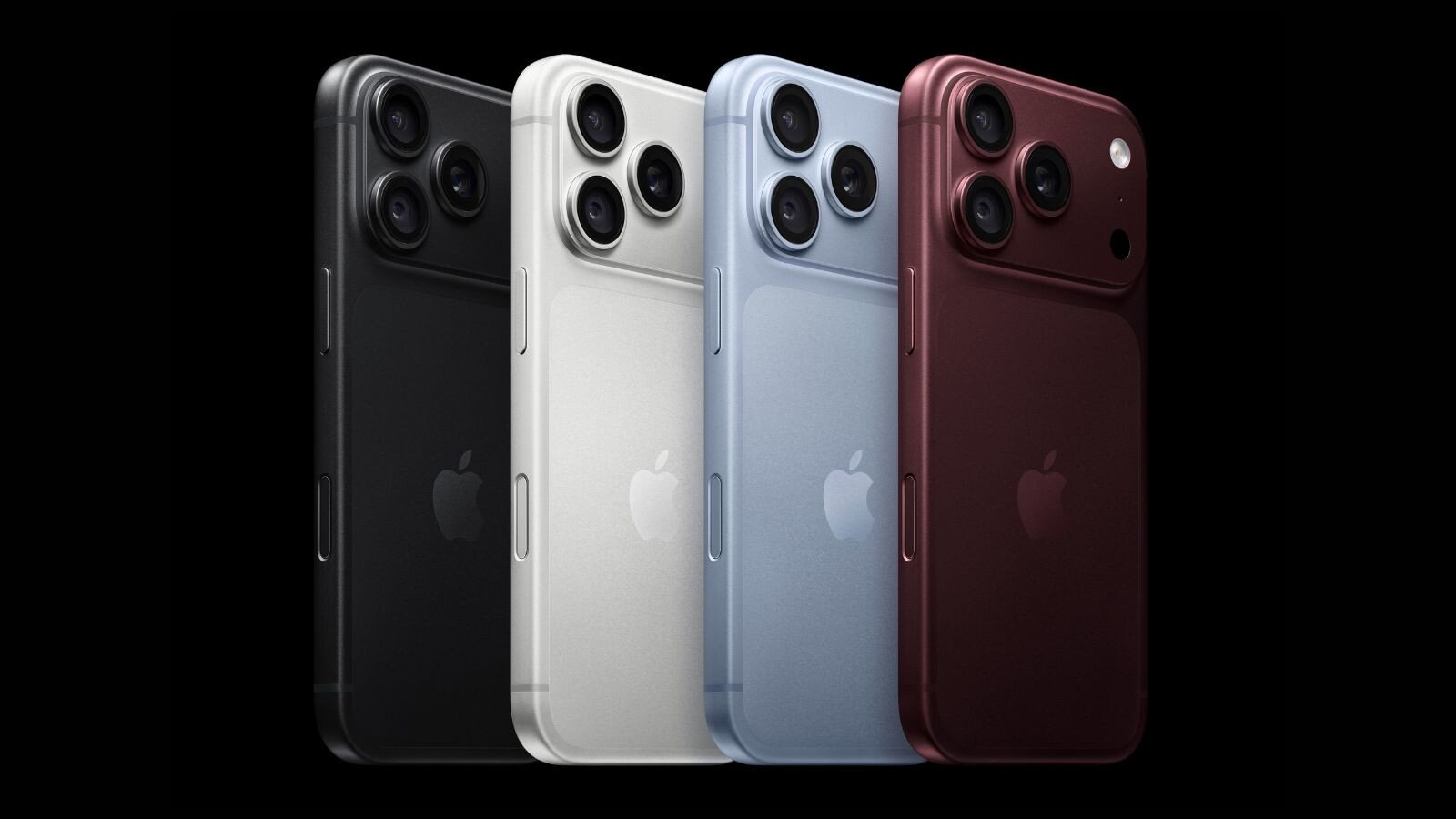
The GPU is rated up to 40 percent faster than A19 Pro, and the Neural Engine doubles to 32 cores. A smaller Dynamic Island handles three Live Activities, while finishes include black, silver, glacier and burgundy. Still, variable aperture defines this Pro generation.
Pro Max Pushes Battery Life Further
Apple rates eSIM-only iPhone 18 Pro Max at 45 hours of video playback and the smaller Pro at 36. It calls this the largest battery increase in iPhone history. Playback loops cannot reproduce navigation, photography and cellular use, so daily endurance still needs testing.
A five-minute charge is said to return roughly seven hours of playback, which may be more useful than a laboratory maximum for heavy users. Removing the physical SIM tray also frees internal room for battery cells in eSIM-only versions. The bigger story is not one number, but the combination of added capacity, efficient silicon and faster recovery.
Series 12 Watches Recovery More Closely
Wearable upgrades become meaningful when they change a decision, and Apple Watch Series 12 is aiming at recovery. The watch samples heart-rate variability every five minutes, building a denser trend than an occasional reading. That context can help distinguish one unusually poor result from a baseline that has been slipping for days.
Apple redesigned the sensor array with larger electrodes, photodiodes arranged in a ring and brighter green LEDs. It then compared the system with rival wearables using a chest strap as the reference. More frequent measurements are promising, although accuracy across different wrists, movement and skin conditions will matter more than presentation-stage confidence.
A readiness score from zero to 10 translates the data into something easier to use before training. A low score should not dictate a workout by itself, but it can reinforce what the body is already saying. If warm-up weights feel unusually heavy and the trend is poor, skipping an extra set becomes a more informed choice.
Ceramic Shield 2 makes the aluminum case 60 percent tougher than Series 11, according to Apple. Battery life remains 24 hours, while 15 minutes of charging supplies another 12. The headline is therefore not endurance; it is a watch trying to connect background health measurements with everyday training judgment.
Ultra 4 Makes a Bold GPS Claim
Apple describes Watch Ultra 4 as the most accurate sports watch for positioning, a claim that deserves a direct comparison with devices such as Garmin’s Fenix line. Dense city streets, tall buildings, tree cover and long routes expose weaknesses that a controlled demonstration cannot. Until those tests happen, the superlative remains a promise.
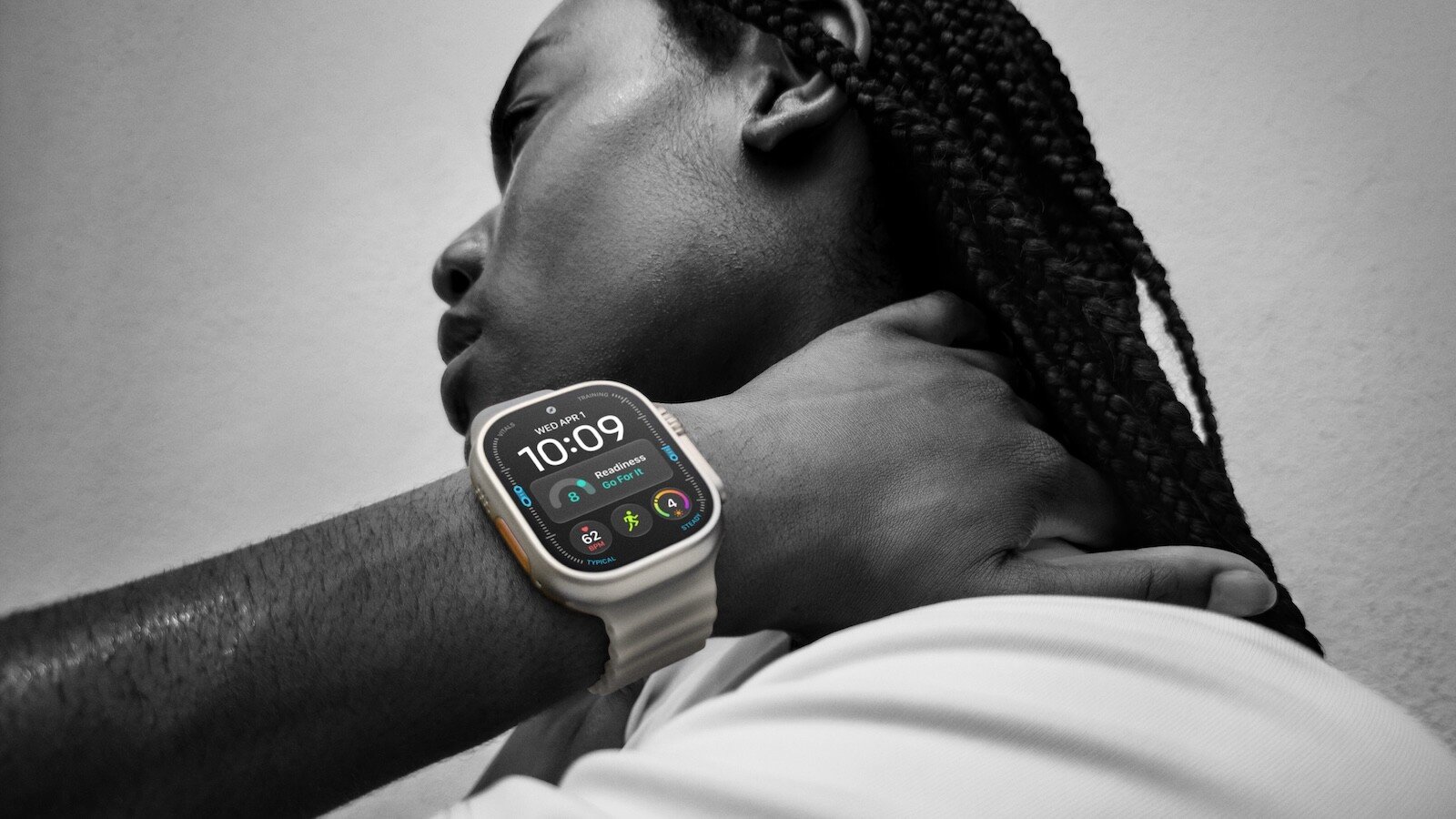
Battery figures are easier to understand. Max Extended Workout can log a GPS point every second for 45 hours, targeting athletes in 100-mile races. The regular Extended Workout setting offers 25 hours with full GPS, and normal use exceeds two days. Natural and black titanium remain, joined by a translucent silicone Ocean Band.
Hermès Adds Gold and a Dive-Ready Strap
Hermès puts radiant gold titanium on Series 12, paired with the Clou de Selle strap in a Noir satin finish. A Rocabar Club band weaves an elongated H into its pattern, while the Ultra 4 option grows long enough to fit over a wetsuit. The most playful addition is the Fathom and Wonder face, which uses the Digital Crown to descend through four shades of ocean.
AirPods 5 Improve Open-Fit ANC
Open-fit earbuds give active noise cancellation very little acoustic seal to work with. AirPods 5 nevertheless promise 50 percent stronger overall noise reduction than ANC-equipped AirPods 4. A multiport acoustic design derived from AirPods Pro 3 and a wider-ranging Adaptive EQ help more ear shapes receive useful bass.
Live Translation now spans the lineup, while Siri AI can operate hands-free and accept a nod as a response. The standard ANC model lasts four hours per charge and 20 hours with its case. Those figures are not class-leading, but the attraction is maintaining an unsealed fit without giving up as much quiet.
The Wireless Case Is the Better Buy
The upgraded case version adds volume swipes on the stem, a control that quickly becomes difficult to surrender once learned. It also stretches playback to five hours with ANC and 22 hours including the case. Charging works through USB-C, a Qi pad or an Apple Watch puck, making this the more flexible configuration despite the likely premium.
watchOS 27 Turns the Watch Into a Notetaker
Live Rewind addresses the small moments that disappear before anyone can write them down. Double-pressing the Digital Crown can transcribe the previous 15 seconds of conversation—enough to recover a book title, address or name that was just missed without interrupting the speaker.
Siri Recap can preserve a conversation’s title and main points inside the new Siri app. Sound Recognition extends the same listening hardware toward accessibility, warning deaf and hard-of-hearing users about sirens or doorbells even when an iPhone is not nearby.
Privacy depends on local handling. The S11 chip keeps audio local, while its Secure Exclave processes and securely deletes the data. Live Rewind stores no recording and does not identify speakers. Those limits make the feature closer to a temporary memory buffer than a continuously saved microphone log.
The watch also plays a sound when transcription begins, including in silent mode, so people nearby receive an audible signal. That is a thoughtful social safeguard. Live Rewind and Siri Recap still arrive as beta features later in the year, however, and their usefulness will depend on transcription quality outside a quiet demo.
Elsewhere, one-handed tapping reveals Smart Stack widgets, while Workout Buddy now works fully without an iPhone. Neither is as dramatic as retrospective transcription, but both reduce the friction of using a small display while walking, carrying something or exercising.
iOS 27 Delivers the Siri Reset
Siri AI is the software thread connecting the event. It can draw personal context from Mail, Messages and Photos, reason about onscreen content and take actions inside third-party apps. The standalone Siri app synchronizes past conversations privately through iCloud, while Camera integration answers questions about whatever the lens is viewing.
Notify Me can monitor a Safari page for a restock, a practical feature that will matter only if it proves reliable. On September 14, iOS 27 brings Apple Intelligence to 16 languages. Siri AI begins as an English beta, with five additional languages scheduled for October, and server-backed features carry daily usage limits.
European iPhone users will not receive Siri AI at launch, leaving the rollout divided by regulation and region. That caveat fits the entire event: Apple showed ambitious hardware and overdue intelligence, but several of its most interesting ideas still need real-world proof. Duo must survive repeated folds, new sensors must produce trustworthy trends, and Siri must finally deliver outside the keynote. That is the real test for a keynote built on promises: whether difficult technology feels ordinary after the launch-stage spectacle fades and customers begin living with it every day.