
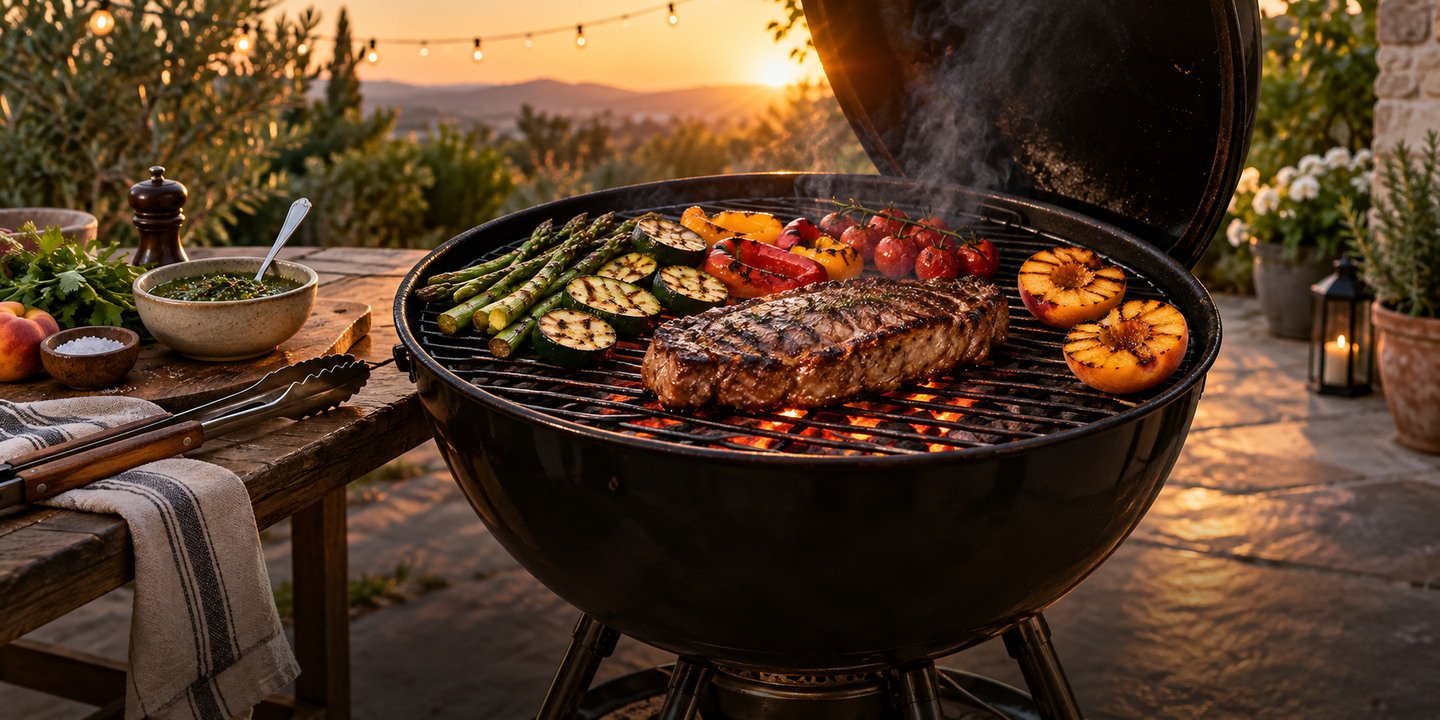











Fire-Smart Summer Cooking
Seven dependable habits for managing heat, timing, vegetables, and even dessert—with far less guesswork at the grill.
Summer dinner feels different outdoors. The light lasts longer, the kitchen stays cool, and cooking over a live flame gives everyone a reason to gather near the action. One person brings out drinks, another carries a platter, and the meal becomes part of the evening instead of a task to finish quickly.
A grill can still feel less predictable than an oven. Flames rise, temperatures shift, and food offers fewer obvious signals. The reassuring part is that confident grilling depends more on a handful of repeatable habits than on elaborate equipment or complicated recipes.
These principles work whether you cook with gas or charcoal. They also apply across the menu: the same control that protects a thick steak from scorching helps zucchini stay juicy and gives peaches a caramelized edge without turning them to mush.

The Habits Behind Better Grilling
Before the first steak or vegetable reaches the grate, think about preparation, heat, and timing. Master those three ideas and the grill becomes less mysterious, easier to control, and useful for far more than burgers.
Rule 01Take Off the Chill—Then Rest Again
Take chicken, beef, or pork out of the refrigerator about 30 minutes before grilling. The goal is not to leave it sitting out for hours, but to soften the deepest chill so the outside is less likely to overcook before the center is ready. Pat the surface dry before seasoning to encourage better browning. If the meat has been marinated, let the excess drip away so it does not flood the grate or feed sudden flames.
Resting matters on the other side of the fire, too. Move cooked meat to a board or platter, cover it loosely with foil, and wait 5–10 minutes before slicing. That short pause lets the juices settle back through the meat instead of spilling out immediately.
Rule 02Preheat and Clean the Grate
Close the lid and preheat the grill for at least 15 minutes. A thoroughly heated grate creates stronger color and helps food release more easily. Once it is hot, brush away residue from the previous cookout. Clean metal delivers clearer grill marks and prevents old sauce or grease from adding a burnt flavor to tonight’s dinner.
Arrange your tools while the grill warms: long tongs, a spatula, an instant-read thermometer, and separate platters for raw and cooked food. Having everything within reach keeps the cooking area orderly and prevents a search through the kitchen just as the fire needs attention.
Rule 03Give Yourself Two Heat Zones
Direct heat means cooking immediately above the flame or hot coals. It suits foods that need a quick sear and can finish in roughly 15 minutes or less: burgers, shrimp, thinner steaks, chicken breasts, corn, and many tender vegetables.
Indirect heat is gentler. Use it for whole chicken, ribs, bone-in pieces, thick pork chops, or anything that needs more time without burning outside. On a gas grill, lower or switch off one section; with charcoal, bank most of the coals to one side.
The cooler zone is also your safety valve. If fat creates a flare-up or the surface is darkening before the center is done, move the food away from the fire. Thick steaks often benefit from a fast sear over direct heat followed by a slower finish on the indirect side.
Think of this setup as a choice rather than a strict schedule. Food can move back and forth as needed: closer to the flame for more color, then away from it to cook through gently. That freedom is what makes a two-zone grill so much easier to manage.
Rule 04Cut Vegetables for the Fire
Once the fire is under control, attention shifts to the ingredients themselves. Vegetables become sweeter and more interesting over a flame, but their size and shape determine whether they char evenly or disappear through the grate.
Keep pieces large and similar in thickness. Leave asparagus and green beans whole; cut zucchini and eggplant into long spears; halve tomatoes and bell peppers and place them cut-side down. Carrots, sweet potatoes, and winter squash benefit from blanching or partial cooking first, while most summer produce needs only olive oil, salt, and seasoning.
Coat vegetables lightly rather than drenching them, since excess oil can drip and cause flare-ups. A grill basket is useful for mushrooms, cherry tomatoes, and other small pieces, but broad cuts can go directly on the grate where they pick up the best char.
Serve the vegetables straight from the grill or pile them onto a platter with chimichurri, pesto, romesco, or citrus aioli. A bright sauce turns the simplest charred produce into a complete summer side.
Rule 05Close the Lid With Purpose
A closed grill behaves like an outdoor oven. The lid holds in heat, steadies the temperature, and captures some of the smoky character created when juices meet the fire. Keep it down for thicker foods and indirect cooking. Open it when something thin cooks in minutes, a sugary glaze needs watching, or a flare-up requires attention.
Try not to lift the lid simply to check progress every few seconds. Each peek releases heat and can extend the cooking time. Decide when the food truly needs turning or testing, then let the enclosed grill do its work between those moments.
Rule 06Stop Moving the Food
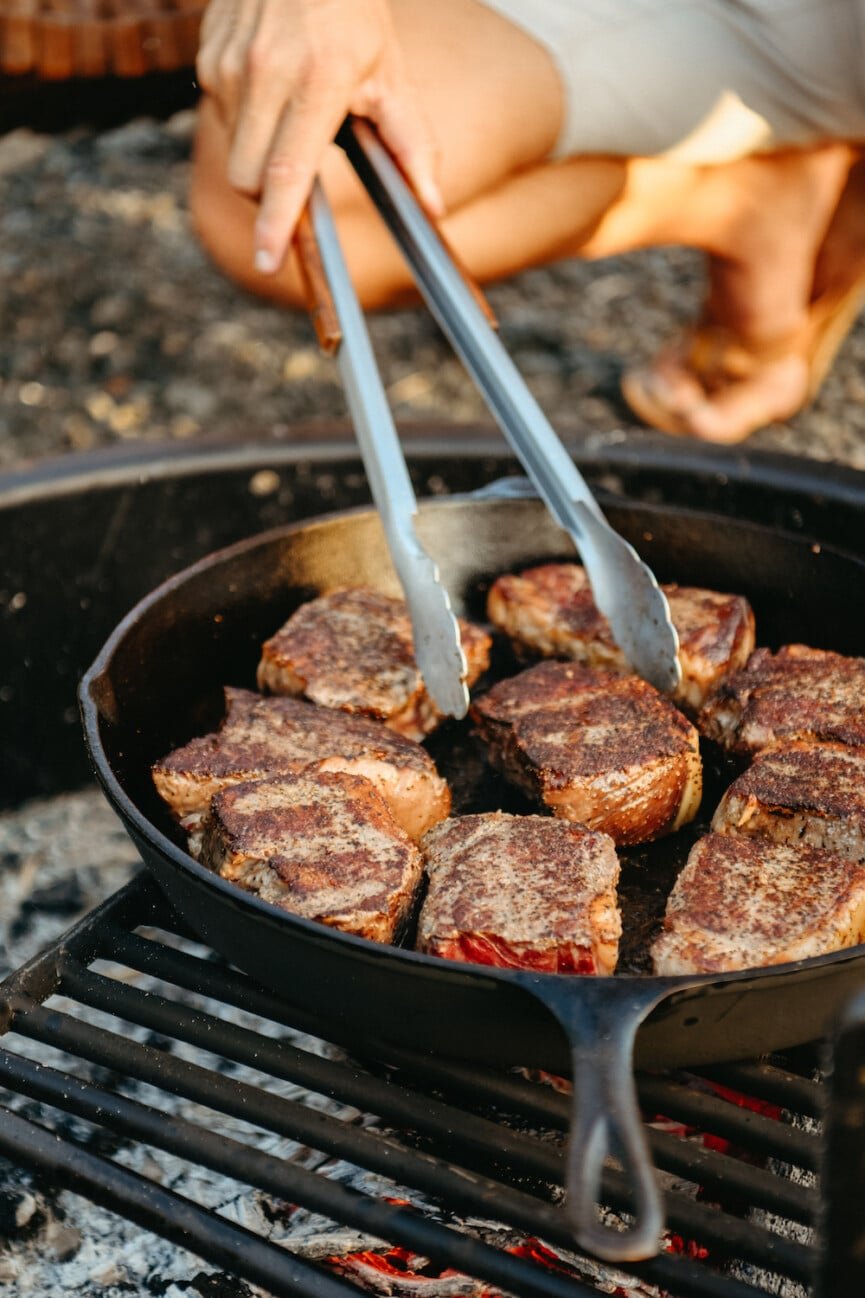
Constant turning interrupts caramelization. Place food on a clean, hot grate and leave it long enough to form a crust. Most ingredients will release naturally when they are ready to turn; if something clings, give it another minute instead of tearing it loose.
Use long tongs or a wide spatula and flip only once or twice. An instant-read thermometer is more reliable for thick meat than repeated cutting. Fewer movements produce stronger color, clearer grill marks, and a calmer cook.
If you are using a sweet barbecue sauce or glaze, brush it on near the end. Sugar can burn before the food is cooked, so the final minutes are enough to make the coating glossy and concentrated without leaving it bitter.
Rule 07Save Some Fire for Dessert
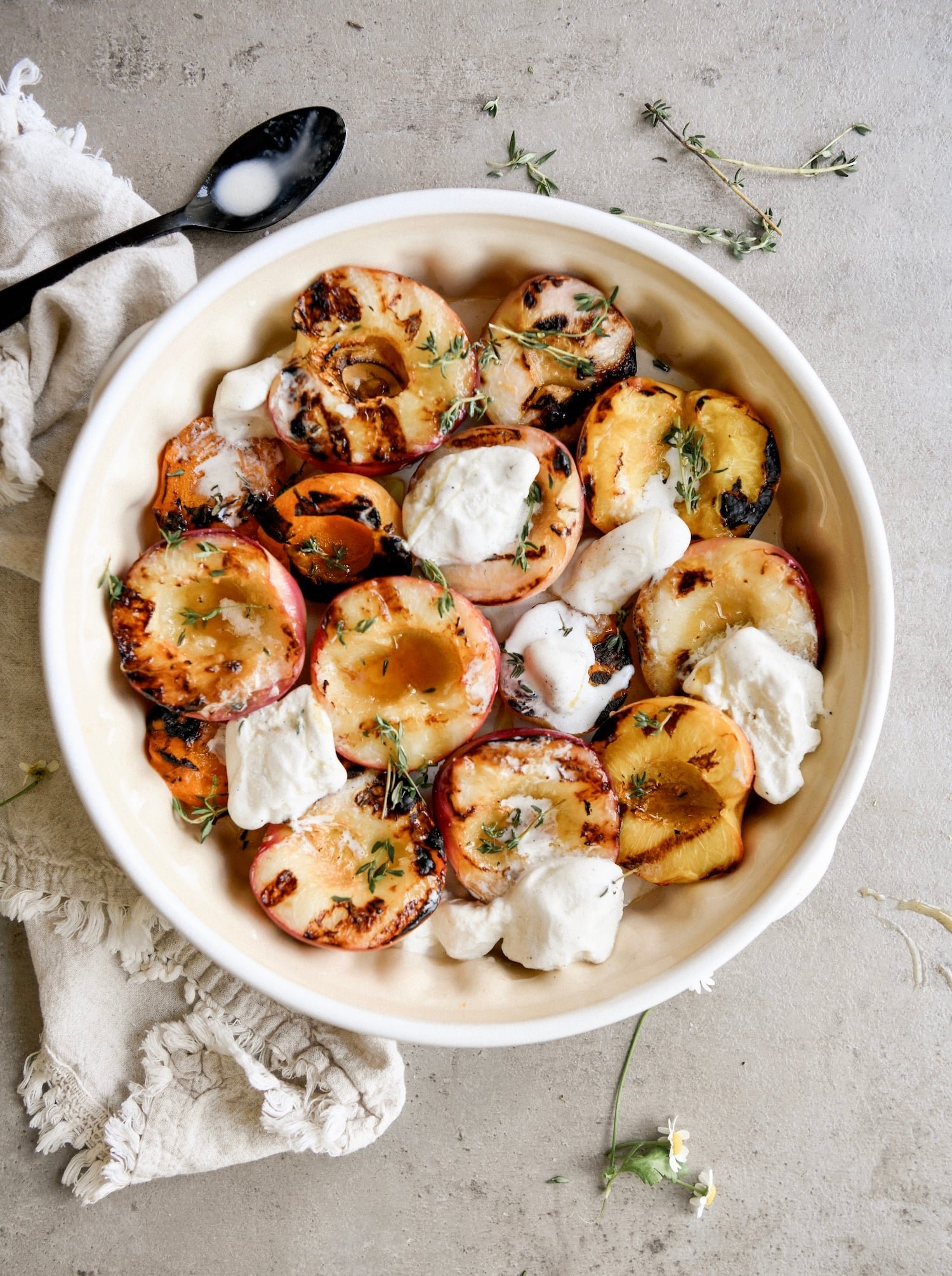
Finally, let the grill move beyond the main course. Heat concentrates the sweetness of ripe fruit, softens its center, and adds a smoky edge that keeps dessert from feeling too rich.
Place halved peaches, plums, nectarines, or other stone fruit cut-side down for a few minutes, then serve them with ice cream or yogurt. Pound cake can be toasted briefly, foil-wrapped s’mores melt beside the coals, and grilled citrus adds unexpected depth to cocktails and simple desserts.
Clean the grate before dessert or reserve a quieter section that has not held strongly seasoned meat. Honey, chopped nuts, mascarpone, fresh herbs, and flaky salt are easy finishing touches, so the final course can feel special without starting a second cooking project.
A memorable night around the grill does not depend on perfect marks or a complicated menu. Prepare what you can indoors, build a hot side and a cool side, and give the food enough time to cook without constant interference.
Once these habits become automatic, grilling stops feeling like a performance. It becomes what summer cooking should be: flexible, flavorful, and pleasantly connected to the people gathered outside.