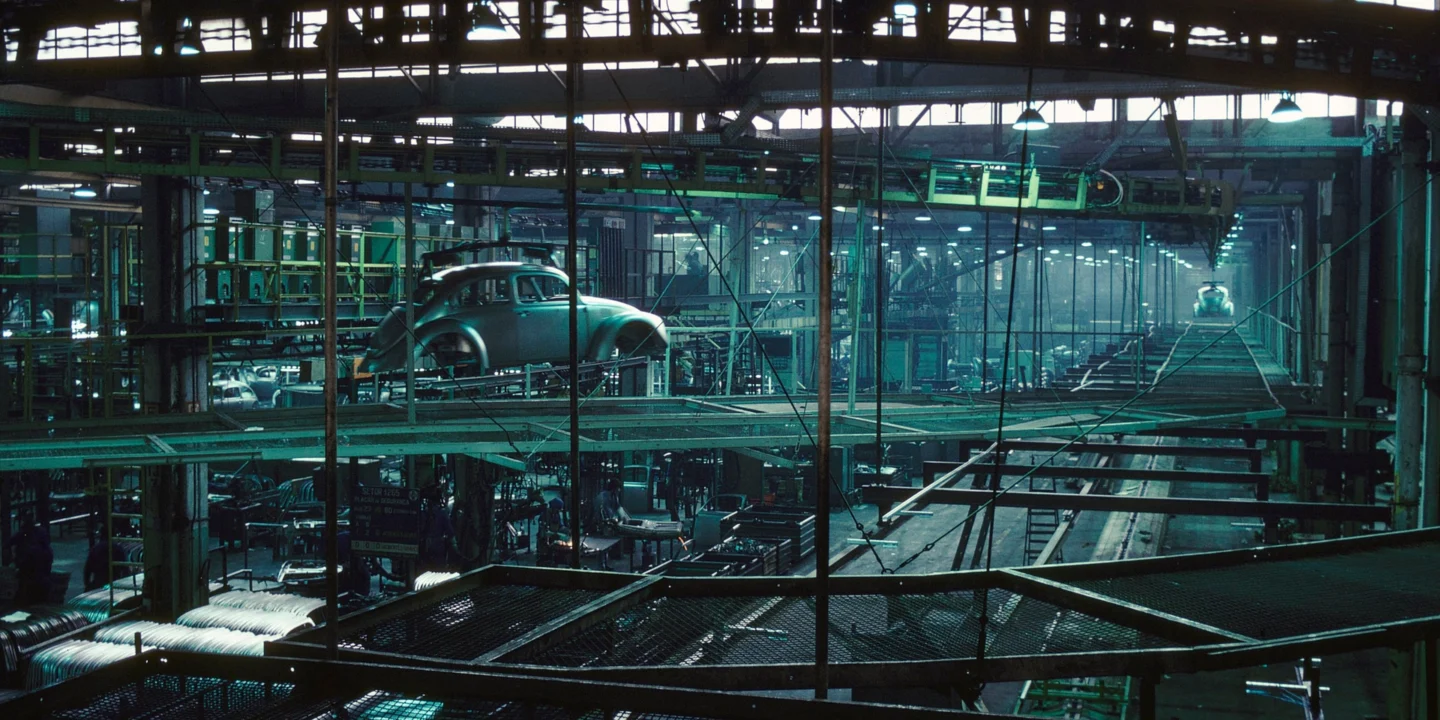












In Nigeria’s oil fields, multinational energy companies have been extracting crude for decades. Oil keeps flowing out, foreign exchange keeps coming in, yet the country still struggles to build a strong refining system of its own, let alone a full high-end industrial base. In Mexico, global car brands produce vast numbers of vehicles for export each year, but many domestic suppliers remain trapped in low-value parts, simple assembly and cheap-labour tasks. Similar stories can be found in Vietnam, Bangladesh, Zambia, Peru and the Philippines: foreign capital arrives, modern factories are built, export numbers rise, but domestic firms, engineers, technological systems and brand capabilities do not grow at the same pace.
This is the contradiction most easily overlooked in contemporary globalisation. A country can possess modern plants, automated machines, transnational supply chains and impressive export statistics, while still failing to acquire the real capacity for development. It can produce clothes, car parts, phone casings, battery materials or mineral inputs for others, yet remain unable to decide product design, core technology, brand pricing, global distribution or the direction of the next industrial generation. It appears to have entered the world economy, but in reality it may have merely been assigned a low-level workstation inside it.
Developing countries have long been told that attracting foreign investment is the shortcut to development. Foreign direct investment is treated as proof of market confidence; capital inflows signal economic promise, while capital flight signals policy failure or political risk. The dominant narrative says that capital naturally flows to the places where it is most needed, bringing money, technology, managerial expertise, jobs and access to global markets. By this logic, if investors hesitate to come, the fault must lie with the host country: too much corruption, too many unstable rules, too much protectionism, insufficient labour flexibility, or markets that are not open enough.
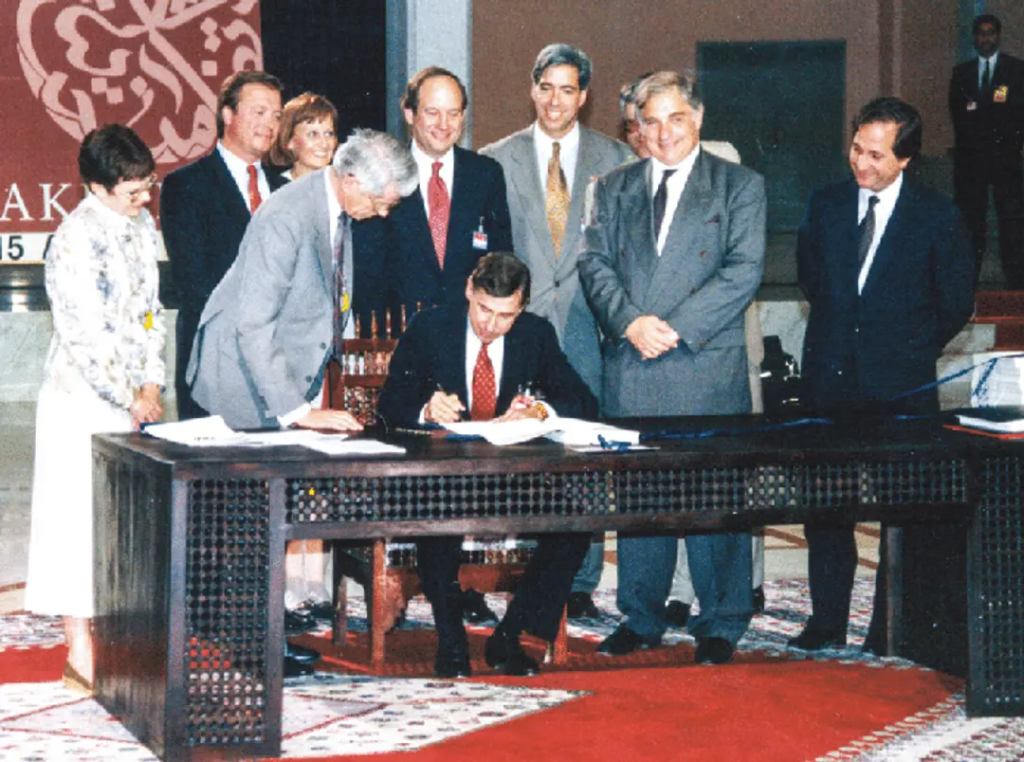
The US trade representative Mickey Kantor signing the final measure of the Uruguay Round of the General Agreement on Tariffs and Trade in Marrakech, 1994. Photo © WTO
History, however, is far more complicated than this story allows. Many of today’s richest countries did not develop by opening themselves unconditionally to foreign capital. In the 19th and early 20th centuries, the United States received large amounts of foreign investment, but it maintained strict limits in banking, shipping, natural resources and other strategic sectors. Japan was even more cautious during its own catch-up period, tightly controlling foreign business in order to protect domestic industries. South Korea and Taiwan likewise did not simply hand their economies over to multinational corporations. They incorporated foreign capital into national industrial strategies: allowing it in, but requiring it to teach, transfer, cooperate and embed itself in local systems. They absorbed capital without handing over the steering wheel.
This is the real historical lesson. Foreign investment can assist development, but foreign investment is not development itself. Capital is a tool, not a destiny. Technology can be introduced, but it can also remain sealed inside the multinational firm. Factories can create jobs, but they can also suppress the growth of domestic firms. Exports can earn foreign exchange, but they can also keep a country stuck in low-margin activities. Whether globalisation is good or bad does not depend simply on whether capital moves. It depends on who decides how capital moves, where it goes, and for whom capabilities are accumulated.
Beginning in the 1980s, many developing countries accepted a very different set of rules. Free-market ideology re-emerged with force, and the International Monetary Fund, the World Bank and the US Treasury promoted so-called liberalisation: privatising state enterprises, deregulating markets, lowering tariffs, weakening industrial policy and welcoming multinational corporations with few conditions attached. Foreign investment was described as almost naturally beneficial. It would raise productivity, expand employment, introduce competition, improve management, transfer technology and solve foreign-exchange shortages. It was as if development would simply walk in once the door was opened.
International trade rules gradually institutionalised this kind of openness. After the creation of the World Trade Organization, many policy tools used by earlier successful developers became restricted. Local-content rules requiring foreign firms to use a certain share of domestic inputs became difficult to sustain. Requirements that foreign investors form joint ventures with local firms and help transfer technology were increasingly attacked as discriminatory or as barriers to trade. In services, limits on foreign ownership and requirements for domestic partnerships became harder to defend. The issue is not that all these rules were irrational. It is that they placed countries at very different stages of development under a single standard of openness.
For many low- and middle-income countries, this meant that their policy toolbox was locked too early. They were asked to expose their markets to the world’s most powerful companies before domestic firms had matured, before national financial systems had strengthened, before engineering education had deepened, and before technological absorption capacity had been built. They accepted a promise: foreign capital would naturally bring upgrading. Too often, the result was that foreign capital brought production without sovereignty, factories without innovation, jobs without industrial control.
A country can host modern factories and still lack the capacity to create its own Samsung, Toyota or Huawei.
This sentence captures one of the most important distinctions in development: production capacity is not the same as creative capacity. Many countries can assemble cars but cannot design engines. They can produce phone parts but cannot control operating systems, chips or brands. They can export minerals but cannot build materials science and equipment industries. They can provide outsourced services but cannot generate domestic platforms and core technologies. Real development is not merely making things for others. It is gradually acquiring the ability to decide what to make, how to make it, whom to sell it to, and which part of the profit to capture.
The economist Alice Amsden studied a group of late-developing countries that industrialised after the Second World War. She showed that many of them began by importing technology, imitating production, buying machinery and taking on mature industrial tasks. This was a reasonable starting point for late development. A poor country cannot invent every technology overnight, nor can it wait until it is fully prepared before industrialising. But imitation and assembly can carry a country only to the middle-income stage. They do not automatically carry it to the technological frontier. To keep rising, a country must move from using other people’s knowledge to creating and controlling its own.
That step is extraordinarily difficult because the most valuable knowledge is often not the machine itself, but the organisational capability behind it. Design capacity, engineering experience, supply-chain management, quality control, brand judgment, research culture, process adjustment and production know-how are often forms of tacit knowledge that cannot be fully written into manuals. Multinational corporations may be willing to bring certain equipment and routines into a country, but they do not casually transfer the core capabilities that determine competitive advantage. A factory may train workers to operate a production line, but that does not mean it trains engineers to design the next generation of products. A car company may use some local parts, but that does not mean local firms enter the core research and design chain.

The first all-wheel-drive Kia Sportage to be built in Germany rolls off the production line in Osnabrück in April, 1995. Photo by Ingo Wagner/picture alliance/Getty
This is the ownership trap. When key assets are controlled by foreign firms, the host country may obtain production activity without obtaining a learning path. Technology remains locked inside the firm, decisions remain at headquarters, profits are remitted abroad, and local companies organise themselves around the needs of the multinational. The country resembles a student in a school that never grants diplomas: attending lessons every day, taking tests forever, but never gaining the authority to design the curriculum.
Latin America offers a clear warning. Brazil, Mexico and Argentina attracted large numbers of multinational manufacturers in the late 20th century, and their auto, electronics and chemical sectors often appeared modern. But in many high-technology and capital-intensive industries, domestic firms were pushed out of commanding positions, while foreign firms controlled brands, technology and key supply chains. Local firms were left with simpler and lower-margin tasks. When markets are opened too quickly, before domestic companies are capable of competing with global giants, they are often not lifted up but pushed down.
Some East Asian countries followed a different path. South Korea, Taiwan and later China did not reject foreign capital; they used it selectively. They required joint ventures, technology licensing, local procurement, export performance and industrial linkages, while also supporting domestic firms. South Korea did not simply allow foreign carmakers to dominate its market; it protected and cultivated Hyundai, Kia and other domestic companies. Taiwan used the interaction between local firms, public research institutions and global supply chains to build semiconductor and electronics capabilities. China allowed foreign investment into manufacturing and consumer markets, but in many sectors required partnership with local firms and exchanged market access for technological learning.
These policies were not perfect, nor were they costless. Some joint-venture requirements had limited effects, some protection created inefficiency, and some industrial policies failed. But the overall lesson is clear: when foreign capital is incorporated into domestic capability-building, it can become a ladder; when it is treated merely as a growth statistic, it can become a ceiling. What a country really needs is not for foreign investors to develop it, but for foreign investment to help it one day develop without dependence on foreign investors.
Latin American structuralist economists saw this problem early. Raúl Prebisch and Celso Furtado argued that developing countries often export low-value raw materials and import high-value manufactured goods. This structure keeps poor countries poor even when they participate actively in global trade. If foreign capital flows mainly into oil, mining, agriculture and simple processing, it may reinforce that division of labour rather than break it. Foreign firms naturally seek the easiest profits, and the easiest profits are not necessarily those most useful for domestic development.
Osvaldo Sunkel and others later described the emergence of a dual economy inside developing nations. On one side stands a modern, capital-intensive, foreign-dominated sector; on the other stands a low-productivity domestic sector starved of finance and technology. The two sectors coexist geographically but remain economically separated. The foreign sector exports, earns profits and connects to the world; the domestic sector remains trapped in low skills, low wages and low innovation. Worse still, foreign companies often remit profits rather than reinvesting them fully in the host economy. Foreign exchange may seem to increase, but accumulation continually leaks outward.
A surge of powerful foreign competitors may knock local industry down rather than lift it up.
This is not an argument against competition. It is an argument about stages of development. Competition produces learning and upgrading only when participants possess basic capabilities. A child who has just learned to walk will not become an athlete by being forced to compete with Olympic runners. A young domestic firm facing a multinational with a global brand, cheap finance, mature technology and control over supply chains may not rise to the challenge. It may lose markets, talent and investment opportunities. Competition can raise efficiency, but it can also kill the learning process too early.
The benefits of foreign investment require what economists call absorptive capacity. If a country lacks engineers, skilled workers, universities, infrastructure, financial services and domestic suppliers, foreign-owned firms become islands of modernity. They may function extremely well, but they remain weakly connected to the surrounding economy. Management comes from abroad, key inputs are imported, core technology stays at headquarters, and local workers perform basic tasks. Such factories may create employment, but not necessarily knowledge diffusion. They are like advanced machines placed inside a poor economy: people can watch them operate, but cannot easily take them apart and learn from them.
The financial system matters as well. If domestic firms cannot obtain long-term loans, cannot survive research failures, and cannot expand production, they cannot become genuine partners to multinationals. Foreign firms usually finance themselves more easily, absorb risk better and control supply chains more effectively. Once they enter a market, they may attract the best customers, workers and credit. Local firms may then find it harder, not easier, to grow. Spillovers from foreign investment do not occur automatically. If institutional conditions are weak, spillovers may become crowding-out.
Foreign investment can also reshape entire industrial structures. Multinationals, seeking global efficiency, often assign a country to a specific function: sewing garments, assembling electronics, refining minerals, processing agricultural goods, or making low-end components. In the short term, this may raise exports, increase employment and improve the efficiency of some firms. In the long term, it can make the economy more specialised in low-value activities. The better a country becomes at performing low-end tasks for others, the more likely it is to keep being asked to perform low-end tasks. Comparative advantage shifts from a practical reality into a self-fulfilling limitation.
This is why the simple claim that “capital has no nationality” is inadequate. Capital does seek returns, but development requires more than returns. Development requires learning, accumulation, organisation, experimentation, industrial upgrading and local control. Who owns the firm determines who controls the technological path. Who controls the technological path determines who receives high profits. Who receives high profits determines who can reinvest in research. Who can reinvest in research determines who enters the next generation of industry. Ownership is not a trivial detail. It is the mechanism through which power, knowledge and future income are distributed.
It is no accident that many countries heavily dependent on foreign ownership remain stuck in low-complexity exports. They export minerals, agricultural products, textiles, simple components and assembled goods, but struggle to build their own advanced equipment, brands, software, materials and engineering systems. Multinationals in these countries pursue efficiency and profit, not the construction of future domestic competitors. They may train workers to complete specific tasks, but they do not necessarily train a nation to control its industrial destiny. The more successfully a foreign firm integrates a host country into its global chain, the more fixed that country’s role in the chain may become.
Particularly in less-developed countries, multinationals often fail to deliver the promised technological upgrading.
This is not to say that foreign investment is useless. The problem is that we often mistake local efficiency for national development. A foreign firm takes over a plant; output rises, costs fall, exports increase. These are real gains. But they do not necessarily mean that domestic firms have learned to design products, that local suppliers have moved into higher-value segments, that universities are producing more engineers, or that the next generation of entrepreneurs has gained industrial control. Productivity gains may simply come from foreign firms reorganising production and incorporating the country more efficiently into their own system. The country does more of the same, rather than learning to do more complex things.
The long-term result can be dangerous. If low-skill jobs dominate, social demand for advanced education remains weak. If skilled jobs are scarce, young people have less incentive to study engineering and science. If innovative domestic firms are absent, university research struggles to become commercial capability. If research demand is weak, financial systems avoid high-risk technological projects. A cycle forms: a low-technology industrial structure produces low demand for skilled labour, and that low demand makes industrial upgrading harder. The economy may grow for a time, but then stall at the middle-income level.
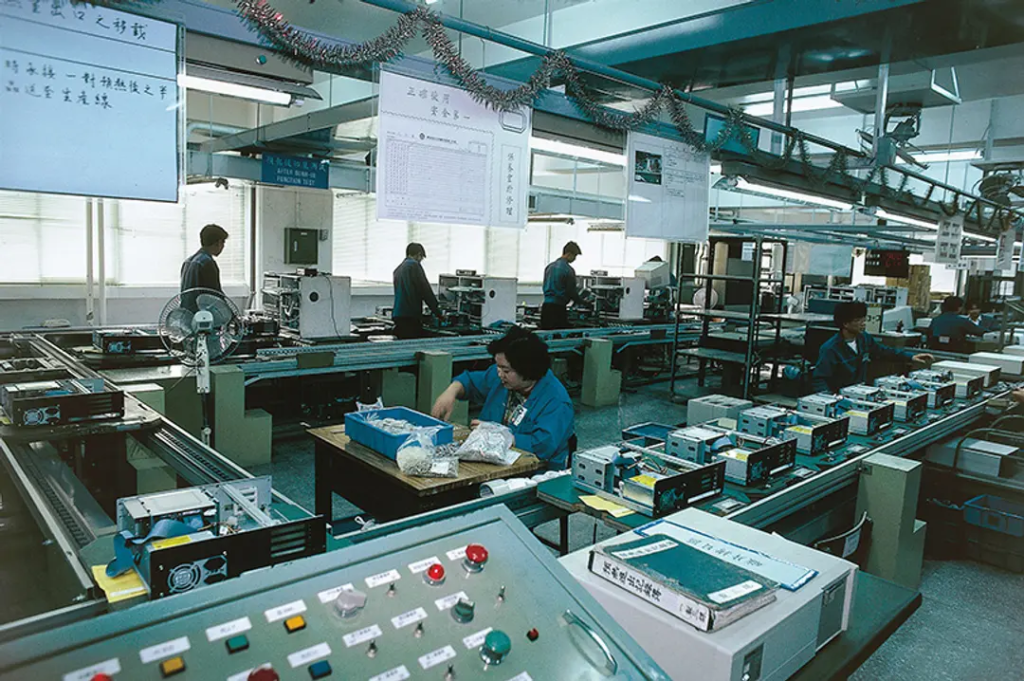
Computer manufacturing at the Tatung Company electronics factory in Taiwan in 1992. Photo by Gérard Sioen/Alamy
Such a country may look industrialised without becoming developed. It has factories, but not brands. Exports, but not pricing power. Jobs, but not a technological ladder. Foreign capital, but not domestic accumulation. Growth, but not autonomous upgrading. It has not failed to enter globalisation; it has entered an incomplete form of globalisation.
Is the answer, then, to close the border, reject foreign investment and return to self-sufficiency? Certainly not. The successful cases show exactly the opposite: the issue is not whether to use foreign capital, but how. Foreign investment can provide money, markets, technology, managerial knowledge and competitive pressure. A developing country that rejects all external resources will often miss important learning opportunities. But it must place foreign capital inside its own strategy, rather than handing its strategy over to foreign capital.
Good foreign-investment policy usually has several features. First, it identifies which industries are strategic and cannot be fully controlled by foreign owners. Second, it requires foreign investors to form real linkages with local firms, suppliers and research institutions. Third, it encourages technology transfer, talent development and domestic management capability. Fourth, it supports the growth of domestic firms so they can move from subcontractors to competitors. Fifth, it gradually relaxes protection once domestic firms are strong enough, rather than opening completely while they are still infant industries.
The experiences of South Korea, Taiwan and China all reflect this logic. South Korea imported large amounts of technology, but its goal was always for local firms to absorb and surpass it. Taiwan embedded itself in global electronics chains, while also building domestic firms and public research capacity. China attracted foreign investors into manufacturing and consumer markets, but in many periods used joint ventures, market-access conditions and industrial policy to promote learning. These economies were not anti-globalisation. They rejected passive globalisation. They understood that the global market is not a charity, but a field of power.
Today, ironically, many rich countries have rediscovered caution about foreign ownership and globalisation. The United States worries about Chinese control of critical technologies. Europe screens acquisitions in strategic sectors. Japan and South Korea protect semiconductor supply chains. Governments everywhere speak of industrial security, supply-chain resilience and national capability. Countries that once urged developing nations to open unconditionally have rediscovered the importance of ownership in their own key sectors. If the United States and Europe worry about who owns chips, energy, data and infrastructure, developing countries that have not yet completed industrialisation have even less reason to pretend ownership does not matter.
The anti-globalisation turn in rich countries often wears the costume of localism and can easily slide into exclusion and xenophobia.
This must be stated clearly. Criticism of globalisation can be progressive, but it can also be reactionary. It can demand fairer development space, or it can become hatred of foreigners, migrants and minorities. It can protect workers and domestic industry, or it can protect inefficient monopolies and nationalist fantasies. In rich countries, recent anti-globalisation sentiment often mixes real economic injury with dangerous political incitement. Factory closures, regional decline, wage pressure and offshored supply chains are real problems. But reducing these problems to foreigners, foreign workers or conspiracies by particular countries turns economic reform into culture war.
Developing countries should avoid that trap. Managing foreign capital should not mean narrow nationalism, nor should industrial policy become an excuse for closure and corruption. The issue is not that foreign firms are bad or domestic firms naturally good. The issue is how institutions can be designed so that foreign investment strengthens domestic capabilities instead of replacing them. Good globalisation does not reject the world. It enters the world with greater dignity and strategy.
This means international rules must change. Developing countries should have more policy space to require certain strategic investments to meet conditions on local procurement, technical training, joint ventures, research investment and talent development. They should be able to limit foreign ownership in critical sectors, review acquisitions that may harm long-term development capacity, and direct foreign investment toward areas that complement domestic effort. In recent decades, such policies have often been condemned as protectionism, inefficiency or market distortion. But without these tools, many countries cannot move from participating in globalisation to mastering it.
The climate transition makes this problem even more urgent. The world needs solar power, batteries, electric vehicles, green hydrogen, climate-adaptation infrastructure and low-carbon industry. Developing countries cannot remain merely the suppliers of lithium, cobalt, nickel, copper, rare earths and cheap labour. If green globalisation extracts resources from the South while keeping technology and profits in the North, it will repeat the inequalities of earlier globalisation. A genuinely fair climate transition must allow resource-rich countries to build processing, manufacturing, research and domestic employment capacity. Otherwise, the green economy may become a form of green colonialism.
Artificial intelligence and the digital economy present the same risk. Many developing countries provide data, content-moderation labour, cloud-computing markets and young users, but they do not own the algorithms, computing power, platforms or foundation models. If digital infrastructure is controlled entirely by external companies, a country’s industries, public sphere, education and public services may all become dependent on rules written elsewhere. Future foreign-investment policy cannot concern itself only with mines and factories. It must also concern itself with data centres, platforms, artificial intelligence, payment systems and digital public infrastructure.
In practice, developing countries can adopt a more refined approach. Ordinary consumer-goods sectors may be more open; strategic sectors should face stricter conditions. Foreign investment that produces domestic learning should be welcomed; investment that merely acquires potential local competitors, monopolises markets or extracts resources should be treated with caution. Short-term speculative capital should be subject to macroprudential management; long-term technological investment should receive a stable policy environment. The point is not to close the door, but to screen, negotiate and guide.
This also requires developing countries to improve their own state capacity. Industrial policy fails if captured by corruption, cronyism and inefficient state firms. Restrictions on foreign capital will not produce development if they merely protect domestic oligarchs. Technology-transfer requirements will remain paper promises if there are no local engineers and firms capable of absorbing knowledge. Good globalisation requires capable states: states that can identify strategic sectors, discipline domestic interest groups, train people, build infrastructure, and make policy stable without making it rigid. Without this capacity, openness fails and protection fails as well.
Rich countries must also change their role. They should not protect their own critical industries while demanding unconditional openness from developing countries. They should not speak of supply-chain security while denying poorer nations the right to industrial policy. They should not demand the Global South’s participation in the climate transition while refusing technology diffusion. A more stable world economy requires more countries to possess development capabilities, rather than a few countries controlling high-end industry while most supply raw materials and cheap labour. The more capable developing countries become, the stronger the world’s foundation for responding to climate change, disease, food insecurity, energy instability and technological governance.
Good globalisation, then, is not less global connection, but fairer global connection. It does not require every country to produce everything in isolation. It requires every country to have a chance to move upward within global production. It is not anti-multinational, but it asks multinationals to accept developmental responsibility. It is not anti-trade, but it rejects trade rules that lock countries into hierarchy. It is not against capital flows, but against a world in which capital holds all bargaining power while workers, communities and states simply accept the terms.
The debate over foreign investment is ultimately a debate over control. Who controls resources? Who controls technology? Who decides industrial direction? Who receives profits? Who bears risk? Who leaves during a crisis, and who must remain? If a company merely places production inside a country while keeping design, profits, data, patents and strategic decisions abroad, the country receives only the surface of globalisation. If a country cannot cultivate its own firms, engineers and technological systems, it will struggle to possess genuine economic sovereignty.
Development is not being employed by others. It is gradually acquiring the ability to choose one’s own path. Foreign capital can participate in this process, but it cannot replace it. A country that remains forever someone else’s production base will have its growth determined by someone else’s brands, orders, supply chains and strategic shifts. Today there may be factories; tomorrow orders may move elsewhere. Today there may be jobs; tomorrow machines may replace them. Today there may be exports; tomorrow profits may still accumulate outside the country. Without domestic capability, the opportunities brought by globalisation can leave at any time.
Developing countries therefore need to renegotiate their relationship with foreign capital. Not to reject foreign investment, but to stop treating it as an unconditional saviour. Not to withdraw from globalisation, but to refuse a form of globalisation that locks them into low positions. Not to oppose markets, but to recognise that market power is unequal and that policy is needed to create space for learning. They must turn foreign capital into a tool of capability-building, rather than allowing domestic capability to become an accessory to foreign profits.
Ultimately, good globalisation should expand freedom rather than create dependence. It should allow more countries to produce complex goods, train engineers, create brands, participate in technological frontiers and determine their own development paths. It should make global capital flows serve domestic accumulation, rather than hollow it out. It should make world trade a process of shared upgrading, rather than a permanent structure in which a few countries innovate and most countries assemble.
Globalisation has not ended, and it should not end. The question is what kind of globalisation we want. Bad globalisation asks developing countries to open their doors and hand their futures to external capital. Good globalisation allows them to open, negotiate, learn, select, protect, upgrade and eventually participate in the world on more equal terms. Development has never been merely the result of capital inflows. It is the process by which states, firms, workers and societies acquire capability together. Only when globalisation strengthens that capability, rather than weakening it, does it deserve to be called good.