











Some words announce their hostility before a sentence has even finished. Bitch is one of them. Spoken sharply, it can end an argument, diminish a stranger or turn an ordinary disagreement into a judgment on a woman’s entire character. Delivered with a laugh between friends, however, the same word may convey admiration, intimacy or conspiratorial affection. A musician can be “a bitch” because he is exceptionally gifted; a woman can call herself a “bad bitch” to signal confidence; an irritated customer can use it to punish another woman for refusing to cooperate.
Few English words travel so easily between injury and praise. There are difficult bitches, basic bitches, boss bitches and glamorous bitches. A person may bitch about the weather, be someone else’s bitch, describe an arduous task as “a bitch”, or greet a friend with “Bitch, please.” The word can indicate cruelty, weakness, talent, attractiveness, authority, submission or mere inconvenience.
This variety can make bitch seem emptied of meaning. In fact, the opposite is true. The word has accumulated meanings without discarding its earlier ones. Its history resembles a crowded archive in which old associations remain available even after new ones arrive. The female animal, the sexually unruly woman, the nag, the servant, the weak man, the formidable operator and the admired performer all remain somewhere inside it.
What changes from one use to another is not only definition but permission. Who is allowed to say the word? Who is expected to endure it? Can the person receiving it answer back? Is it imposed from above, exchanged among equals or deliberately claimed by someone who once would have been wounded by it?
The history of bitch is therefore more than the biography of an insult. It is a history of social relationships compressed into one syllable.
At its beginning, there was nothing metaphorical about it. A bitch was simply a female dog. This is still the word’s literal meaning and also its oldest documented sense.
Because bitch is now common in films, music, online arguments and casual speech, it can sound like a product of modern informality. Its ancestry is considerably older. The term can be traced to around 1000 CE, placing it among the long-established inhabitants of English. It predates recorded examples of several obscenities that now feel equally ancient, including fuck and cunt.
The earliest form would not have looked entirely familiar. In Old English, the language spoken in Anglo-Saxon England, the word appeared as bicce, probably pronounced with an additional final sound, something like “bitch-eh”. It came into English through the Germanic linguistic inheritance rather than through Latin or French.
One of its earliest surviving appearances occurs in an 11th-century Old English translation of a Latin medical collection usually known as the Medicina de Quadrupedibus, or Medicines from Four-Footed Creatures. The manuscript records remedies made from animal flesh, fat, milk, blood, urine and other substances. Such recipes belonged to a medical world in which practical observation, inherited folklore, religion and magic were not sharply separated.
In one treatment, milk from a female dog is recommended for an infant suffering from painful teething. The gums are to be rubbed repeatedly so that the teeth might emerge without distress. Another instruction proposes soaking wool in a bitch’s urine and binding it to corns or warts.
Neither passage treats the animal with contempt. The bitch appears as a source of curative material. Dogs were thought to possess special bodily properties, and the female dog’s milk or urine could be incorporated into the healing practices available to medieval households.
The spelling remained unstable for centuries. Alongside bicce, Old English sources occasionally contain bicge. Middle English manuscripts offer bycce, bichche, becch, bych and bytche. Scottish writers produced forms such as beiche and beitch.
This variety was normal. Before widespread printing, words were copied by scribes working with regional pronunciations and inconsistent conventions. A spelling could change when a text travelled only a few dozen miles.
The arrival of William Caxton’s printing press in England during the 15th century encouraged greater regularity. Printers had commercial reasons to choose repeatable forms, even though English spelling never became perfectly logical. By the 17th century, bitch had largely acquired its present appearance, sometimes with a decorative final e.
Its zoological range also expanded. The term was first associated with domestic dogs but gradually came to include the females of related animals, especially foxes and wolves. Later usage extended still further, covering female bears, otters, seals and ferrets.
The animal meaning did not disappear when the human insult emerged; it remained underneath, ready to lend every later use a suggestion of appetite, noise and unruly flesh.
To understand how this neutral animal word became an attack on women, it helps to begin with dog. Humans had been insulting one another through comparisons with dogs long before English existed.
Greek and Roman writers repeatedly used canine imagery to describe people who seemed greedy, shameless, disloyal, cowardly or socially uncontrolled. Dogs lived close to human settlements but did not reliably obey human rules. They scavenged, copulated in public, fought over food, barked at strangers and followed bodily appetite without embarrassment.
Such behaviour made them useful moral symbols. A person called a dog could be imagined as someone who lacked restraint and ignored the boundaries separating respectable conduct from animal desire.
The metaphor was gendered from an early stage. A man compared to a dog might be condemned for aggression, greed or cowardice. A woman subjected to the same comparison was more likely to be judged sexually uncontrolled, immodest or unwilling to obey.
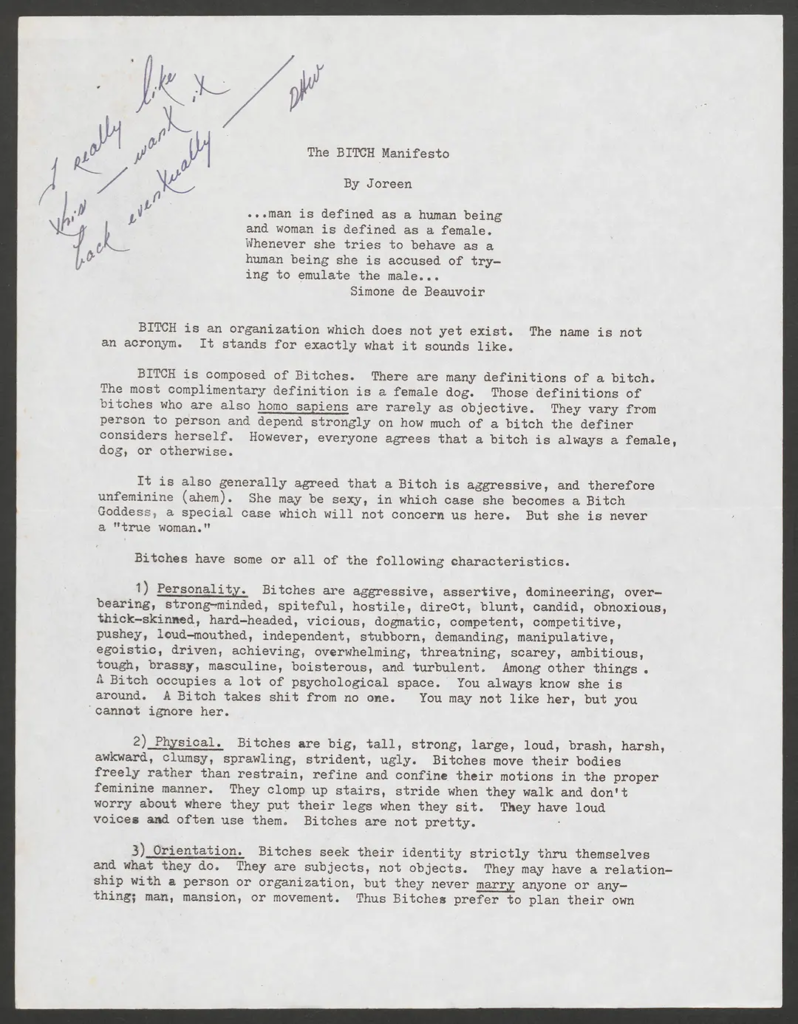
‘The Bitch Manifesto’, by kind permission of Jo Freeman
In Homer’s Odyssey, Helen of Troy looks back on the adultery and flight that helped provoke the Trojan War and refers to herself through a canine image. Her beauty may have been legendary, but the metaphor marks her as shameless and destructive: the woman whose desire drew armies across the sea.
Dogs did not merely represent bad behaviour. They represented behaviour displayed without the modest concealment demanded by society. To call someone canine was to say that they did not know, or refused to accept, their proper place.
Once bitch was available as the specific term for a female dog, it was almost inevitable that existing canine judgments would attach themselves to women.
The transition occurred through what linguists call pejoration: a neutral word acquires a degrading human meaning. The female dog became a metaphor for a woman believed to be sexually available or excessively desirous, particularly through comparison with an animal in heat.
Medieval uses of bitch could refer directly to a prostitute. In this respect, it overlapped with whore and with meanings later carried by slut. The insult treated female sexuality as animal appetite: public, indiscriminate and uncontrolled by family or male authority.
Those associations never vanished completely. In some varieties of contemporary speech, including parts of rap and hip-hop culture, bitch can still suggest sexual availability, prostitution or a woman defined through her relationship to male desire.
Yet sexual condemnation was only the beginning. As the term travelled through English, it became a container for almost every form of female noncompliance.
By the late 18th century, bitch had acquired a reputation for unusual offensiveness. Francis Grose, whose Classical Dictionary of the Vulgar Tongue appeared in 1785, called it the most insulting name one could apply to an Englishwoman, more provocative even than whore.
Samuel Johnson reportedly found the term so distasteful that he approached it indirectly. Recalling an argument in which his mother had called him a puppy, he said that he asked whether she knew what people called a puppy’s mother.
A period joke made the hierarchy of insults explicit: “I may be a whore, but I cannot be a bitch.” The logic sounds strange until one considers what the two terms implied. A prostitute might at least be imagined as performing recognisable labour for payment. A bitch was condemned as offensive by disposition. The problem was not one action but her entire nature.
This capacity to turn behaviour into identity made the word especially flexible. A woman might be called a bitch for being sexually active, but also for refusing sex. She might earn the name by talking too much, declining to speak, seeking authority, withholding affection, expressing anger, maintaining standards or merely causing inconvenience.
The word did not need a consistent accusation. It needed only dissatisfaction.
A demanding woman could be a bitch. So could an aloof one, an ambitious one, a resentful one, an intelligent one or a woman who had rejected the speaker. The label collected traits such as malicious, manipulative, treacherous, nagging, selfish, cold, spiteful and difficult, even when those qualities contradicted one another.
This inconsistency was not a defect. It was the source of the insult’s usefulness. A precise term can be disproved. A vague moral category follows its target from situation to situation.
The literal animal remained present in the background. A protective mother dog bares her teeth, growls, barks and attacks anyone approaching her young. These actions may be necessary and admirable in the animal. Transferred to a woman, however, they become evidence that she is hostile, irrational or dangerous.
The human bitch is repeatedly imagined as making too much noise and occupying too much space. She does not submit gracefully. She answers back.
The word became powerful not because it described one kind of woman accurately, but because it could punish almost any woman who interrupted someone else’s expectations.
During the 19th and early 20th centuries, women demanding education, voting rights, professional employment and political authority were frequently met with canine insults. First-wave feminists were caricatured as ugly, aggressive and unfeminine. Their public speech itself could be presented as evidence that they had abandoned proper womanhood.
The insult helped transform political disagreement into personal defect. A man opposing women’s suffrage could avoid answering a woman’s argument by suggesting that only an unpleasant or sexually failed woman would make it.
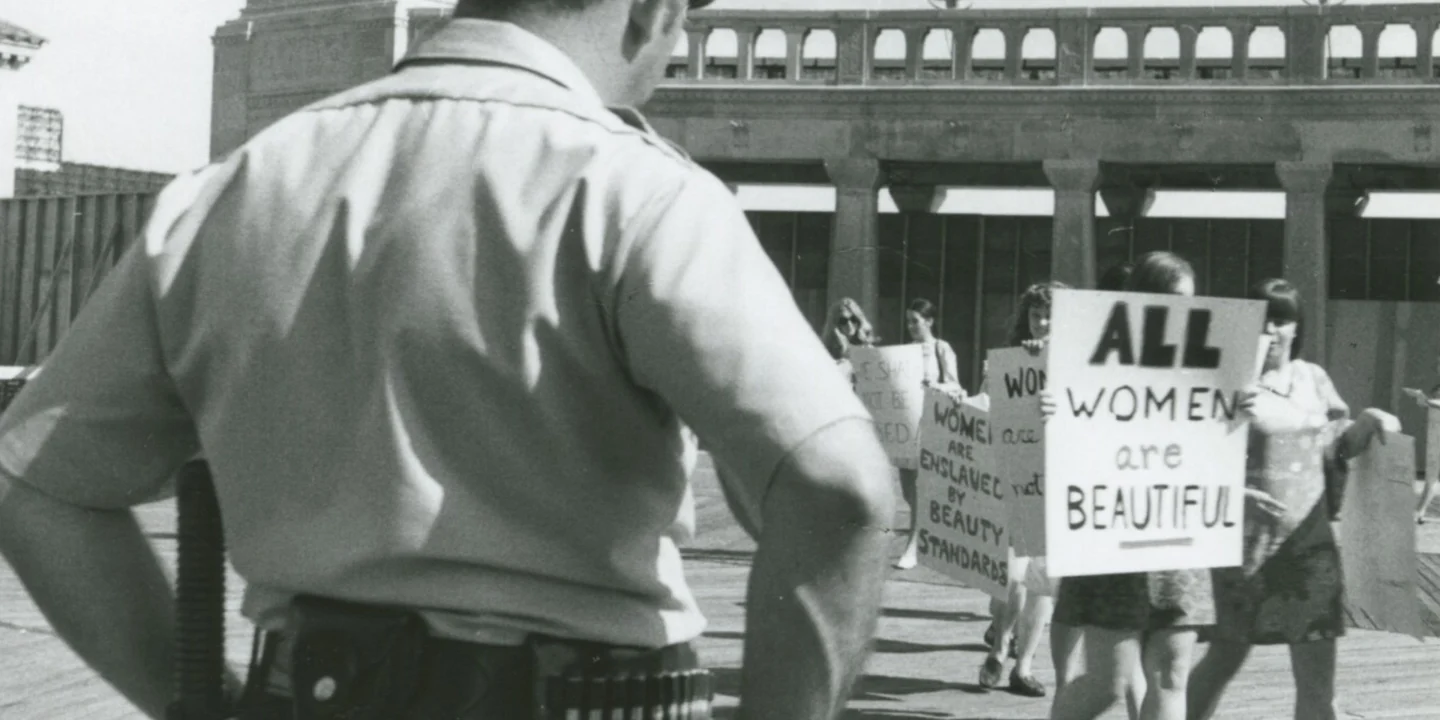
By the 1960s and ’70s, some feminists began turning that logic back on itself. If a bitch was simply a woman who spoke forcefully, refused obedience and demanded equal treatment, perhaps the category contained qualities worth defending.
Jo Freeman’s 1968 essay “The Bitch Manifesto”, published under the name Joreen, offered one of the most influential versions of this reversal. Freeman argued that women described as bitches were often independent, self-assured, ambitious and unwilling to make themselves smaller for the comfort of others.
The manifesto exposed a familiar linguistic double standard. A man who issues commands is decisive; a woman doing the same is domineering. A male employee who argues for advancement is ambitious; his female colleague is ruthless. He is confident, while she is arrogant. He is a leader, while she is bossy.
Under such conditions, avoiding the label requires more than behaving ethically. It requires performing deference.
Freeman’s intervention did not erase the insult. It changed the direction from which some women could approach it. Instead of waiting to be named by an opponent, they could name themselves. The word became a declaration that approval was no longer being requested.
This strategy resembled the reclamation of other hostile terms, including gay and queer. A stigmatised group can weaken a word by using it internally, humorously or proudly. Repetition in friendly contexts may separate the term from the speaker’s original power to injure.
But reclamation is never a simple reversal. A word does not pass from “bad” to “good” as though a dictionary entry had been rewritten. The hostile sense remains available, and not everyone gains equal control over the new one.
One woman may call herself a bitch with pride and still experience the word as threatening when shouted by a stranger. Friends may use it affectionately while resenting the same term from a supervisor or romantic partner. The identity of the speaker alters the act.
Reclamation is therefore not ownership in the ordinary sense. No community can prevent outsiders from using a word. What changes is the target’s ability to refuse the meaning being imposed.
The label may still hurt, but it no longer arrives uncontested.
Bitch has also been applied to men for centuries. This might appear to make the word gender-neutral, yet its function changes sharply when the target is male.
A woman is usually called a bitch because she is perceived as too forceful. A man is usually called one because he is considered insufficiently forceful. The insult travels in opposite directions while relying on the same hierarchy.
Calling a powerful woman a bitch implies that she has crossed into masculine behaviour. Calling a man a bitch implies that he has fallen into feminine weakness. In both cases, conventional masculinity remains the standard against which value is measured.
For men, the word often communicates cowardice, submission, dependence or inability to defend oneself. It may also carry implications of effeminacy or queerness. A “little bitch” complains, retreats or fails to withstand pain. A “prison bitch” is imagined as forcibly subordinated to another man.
The gender crossing is only apparent. The insult still draws force from the idea that being feminised is degrading.
“Son of a bitch” developed differently. Instead of simply weakening its male target, the phrase can combine condemnation with reluctant admiration. A son of a bitch may be cruel, dishonest and difficult, yet also effective, fearless or formidable.
The expression is nearly as old as the insult itself. Old Icelandic had the related bikkju-sonr. In medieval English, bichesone, literally “bitch’s son”, appears in the romance Arthur and Merlin.
Shakespeare used an elaborately expanded form in King Lear. The Earl of Kent attacks Oswald with a catalogue of abuse, calling him a knave, a rascal, an eater of scraps and the offspring and heir of a mongrel bitch.
The maternal structure matters. The man is degraded through the imagined character of his mother. Moral corruption is treated as inherited through female lineage.
Usage of the phrase later declined in Britain but flourished in the United States. John Neal included it in his 1823 Revolutionary War novel Seventy-Six. Writers such as Ernest Hemingway, William Faulkner, Sherwood Anderson and John Steinbeck helped establish it in modern American literary speech.
Cinema gave it an even larger audience. Westerns incorporated “son of a bitch” into their language of frontier masculinity, where men demonstrated courage through threats, gunfights and endurance.
In the 1969 film True Grit, John Wayne’s one-eyed marshal Rooster Cogburn rides against his opponents with the challenge: “Fill your hand, you son of a bitch!” The insult identifies the enemy, but it also belongs to a ritual in which both men prove their toughness through violence.
In American usage, the son of a bitch became a figure one might hate, hire or even admire, provided he remained useful.
The phrase became sufficiently ordinary that it could enter presidential folklore. Franklin D Roosevelt is often said to have defended the Nicaraguan dictator Anastasio Somoza with the line: “He may be a son of a bitch, but he’s our son of a bitch.”
Whether Roosevelt actually said it is uncertain. The sentence has also been attached to other presidents and foreign leaders. Its survival matters more than its authorship. It expresses a recognisable doctrine: brutality is objectionable when exercised against one’s interests and tolerable when exercised on one’s behalf.
Richard Nixon used the phrase in a similarly instrumental way during the Watergate period. Searching for a White House operative willing to leak material and behave dishonourably, he remarked that he needed a son of a bitch who would work tirelessly and disregard ordinary scruples.
Here the insult almost becomes a job description. The man’s moral defect is valuable because it can be placed in service of power.
Euphemisms such as son of a gun and sumbitch later softened the expression. Familiarity made it comic, folksy and sometimes affectionate. Yet the structure continues to locate the source of male corruption in the female parent.
English contains countless direct insults for men—bastard, prick, asshole, jerk—but it lacks a true masculine equivalent of bitch. Even an attack aimed at a son returns to his mother.
Not every branch of the word’s history was hostile. At various moments, bitch described service, talent and excellence.
Grose’s dictionary recorded the 18th-century phrase “to stand bitch”, meaning to make tea or preside over the tea table. A related expression, “to bitch the pot”, meant to pour and serve as host.
The domestic association is easy to understand. Preparing tea was coded as women’s work. In male-only universities and clubs, however, someone still had to perform it. One man might be designated the “old bitch” and assigned the pot.
The question “Who will bitch the pot?” did not accuse anyone of sexual misconduct or unpleasantness. It asked who would serve. A man who performed the ritual skilfully might even be praised as an excellent bitch.
This apparently harmless usage preserves another dimension of the word: subordination. The bitch is the person made to provide comfort for everyone else.
The same connection survives in modern expressions such as “make someone your bitch”. The target is not necessarily feminine in appearance; the humiliation lies in being controlled, used or forced into service.
In 20th-century jazz, the word took a very different turn. Among musicians, a bitch could be an extraordinary performer: technically brilliant, inventive and difficult to rival.
Miles Davis used the term for musicians he admired and placed it at the centre of the title Bitches Brew in 1970. The phrase carried sexual provocation, danger and musical force, but bitch in jazz speech could function as uncomplicated praise.
Mezz Mezzrow, recalling the jazz world of the 1930s, described a naturally gifted cornet player called Yellow as “really a bitch”. Formal instruction had not produced his ability; music seemed to exist instinctively inside him.
Later music journalism used the same vocabulary. A bassist could be underrated but still “a bitch”, meaning that knowledgeable players recognised a mastery the public had overlooked.
Such praise was not necessarily feminist. Male musicians could use the word for one another without challenging its hostile use against women. The positive sense existed inside a particular professional community, where intensity and skill could convert the insult into admiration.
Black female blues performers brought a more openly confrontational energy to the term. Gertrude “Ma” Rainey, Bessie Smith and Lucille Bogan sang about female desire, betrayal, drinking and sexual pleasure in language that refused respectable restraint.
Their performances preceded the formal language of feminist reclamation, but they enacted something similar. A woman who could be condemned as vulgar or sexually uncontrolled took possession of the stage and made excess part of her authority.
Many of these songs circulated in brothels, bars and private gatherings or on “party records” excluded from polite listening. Their obscenity created a counterpublic: a space in which women could speak about appetite without disguising it as romance or submission.
The word’s ability to move through music did not mean that public institutions accepted it. For much of modern history, publishers and broadcasters treated bitch as dangerously vulgar.
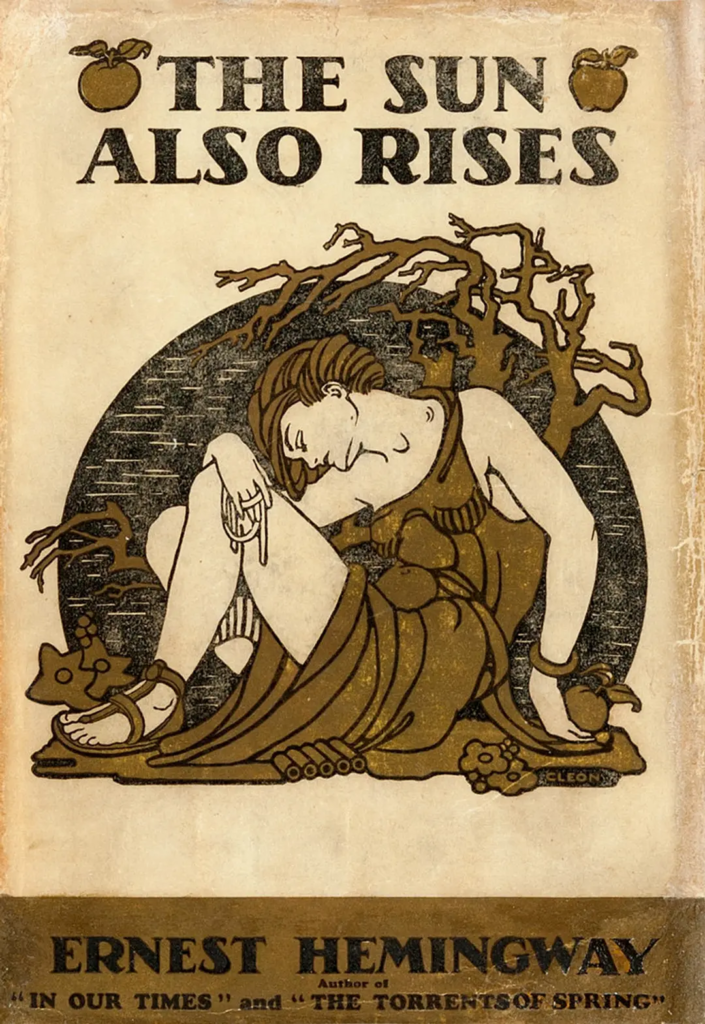
When Charles Scribner’s publishing house acquired Ernest Hemingway’s The Sun Also Rises, the word nearly caused a rupture. Scribner reportedly objected that he no more wanted obscenity in his books than he wanted guests using his parlour as a toilet.
Hemingway insisted that his vocabulary was deliberate. He claimed never to use a word without first considering whether another could replace it.
The contested term remained. Attempts to ban the novel in several American cities then contributed to its notoriety, illustrating a pattern that later media industries would repeatedly exploit: censorship advertises the very language it attempts to suppress.
The scandal surrounding a forbidden word often increases its cultural value, turning moral disapproval into publicity.
Decades later, institutional caution had not vanished. In 2005, The New York Times referred to Jennifer Shahade’s book Chess Bitch: Women in the Ultimate Intellectual Sport without printing its complete title.
Critics mocked the newspaper’s nervousness. The situation became stranger when Shahade herself contributed an opinion piece about the controversy to the same issue, yet the disputed word still failed to appear.
The omission demonstrated how context could be erased by policy. The title was not an attack on an individual woman. It deliberately confronted assumptions about gender and competition in chess. Treating every appearance of the word as identical made serious discussion harder rather than safer.
George Carlin placed bitch near, though not quite inside, his famous category of forbidden language. Because the word retained its literal zoological definition, he called it a “part-time dirty word”, alongside terms such as ass, prick, cock and balls.
Today, it is rarely excluded completely from mainstream entertainment. Television series use it as character punctuation. How I Met Your Mother and Breaking Bad turned repetition into part of their comic or dramatic identity, encouraging viewers to count each occurrence.
Writers now know that profanity divides audiences profitably. Some viewers object; others interpret uncensored language as honesty, realism or transgression. The word can generate attention because its history remains audible even after it becomes familiar.
Comparison with cunt shows that not all gendered obscenities follow the same path.
The linguist Deborah Tannen once described bitch as perhaps the most contemptuous label for a woman, with the possible exception of the four-letter C-word. Yet cunt began not as an insult but as a literal anatomical term.
Medieval records used it plainly enough that it even appeared in surnames such as John Fillecunt and Bele Wydecunthe. The term named a body part before becoming evidence of moral pollution.
By Shakespeare’s time, direct use had become unacceptable in respectable drama. In Hamlet, the playwright approaches it through wordplay. Hamlet asks Ophelia whether he may lie in her lap and then refers to “country matters”, allowing the first syllable to carry the obscenity without stating it openly.
The association with promiscuous women developed early, but the word’s taboo intensified across the following centuries. Samuel Johnson left it out of his dictionary. Grose included it only to call it a nasty name for a nasty thing.
A major English dictionary did not restore it until the 1960s. Its use as a general insult, detached from literal anatomy, had become common only in the early 20th century.
Feminists have attempted to reclaim cunt, especially because turning the name of a female body part into one of the language’s worst insults reveals the depth of cultural disgust attached to female sexuality.
Germaine Greer’s 1971 essay “Lady, Love Your Cunt” urged women to reject that disgust. Eve Ensler’s The Vagina Monologues later invited audiences to speak openly about female anatomy, sexual pleasure and violence.
Some queer and feminist communities continue to use the word affirmatively. Yet the reclamation has remained narrower than that of bitch. Mainstream censorship limits repetition, and the term’s shock remains closely tied to bodily violation and misogyny.
Regional differences complicate the picture. In Australian and Scottish English, cunt can function as rough familiarity between friends. A person may greet an old companion with the word without intending hostility.
Online communication has also made it easier to type. Text places distance between speaker and recipient and allows users to perform extremity without producing the word aloud.
Even so, in most English-speaking environments, cunt remains more radioactive than bitch. Its history has not become flexible enough to provide ordinary speakers with reliable control over how it will be received.
Slut offers another comparison.
In present-day usage, slut condemns a woman as sexually promiscuous. Since early bitch could carry a similar meaning, one might assume that the words have always been interchangeable. They have not.
The Middle English slutte referred primarily to dirtiness, untidiness or slovenly appearance. It belonged to a group of words criticising women for failing at domestic order.
In the 14th century, Geoffrey Chaucer even applied it to a man. In the prologue to “The Canon’s Yeoman’s Tale”, a lord is described as sluttish because his unkempt clothing and appearance fail to match his social rank.
Chaucer’s slut was a shabby man, not a sexually active woman, reminding us that gendered insults often acquire their gender only after centuries of use.
By the 15th century, slut could also mean a female domestic servant performing unpleasant or menial tasks. A kitchen maid emptying chamber pots might be called a slut or a drudge.
Samuel Pepys used the term approvingly when describing a young maid called Susan as an admirable slut who pleased the household. The compliment concerned her usefulness and industrious service, not her sexual behaviour.
From dirty woman and low-status servant, the term moved towards a woman of degraded character. The sexual implication remained indistinct for some time. Johnson defined a slut as a dirty woman and considered the term only mildly contemptuous.
Its downward semantic movement followed a pattern visible in many words referring to women. Mistress, wench, dame, tart and hussy all acquired sexual or insulting meanings that were absent or weaker in earlier use. Tart grew from a shortened form of sweetheart. Hussy developed from housewife.
Words associated with women, especially women outside elite protection, have a recurrent tendency to become insults. The transformation reveals less about female behaviour than about how readily female categories are sexualised.
Only in the 20th century did slut become firmly attached to presumed sexual promiscuity. During the era of 1960s sexual liberation, it joined a crowded vocabulary for policing women: whore, tramp, tart, floozy, skank, moll and Jezebel.
As with bitch, evidence was optional. A woman could be called a slut for having several partners, but also for wearing particular clothes, having male friends, appearing attractive or provoking jealousy.
The accusation often operates independently of sexual history. It warns women that visibility itself may be interpreted as availability.
Attempts at reclamation followed. SlutWalk began in Toronto in 2011 after a police officer suggested that women could avoid sexual assault by not dressing like “sluts”. Protesters adopted the term to reject victim-blaming and insist that clothing or sexual reputation never constitutes consent.
Characters such as Samantha Jones in Sex and the City, along with public figures including Amber Rose, helped present the slut as a woman who claims sexual pleasure without accepting shame.
As with bitch, however, reclamation remains uneven. A person may use the term for herself and still object when it is used to discredit her. Self-description does not grant permission to every speaker.
This is the central difficulty in declaring an insult redeemed. A word does not possess a single political status. It moves through unequal relationships.
In the present day, bitch wears more forms than any earlier speaker could have anticipated. It has produced altered spellings such as biatch, bish and biznatch, which imitate, soften or stylise its sound.
It lives in phrases including “resting bitch face”, “basic bitch”, “bitch tits”, “Bitch, please”, “life’s a bitch”, “bitch slap” and “make it your bitch”. Each expression activates a different layer of history.
“Resting bitch face” turns a neutral female expression into evidence of hostility. “Basic bitch” ridicules a woman for predictable tastes. “Bad bitch” praises self-possession and attractiveness. To “bitch” is to complain, while describing a task as “a bitch” means it is unusually difficult.
The word has also travelled internationally. Many languages possess their own insults based on female dogs, sexual shame or disobedient women. In others, English bitch is borrowed directly because American film, music and internet culture have made its force recognisable.
Borrowing does not always preserve its exact meaning. Speakers adapt it to local gender systems, humour and class distinctions. The English sound itself may carry modernity, aggression or cosmopolitan style.
Grammatically, the word works relentlessly. It can be a noun, verb, adjective, exclamation or part of a compound. It can describe a person, relationship, object, emotional state or difficult situation.
Semantically, it performs even more labour. It can praise and humiliate, invite and exclude, feminise a man, masculinise a woman, express friendship or threaten violence.
That range does not prove that the word has become harmless. It proves that context has become more demanding.
Two friends may exchange “bitch” as evidence of intimacy because each trusts the other not to weaponise the older meanings. A stranger shouting it in anger offers no such protection. An employee may hear it differently from a manager than from a colleague. Tone matters, but power determines what tone can safely accomplish.
Most women still do not welcome being called a bitch by someone who intends harm. The insult reduces disagreement to personality. Instead of addressing what a woman has said, it presents her speech as proof of what she is.
Singer-songwriter Meredith Brooks encountered this contradiction after releasing “Bitch” in the 1990s. The song embraced a collection of supposedly incompatible female identities, but Brooks later acknowledged that women generally do not want the word imposed upon them.
For most people, she observed, it remains a derogatory comment directed at a woman. Once that cultural association exists, it cannot simply be rung backwards like a bell.
She was right, though the persistence of injury does not make every use identical. A word can remain insulting at its core while also becoming available for irony, solidarity and self-invention.
The mistake is to imagine that reclamation cleans a word. It does not wash away history. It gives some speakers additional ways to position themselves in relation to that history.
Bitch still bites. Sometimes the bite is the point. Sometimes trusted speakers pretend to bite as a form of play. Sometimes the person once expected to bleed bares her own teeth.
Across a thousand years, the word has moved from animal body to female sexuality, from domestic service to musical excellence, from masculine humiliation to feminist confidence. Yet the changes have not replaced one another. They coexist.
Its future will depend less on finding a final definition than on the relationships through which it continues to be spoken.
At its most hostile, bitch remains a punishment for a woman who does or says something another person dislikes. At its most affirmative, it names a person who has stopped organising herself around that dislike.
Between those meanings lies the history of who gets to speak and who is required to listen.