





The art market has always presented itself as a realm of cultivated confidence. Names appear on labels as if they were facts of nature. Dates settle into catalogues with the tidiness of legal documents. Auction estimates arrive with an air of numerical authority, as though the future could be measured in advance. Yet beneath this polished surface lies an economy built less on certainty than on the careful arrangement of doubt.
A painting is rarely just a painting once it enters the market. It becomes a claim. Someone says that it is by a particular hand, from a particular decade, connected to a particular chain of owners, and therefore deserving of a particular price. Enormous amounts of money can depend on that claim holding steady. But attribution, the apparently solid ground on which the whole structure rests, is often less solid than the market likes to admit. It may be supported by scholarship, by provenance, by forensic tests, by tradition, by institutional authority, or by the eye of one dominant specialist. Sometimes it is supported by all of these. Sometimes it is supported by remarkably little.
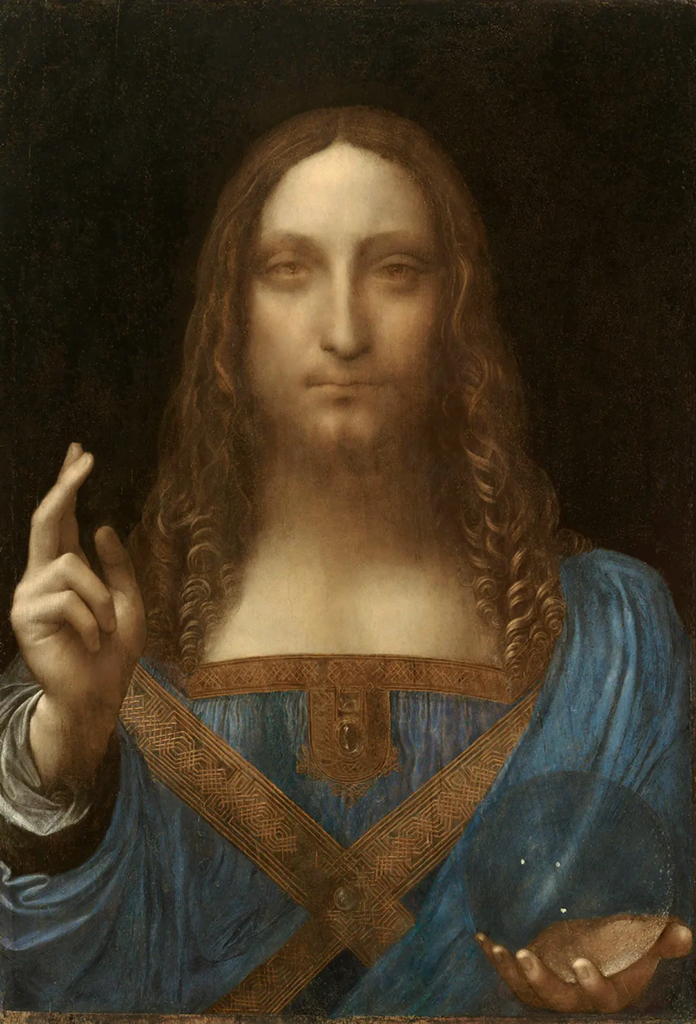
Salvator Mundi (c1500), attributed to Leonardo da Vinci. Courtesy Wikipedia
A name attached to an artwork can do more than change its price. It can alter the story told by museums, the direction of academic research, and the reputation of collectors and institutions. Remove that name, and the object does not physically change. The paint remains where it was. The canvas does not shrink. The face, landscape or still life looks much the same as it did yesterday. Yet everything around it changes. Value drains away. Confidence falters. A catalogue entry is rewritten. A masterpiece may become a copy, a workshop production, a follower’s exercise, or an attractive orphan with no famous parent.
Few cases make this more visible than Salvator Mundi, the painting sold at Christie’s in 2017 for $450.3 million and presented as a work by Leonardo da Vinci. Some of the most respected Leonardo scholars have accepted the attribution. Others, equally serious, have argued that it is not Leonardo’s own work but a derivative painting connected to his circle. The difference is not a small academic adjustment. If it is Leonardo, it belongs among the most expensive objects ever sold. If it is not, its value could be a tiny fraction of that sum. The question is not merely whether one expert is right and another wrong. It is whether a global market can tolerate the fact that a difference of opinion may separate hundreds of millions of dollars from hundreds of thousands.
Since its sale, Salvator Mundi has not been publicly displayed. It is widely believed to have been acquired by proxy for Mohammed bin Salman, the Saudi crown prince, and was expected by many to become a defining attraction of the Louvre Abu Dhabi. Instead, it remains absent from public view, its current location undisclosed. That absence has become part of the painting’s meaning. It is no longer only an image of Christ raising his hand in blessing. It is a symbol of attribution itself: luminous, contested, politically charged, and financially explosive.
Once an attribution is questioned, the consequences spread quickly. A museum’s judgment may look less secure. A collector’s asset may become unstable. Insurers, lenders, heirs, tax authorities, governments and auction houses all depend on the appearance of accuracy, even while knowing that many judgments remain provisional. This is not a malfunction in the system. It is part of how the system operates. The art market runs on partial information, unequal access to expertise, and incentives that often reward the most optimistic plausible description.
Sellers benefit from the strongest attribution that can be responsibly, or sometimes semi-responsibly, defended. Buyers hope the label will survive future scrutiny. Auction houses inherit old opinions and cautiously adjust them. Museums, once publicly committed, rarely rush to reverse themselves. Scholars may revise their views, but reputations harden around earlier declarations. The result is not a world without doubt, but a world in which doubt is managed, softened, postponed or made invisible until it can no longer be ignored.
Attribution is therefore not only an art-historical problem. It is a social technology. It allows objects to move through markets, museums and scholarship with identities attached to them. Without attribution, prices become unstable, exhibitions lose coherence, and narratives of artistic development begin to fray. Yet attribution is also an intensely human practice. It is shaped by training, memory, comparison, pride, rivalry, intuition and sometimes wishful thinking. The human eye can be astonishingly subtle. It can also be persuaded by what it wants to see.
For centuries, connoisseurship was the central instrument of attribution. Experts studied brushwork, anatomy, composition, colour, underdrawing and the small habits of making that recur across an artist’s career. A trained eye could distinguish master from pupil, early work from late work, studio product from autograph painting. This kind of looking is not casual. At its best, it is disciplined, cumulative and intellectually rigorous. Some connoisseurs have rescued lost works from obscurity with extraordinary precision.
But connoisseurship is not immune to subjectivity. Two scholars may look at the same passage of paint and see different histories. One sees hesitation; another sees late style. One sees a copyist’s stiffness; another sees an artist experimenting under pressure. Such disagreements are not rare accidents. They are part of the field. Some have lasted for decades. Others have shaped whole careers.
During the 20th century, science entered the conversation with the promise of firmer ground. Technical analysis made it possible to identify pigments that did not exist in a claimed period, to examine preparatory drawings beneath the paint surface, to date wooden panels, to test canvas, to study varnish and binding media, and to expose deliberate forgery. Many celebrated fakes fell apart under this scrutiny. A painting that used a modern pigment could not be a Renaissance original. A supposedly 17th-century support might reveal a later origin. These discoveries changed authentication forever.
Still, technical evidence has limits. Science is often better at exclusion than confirmation. It can tell us that a work cannot be what it claims to be. It is usually less able to say who made it. A canvas may be old enough. The pigments may be historically plausible. The underdrawing may resemble known practice. None of that, by itself, proves authorship. Forensic testing is also costly, slow and sometimes invasive. Paintings must be moved, insured, examined with specialist equipment, and occasionally sampled. Many works entering the market are never subjected to such scrutiny. Technical analysis tends to be reserved for objects already considered valuable, suspicious or important.
So the market continues to depend on a hybrid of connoisseurship, provenance and selective science. This mixture is strong enough to support a vast international industry, yet weak enough to leave uncertainty alive beneath the surface. That uncertainty is not merely inconvenient. It is productive. It creates opportunity, speculation, prestige and danger. It allows someone to hope that a neglected picture in a provincial sale might be a lost masterpiece. It also allows questionable works to travel farther than they should.
This helps explain why artificial intelligence has entered attribution not as a neutral tool but as a provocation. To some, AI promises what the art market has long lacked: consistency, scale and a method less vulnerable to social pressure. To others, it threatens to misunderstand art by reducing it to measurable pattern. The disagreement is not really about computers. It is about whether the authority to name a work should remain with human judgment alone.
The British art historian and television presenter Bendor Grosvenor has expressed serious reservations about AI attribution. Grosvenor is not hostile to looking closely; his career has helped popularise traditional connoisseurship, and he has identified lost Old Master works himself. His concern is that painting cannot be reduced to a statistical signature. Artists are not machines repeating themselves. They change their habits, revise their methods, collaborate with assistants, respond to patrons, adapt to materials, and sometimes do their best work by violating their own patterns.
AI does not replace the eye; it reveals what the eye may have learned to ignore
This is a serious objection. A painter’s art is not simply a set of repeated gestures. It involves intention, context, failure, pressure, experiment and accident. A system trained on what is typical may be least comfortable with what is most interesting. The unfinished, the transitional, the collaborative, the damaged and the eccentric may all trouble an algorithm. If AI were treated as a final judge, it could encourage a conservative view of artistic production, rewarding conformity to an artist’s known habits and penalising innovation.
Behind such concerns lies a broader anxiety. Art history is not physics. It does not seek universal laws. It works through interpretation, comparison, archival evidence, historical reconstruction and argument. Its vitality comes partly from disagreement. To replace argument with probability scores would be to flatten the discipline. At least, that is the fear.
Yet this fear can misdescribe what responsible AI analysis actually claims to do. It does not experience beauty. It does not understand ambition. It does not know what a painting means. It does not decide whether an artist was moved by grief, patronage, rivalry or faith. What it can do is compare visual information at a scale and level of granularity unavailable to human perception. It can measure repeated relationships in brushwork, surface structure, compositional geometry, colour modulation and other features that may escape conscious attention.
Clovis Whitfield, an art historian and dealer long involved in attribution debates, has argued that AI should be understood not as an enemy of connoisseurship but as its descendant. Algorithms are trained on judgments made by human experts: catalogues raisonnés, museum collections, accepted corpora, rejected works, copies and forgeries. Before they challenge the connoisseur, they learn from connoisseurship. Their contribution is not taste. It is consistency. They can ask the same question thousands of times without fatigue, vanity or market interest.
This distinction matters. A probability is not a verdict. It is a form of evidence. It may be powerful evidence, but it still requires interpretation. A high match does not make a painting autograph by magic. A low match does not automatically condemn it. Instead, AI changes the conversation. It asks the scholar who disagrees to explain why the exceptional case should be exceptional. It asks the seller to justify confidence. It asks the museum to make explicit the reasoning that may once have remained implicit.
The deeper issue, then, is not whether humans or machines should prevail. It is whether attribution can become a more transparent negotiation among different kinds of evidence. Connoisseurship sees historical possibility. Science tests material fact. Provenance traces ownership and movement. AI measures visual relation. None is sufficient alone. Together, they may make it harder for desire to masquerade as certainty.
Authorship matters so intensely because the market and much of Western art history have inherited a Renaissance fantasy of the singular creator. We want paintings to belong to names. We want creativity to be anchored in biography. A work becomes easier to admire, sell, insure and narrate once it can be attached to a famous hand. This desire persists even where history complicates it. Early modern artists often worked collaboratively. Large studios were productive systems, not solitary cells of genius. Peter Paul Rubens, for instance, ran a major workshop in which assistants handled significant portions of large compositions, while the master might reserve crucial passages such as faces and hands. Yet the market still prefers the cleaner fiction of one author.
This fixation on authorship is not just economic. It is almost metaphysical. In 1935, Walter Benjamin wrote about the aura of the artwork in the age of mechanical reproduction. In the present moment, we might speak of the aura of attribution in the age of mechanical analysis. The name attached to a painting has become a vessel for authenticity, value, originality and cultural power. To lose that name is to lose more than money. It is to lose a story.
AI’s most unsettling quality is not intelligence, but indifference
Artificial intelligence enters this world without reverence. It does not care whether a painting hangs in a famous museum, belongs to a powerful collector, or supports a cherished scholarly narrative. It has no emotional investment in whether an object is worth millions or thousands. It is not impressed by old labels. It does not feel embarrassed by institutional reversal. Its strength is not that it knows more than people. Its strength is that it wants nothing from the result.
That absence of desire is precisely what makes it uncomfortable. The art market is built on belief, prestige and trust. AI analysis bypasses much of that social architecture. It does not ask who has endorsed the picture. It asks what the picture looks like when translated into measurable features. In a field where optimism can be financially rewarded, such indifference may be a useful irritant.
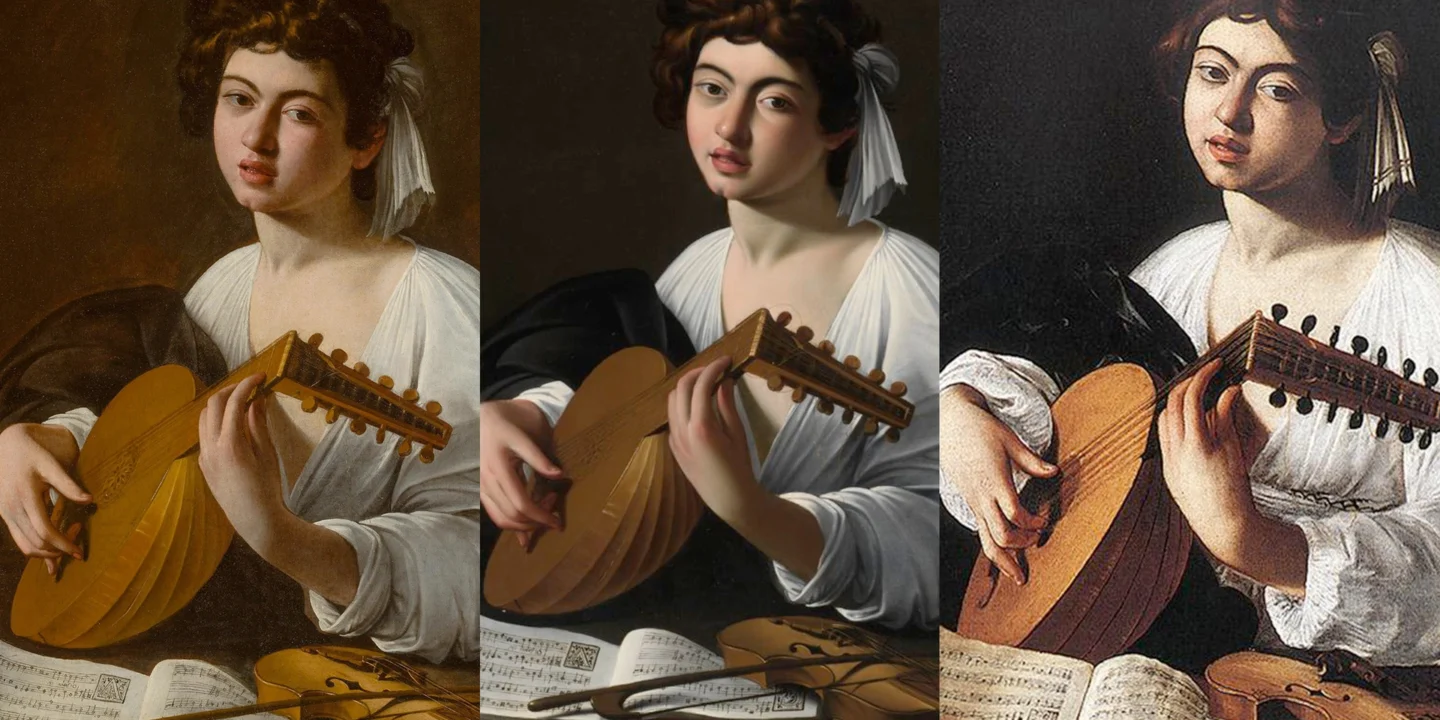
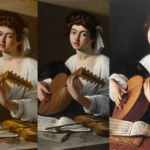
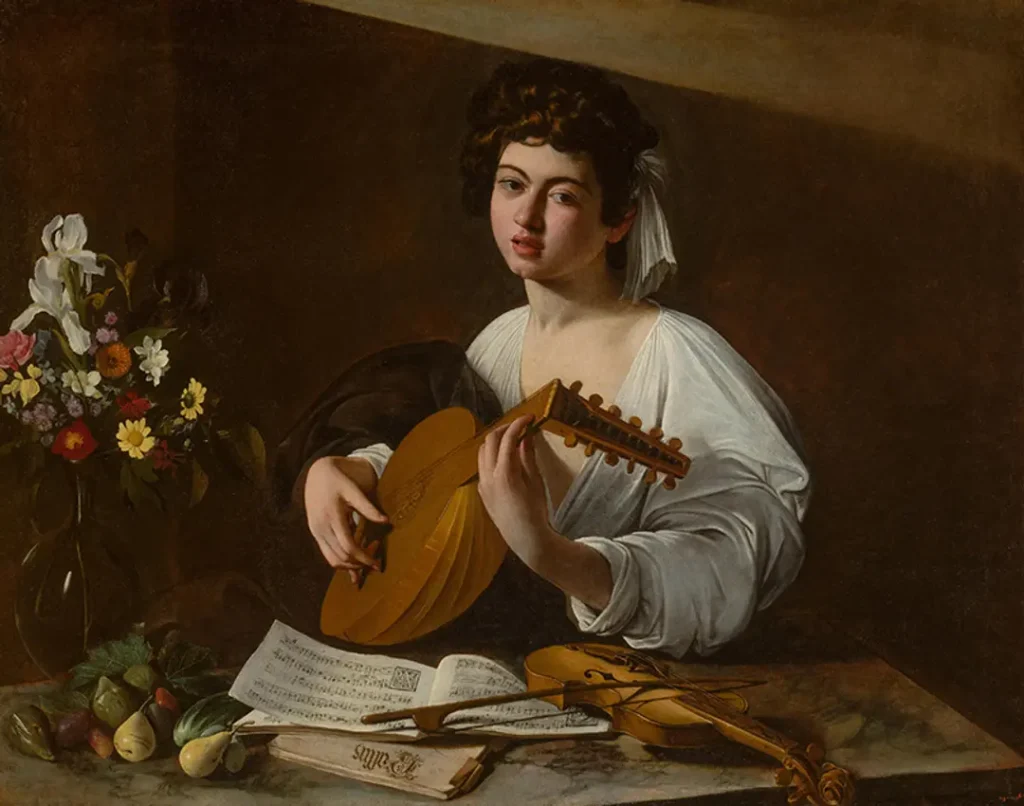
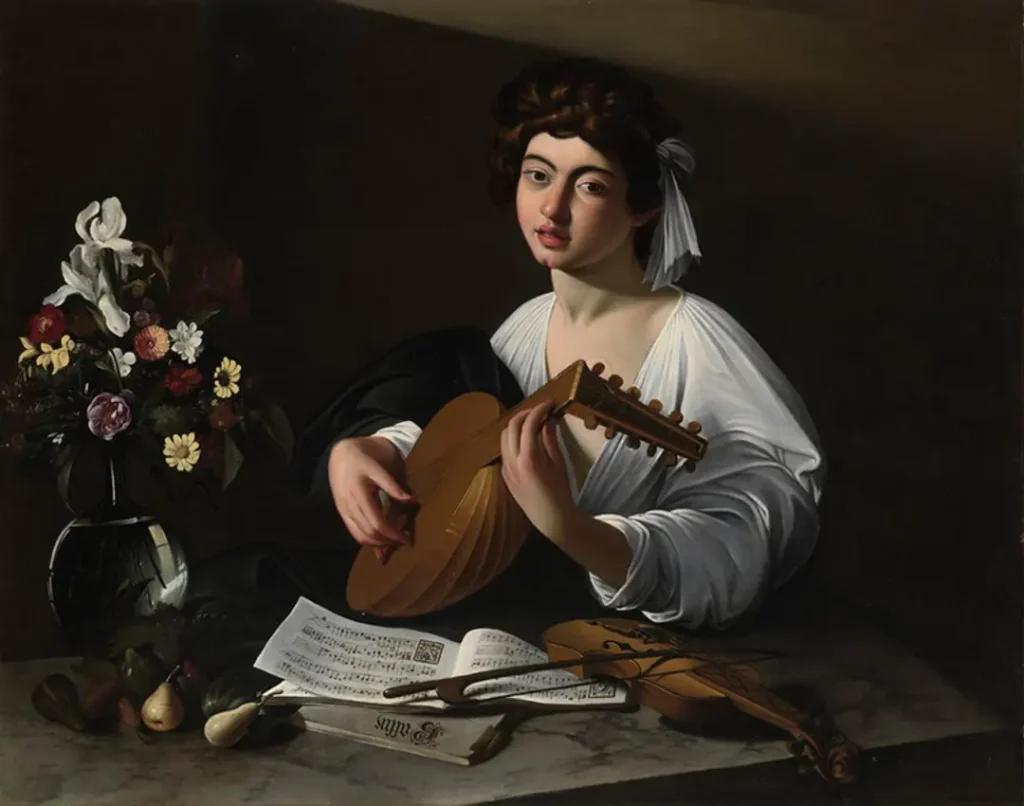
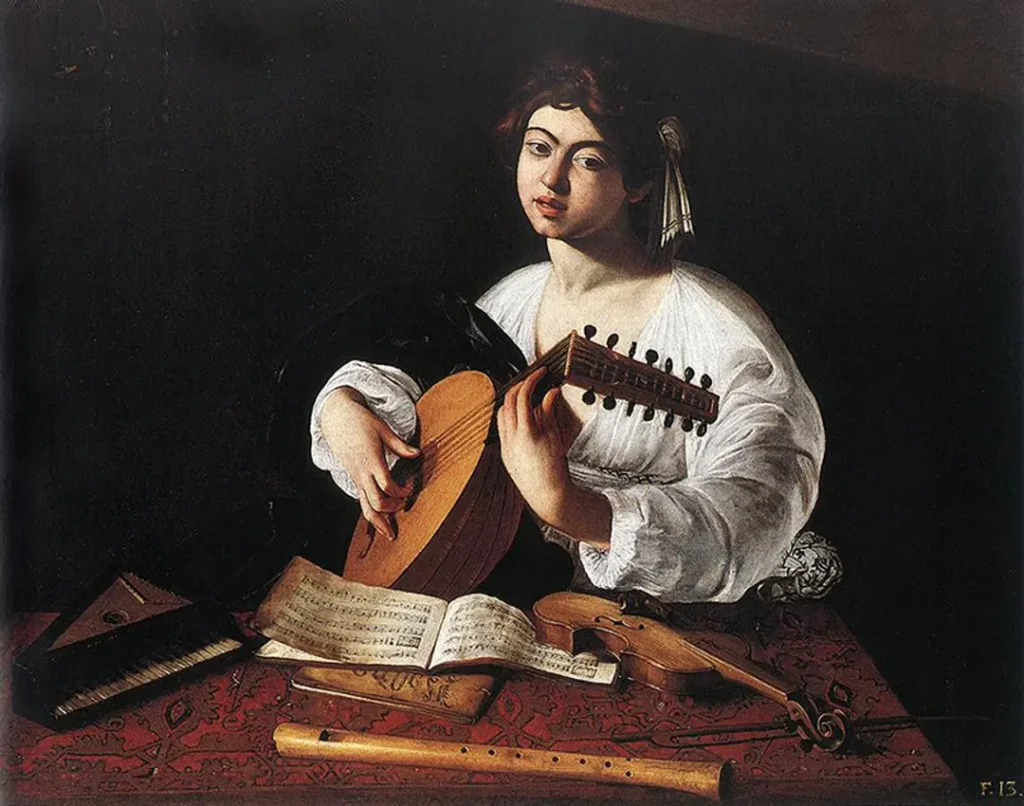
The debate becomes clearer when we turn from abstraction to contested paintings. Caravaggio’s The Lute Player offers one such case. Caravaggio’s career was short, turbulent and immensely influential. His accepted oeuvre is relatively small, so every proposed addition or subtraction matters. The Lute Player survives in several versions, and scholars have long debated which, if any beyond the accepted example, might be by Caravaggio himself rather than by a follower, copyist or workshop hand.
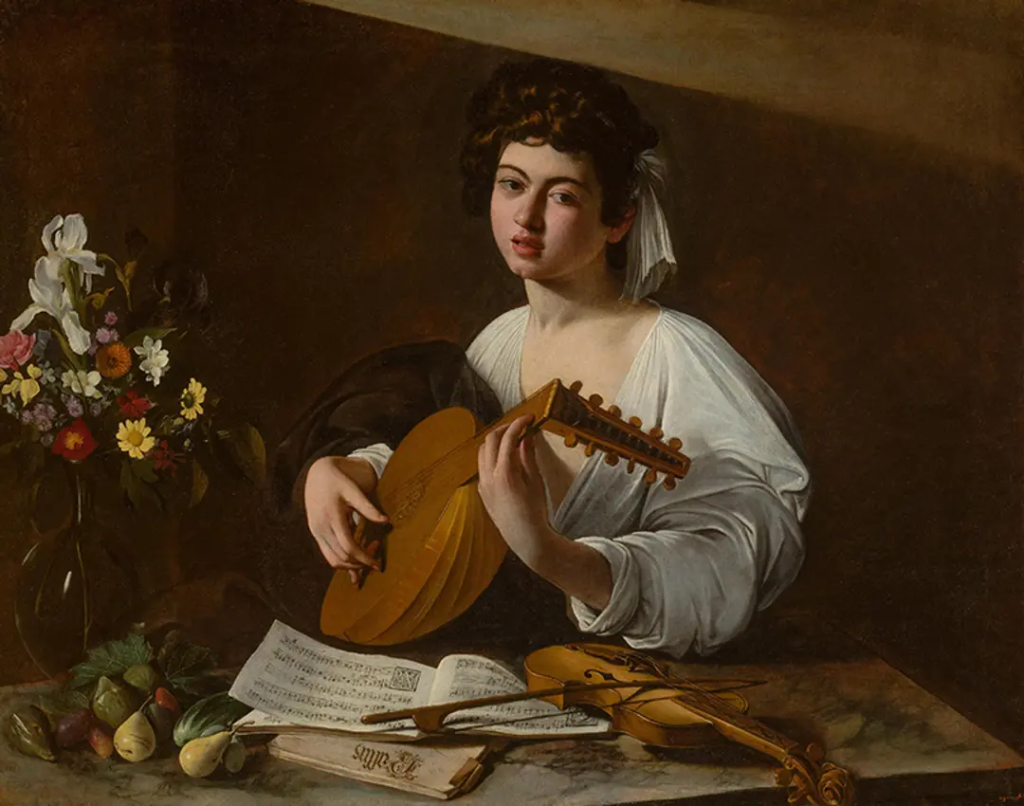
The disagreements turn on subtle visual judgments: the handling of light across flesh, the modelling of fingers, the psychological concentration of the figure, the firmness of contour, the orchestration of objects on the table. One scholar sees Caravaggio’s pressure and immediacy. Another sees a skilled imitation of Caravaggio’s effects. The same evidence supports different conclusions because evidence in art history is rarely self-interpreting.
In September 2025, The Guardian reported that three versions of The Lute Player had been examined by Art Recognition, a Swiss firm using AI image analysis. One version is in the Hermitage in St Petersburg and is broadly accepted as Caravaggio’s. Another, formerly at Badminton House in Gloucestershire and known as the ex-Badminton picture, had previously been dismissed by some as derivative. A third, associated with the Wildenstein collection in Paris, had also divided opinion. The AI results accepted the Hermitage picture and the ex-Badminton version, while rejecting the Wildenstein.
This did not end the debate. It did something more interesting. It strengthened one side and forced the other to confront new evidence. Scholars may still disagree with the result, and disagreement remains legitimate. But an objection now has to do more work. It must explain why the system is wrong, whether the training set was inadequate, whether condition issues distorted the analysis, whether Caravaggio’s practice in this case was atypical, or whether the visual features being measured are not decisive. AI does not silence argument. It makes argument more accountable.
A similar tension surrounds Johannes Vermeer’s Girl with a Flute. Vermeer’s known body of work is famously small, with fewer than 40 surviving paintings generally accepted. Each attribution therefore carries unusual weight. Girl with a Flute has troubled specialists for years. In 2022, the National Gallery of Art in Washington, DC concluded that it was not by Vermeer, describing aspects of its execution as too heavy and insufficiently controlled. The Rijksmuseum in Amsterdam disagreed, arguing that close viewing supported the attribution. These were not marginal voices. Both institutions had expertise, authority and reputational stakes.
The case was especially delicate because the painting belongs to the Washington museum. To downgrade it would be to devalue one of its own works. That fact does not mean the conclusion was wrong. Institutions can act against their own financial interest, and often do. But it reminds us that attribution never takes place in a vacuum. Every judgment enters a field of consequences.
Art Recognition examined Girl with a Flute and compared it with accepted Vermeers across multiple visual levels. Its conclusion aligned with the Rijksmuseum: the painting fit within Vermeer’s statistical signature. This did not prove that Vermeer painted it. Proof is the wrong word. But it introduced another kind of evidence into a disagreement that had already reached an institutional impasse.
A probability does not end a dispute; it changes what must be explained
Carina Popovici, the theoretical physicist who founded Art Recognition, has been careful to define the limits of the technology. AI analysis provides probability assessments based on measurable similarity. It does not replace historical judgment. Popovici’s interest in authentication emerged partly from the failures exposed by the Beltracchi forgery scandal, in which a German forger deceived experts and sold fakes for large sums. Her argument is not that experts are useless. It is that the traditional process can fail badly, especially when reputation and expectation move faster than evidence.
Understanding how such systems operate helps reduce both exaggerated hope and exaggerated fear. AI image analysis does not “understand style” as a human viewer does. It does not recognise tenderness, grace, irony or spiritual presence. It decomposes images into data. Stroke direction, texture, pressure, distribution, rhythm, colour relationship, spatial structure and compositional proportion can all become measurable features. Across a carefully assembled corpus, patterns emerge.
The quality of the corpus is crucial. A responsible system should not simply scrape images from the internet. It should rely on a closed, curated dataset grounded in a catalogue raisonné or comparable body of expert scholarship. It should include accepted works, disputed works, known copies, related workshop paintings and confirmed forgeries where available. Negative data is as important as positive data. The system must learn not only what an artist’s work resembles, but also what can deceptively resemble it.
This is where some criticism of AI misses the mark. The best systems are not independent of human expertise in the crude sense. They are built from it. Their independence comes later, at the moment of analysis, when they compare a questioned work without caring about ownership, prestige or price. They may reproduce weaknesses in the scholarly consensus if their training data is poor. But they may also reveal inconsistencies inside that consensus. The danger is not AI itself. The danger is bad AI presented with excessive confidence.
That distinction will become increasingly important as more firms adopt the language of artificial intelligence. Some may use open datasets, inadequate images, unclear methods or insufficient negative examples. Such work risks producing misleading results and damaging trust in the field. For AI attribution to mature, it needs protocols, transparency and standards. Methodology must be open enough to be challenged. Training corpora must be defensible. Probabilities must be explained rather than marketed as oracles.
This is why a responsible future for AI in art authentication cannot be built on technological glamour. It must be built on procedures. Who selected the training images? Were condition issues accounted for? Were copies and forgeries included? How were images standardised? What thresholds are meaningful? How should a probability be weighed against provenance or material evidence? These questions are not obstacles to AI. They are the conditions under which it becomes useful.
At present, museums already approximate the most sensible model: connoisseurship, provenance, technical science and, increasingly, AI analysis working together. Four kinds of evidence form a more stable structure than one. Connoisseurship provides historical and visual judgment. Forensics establishes what materials can and cannot be true. Provenance reconstructs the object’s life. AI tests visual affinity at scale. Each can correct the others.
Where AI may prove most transformative, however, is not only in old-master disputes but in the future of contemporary art. Traditional authentication often arrives after trouble begins: after a forgery appears, after a provenance gap opens, after an estate dispute, after a collector’s suspicion. It is retrospective, detective work. A parallel development suggests another path, one in which verification begins at the moment of creation.
Craig Follett, co-founder of Peggy, an AI-powered online marketplace and social platform for contemporary art, has described this shift as moving from “Trust Me” to “Verify Me.” Peggy’s technology allows living artists to scan the unique physical topography of their paintings while verifying their identity. The result is a digital fingerprint of the object itself, recording minute surface features that cannot be exactly reproduced.
As Follett explained it to me, forensic AI asks whether a work resembles an artist’s wider body of work. Object-level verification asks whether this is the exact canvas the artist handled. These are different questions. One concerns attribution to a hand. The other concerns identity of an object. Both matter, but they solve different problems.
If such methods become widely adopted, future disputes may look very different. Contemporary artists could anchor authenticity from the beginning. Forgers would face higher barriers. Provenance gaps would narrow. Lower and middle segments of the market, where buyers rarely receive museum-level research, could gain new forms of trust. This matters because authentication is not only a problem for billionaires and national museums. It affects ordinary artists, small galleries, online platforms and emerging collectors.
Still, technology will not abolish the older tools. Provenance remains essential, especially for works that may have been looted, stolen, displaced during war or transferred under coercive conditions. Material forensics remains necessary for questions of age, support and composition. Human interpretation remains irreplaceable when discussing meaning, iconography, patronage, workshop practice and historical context. AI does not tell us why a painting matters. It helps us ask whether the object in front of us is what the market says it is.
Verification will not remove uncertainty from art; it will change who controls it
The market has much to gain from demonstrating that works offered for sale have been seriously tested. Buyers often assume that expensive paintings have undergone exhaustive examination. In many cases, they have not. Due diligence is uneven. Scrutiny increases with price, controversy and institutional visibility, but many works move through the market on inherited opinion and attractive wording. This is odd, because the market’s credibility depends on trust. Publicly showing that a work has been assessed through connoisseurship, provenance, forensics and AI should make legitimate objects easier to sell, not harder.
Eventually, buyers are likely to demand such analysis for high-value works. The first major auction house to announce that every painting above a certain threshold has undergone AI image analysis, alongside traditional research, would reset expectations. Sellers with strong works would welcome the additional support. Sellers with questionable works would hesitate. The deterrent effect alone could be powerful.
Resistance will not come only from sellers. Some experts fear that AI threatens their authority, their livelihoods or the prestige of trained judgment. Such anxiety is understandable but misplaced if AI is used responsibly. The expert’s role does not disappear. It changes. Instead of acting as the solitary source of authority, the expert becomes an interpreter among forms of evidence. That may feel like a loss of monopoly, but it could also strengthen the field. An attribution defended against multiple kinds of scrutiny is more persuasive than one defended by reputation alone.
Some sellers, of course, fear downgrade. AI may not only promote neglected works; it may weaken optimistic attributions. A painting offered as “by” may become “studio of,” “circle of,” or “follower of.” But a market that resists accuracy undermines itself. If confidence depends on avoiding better evidence, it is not confidence. It is concealment.
There is, however, a deeper reason the art market may hesitate. Uncertainty is not simply a problem to be solved. It is part of the market’s emotional engine. The possibility of discovery gives the art world much of its drama. A collector spots a painting in a minor sale. A dealer senses something overlooked. A scholar sees the trace of a famous hand beneath dirt, repaint or bad attribution. The fantasy of being right before everyone else is powerful. It is the art-market version of speculation: risk joined to expertise, luck and desire.
A fully verified market might be safer, but it could also feel less charged. The romance of discovery depends on not knowing. So does profit. Information asymmetry allows some participants to benefit from seeing what others miss. AI threatens to redistribute that advantage. It does not make everyone equal, but it may make certain kinds of hidden knowledge less exclusive.
This is where the most interesting argument for AI lies. It is not that machines are better judges of art than people. They are not. The point is that AI exposes how much of the art market has depended on uncertainty being selectively visible. Doubt is often emphasised when it lowers someone else’s claim and minimised when it protects one’s own. AI analysis, when responsibly performed, makes uncertainty harder to arrange according to convenience.
A market that embraces this shift could become more credible without becoming sterile. Risk would not disappear. Questions of quality, condition, importance, legal title, cultural meaning and future taste would remain. Even attribution would not become absolute. But uncertainty would become more explicit. Instead of trading on vague confidence, participants would have to say what kind of confidence they possess and what kind they lack.
A transparent market does not destroy belief; it asks belief to earn its authority
The deeper significance of AI, then, is not fraud prevention alone. It forces the art world to confront a contradiction it has long managed rather than resolved. The market wants certainty because certainty supports value. It also wants uncertainty because uncertainty creates opportunity. Attribution has always lived inside that contradiction. It is a belief system that borrows the language of fact.
AI does not abolish belief. Nor does it remove the need for judgment. It introduces a form of evidence relatively indifferent to the social pressures that surround art. That evidence may be flawed, partial or misused. It may need interpretation. But it asks uncomfortable questions with unusual calm. Why is this painting accepted? Why is that one rejected? What assumptions are hidden inside the consensus? Who benefits when uncertainty remains vague?
The art world should not surrender to machines. But neither should it protect human judgment by pretending that judgment has been pure, neutral or consistently reliable. Connoisseurship remains indispensable, but it is strongest when it welcomes challenge. Science remains indispensable, but it cannot answer every question. Provenance remains indispensable, but records are often broken, embellished or absent. AI belongs among these tools not because it is infallible, but because fallibility is already everywhere.
Ultimately, the question is not whether a machine can judge art in any full human sense. It cannot. A machine cannot feel the theatrical violence of Caravaggio’s light, the quiet suspension of Vermeer’s interiors, or the strange devotional intensity of Salvator Mundi. It cannot understand why a painting matters to a culture, a collector, a museum or a nation. But it can test patterns without desires. It can measure without flattery. It can disturb a comfortable story.
That disturbance may be its greatest value. In a world where myths can grow simply because no one has the incentive to ask too carefully, AI makes certain questions harder to avoid. It does not give the art market absolute certainty. It offers a different kind of trust: one less dependent on authority alone, more open about probability, and more honest about the instability that has always been there.
Disclosure: Noah Charney is an art history advisor to Art Recognition.