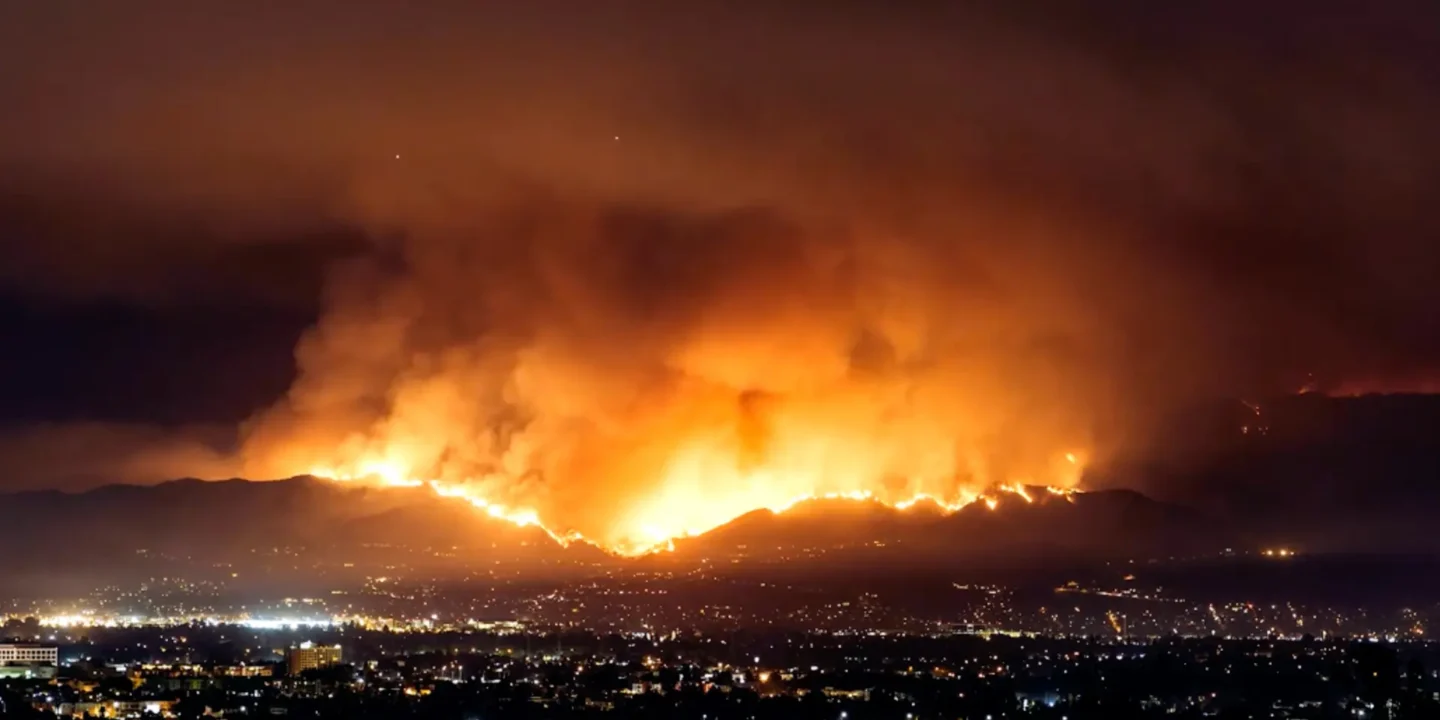




Will a Category 5 hurricane make landfall in the United States before 2027? Will this summer bring a record-breaking heatwave? Will a wildfire in a particular city be fully contained by the end of the month? Will Arctic sea ice fall to another historic low? Today, you do not need to be a meteorologist, an insurance actuary, an emergency official or an energy trader to wager on such questions. You need only an account, a card, a crypto wallet, or a small amount of money you are willing to lose. Catastrophe, once an object of prayer, fear, news and rescue, has become something on which one can click “yes” or “no”.
Online prediction markets divide the future into a series of tidy questions. Will Trump win? Will a team take the championship? Will the Federal Reserve cut rates? Will a film win an award? Between these political, sports, entertainment and financial events sit a stranger class of contracts: hurricanes, wildfires, earthquakes, floods, temperatures, sea ice, climate anomalies. They are arranged on the same interface as everything else, with the same colours, the same odds, the same volume indicators, the same potential-return calculator. Disaster loses its special status. It becomes one tradable event among many.
This flattening is itself unsettling. A wildfire is no longer first of all an evacuation, burning homes, failed insurance, smoke entering lungs, elderly people unable to find medicine, trapped pets, exhausted firefighters. It is a market condition waiting to be resolved. A hurricane is no longer first of all storm surge, torn roofs, hospital outages, and low-income neighbourhoods struggling to rebuild. It is a probability curve. Catastrophe markets do not deny suffering. They merely move suffering to the edge of the screen. The centre is reserved for price.
It is tempting to see these markets as a new grotesquerie: the offspring of internet gambling, cryptocurrency speculation, news-as-entertainment and climate anxiety. But betting on weather and disaster is not new. Long ago, people wagered on whether it would rain tomorrow, whether the temperature would reach a certain number, whether a rain gauge would overflow. Office weather pools, urban gambling rings, newspaper meteorological data, rain insurance, weather derivatives and catastrophe bonds have all transformed atmospheric uncertainty into money games. Today’s online catastrophe markets merely divert an old river into a brighter, faster, more visual canal.
What is truly new is not that people are betting on disaster for the first time, but that the interface of betting has changed. Older weather wagers were often attached to local life: farmers cared about rain, merchants about transport, event organisers about precipitation, city residents about tomorrow’s temperature. The wager may have been frivolous, but it remained close to the weather itself. Today’s catastrophe markets abstract local experience into a global asset. Someone who has never been to Los Angeles can trade in wildfire containment; someone with no relation to Miami can bet on hurricane landfall; someone who knows no victim can experience disaster as market excitement.
Capitalism did not eliminate the uncertainty of catastrophe. It learned to divide it, package it, and sell it to those willing to hold it.
One of the earliest charms of weather gambling was the belief that nature could not be manipulated. Rain was rain, flood was flood, temperature was temperature. Stocks could be rigged, companies could lie, railroad bonds could collapse; but a downpour seemed immune to brokers, fraudsters and market operators. People believed that, before nature, the market might at least briefly be honest. Yet this belief was always too innocent. Weather data must be measured, measurement requires instruments, instruments require human readers, data must be transmitted, and results must be published. Wherever there is a record, there is struggle over the record; wherever there is settlement, there is an incentive to manipulate.
Twentieth-century weather pools already showed this. People tried to bribe weather officials, tamper with reports, and force cities to protect meteorological data more carefully. Weather may not be easily manipulated, but weather numbers can be. Today’s catastrophe markets inherit this problem and magnify it for the platform age. Fire containment percentages, wind forecasts, death tolls, damage estimates, government statements, satellite images, insurance reports and social-media rumours can all move prices. The disaster itself is already chaotic enough; the market creates a second layer of informational weather on top of it.
This is the most modern feature of catastrophe markets: they trade not only disaster, but the stream of information about disaster. Users are not betting only on whether a fire will be contained, but on who knows first whether it will be contained; not only on whether a hurricane will make landfall, but on which model, agency, journalist or anonymous commenter approaches the settleable fact fastest. Catastrophe markets appear to predict the future. In practice, they also stage a competition for informational advantage. The more chaotic the disaster, the scarcer the reliable information, the more excited the market becomes.
Insurance has long institutionalised this logic. Rain insurance, flood insurance, reinsurance, weather derivatives and catastrophe bonds all convert natural risk into financial risk in different ways. They serve real purposes: helping businesses, households, governments and insurers spread losses. But they also alter the meaning of catastrophe. Disaster becomes not only damage, but a trigger condition; not only the exposure of human vulnerability, but a question of whether a contract pays. When wind speed reaches a certain level, losses pass a threshold, or an earthquake matches a parameter, the financial machine begins to move. Catastrophe is translated into terms and conditions.
Catastrophe bonds are one of the sharpest forms of this translation. For investors, they are attractive because disaster risk does not perfectly correlate with stock markets, bond markets or ordinary economic cycles. The more unstable the world becomes, the more elegant certain portfolios may appear. If disaster does not occur, investors receive high returns. If disaster does occur, they may lose their principal while insurers receive a payout. There is a cold elegance here: risk is sliced, pain is securitised, and natural violence is placed inside a hedge fund model.
If the disaster does not occur, the return belongs to the investor. If the disaster occurs, the loss belongs to the investor, but the suffering still belongs to the victims.
This point is often missed. The financialisation of catastrophe does not really remove disaster from communities. It transfers some losses to capital markets and converts some risks into investment opportunities. Houses still burn. Cities still flood. People still die. Financial instruments can compensate, distribute and hedge, but they cannot breathe smoke for someone, evacuate an elderly resident, or rebuild the life of an uninsured family. Markets can absorb some balance-sheet losses. They cannot absorb the debris of lived catastrophe.
Online catastrophe markets go further than catastrophe bonds because they lower the threshold of participation. The financialisation of disaster once belonged mainly to insurers, reinsurers, hedge funds, energy firms and large investors. Ordinary people participated as victims, taxpayers or policyholders. Now ordinary people can enter catastrophe finance as bettors. A student, a programmer, a crypto enthusiast, a news addict, a weather hobbyist or a bored late-night user can wager a few dollars, or a few thousand, on wildfire, hurricane, temperature or earthquake. Disaster capitalism has been retailised.
Platforms call this democratisation. In the past, only experts and financial institutions could trade risk; now everyone can express a forecast. Everyone has an opinion. Everyone can research the data. Everyone can participate in price discovery. It sounds like a victory for the wisdom of crowds. But a crowd is not naturally a community. A crowd can produce a price without producing responsibility; it can aggregate judgment without aggregating care; it can form a probability without forming an obligation.
Catastrophe is especially ill-suited to being understood only through crowd wisdom. A disaster is not an isolated event, but the outcome of long decisions. A wildfire becomes a disaster through climate warming, land development, vegetation management, insurance retreat, grid maintenance, wealth inequality, building codes, firefighting budgets, evacuation routes and local politics. A flood becomes a disaster through vanished wetlands, paved surfaces, housing discrimination, ageing infrastructure and concentrated poverty. An event market compresses these histories into a “yes” or “no” button. It asks when the fire will be contained, but not why people are living on such vulnerable slopes. It asks whether the hurricane will make landfall, but not who has a car to evacuate and who must stay behind to work.
This is not to say that prediction has no value. Forecasting storm paths, fire spread, rainfall intensity and heatwave duration is essential for public safety. The problem is that prediction markets detach prediction from public preparedness and turn it into a private profit opportunity. The ideal use of weather forecasting is to help more people act early. The primary use of forecasting in catastrophe markets is to help bettors reprice their positions before resolution. Both care about the future, but they care in different ways. One asks: how can we reduce harm together? The other asks: how can I stand on the right side before the result is known?
When catastrophe is made into a dashboard, moral shock quickly gives way to interface familiarity.
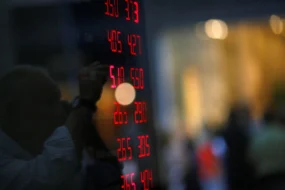
This is what makes online catastrophe markets especially dangerous. They do not need to persuade users to be cruel. They only need to make cruelty convenient. Green buttons, red buttons, percentages, volume, potential return, price charts, comment threads, countdowns: these interface elements treat wildfires like sporting events, heatwaves like earnings reports, earthquakes like elections. The user does not have to imagine the victims, because the platform has already supplied another path of attention: odds, liquidity, comments, returns.
Moral outrage often erupts when disaster markets first appear. People ask: how can anyone bet on death and destruction? This is obscene. Then the news cycle moves on. Another catastrophe appears, another controversy replaces the previous one. The platform continues, users keep trading, the interface refreshes. The real normalisation does not consist in people openly praising disaster betting. It consists in their gradual loss of surprise. The deepest victory of catastrophe markets is to turn the grotesque into a normal feature.
Of course, participants are not all motivated by the same thing. Some are simply seeking profit, seeing rising volume in a wildfire market the way they might see movement in a hot stock. Some sincerely believe markets can generate better forecasts. Some are weather enthusiasts who treat betting as a test of judgment. Some may be directly connected to the disaster: living near the fire line, underinsured, afraid their house will burn, hoping to hedge real-world loss. If a homeowner who has lost everything bets that a wildfire will not be quickly contained, is that shameful or pitiable? If he is trying to cover an insurance gap, should we condemn him or sympathise?
Here lies the moral complexity of catastrophe markets. An arsonist, a displaced homeowner, an insurance agent, a meteorology hobbyist, a crypto speculator and a spectator may all appear in the same market. They may hold the same side of the contract while having utterly different relationships to the event. The platform interface reduces them all to buyers and sellers. The market does not care why you bet. It cares only about your direction and your size. That moral blindness is part of market efficiency, and part of what makes catastrophe markets so disturbing.
In the same wildfire market, one person’s hedge may be another person’s glee.
More troubling still, catastrophe markets can create small but real moral hazards. Some disasters are too large for an ordinary person to influence; nobody can change the annual global temperature by placing a bet. But some event boundaries are narrower: whether a fire is contained by a certain date, whether a small piece of infrastructure is damaged, whether a rumour alters public judgment. Even if the overwhelming majority of users would never act to worsen a disaster, the existence of such incentives is enough to make people suspect that the market has contaminated the event. Catastrophe markets do not merely observe disaster. They can alter the information ecology around it.
Comment sections reveal this contamination most clearly. Users share forecasts, satellite images, fire-department notices and local news; they also spread rumours, conspiracy theories, political attacks and self-interested interpretations. Some urge others to trust official data; others claim official data is delayed. Some say the market already knows the truth; others try to move the market through comments. During a disaster, people need clear, credible and actionable information. Catastrophe markets turn information into a trading weapon. Every message may be help or manipulation; sincere analysis or position-pumping.
This is harmful to public trust. The information environment during disaster is already fragile: evacuation orders, fire boundaries, air quality, road closures, shelter locations, insurance procedures — each can matter to life and property. If a catastrophe market attracts enough attention, it can drag part of public information into speculative logic. People no longer ask only, “Is this true?” They also ask, “Who profits if I believe it?” In a disaster, suspicion may look intelligent, but it makes collective response harder.
Climate markets raise a different problem. Betting on the highest temperature on a particular day, whether a year will be the hottest on record, or whether a temperature threshold will be crossed decades from now seems gentler than betting on wildfire death and destruction. No house is visibly burning on the screen. No city is evacuating. A temperature market looks like an ordinary number game, perhaps even a form of climate education. Users may read reports from NOAA, NASA, national weather services and climate models. They may know more about climate data than the average person.
Yet the moral problem of long-term climate markets is deeper. They transform a planetary crisis into a private trading opportunity. Global warming is no longer a common danger to be mitigated, but a trend to be wagered on. The fact that the past decade may already have been the hottest in recorded history matters less in the market than whether next year settles “yes”. This is a very narrow view of time. It cares only about a future node that can be resolved, not about the history that produced that node, nor about the lives that follow it. The future of catastrophe markets is a future without memory.
Scientists usually think about climate in terms of scenarios, ranges, probabilities, feedbacks, thresholds and multiple possible futures. Prediction markets prefer binary questions. Yes or no. Above or below. Landfall or no landfall. Contained or not contained. This format is powerful because it is simple, but it is poorly suited to complex systems. Climate is not a coin toss. Disaster is not a switch. The future is not a single line waiting to be revealed. The real future is plural, continually shaped by policy, technology, land use, energy systems, collective action and accident.
Catastrophe markets therefore train a dangerous sense of the future: the future as an answer already written, awaiting market discovery. But disaster governance requires another sense of the future: the future is not closed, and warning itself can change outcomes. A weather forecast that prompts evacuation reduces deaths. A climate model that prompts emissions cuts changes the curve. A risk map that changes building rules reduces losses. Prediction is not merely looking at the future. It is an intervention in the future. Catastrophe markets invite users to stand outside that process, treating the future as something others will endure and they can price.
The biggest loss in catastrophe markets is not that a bettor loses money, but that common risk is repackaged as a game of individual judgment.
This is the central problem. Catastrophe is, by definition, collective. It exposes how houses, roads, power grids, hospitals, insurance, government, neighbours and social inequality are connected. Online markets re-individualise catastrophe. Your position, your odds, your return, your judgment, your loss. Victims become background; communities become data sources; public danger becomes a private game. A person may win in the market while living in a more dangerous world. A person may profit from being right while contributing nothing to reducing the next disaster.
This individualisation fits neatly with the way contemporary societies often handle risk. During the pandemic, many countries translated a collective health problem into individual choices: whether you wore a mask, whether you vaccinated, whether you went to work, how much risk you accepted. The climate crisis is often translated into personal consumption: what car you drive, what you eat, whether you recycle. Catastrophe markets go one step further and translate collective risk into individual financial risk: do you buy yes or no? In each case, the community is weakened and the dashboard strengthened.
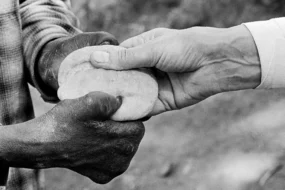
What matters most in catastrophe is often not the predictive ability of a crowd, but the care capacity of a community. After many disasters, people do not simply panic or loot. They improvise networks of mutual aid: sharing food, rescuing neighbours, opening homes, clearing streets, caring for strangers. Disasters expose social fractures, but they can also briefly awaken solidarities buried beneath ordinary life. People know what to do in disaster not because a market gives them probabilities, but because they know that the person next to them is a person.
The “crowd” in online catastrophe markets is not such a community. It has no shared fate and requires no mutual care. It is connected by price, not obligation. A real community asks: who is trapped? Who needs a ride? Who has no insurance? Who cannot understand the evacuation notice? Who needs medicine after breathing smoke? Who will be priced out after the disaster? The market asks: has the condition triggered? Has the probability moved? Is there still an edge? These are not merely different questions; they are different social imaginations.
If catastrophe markets were only marginal entertainment, the problem might remain contained. But they are becoming mainstream. News organisations integrate prediction-market odds into coverage. Financial firms invest in platforms. Regulatory climates soften. Users treat live probabilities as information sources. Once catastrophe markets intertwine with news, finance and social media, they may no longer merely reflect public judgment about events. They may help shape how the public understands events. They train us to see disaster as tradable, risk as privatisable, attention as monetisable.
We do not have to demand a ban on all disaster-related forecasting, nor pretend that human beings will stop being curious about danger. The task is to distinguish prediction, insurance, hedging, speculation and entertainment. Prediction should serve preparedness. Insurance should serve recovery. Hedging should serve risk-sharing. Speculation, if it exists, should not disguise itself as public knowledge. Entertainment should not take other people’s destruction as its raw material. Online catastrophe markets collapse these distinctions, then cleanse themselves with the claim that markets discover truth.
A better culture of catastrophe would reconnect probability to responsibility. If a platform allows wildfire markets, should a portion of its trading revenue automatically go to affected communities? If users trade on climate events, should they also see the real effects of those events on different groups of people? If a market shows rising odds of a heatwave in a city, should it link to cooling centres, public-health guidance and mutual-aid resources? If catastrophe markets claim informational value, they should bear informational obligations. Otherwise, they merely convert public pain into private participation.
But the deeper question is whether we are willing to admit that some things should not be made so easily marketable. Modern capitalism is adept at turning everything into an asset: weather, attention, carbon emissions, personal data, future interest rates, wildfire containment dates. Each conversion promises efficiency, liquidity, prediction and democratisation. But some things change meaning when they become tradable. Once disaster becomes a market, it is not only predicted; it is reimagined. It changes from something we must face together into something I can bet on alone.
This does not mean market participants are monsters. Many are simply living in a world that has already financialised almost every form of uncertainty. They have learned to understand politics through prices, war through odds, pandemics through charts, wildfires through returns. They are not the sole sinners of catastrophe markets. They are subjects trained by them. The real question is why society has offered people this way of facing disaster, while failing to build an equally powerful, intuitive and participatory interface for collective care.
Imagine a different disaster platform. It too would show fire spread, wind direction, air quality, evacuation routes and risk probabilities. But it would not show potential return. It would show people needing help. It would not let users buy “yes” or “no”, but let them claim tasks, offer shelter, donate supplies, contact older neighbours, translate warnings. It would not convert crowd wisdom into price, but crowd capacity into action. Such an interface would not make anyone rich, but it might help people remember the right posture in catastrophe.
Catastrophe markets ask us a bleak question: do people still know what to do in a disaster? If the platform wrote that as a yes-or-no contract, we might bet on it. But the real answer cannot be found in market settlement. It can be found only in smoke, floodwater, blackout, evacuation lines, temporary shelters and the sound of a neighbour knocking on the door. Catastrophe is not for proving who predicted correctly. It is for testing whether we are still capable of responsibility toward one another.
You can bet on that. But the better choice is not only to bet.