








Not seeing poverty requires a certain effort. In a world of unprecedented wealth accumulation, accelerating technology and ever-brighter city skylines, poverty has not retreated into the distance. It is in every community: under highways, inside the phones of temporary workers, behind hospital bills, on the next page of rental contracts, and in the spare rooms and kitchens of affluent households. Poverty is so near, so ordinary, that people begin to treat it as part of the natural background of the world. The poor seem always to have been with us; and because they have long been with us, their continued presence is made to appear almost self-explanatory.
But the endurance of a condition does not justify its existence. War existed for much of human history. So did slavery, child labour, famine, feudal dependency and the political subordination of women. Time cannot provide moral cover for injustice. The persistence of poverty is not proof that poverty is inevitable. It may be proof only that human beings have lacked sufficient will, imagination and institutional courage. The real question is not why poverty still exists, but why, in a world of such abundance, we continue to permit it to shape the lives of so many.
What we propose is not charitable relief, nor the modest statistical achievement of moving people from just below a poverty line to just above it. We need to address the causes of poverty, not merely its visible symptoms. Poverty is not simply a shortage of money. It is a whole architecture of risk and blocked opportunity: unstable work, unsafe housing, lack of medical protection, missing identity papers, exclusion from public services, broken ladders of advancement, and the absence of basic security from humiliation and fear. To eliminate poverty means dismantling this structure, not occasionally dropping coins into it.
Poverty is usually defined as lacking the resources needed for a socially acceptable standard of living. But what counts as “acceptable” changes across countries, historical periods, political interests and statistical methods. Governments can lower poverty lines to manufacture success; they can choose narrower indicators to conceal deprivation. International institutions offer different thresholds, from extreme poverty to more realistic standards of daily life. If we use the lowest line, the world appears to have made impressive progress. If we use a standard closer to what people actually need, the number of poor people rises dramatically. Many lack safe water, healthy food, clean energy, secure shelter and medical care, yet they can be declared “not poor” because their daily income barely crosses an arbitrary line.
Meanwhile, wealth has concentrated on a scale almost impossible to comprehend. A handful of people can own more than billions combined. Inequality of this magnitude is not merely a shocking moral spectacle; it corrodes the pillars of society: democracy, opportunity, justice, trust and public peace. A society in which a tiny minority controls immense resources while millions can be pushed into hardship by illness, job loss or rent increases is not merely unequal. It is institutionally organised around insecurity.
The economic pie keeps growing, yet poverty remains. Those in power often use the language of growth to avoid questions of distribution and structure. Make the pie bigger, they say, and everyone will eventually receive a larger slice. On the surface, this seems reasonable. If people lack food, income or healthcare, then producing more food, income and healthcare should help. But in reality, the gains from growth increasingly flow to those who already have the most. Growth can reduce poverty, but it can also generate new forms of exclusion. It can improve lives, but it can also destroy environments. It can expand opportunity, but it can also deepen monopoly. The issue is not simply how much growth occurs, but who controls it, who benefits from it, and who pays its costs.
What kind of growth would be needed to eradicate poverty, and at what cost to people and planet?
This question forces us to rethink development itself. If eradicating poverty requires the endless extraction of the Earth, polluted rivers, cleared forests, financialised cities and ever-cheaper labour, then such “development” merely transfers suffering into the future. If growth mostly enriches those already rich while asking the poor to wait for trickle-down benefits, then it is not a remedy but a language for delaying justice. The central fact is not that the world lacks resources. It is that many people are excluded from the resources that already exist.
The first myth to discard is that poverty has always existed and always will. For most of human history, poverty in the modern sense did not exist. Early human societies certainly experienced hunger, illness, cold and danger. But many foraging and Indigenous communities did not organise basic life through private property, wages and monetary payment. People could face hardship without being systematically excluded from land, water, food, community and mutual support. Poverty as a social condition often emerges only after resources are enclosed, land is privatised, commons are destroyed and money becomes the gate through which survival must pass.
Poverty is not the natural fate given to humanity by the environment. It is a product of social stratification. When land is enclosed, water controlled, forests sold, housing financialised, and healthcare and education priced, growing numbers of people must use money to obtain what once could be accessed through community, shared resources or common rights. Those without money are not merely deprived of consumer choice. They are blocked from the entrances to survival. Property gives security and returns to those who own it, while exposing those without property to scarcity and dependency.
Humans were born to an immense abundance naturally existing on our planet.
That sentence may sound almost poetic, but it points to a serious historical truth. The Earth’s land, water, seeds, forests, fish, minerals and ecosystems did not originally belong to a small minority. They had to be measured, divided, named, registered, fenced, legalised, commodified and licensed before they became the assets of some and the deprivation of others. Enclosures deprived peasants of common land. Colonial expansion drove Indigenous peoples from their homes. The slave trade turned Africans into dispossessed labour. Modern land grabs, debt finance and corporate power continue this dispossession in new forms. Some rob with guns, some with contracts, some with law; today, some need only a keystroke.
Poverty, then, is not humanity’s starting point. It is the result of repeated historical choices. It comes from governments, corporations, landlords, colonisers, financial institutions and elites deciding again and again that resources should serve profit and power rather than basic human life. If poverty has been made, it can be unmade. It is not weather, gravity or natural law. It is an institutional arrangement, and it can be replaced by another.
The second myth is that poverty is only about money. Modern society has made wealth accumulation its operating logic, so we have become accustomed to measuring life by income and purchasing power. People chase larger cars, more expensive homes, faster devices and higher financial assets, mistaking this race for a universal human purpose. The poor are described as people who lack fuel for the same highway: give them more money, and perhaps they can join the traffic.
But the destination of this highway is rarely discussed. The global economy resembles a road without an end. Some stretches are smooth, with guardrails, medical services and traffic rules; others are full of potholes and disorder, where pedestrians are pushed aside or run over. Yet whether in Scandinavia, Nigeria, the United States or China, the road’s basic direction is similar: more production, more consumption, more competition, more speed. As if the problem would be solved if everyone were placed in a more expensive vehicle. But if the planet cannot bear such traffic, and if the road itself pushes many to the edge, poverty cannot be solved by forcing everyone into the same race.
Poverty stems from denied access to resources that society and the planet have in abundance.
Poverty is not a simple dollar value. If it were only a matter of money, ending it would be a straightforward transfer. But poverty is a web of deprivation: lack of food, shelter, security, healthcare, education, clean water, trusted relationships, legal recognition and the ability to plan for the future. It is an empty refrigerator. It is a child with a fever whose parents are afraid to visit a doctor. It is a single toilet shared by a hundred people. It is clothes that do not fit, electricity that has been cut off, a creditor at the door. It is shame, stress and pain.
At a deeper level, poverty is made of systemic barriers. It prevents people from entering formal labour markets, owning legally recognised homes, obtaining identity documents, using public schools and hospitals, getting bank loans, or rebuilding after disaster. Poverty is not an isolated state, but a chain of accumulating risks: illness, job loss, eviction, debt, violence, climate shocks and the death of a family member. For the middle classes, these events may be difficult. For the poor, they often mean collapse.
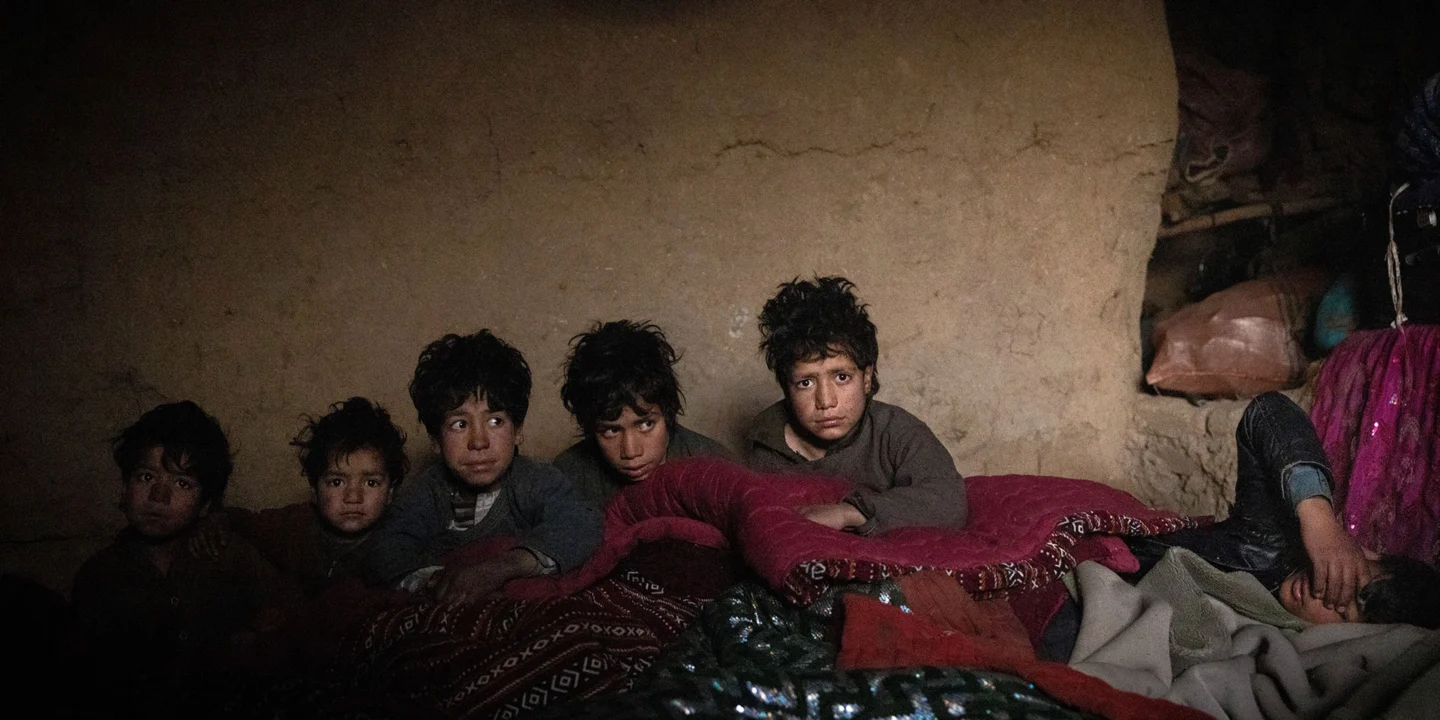
The third myth is that poverty is self-inflicted. Familiar slogans tell us that the rich deserve their wealth and the poor simply need to work harder. Such claims are simple, cruel and unsupported by evidence. Place of birth, family, race, gender, education, childhood nutrition, neighbourhood, legal status, public services and social networks shape life chances long before a person begins making meaningful choices. A girl born in Finland and a girl born in a war-torn part of Afghanistan do not have different futures because one works harder than the other. A child born in a wealthy neighbourhood and a child born in a stripped-down community did not choose their postal codes.
Individual effort matters only when opportunity is real. If schools are broken, roads unsafe, internet unreliable, healthcare unaffordable, homes vulnerable to demolition, families indebted and parents unable to provide support, then “hard work” becomes like asking a person with tied feet to run a race. Poor people are not lazier than rich people. Many work longer hours, do harder physical labour, begin working younger and still fail to achieve security. The problem is not that they do not work. It is that their work is not converted by the system into a stable life.
If poverty is inflicted, it is done by society, not any individual.
This does not mean personal choices are irrelevant. It means choices are made inside structures. Society amplifies risk for some and reduces risk for others. The failures of wealthy families are absorbed by savings, insurance, connections and inheritance; the small illnesses, accidents or job losses of poor families can become permanent debt. Wealth is not simply a reward for ability, and poverty is not simply a punishment for deficiency. Both are embedded in social arrangements.
If poverty is not natural, not eternal, not merely monetary and not self-inflicted, then what is it? It is, most accurately, a lived condition in which basic needs cannot be reliably met. It does not allow for a clean separation between the poor and the non-poor. Reality is not black and white, but bands of grey. Some people live in persistent destitution. Others have recently escaped it. Many appear middle class but remain one illness, one job loss, one rent increase or one eviction notice away from falling. Poverty is not a fixed category. It is a moving danger.
For this reason, poverty must be understood as a film, not a snapshot. Many people are not born poor but fall into chronic poverty after illness, disaster, debt or job loss. Others escape poverty briefly, only to be pulled back by new risks. Poverty is a trapdoor hidden beneath unstable work, expensive healthcare, informal housing, lack of legal identity and life without public support. Anti-poverty policy must not count only how many people are below a line on a given day. It must count how many are falling into poverty, and how many live permanently at the edge of falling.
An effective agenda of poverty elimination is not radical, it is commonsensical.
In the short term, the priority must be poverty prevention. If a society allows large numbers of people to fall into poverty every year because of medical bills, job loss, evictions or lack of identity documents, it is like pouring water into a bucket with holes in the bottom. Preventing poverty first means lowering the risks of ordinary life, so that people can predict the future and invest in education, skills, housing and children.
One of the largest sources of instability is informal labour. To employers, informal workers can look like a dream: cheap, flexible, instantly hired and fired, almost free of benefit costs. To workers, informality is often a nightmare: no contract, no stable wage, no healthcare, no pension, no protection from dismissal, no mechanism for resolving disputes. In many developing countries, most workers live in this condition. Whether there will be work tomorrow, whether they can be dismissed without warning, whether illness means hunger — none of this is secure.
Fixing informal labour does not require abolishing markets. It requires better market rules: written contracts, minimum wages, medical protection, pensions, protection from arbitrary dismissal, labour dispute mechanisms, union rights and enforceable labour law. Work should not be another name for poverty. If a person works full time and still cannot obtain secure housing, healthcare and education for children, the problem is not that person’s work ethic. It is a society that allows cheap labour to be endlessly extracted.
Informal housing and lack of identity are just as important. Residents of slums and shanties may have lived in the same place for years but still lack formal title or legal recognition. They cannot use their homes as collateral. They cannot access municipal services. They remain vulnerable to demolition. Many migrants from rural areas lack urban identity papers, preventing their children from attending public schools and limiting access to healthcare and legal protection. Informal work, informal housing and informal identity combine into a triple insecurity. To eliminate poverty, people must be brought out of institutional shadow: recognised residence, identity documents, water, electricity, sanitation, schools, hospitals and financial access.
Medical risk is another mechanism of descent. Countless families fall into poverty not because they refuse to work, but because someone becomes ill. Doctor’s fees, medicines, surgery, transport, caregiving time and lost wages can destroy years of savings. Whether households must pay most medical costs out of pocket is a policy choice, not a natural fact. Some countries protect citizens through public healthcare and insurance; others turn illness into personal financial disaster.
In the US, where healthcare remains expensive for many, the average child poverty rate was 26.2 per cent.
The cruelty of the medical poverty trap is that it punishes vulnerability. Illness is already suffering; society then turns it into debt, school dropout, asset sales and long-term poverty. If a family must choose between treating a loved one and keeping its home, it lives inside an uncivilised institution. Universal, affordable and reliable healthcare is not an optional welfare benefit. It is a central anti-poverty policy.
Children and older people also require special protection. Poverty causes the deepest damage at the earliest and latest stages of life. Nutrition, early education, vaccination, childcare and safety in childhood shape life chances for decades. Pensions, healthcare and elder care determine whether families fall into poverty under the burden of old age. A society that supports people only during their working years, while neglecting children and the elderly, manufactures poverty at the most vulnerable moments of life.
The medium-term goal is to build ladders of opportunity. Talent is not distributed according to wealth. Mathematical ability, musical gift, athletic skill, technical creativity, organisational talent and artistic imagination are born randomly among rich and poor alike. Opportunity is not random. Wealthy families can turn children’s potential into courses, training, mentors, competitions, certificates and career paths. Poor children with equal talent may be buried because their school lacks equipment, their family lacks money, their community lacks mentors, or transport is impossible. Poverty is not only deprivation in the present. It is the waste of future possibility.
Many examples show that opportunity can be deliberately designed. A girl from a poor neighbourhood becomes a chess champion because a teacher creates a chess club. Jamaica cultivates world-class sprinters. Venezuela produces classical musicians. Estonia generates technology companies. Sweden excels in technology, design and industrial organisation. These successes do not come from mysterious national talent. They come from accessible training systems, clear standards, role models, mentors, intermediate rewards, alternative paths for those who do not reach the top, and support from communities and public institutions.
New “ladders of opportunity” can be constructed everywhere, unlocking human potential in the process.
Replicating these design principles matters more than simply distributing aid. Every community should have pathways through which children and young people discover their capacities: sport, music, mathematics, coding, nursing, mechanics, agriculture, design, languages, entrepreneurship and public service. Ladders of opportunity should not lead only to a few star positions; they should also create dignified careers for those who do not reach the summit. Not every child who plays football becomes a world champion, but a good football system can also create coaches, therapists, teachers, community organisers and healthy citizens. The real importance of opportunity is not merely that it produces elites, but that it prevents birth from locking people into place.
Automation and artificial intelligence make this question more urgent. If machines replace large amounts of work while ownership of those machines is concentrated in a few companies and investors, a new enclosure will occur. In the past, people were pushed off land. In the future, they may be pushed out of work. Those who control algorithms, platforms, robots and data will accumulate wealth; those who are displaced may be forced into lower wages, unstable work and diminished social value. To avoid this technological dystopia, we must ensure that everyone shares in the benefits of technical progress, rather than allowing automation to become an extraction machine for the few.
The long-term goal is to redefine prosperity itself. Humanity cannot endlessly pursue more. Planetary boundaries already show that infinite extraction, consumption and growth cannot support dignified life for all. The real issue is not whether the world has enough resources for everyone to live decently. It is whether we can stop defining prosperity as limitless accumulation. A society without poverty should not be built on the expectation that everyone imitate the consumption patterns of the richest. It should be built on public guarantees, ecological restraint and shared flourishing.
Reducing poverty and inequality benefits not only those who are poor. More equal societies tend to be healthier, safer and more stable. They have higher trust, less violence, stronger democracy and broader innovation. Poverty is not a private problem of the poor. It is a public disease of the whole society. Even the rich are not truly safe in extremely unequal societies; they require walls, guards, private schools, private healthcare and gated communities to protect themselves from insecurity. A more equal society gives everyone less to fear.
Around the world, people are already imagining and building new institutional forms. We might call them common-good societies, post-growth economies, capitalism 3.0 or something else. The name matters less than the principle. Such societies would no longer place profit, growth or power above all else. They would prioritise the flourishing of persons, communities, ecosystems and future generations. They would differ from existing growth-centred and extractive systems, whether those systems call themselves capitalist, communist or something else. They would be designed to serve everyone, not only the few.
We must see healthcare, education, housing and food as human rights, not commodities to be bought and sold.
The moral foundation is simple: every person has a right to the necessities of life. Call it dignity for all. Housing, nutrition, community, education, healthcare and a protected environment should not depend entirely on repeated financial transactions. Markets can efficiently produce many non-essential consumer goods, but they are poorly suited to deciding who can see a doctor, who can live safely, who can eat well, who can go to school, and who can breathe clean air. Markets allocate according to ability to pay. Basic needs should be guaranteed according to human need.
We therefore need to de-financialise basic necessities. Housing should not be primarily an investment asset. Healthcare should not be merely an insurance product. Education should not be a private competition tool. Food should not be only a globally traded speculative commodity. Public housing and land trusts, publicly owned utilities, universal childcare, walkable cities, free or low-cost public transport and robust public services all point toward another possibility: a person should not have to prove sufficient purchasing power before being allowed a dignified life. Basic security is not a reward for laziness. It is the precondition of freedom. Only when people are not crushed by fear of survival can they truly learn, work, create, care and participate in society.
The plan for eliminating poverty is not mysterious. In the short term, reduce risk and uncertainty: formalise labour, recognise housing and identity, provide medical protection, and protect children and older people. In the medium term, build an infrastructure of opportunity: education, skills, mentors, community programmes, public spaces and diverse routes upward. In the long term, reorganise economic purpose: from endless growth to shared sufficiency, from commodified basic needs to human rights, from planetary extraction to life within ecological boundaries.
We should stop asking whether poverty will always exist. The more honest question is: how much longer are we willing to allow it to exist? No one thinks their own child should be denied the chance to thrive. No one wants to admit that a child should drink dirty water, attend a broken school, fear a hospital bill, or live in a home that can be demolished at any moment simply because of where that child was born. If we would not accept this fate for our own children, we have no justification for imposing it on the children of others.
Poverty is not permanent. It is merely treated as permanent by too many people. It is not a natural law, but an institutional habit; not a shortage of resources, but a failure of distribution and access; not a personal defect, but a social choice. Future generations may look back at us and wonder how a world with so much wealth, knowledge and productive capacity tolerated so much needless suffering. We should begin now to give them an answer that does not shame us.