











A population crisis is unfolding inside my own family. My paternal grandparents were born in India and had a family size that now sounds almost mythic: ten children. In my parents’ generation, the network of siblings and cousins was still vast, so large that holiday gatherings resembled small conferences. But by my generation, something changed abruptly. We stayed in school longer, married later, moved farther away, faced higher housing costs, less stable work, more life choices, and less pressure from family tradition. Across three generations, one family went from “so many children that names had to be remembered in clusters” to “each child treated almost like a carefully planned scarce project.”
This is not merely an eccentric family story. It is a miniature version of what the whole world is undergoing. India, once defined by explosive population growth and a vast young population, surpassed China in 2023 as the world’s most populous country. Yet India’s fertility rate has also fallen from the high levels of the mid-20th century to near replacement. China, Japan, South Korea, Europe, North America, and even many developing countries once assumed to remain highly fertile are all moving in the same direction: fewer children, more old people, smaller families, older societies.
In 1950, the average woman in the world had close to five children. Today, the number is around two. The United States is below replacement. Japan is lower still. South Korea’s fertility rate is so low that it looks almost like a social experiment. The world population is still growing, but that is the result of demographic momentum: large generations born in the past are moving through adulthood and into old age. The real trend has already changed. Later this century, humanity may reach its population peak and begin to decline. We may not live to see the steepest part of that descent, but our children may stand at the edge of the demographic summit and look down into a very different world.
Is this really a crisis?
Some say no. Fewer people, they argue, means fewer carbon emissions, less crowding, less competition for resources. Housing may become cheaper, wages may rise as labour becomes scarce, and natural systems may finally breathe. Humanity, long troubled by population pressure, might at last receive the gift of fewer humans. In this telling, population decline is not a disaster but a late ecological correction.
The idea is tempting. But it rests on the wrong timeline and the wrong social imagination.
The path through the climate crisis is not mysterious: rapid decarbonisation, a swift transition from fossil fuels to low-carbon energy, and the remaking of industry, transport, agriculture and cities. If we fail, the next few decades will bring severe climate disruption, and population decline in the following century will not rescue us. If we succeed, more people need not mean more emissions. The question is not whether fewer children born in the future can reduce carbon. It is whether people alive now can transform the energy system. Population decline will not reverse time, nor will it pull today’s carbon back out of the atmosphere.
More importantly, population decline may weaken our ability to confront climate change. Young people are more likely to support radical climate policies, march in the streets, accept new technologies, and become the inventors of green energy, storage, grids, materials and agricultural systems. An ageing society will be more preoccupied with pensions, healthcare, asset preservation and risk avoidance than with large-scale transformation. Fewer young people may not mean less pollution. It may mean fewer people willing and able to change the systems that produce pollution.
Hospitals will burst at the seams while playgrounds slowly empty.
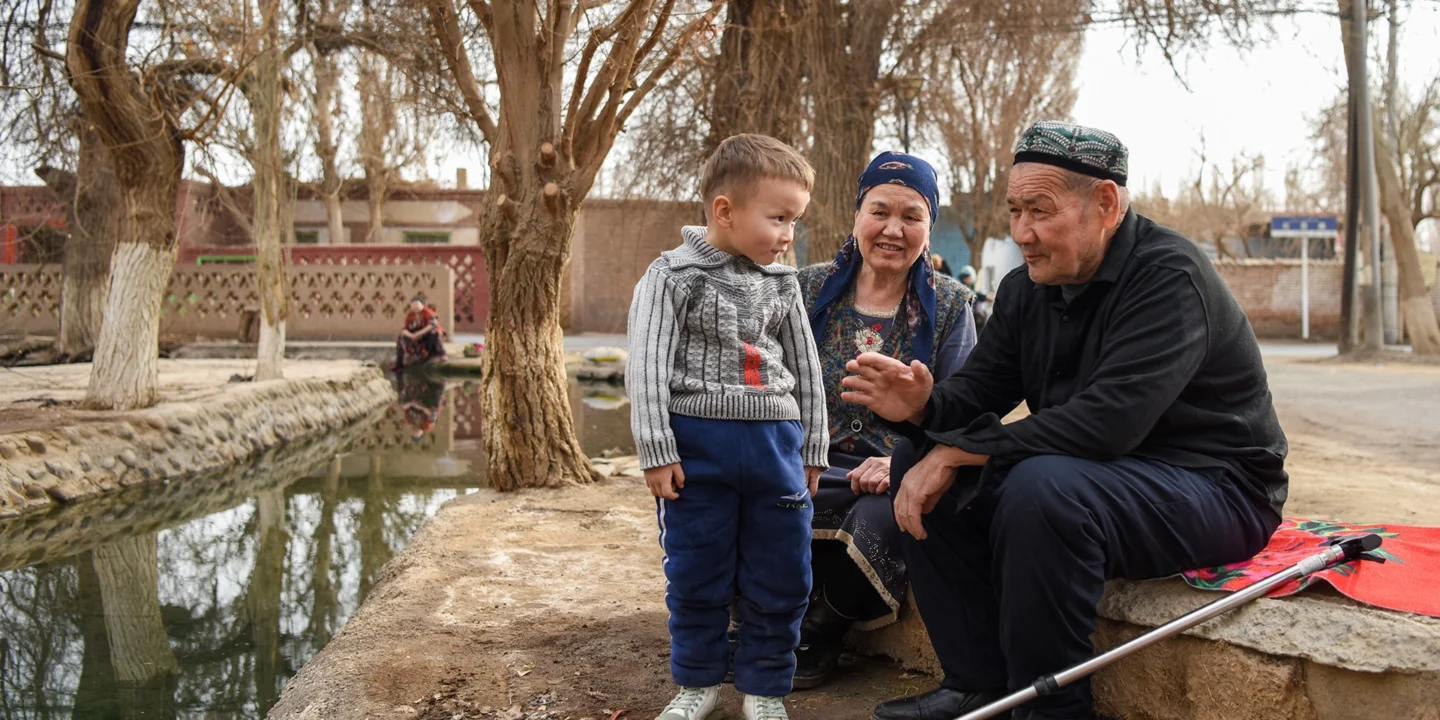
This is the truest image of population decline. When we talk about demographic crisis, we often imagine abstract numbers: how much total population falls, how low fertility rates go, how high the old-age dependency ratio becomes. But what will change everyday life is the disappearance of the young. Schools will close. Maternity wards will merge. Kindergartens will become elder-care centres. Universities will worry about enrolment while hospitals and nursing homes overflow. Fewer people will push strollers through the streets; more will push wheelchairs. Society will become quieter, but also more cautious.
Social-security systems will feel the strain first. Many people imagine pensions as personal savings accounts: money paid in during youth and withdrawn in old age. In reality, many pension systems are intergenerational transfers: today’s workers pay taxes to support today’s retirees. Such systems do not require every generation to be the same size, but they do require enough working-age adults to support a manageable number of older people. If the young shrink and the old expand, the system is stretched tighter and tighter. Taxes must rise, benefits must fall, retirement must be delayed, or debt must grow. None of these choices is easy.
The problem extends beyond pensions. As young workers decline, the tax base shrinks; as the elderly increase, public spending rises. Education, healthcare, infrastructure, policing, disability support and poverty relief will all be squeezed between fewer taxpayers and greater demand. Healthcare will face a double pressure: more people needing care, fewer people available to provide it. The most vulnerable — the poor, the disabled, the isolated elderly, the chronically ill — will feel the cruelty of this social arithmetic first.
A flourishing society needs young people. The young do not merely fill jobs; they redefine jobs. They do not merely consume goods; they create new demands. They do not merely inherit institutions; they challenge them. They are more willing to take risks, more inclined to believe that the future can be different, less trained by failure into caution. Scientific innovation, entrepreneurship, artistic revolutions, moral progress and political movements often depend on the dissatisfaction and imagination of youth. What disappears in population decline is not merely population size, but society’s power of self-renewal.
Some believe immigration can solve the problem. Open the borders, bring in young workers from countries whose populations are still growing, and pension systems, hospitals and factories can keep going. For some countries, immigration can indeed delay population decline, supplement the labour force and enrich social life. But immigration is not a global solution. A nation can make itself younger by attracting young people. Humanity cannot make itself younger by importing youth from another planet.
More subtly, migration often spreads low-fertility patterns. Young people who move from poorer countries to rich countries enter the same housing markets, educational systems, career competition, urban lifestyles and family norms. Many immigrant families quickly move from high fertility to low fertility. Rich countries that absorb young people ease their own ageing while potentially accelerating ageing in the countries those migrants leave. Immigration can redistribute youth. It cannot create enough youth.
Progressive tax reform could boost public revenues, but it is an extraordinarily difficult political task.
Some economic consequences can, of course, be softened through policy. Retirement ages can rise. Healthy lifespans can lengthen. Medical technology may reduce age-related illness and disability. Automation and artificial intelligence may take over some care work, logistics, administration and manufacturing. Fairer taxation could raise more revenue from high earners and capital income, helping support pensions, healthcare and family policy. All these measures matter, and all should be pursued.
But they touch only the surface. Ageing is not only a fiscal problem, nor simply a labour shortage. It changes the psychological structure of society. A society in which older people dominate voting, wealth, housing and public agendas will tend to protect asset values, avoid risk and preserve the status quo. Fewer young people means not only fewer taxpayers, but fewer rebels, inventors, experimenters and people who make adults uncomfortable. Demography eventually becomes culture.
Economic growth will also suffer. Population growth is not the only source of prosperity, but young population is often one of its main fuels. More young people means more workers, more consumers, more household formation, more entrepreneurial attempts, more housing demand, more technological adoption. The larger and more connected a society is, the more specialised its labour and the richer its networks of innovation. Young people do not simply enter the economy; they alter it. They create new industries, adopt new tools and challenge old business models. An ageing society may remain wealthy, but it will increasingly resemble a well-preserved museum.
Some welcome degrowth, seeing it as a cure for environmental damage and capitalist exploitation. But this view overlooks two facts. First, economic growth can be decoupled from carbon emissions, if energy, technology and institutions change. Second, degrowth would be especially dangerous for poor countries. Over recent decades, global poverty fell dramatically because of growth, industrialisation, education and public health. If the world economy enters long-term contraction, the first to lose hope will not be the upper classes of wealthy nations, but the billions still struggling toward basic security.
Most breakthrough discoveries come from younger researchers and entrepreneurs.
Population decline will also weaken humanity’s collective brain. Knowledge is not produced by isolated geniuses alone, but through dense networks of people, schools, laboratories, firms, universities, cities and conversations. The more numerous and connected people are, the more chances ideas have to be recombined. If future societies become smaller, older, more cautious, and less full of young researchers and risk-taking entrepreneurs, many problems will not be studied, and many fields may stagnate before they mature. We will lose not just particular inventions, but entire regions of possibility.
Young people are also crucial to moral progress. Many rights now taken for granted were first accepted and pushed hardest by the young: racial equality, gender equality, same-sex marriage, environmentalism, anti-war politics, labour rights, bodily autonomy. Older generations are not always wrong, and young people are not always right, but generational renewal often helps societies escape obsolete prejudices. If young people make up a smaller share of society, political and moral renewal will slow. We already complain that we live in gerontocracy. The future may be older still.
The cultural consequences will be just as severe. Rock music, cinematic new waves, street art, hip-hop, digital culture, independent games, internet language and fashion subcultures have all depended on the concentration of young people. The young create style, and they create impatience. They do not want everything to continue as their parents arranged it, and so new sounds, gestures, aesthetics and communities appear. A society without enough young people may still produce culture, but it will sound more like an endlessly remastered archive than a sudden eruption of the future.
This places me in awkward company. Many of those who speak about fertility crisis come from the Right, even the far Right. They blame low fertility on women’s freedom, feminism, contraception, abortion, gender diversity and career-minded women. What they really want is not children, but the restoration of patriarchy: women marrying younger, losing professional options, doing more unpaid care work, and being returned to a hierarchical family order. Some are concerned only about the decline of a particular ethnic group, not about humanity’s future. Because these cures are toxic, many progressives instinctively avoid the topic of population decline, treating it as little more than moral panic.
But a poisonous cure does not prove the disease is imaginary. Coercive pronatalism must be rejected. The risks of population decline must not be denied. If a problem is discussed only by dangerous people, the problem does not vanish; it becomes theirs to monopolise. Progressive politics needs its own answer: a form of fertility support that respects freedom, equality and women’s agency.
We have a shared responsibility to create conditions in which people want children, and can have the number of children they want.
This does not mean that individuals must sacrifice themselves to reproduce humanity. No one owes society a child. A childless life can be complete and morally serious. The real issue is that many people want children, or want more children, but are prevented by housing, work, care burdens, gender inequality, education costs and isolated family structures. Progressive family policy is not about commanding people to reproduce. It is about removing the obstacles that keep people from realising their own family aspirations.
Understanding the source of the problem is essential. Fertility decline is not simply the result of selfishness, nor proof that young people no longer like children. It is tied to many of modernity’s greatest achievements. Women receive more education, gain more career opportunities, obtain contraception and reproductive rights, and no longer need marriage as their only survival strategy. Cities offer more choices. Child mortality falls, and parents no longer need to have many children in order for some to survive. These are forms of progress.
At the same time, these forms of progress changed the cost of children. The more education matters, the more parents tend to have fewer children and invest more in each one. The higher urban housing costs rise, the smaller family space becomes. The more competitive careers become, the greater the career penalty of parenthood. The later people marry, the shorter the fertility window. The more extended families scatter, the fewer grandparents, aunts, uncles and neighbours are available for daily help. Childrearing has shifted from being part of shared life to being a high-cost, high-anxiety, high-standard long-term project. A child is no longer just another bowl at the table, but a vast commitment of money, time, mental energy and career sacrifice.
A great tragedy of our species is that procreation has long been an oppressive institution.
This sentence must be taken seriously. Historically high fertility did not always arise from happy families. It often arose from women’s lack of choice, failed contraception, child marriage, economic dependence, religious pressure and patriarchal control. Freedom and prosperity have allowed women, often for the first time, to ask: do I want marriage? Do I want children? How many? When? With whom? These questions are themselves progress. If fertility has fallen as a result of freedom, we cannot restore the numbers by cancelling freedom.
East Asia’s low fertility makes this especially clear. In many countries, women gained education and employment opportunities while marriage and family structures remained highly traditional. Women were expected to compete like modern workers and also perform like traditional wives and mothers, carrying housework, childcare, elder care and kinship duties. The result is unsurprising: many women choose not to marry, marry late or have few children. It is not that they reject children. They reject a system that turns children primarily into women’s burden.
The central challenge, then, is this: how can we raise fertility while preserving freedom, equality and prosperity? The old causes of high fertility — poverty, oppression, lack of contraception, lack of female education — cannot and should not return. We need to separate fertility from its historical unfreedoms, so that children depend not on women’s forced sacrifice but on social support. The goal is not to restore the old large family, but to invent new conditions for family formation in a free society.
I see this contradiction in my own life. My children are among the deepest sources of meaning I have. They have changed how I understand time, responsibility, vulnerability and love. But when I ask myself whether I want more children, I also think of writing, work, travel, friendship, marriage, sleep, housing, money and energy. Modern people do not fail to love children. Rather, loving children must compete with many other meaningful forms of life.
Perhaps I would want a third child if I had found my partner and secured a stable job in my mid-20s.
Many lives have been delayed. Education lasts longer. Stable careers arrive later. Homeownership is postponed. Durable partnership comes later. Biological fertility, however, has not shifted on the same schedule. A person who begins to feel settled at 35 may no longer have the time and energy to have the family size once imagined. Modern society delays adulthood without reorganising support for fertility. The result is that people do not always choose fewer children clearly and deliberately; they lose the possibility of more children through a sequence of postponements.
Policy can help. Nordic countries provide childcare subsidies, paid parental leave and family benefits, making parenthood easier. France, with more generous family allowances, tax benefits and childcare support, has maintained relatively higher fertility than many neighbours. The United States briefly demonstrated the power of direct family support through the expanded child tax credit during the COVID-19 pandemic. Such policies may not return fertility to replacement level, but they reduce the penalty of childrearing and increase family security.
We should not abandon policy simply because no single measure is sufficient. Fertility decline has many causes, and the solution must also be a package: cash benefits, child tax credits, universal childcare, paid parental leave, healthcare, housing supply, education-cost control, workplace flexibility, men’s care responsibilities and community support. Each may raise fertility only slightly, but marginal improvements combined may change life decisions. Demography is not a switch. It is a whole set of living conditions.
Social norms about family size and parenting are remarkably resistant to change.
Housing is especially important. If young adults cannot leave their parents’ homes, cannot afford stable housing, and cannot find spaces large enough for children, family formation becomes harder. Demand subsidies may raise prices. The deeper task is increasing supply: loosening exclusionary zoning, allowing more multifamily housing, improving public transport, and designing cities for more than high-income childless adults. If a society wants children to be born, it cannot make child-friendly space a luxury good.
Gender division of labour is equally central. Even after enormous gains in female education and employment, women in many heterosexual households still perform more domestic and childcare labour than men. After children arrive, the gap often expands rapidly. If mothers are expected to work while also managing schooling, health, activities, emotions, food, housework and kinship obligations, having fewer children is rational. Raising fertility cannot mean asking women to sacrifice more. It must mean men doing half the care, and institutions punishing the workplace cultures that assume mothers are infinitely available.
Modern parenting itself also needs to cool down. Parents today are expected to supervise everything: schoolwork, sport, enrichment activities, mental health, academic pathways, internet safety, diet, friendships and sleep. Some of this reflects love and real competitive pressure. But some of it has become excessive anxiety. If every child is a long-term project requiring a full-time manager, many families will understandably stop at one. Making parenting lighter, more collective and less perfect would help parents and children alike.
Parenting becomes more difficult when extended families disperse.
Human beings never raised children through isolated nuclear families alone. Grandparents, aunts, uncles, siblings, neighbours, friends, villages and communities once shared the work. Modern mobility brought freedom, but it also broke care networks. Young people leave home for education and work, gaining independence but losing daily support. Two adults are asked to do what once required an entire web of kin and community. That is not realistic.
New forms of cooperative parenting are worth exploring. Friends living near one another, neighbourhood childcare exchanges, parent cooperatives, community daycare, workplace childcare, shared meals across households and informal care networks could all reduce the loneliness of parenthood. Pandemic learning pods and care circles, though born of emergency, reminded us that the nuclear family is not the only possible unit. Future family policy should support not only individual parents, but care communities.
Workplaces must change as well. If careers continue to reward people who appear unattached, always available, constantly mobile and never interrupted by children, then parents, especially mothers, will keep being punished. Flexible hours, remote work, on-site childcare, parent-friendly promotion systems, care leave and limits on meeting schedules are not decorative benefits. They are demographic policy. A society cannot ask for children while driving the people who care for them out of professional advancement.
We also need to invest in bolder futures. Assisted reproduction, artificial wombs, low-cost egg and sperm freezing, safer fertility medicine, AI-supported care, smart homes and educational technologies may reduce the burdens of childbearing and childrearing. But technology cannot replace ethical debate. If technology merely enables women to delay childbearing while carrying even more burdens, or if it simply commodifies care further, it will not solve the problem. Technology should serve freedom, not repackage fertility pressure as a new consumer product.
How urgent is the population problem? It is not the apocalypse tomorrow morning, but neither is it a distant issue that can be postponed forever. Demographic trends have momentum. The children not born today become the missing parents of several decades from now, and then the missing children of the next generation. Delay compounds. No developed country has yet seen fertility fall below replacement for a sustained period and then truly return to stable replacement. This should make us serious, not hysterical.
Every major advance in human history — technological, cultural, moral — has been driven by youth.
Progressive pronatalism should follow two tracks. First, we should pursue immediately those policies that are worthwhile even if they do not raise fertility: child benefits, childcare, parental leave, housing supply, healthcare, men’s care responsibilities, family-friendly workplaces and community support. These policies improve life, reduce inequality and support caregivers in their own right. Second, we should seriously study more radical approaches, including cooperative parenting, technological assistance, reproductive medicine and new family institutions, while assessing their effects on gender equality, child wellbeing and social freedom.
Pronatal policy also raises moral risks. If gender roles do not change, higher fertility may mean more burdens on women. If the state intervenes too aggressively in private life, fertility support may become reproductive control. If cultural messaging stigmatises the childless, family-friendliness becomes moral coercion. Any genuinely progressive approach must insist that whether to have children, when to have them, and how many to have ultimately belongs to individuals and families. Society’s task is to make free choice feasible, not to make one choice compulsory.
Population decline is not the civilisational conspiracy imagined by the far Right, but it is also not a pseudo-problem progressives can safely mock. It is a paradox encountered by free societies after great achievements: the more free, wealthy and equal people become, the fewer children they tend to have; yet if fertility falls too far, free societies risk losing the young force that sustains innovation, welfare and open values. We must find a new balance between these truths.
The future of humanity should not depend on stripping women of freedom. Nor can it depend on pretending that family costs do not exist. The society worth seeking is one in which people can remain childless without punishment, and can have children with real support; women need not choose between freedom and motherhood; men cannot continue treating care as secondary work; states and markets cannot treat children as private luxuries. Children are private love, but they are also public future.
The vanishing of youth is ultimately the vanishing of futurity. A society without enough young people may remain wealthy, clean and orderly, but it will become more afraid of change, more attached to preservation, less able to imagine new worlds. We need children not to fill statistical tables, not merely to support the old, not to preserve family names, but because each new generation brings a fresh refusal to accept the world as given. Humanity moves forward because someone has just arrived and does not yet understand why the old rules cannot be changed.
Our task is not to restore fertility as it existed in the past. It is to make the future fertile again. If we can create a society that is free, equal, prosperous and welcoming to children, demographic crisis may not become destiny. If we fail, the future may not collapse suddenly. It may simply become older, quieter and narrower. The world will still exist, but with many people missing who might have lived, many inventions missing that might have been made, and many voices missing that might have challenged us.