

Recent Posts










Florence is not a city that reveals itself through a single monument. Its identity emerges gradually—in the curve of Brunelleschi’s dome, the controlled power of a Medici palace, the unfinished figures carved by Michelangelo and the evening light spreading across the Arno.
Although the historic center is compact enough to explore on foot, the concentration of museums, churches and viewpoints can make planning surprisingly difficult. Many headline attractions require timed reservations, while others are most rewarding early in the morning or after the daytime crowds have disappeared.
This guide brings together 30 essential Florence experiences, from Renaissance masterpieces and panoramic towers to markets, gardens and neighborhood food. The attractions are arranged as a journey through the city rather than a simple ranking, making it easier to turn them into a practical itinerary.
Begin in the Heart of Florence
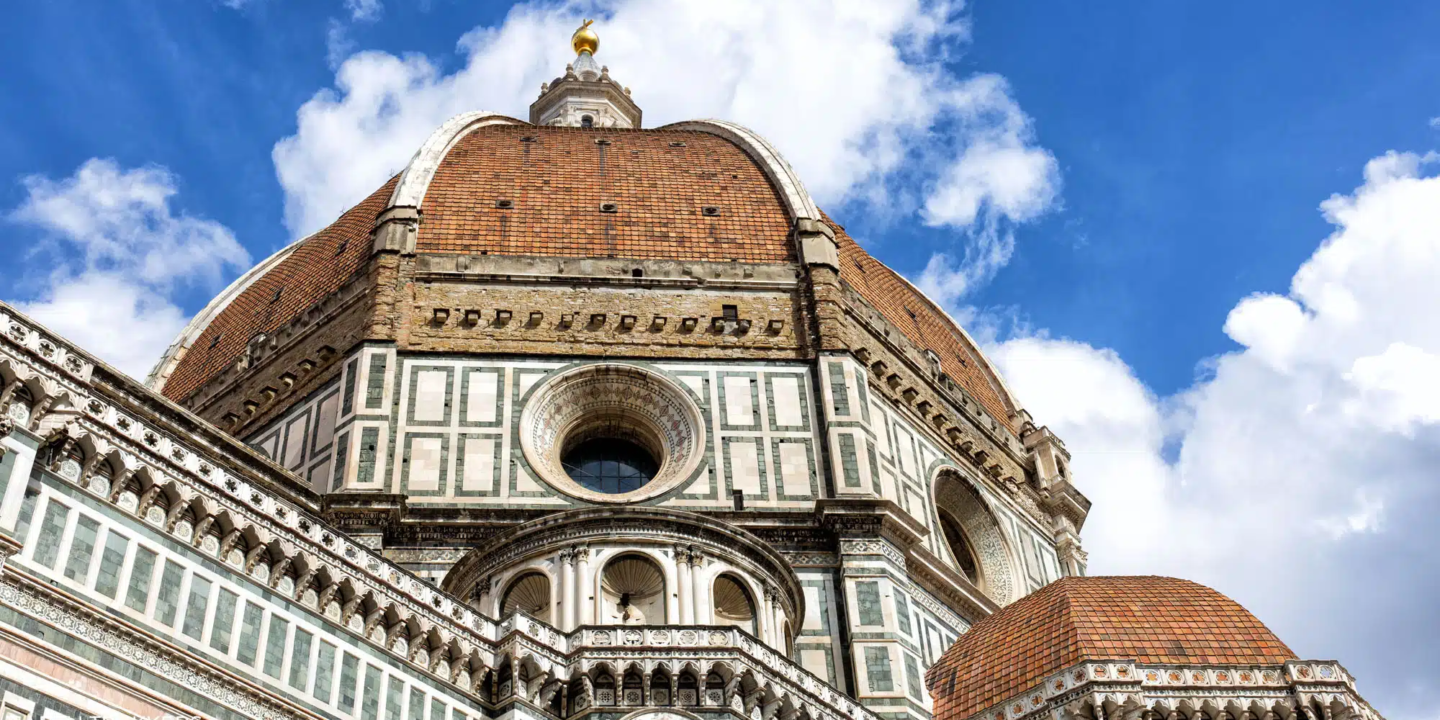
Florence’s historic center is dominated by the Cathedral of Santa Maria del Fiore. Its dome remains visible from streets, towers and hills across the city, yet the cathedral is only one part of a much larger monumental complex.
1. See Piazza del Duomo Before the Crowds Arrive
Suggested time: 30–45 minutes
Piazza del Duomo contains several of Florence’s defining structures: the cathedral, Brunelleschi’s dome, Giotto’s Bell Tower and the Baptistery of San Giovanni.
The square becomes extremely busy during the day, so an early-morning walk provides the clearest opportunity to appreciate the architecture. Circle the cathedral rather than remaining in front of its main façade. The side doors, marble patterns and enormous scale of the dome become more apparent from different positions.
Return after dark if possible. The buildings are illuminated, tour groups have largely departed and the square feels more spacious. Early morning and late evening are also the easiest times to photograph the cathedral without a wall of people in front of it.
2. Enter the Cathedral of Santa Maria del Fiore
Suggested time: 30–60 minutes
The exterior of Florence Cathedral is elaborately covered in white, green and pink marble, while the interior feels unexpectedly restrained. That contrast directs attention upward toward the enormous dome and its painted Last Judgment.
Construction of the cathedral began in the late 13th century, but the building remained without a completed dome until Filippo Brunelleschi developed a revolutionary double-shell design in the 15th century. The project became both an engineering achievement and a symbol of Florentine ambition.
General entry to the cathedral is normally free, although security lines can form throughout the day. Religious services, holidays and special events may alter visitor access. Appropriate church clothing is required, meaning shoulders and knees should be covered.
The cathedral is most meaningful when paired with the museum, where original sculptures and architectural models explain how the complex developed over several centuries.
3. Understand the Duomo at the Opera del Duomo Museum
Suggested time: 1–2 hours
The Opera del Duomo Museum is sometimes overlooked by travelers focused on climbing the dome, yet it provides the clearest explanation of the entire cathedral complex.
Its collection includes the original bronze panels from Ghiberti’s Gates of Paradise, sculptures removed from the cathedral and bell tower, historic models and displays devoted to Brunelleschi’s construction methods.
One of its most affecting works is Michelangelo’s unfinished Bandini Pietà. The museum also reconstructs the cathedral’s lost medieval façade, allowing visitors to imagine how the square looked before the present frontage was completed.
Visit the museum before climbing the dome if you want historical context, or afterward if you prefer to understand details you noticed during the ascent. Either order works, but the museum should not be treated merely as something included with a combination ticket.
4. Visit the Baptistery of San Giovanni
Suggested time: 20–40 minutes
Standing opposite the cathedral, the octagonal Baptistery is older than much of the Duomo complex. Its geometric marble exterior influenced later Florentine architecture, while its bronze doors became landmarks in the development of Renaissance sculpture.
The famous eastern doors are known as the Gates of Paradise. The panels currently visible outside are replicas; the carefully protected originals are displayed inside the Opera del Duomo Museum.
The Baptistery’s interior is traditionally known for its vast golden mosaic ceiling. However, restoration work can obscure parts of the decoration, so check the official Duomo website before deciding how much time to allocate.
Even during restoration, the building remains important for understanding how Florence moved from medieval visual traditions toward the Renaissance.
5. Climb Brunelleschi’s Dome
Suggested time: 60–90 minutes
Climbing the dome is one of Florence’s signature experiences, but it is a physical activity rather than a conventional museum visit.
The route contains 463 steps and no elevator. Some passages are narrow, steep and enclosed between the dome’s two structural shells. Along the way, an interior balcony provides a close view of the Last Judgment before the staircase continues toward the lantern.
At the top, the viewing platform opens onto the terracotta roofs of Florence. Palazzo Vecchio, Santa Croce and the surrounding Tuscan hills can all be identified from above.
A timed reservation is mandatory, and the official site warns that large and medium bags must be left at the designated luggage facility. The climb is not recommended for visitors affected by severe claustrophobia, vertigo or certain heart conditions. Tickets should be purchased only through the official Opera del Duomo channel.
Book this attraction before organizing the rest of your itinerary, particularly during spring, summer and holiday periods.
6. Climb Giotto’s Bell Tower
Suggested time: 45–75 minutes
Giotto’s Bell Tower offers a different perspective from the dome. Its 414-step staircase is interrupted by several terraces, giving visitors places to rest and view the city at progressively higher levels.
The main reward is a close, elevated view of Brunelleschi’s dome. Unlike the dome climb, the bell tower allows you to include Florence’s most recognizable structure in your photographs.
Protective mesh around the upper terrace can make photography more difficult, especially with a large camera. The tower is also undergoing a multi-year restoration project that began in 2026. It is scheduled to remain open, but scaffolding and restoration phases may affect exterior views. Check the Opera’s restoration information before visiting.
If you have limited time or energy, choose either the dome or the bell tower rather than climbing both. Select the dome for its architecture and 360-degree experience; choose the bell tower for the best close view of the dome itself.
Discover Civic Florence and the Arno
Beyond the cathedral, Florence tells another story—one shaped by merchants, guilds, republican government and the Medici family. Piazza della Signoria and the buildings around it formed the political center of the city, while the Arno connected this center with the palaces and gardens on the southern bank.
7. Read the Sculptures of Piazza della Signoria
Suggested time: 30–60 minutes
Piazza della Signoria functions as an open-air introduction to Florentine history. Palazzo Vecchio dominates one side, while fountains and sculptures occupy the space in front of it.
The Loggia dei Lanzi shelters major works such as Cellini’s Perseus with the Head of Medusa and Giambologna’s Rape of the Sabine Women. These are not modern copies placed for decoration; the loggia operates as a free public sculpture gallery.
A replica of Michelangelo’s David marks the location once occupied by the original statue. Nearby, the Fountain of Neptune celebrates Florentine maritime ambitions and the power of the Medici.
Because the square sits between the Duomo, Uffizi and Ponte Vecchio, it is easy to cross repeatedly. Make time for one deliberate visit instead of only passing through it.
8. Enter Palazzo Vecchio and Climb the Arnolfo Tower
Suggested time: 1.5–2.5 hours
Palazzo Vecchio has served Florence as a fortress-like seat of government, a Medici residence and a functioning city hall. Its interior combines imposing public rooms with private apartments, courtyards and concealed passages.
The Hall of the Five Hundred is the palace’s most dramatic room. It was created for the city’s governing council and later redesigned under Medici rule, turning republican space into a display of dynastic authority.
Above the palace rises the Arnolfo Tower. Its viewing level provides one of the clearest perspectives of the cathedral because the dome appears across the rooftops rather than directly beneath you.
Tower access may be suspended during unsuitable weather, and reservations are advisable. Current opening information and tickets are available from the official Palazzo Vecchio museum page.
Travelers who only want the view can book the tower and battlements, while those interested in Medici history should allow additional time for the museum.
9. Give the Uffizi Gallery a Focused Visit
Suggested time: 2.5–4 hours
The Uffizi contains one of the world’s most concentrated collections of Italian Renaissance painting. The challenge is not finding important art but deciding how much of it to absorb in one visit.
Highlights include Botticelli’s Birth of Venus and Primavera, works by Leonardo da Vinci, Raphael, Titian, Michelangelo and Caravaggio, and rooms tracing the transition from medieval painting to Renaissance naturalism.
Instead of moving through every gallery at the same speed, select several artists or periods in advance. This produces a more memorable experience and reduces museum fatigue.
The building itself is part of the visit. Long corridors frame views of the Arno and Palazzo Vecchio, while ancient sculptures collected by the Medici line the route.
The Uffizi is currently open Tuesday through Sunday and normally closes on Mondays, but temporary room closures and special openings occur. Reserve through the official Uffizi website and check current notices before arrival.
10. Walk Through the Vasari Corridor
Suggested time: approximately 45 minutes, in addition to the Uffizi
The Vasari Corridor is an enclosed elevated passage commissioned by Cosimo I de’ Medici in 1565. It allowed the ruling family to travel between Palazzo Vecchio and Palazzo Pitti without mixing with the crowds below.
The corridor begins inside the Uffizi, crosses the Arno above the shops of Ponte Vecchio and continues toward the Boboli Gardens. Small windows provide unusual views over the river and rooftops.
After years of closure and restoration, the corridor is accessible again through tightly controlled timed visits. Tickets are personal, reservations are mandatory and visitors enter the Uffizi before their assigned corridor time.
Availability is limited, so treat this as a special addition rather than the foundation of your entire Florence itinerary. The official Vasari Corridor page publishes current schedules, access rules and ticket options.
11. Cross Ponte Vecchio at Different Times of Day
Suggested time: 20–40 minutes
Ponte Vecchio has carried shops across the Arno for centuries. Today, most of its storefronts sell jewelry and watches, while the upper level contains part of the Vasari Corridor.
The bridge is busiest during the afternoon. Visit early in the morning to see closed wooden shopfronts and a quieter river, then return near sunset when the buildings reflect in the water.
The best complete view of Ponte Vecchio is not from the bridge itself. Walk west to Ponte Santa Trinita and look back toward it, particularly in the evening.
At the center of Ponte Vecchio, openings between the shops provide views along the Arno. Keep moving if the area is congested and avoid blocking the narrow passage for extended photo sessions.
12. Pause in Piazza della Repubblica
Suggested time: 20–45 minutes
Piazza della Repubblica occupies an area that once contained the Roman forum and later Florence’s medieval market. Much of its present appearance dates from major urban changes in the 19th century.
The square is now known for its monumental arch, historic cafés, street performers and carousel. It lacks the concentrated Renaissance atmosphere of Piazza della Signoria, but it captures the social energy of central Florence.
Stop for coffee if you enjoy grand European café culture, although prices around the main square tend to reflect the location. Families may want to allow time for the carousel.
For an elevated view, the upper levels of the nearby department store have hosted rooftop dining spaces overlooking the dome. Confirm the current venue and access arrangements before planning around it.
13. Visit Il Porcellino at Mercato Nuovo
Suggested time: 10–20 minutes
A bronze wild boar fountain stands beside Mercato Nuovo, only a short walk from Piazza della Signoria. Florentines call it Il Porcellino, or “the little pig,” despite the animal clearly being a boar.
Tradition says that rubbing its polished nose helps ensure a return to Florence. Another ritual involves placing a coin in the animal’s mouth and allowing it to fall toward the grate below.
The stop takes only a few minutes, making it a pleasant break between museums. The surrounding market sells leather products, scarves and souvenirs, although quality varies considerably. Compare materials and prices before making an expensive purchase.
Meet Florence Through Art and Science
Art in Florence is not confined to a single museum. Painting, sculpture, architecture and scientific observation developed alongside one another, often under the patronage of the same families. Three collections provide very different ways to understand that creativity.
14. Stand Before Michelangelo’s David
Suggested time: 60–90 minutes
The Galleria dell’Accademia is primarily associated with Michelangelo’s David, and the sculpture remains the central reason to visit.
Its scale is difficult to appreciate from photographs. More than five meters tall, the figure combines an idealized body with details such as prominent veins, tense hands and a concentrated expression. Its placement beneath a skylight emphasizes both its size and the surface of the marble.
The gallery leading toward David contains Michelangelo’s unfinished Prisoners. Because portions of the figures remain embedded in rough stone, they reveal more about the sculptor’s working process than a polished statue can.
Other sections contain Florentine religious painting and a collection of historic musical instruments. These rooms are generally quieter than the central hall.
Timed tickets are strongly recommended. Purchase through the Accademia’s official booking channels and be cautious of websites using “official” language while adding substantial reseller fees.
15. See Renaissance Sculpture at the Bargello
Suggested time: 1.5–2 hours
The Bargello provides a calmer alternative to Florence’s busiest museums. Housed in a former civic palace and prison, it contains a remarkable collection of Renaissance sculpture and decorative art.
Donatello’s bronze David is one of its defining works. The museum also displays sculpture by Michelangelo, Verrocchio, Cellini and the della Robbia family.
Its medieval courtyard, stone staircase and open loggia make the architecture nearly as memorable as the collection. Compared with the Uffizi, the Bargello is easier to explore without feeling pressured by a continuous flow of tour groups.
Anyone especially interested in sculpture should consider the Bargello essential rather than optional. Opening patterns can vary, so verify the schedule before selecting a day.
16. Visit the Museo Galileo
Suggested time: 1–1.5 hours
The Museo Galileo introduces another side of Florence: the city of observation, mathematics, navigation and experimentation.
Its rooms contain telescopes, globes, astronomical instruments, clocks and scientific devices collected by the Medici and Lorraine dynasties. Several objects are connected directly with Galileo, making abstract developments in astronomy feel surprisingly personal.
The museum is located beside the Uffizi, but visiting both consecutively can create information overload. It may work better as an alternative for travelers less interested in painting or as a focused activity for families.
Interactive explanations and unusual instruments make it one of Florence’s most approachable museums for older children.
Cross the Arno into Oltrarno
Crossing the Arno changes the rhythm of Florence. The Oltrarno district contains grand Medici spaces, artisan streets, neighborhood squares and green hills that rise toward the city’s best-known viewpoints.
17. Combine Palazzo Pitti with Boboli Gardens
Suggested time: 3–5 hours
Palazzo Pitti became the principal Medici residence after Cosimo I and Eleanor of Toledo acquired it in the 16th century. Later dynasties and Italian royalty continued to use the enormous building.
Today, the palace contains several collections, including the Palatine Gallery, royal apartments, modern art, fashion and decorative objects. The rooms retain dense arrangements of paintings, furniture, gilding and frescoes, offering a different experience from the chronological galleries of the Uffizi.
Behind the palace, Boboli Gardens extends across a broad hillside. Formal avenues, fountains, sculptures and grottoes turn the landscape into an outdoor expression of courtly power.
The gardens involve considerable walking and relatively little shade in some areas. Bring water during warm weather and wear shoes suitable for slopes and uneven surfaces.
Temporary room closures and seasonal garden hours are common. Consult the official Pitti Palace information before deciding whether to buy a palace, garden or combined ticket.
18. Choose Bardini Gardens for a Quieter View
Suggested time: 1–2 hours
Bardini Gardens occupies a hillside east of Boboli and offers a smaller, more intimate garden experience.
Its paths climb between terraces, fountains and planted areas toward open views of Florence. The dome appears above the surrounding rooftops, making this one of the most attractive garden viewpoints in the city.
A long wisteria pergola becomes especially photogenic during its spring flowering period, normally around April. The garden remains pleasant outside the bloom, but visitors arriving specifically for the flowers should check seasonal updates.
Because Bardini is compact, it works well before walking toward Piazzale Michelangelo. It can also be combined with Boboli, although attempting both gardens during the hottest part of a summer afternoon can be exhausting.
19. Reserve the Brancacci Chapel
Suggested time: 30–60 minutes
The Brancacci Chapel is located inside Santa Maria del Carmine in Oltrarno. Its fresco cycle, created principally by Masaccio and Masolino and later completed by Filippino Lippi, helped transform the depiction of space and human emotion in Western painting.
Masaccio’s figures possess unusual weight and physical presence. Scenes such as The Tribute Money demonstrate perspective, continuous narrative and controlled light with a clarity that influenced later artists.
Visitor numbers are limited to protect the chapel, and entry is organized through timed reservations. Opening days and access arrangements may change because the chapel forms part of an active religious complex.
This is a short visit with considerable artistic importance. It pairs naturally with Santo Spirito, neighborhood cafés or other Oltrarno attractions.
20. Walk Through the Rose Garden
Suggested time: 30–60 minutes
Giardino delle Rose lies on the slope below Piazzale Michelangelo. Admission is normally free, and the paths provide a gentler way to climb toward the panoramic terrace.
The garden is most colorful in spring, particularly during the principal rose season, but it remains a peaceful green space outside peak flowering. Sculptures and openings between the plants frame partial views of the city.
This is not Florence’s highest or widest panorama. Its appeal comes from seeing the skyline through trees and flowers while escaping the traffic and crowds above.
Enter from the lower hillside, wander gradually upward and continue to Piazzale Michelangelo rather than treating the garden as an isolated destination.
21. Investigate Porta San Niccolò
Suggested time: 30–45 minutes when open
Porta San Niccolò is one of the surviving towers from Florence’s medieval defensive system. It stands near the Arno at the foot of the road leading toward Piazzale Michelangelo.
Seasonal guided visits may allow access to the upper level, where the view includes the river, historic center and surrounding hillside.
Opening is generally limited and can change from year to year, so do not assume that the tower can be entered simply because it appears on a map. Check the city museum schedule and reserve if tours are operating.
Even when closed, the exterior adds historical context to a walk between the river and the viewpoints above.
22. Watch the City Change at Piazzale Michelangelo
Suggested time: 45–90 minutes
Piazzale Michelangelo provides Florence’s most familiar panoramic view. From the terrace, the cathedral dome, Palazzo Vecchio, Santa Croce, Ponte Vecchio and the northern hills appear in a single sweep.
Sunset attracts the largest crowds. Arrive early if you want a place near the railing, and remain after the sun disappears as the buildings begin to illuminate.
For a quieter experience, visit shortly after sunrise. Morning light falls differently across the city, and the square feels far removed from its evening atmosphere.
The viewpoint can be reached on foot, by bus or by taxi. Walking from the river involves a sustained uphill climb, especially if you come through the Rose Garden. Comfortable shoes and water make the ascent more pleasant.
23. Continue to San Miniato al Monte
Suggested time: 45–75 minutes
San Miniato al Monte stands above Piazzale Michelangelo and requires another short uphill walk. Many visitors stop at the lower terrace, leaving the church noticeably calmer.
Its green-and-white Romanesque façade predates much of Renaissance Florence. Inside, patterned marble, mosaics and a raised choir create a solemn atmosphere distinct from the city’s more ornate churches.
The cemetery surrounding the basilica contains elaborate tombs, chapels and cypress-lined paths. Walk quietly and remember that it remains an active burial place rather than a conventional tourist garden.
The panorama is higher and more distant than the view from Piazzale Michelangelo. Even if the lower terrace provides the better postcard composition, San Miniato offers a richer combination of architecture, stillness and landscape.
Enter Florence’s Historic Churches
Step inside Florence’s churches and the city’s history becomes more personal. Tombs, family chapels and fresco cycles connect famous names with specific places of worship, while smaller churches often provide relief from the busiest museum routes.
24. Visit the Basilica of Santa Croce
Suggested time: 1–1.5 hours
Santa Croce is both a major Gothic church and a memorial to influential figures in Italian history. Michelangelo, Galileo, Machiavelli and other prominent individuals are buried or commemorated here.
The interior contains frescoed chapels associated with Giotto and his circle, monumental tombs and works reflecting centuries of Florentine patronage.
The larger complex includes cloisters, museum spaces and the Pazzi Chapel, traditionally linked with Brunelleschi. Allow enough time to explore beyond the main nave.
Because it is still a religious site, visiting hours may be affected by services and holidays. Dress respectfully and consult the official Santa Croce website before arrival.
25. Look Beyond the Façade of Santa Maria Novella
Suggested time: 1–1.5 hours
Santa Maria Novella stands close to Florence’s main railway station, yet many travelers photograph its marble façade without entering.
Leon Battista Alberti completed the upper portion of the façade, using proportion and geometry to unite it with the older structure below. Inside, Masaccio’s Holy Trinity demonstrates the mathematical perspective that reshaped Renaissance painting.
The complex also contains frescoed chapels, works connected with Giotto, cloisters and the richly decorated Spanish Chapel.
Its location makes it convenient on an arrival or departure day, but avoid squeezing the visit into the final few minutes before a train. Current hours vary by season and day and are published by the official Santa Maria Novella site.
26. Find Florence’s Smaller Churches
Suggested time: flexible
Several less-visited churches allow you to explore significant art without the scale or crowds of the cathedral complex.
- Basilica di San Lorenzo was closely connected with the Medici family. Its relatively plain unfinished façade conceals architecture associated with Brunelleschi and works connected with Donatello and Michelangelo.
- Ognissanti contains paintings by Botticelli and Ghirlandaio and is the burial place of Sandro Botticelli.
- Santa Trinita is known for the Sassetti Chapel, where Ghirlandaio placed religious scenes within detailed Florentine settings.
- Santissima Annunziata has an elegant entrance court and a richly decorated interior associated with centuries of local devotion.
These churches remain places of worship. Opening hours may be divided around services and midday closures, so build flexibility into your route.
Experience Florence Beyond Its Monuments
Once the principal museums and churches have been visited, Florence becomes easier to enjoy at street level. Markets, traditional businesses and food experiences reveal a city that continues to live beyond its Renaissance reputation.
27. Browse San Lorenzo Market and Mercato Centrale
Suggested time: 1–2 hours, including food
Outdoor stalls spread through the streets near San Lorenzo, selling leather products, belts, bags, scarves and souvenirs. Quality ranges from skilled leatherwork to inexpensive imported goods, so do not assume that everything is locally produced.
Inside the historic Mercato Centrale building, the lower market traditionally focuses on meat, cheese, produce, bread and specialty ingredients. The upper food hall contains prepared dishes and offers an easy introduction to several Tuscan flavors in one place.
Try a sandwich, fresh pasta or a simple selection of cheese and bread. The market works particularly well for groups because everyone can choose something different.
Visit earlier in the day if you are interested in the working food market rather than only the upstairs dining area.
28. Enter the Historic Santa Maria Novella Pharmacy
Suggested time: 20–40 minutes
The Officina Profumo-Farmaceutica di Santa Maria Novella developed from the herbal and medicinal traditions of Dominican friars. Its historic sales rooms feel closer to a decorated palace than a modern shop.
Frescoed ceilings, dark cabinets and carefully displayed perfumes, soaps and botanical products make the interior worth seeing even if you do not plan to buy anything.
Because it remains a commercial space, be considerate of customers and staff. Avoid treating displays as museum exhibits that can be handled freely.
The pharmacy is only a short walk from the church of Santa Maria Novella, making the two easy to combine.
29. End the Day at a Rooftop Bar
Suggested time: 1–2 hours
Florence’s rooftop terraces provide a slower way to appreciate the skyline after a day spent climbing towers and walking through museums.
Some terraces face the Duomo at close range, while others overlook the Arno, Palazzo Vecchio or the hills south of the city. The view is part of the price, so drinks generally cost more than they would at street level.
Reserve ahead for sunset, especially from late spring through early autumn. Hotel rooftops may accept outside guests, but access policies, opening seasons and minimum-spend requirements can change.
Choose a terrace based on the view rather than attempting to visit several in one evening. Watching the light fade from a single comfortable table is usually more enjoyable than rushing between rooftops.
30. Take a Food Tour or Cooking Class
Suggested time: 3–5 hours
Florentine cuisine is rooted in bread, vegetables, beans, meat and the practical use of simple ingredients. A good food tour introduces these traditions while explaining how local eating differs from the generic “Italian food” offered in tourist centers.
Typical foods may include schiacciata, ribollita, lampredotto, crostini, pecorino cheese, cured meats and Tuscan wine. Travelers interested in bistecca alla Fiorentina should understand that the steak is traditionally thick, shared and served rare.
A cooking class offers a more hands-on experience. Pasta and tiramisu classes are widely available, while some programs include market shopping, sauces or a complete Tuscan meal.
Check group size, menu and location before booking. A class held in a real kitchen with a small group generally provides more interaction than a large demonstration designed mainly for photographs.
A Map-Friendly Walking Order
Most of Florence’s central attractions can be connected on foot. A practical north-to-south sequence is:
- Galleria dell’Accademia
- Piazza del Duomo and the cathedral complex
- San Lorenzo and Mercato Centrale
- Piazza della Repubblica
- Il Porcellino and Mercato Nuovo
- Piazza della Signoria and Palazzo Vecchio
- Uffizi Gallery
- Ponte Vecchio
- Palazzo Pitti and Boboli Gardens
- Bardini Gardens or the Rose Garden
- Piazzale Michelangelo
- San Miniato al Monte
Santa Croce and the Galileo Museum can be added to the eastern side of the historic center. Santa Maria Novella and its historic pharmacy form a convenient western cluster near the railway station.
Do not attempt the entire route as one continuous sightseeing day. The sequence is intended to show geographical relationships, not to suggest that every attraction should be visited at once.
How Many Days Do You Need?
Planning Florence successfully depends less on distance than on reservations and mental energy. The city is compact, but placing several major museums and stair climbs on the same day can quickly become exhausting.
One Day
With one day, concentrate on the historic center:
- See Piazza del Duomo and enter the cathedral.
- Reserve either the dome climb or Accademia.
- Walk through Piazza della Signoria.
- Choose the Uffizi only if art is your main priority.
- Cross Ponte Vecchio.
- Finish at Piazzale Michelangelo.
Trying to visit the dome, Accademia and Uffizi in one day is technically possible but leaves little room to experience the streets, meals or unexpected discoveries.
Two Days
Two days provide a more balanced first visit.
Day one: Explore the Duomo complex, see David at Accademia, visit San Lorenzo and walk through Piazza della Signoria to Ponte Vecchio.
Day two: Spend the morning at the Uffizi, cross into Oltrarno and choose Palazzo Pitti, Boboli or Bardini Gardens. Continue through the Rose Garden to Piazzale Michelangelo for sunset.
Three Days
Use a third day for Santa Croce, the Bargello, Palazzo Vecchio, the Galileo Museum or the Brancacci Chapel. Add a rooftop drink, market lunch or cooking class so the itinerary is not composed entirely of monuments.
Four or More Days
A longer stay allows you to visit smaller churches, explore residential parts of Oltrarno and take a day trip to destinations such as Siena, Lucca, Pisa, Bologna or the Tuscan hill towns.
What to Reserve First
Book attractions in this general order:
- Brunelleschi’s Dome: Limited timed entries and no walk-up alternative for the climb.
- Vasari Corridor: Small groups and restricted availability.
- Galleria dell’Accademia: Popular time slots sell out regularly.
- Uffizi Gallery: Morning entries are especially sought after.
- Brancacci Chapel: Capacity is limited.
- Palazzo Vecchio or Arnolfo Tower: Important if you want a specific time.
- Rooftop bars and cooking classes: Reserve sunset tables and small classes during busy months.
Use official ticket websites whenever possible. Third-party tours can be useful when official admissions are sold out or when you genuinely want a guide, but avoid paying a large reseller surcharge for an ordinary entrance ticket.
Is the Firenzecard Worth Buying?
The official Firenzecard currently provides 72-hour access to more than 60 participating museums. However, owning the card does not eliminate the need to arrange reservations for certain major attractions.
It is most likely to provide value if you plan to visit numerous paid museums within three days, including secondary collections. Travelers focusing only on the Duomo, Uffizi and Accademia should compare individual admission costs first.
Coverage, reservation procedures and extension options can change. Check the current museum list and conditions on the official Firenzecard website before purchasing.
The Best Time to Visit Florence
Spring and autumn generally provide the most comfortable balance between weather and crowd levels.
- April and May: Pleasant temperatures, spring gardens and long sightseeing days. Holiday periods can still be busy.
- June through August: Long daylight but high temperatures and peak visitor numbers. Begin early and rest during the hottest part of the afternoon.
- September and October: Warm light, slightly calmer streets and an increased possibility of rain.
- November through March: Fewer visitors and a quieter local atmosphere, although days are shorter and some gardens or rooftop venues have reduced appeal.
No season is completely uncrowded at the Duomo, Uffizi or Accademia. Advance reservations remain useful throughout the year.
Practical Florence Tips
Florence’s official tourism portal, FeelFlorence, publishes current museum notices, mobility guidance, maps and city information.
Keep these additional points in mind:
- Expect Monday closures. Several state museums traditionally close on Mondays, although municipal museums and churches follow different schedules.
- Do not drive into the historic center casually. Much of central Florence is controlled by a restricted-traffic zone. Travelers arriving by car should use authorized parking outside the controlled area or confirm that their hotel can register the vehicle.
- Wear practical shoes. Historic paving, palace staircases and garden slopes make thin or unstable footwear uncomfortable.
- Carry water in summer. Florence’s stone streets retain heat, and many outdoor attractions offer limited shade.
- Follow church dress requirements. Keep shoulders and knees covered and avoid visiting during services solely for sightseeing.
- Balance indoor and outdoor activities. Pair a major museum with a market, garden, bridge or viewpoint.
- Travel lightly on climbing days. Large bags are restricted at the dome and may need to be stored before entry.
- Allow time between reservations. Security lines, one-way museum routes and crowded streets can make tightly connected bookings stressful.
- Be cautious with unofficial ticket sellers. Similar-looking websites may charge significant fees or sell packages that do not match the official admission terms.
Free Experiences Worth Prioritizing
A meaningful visit to Florence does not have to consist entirely of paid museums. Some of the strongest free experiences include:
- Walking around Piazza del Duomo at sunrise or after dark
- Entering the main cathedral when general access is available
- Exploring the sculpture-filled Piazza della Signoria
- Crossing Ponte Vecchio
- Viewing Ponte Vecchio from Ponte Santa Trinita
- Visiting Piazza della Repubblica
- Walking through the Rose Garden
- Watching sunset from Piazzale Michelangelo
- Entering San Miniato al Monte
- Exploring the city’s streets, bridges and smaller neighborhood squares
Visiting Florence with Children
Florence can work well for families when museum visits are selective.
The Galileo Museum, Piazza della Repubblica carousel, Il Porcellino and the city’s gardens provide variety. Older children may enjoy climbing the dome or Arnolfo Tower, but the narrow staircases are not suitable for everyone.
At the Uffizi, choose a short list of recognizable paintings instead of attempting every room. Follow the museum with gelato, a market lunch or time in an open square.
The city center is walkable, but strollers can be difficult on uneven paving and crowded streets. Build regular breaks into the day.
Final Thoughts
Florence can be crossed quickly, but it should not be consumed quickly. The city’s greatest works become more meaningful when they are connected: Ghiberti’s original doors in the cathedral museum, David in the Accademia, Medici power in Palazzo Vecchio and the private passage continuing above Ponte Vecchio.
Choose the experiences that match your interests rather than treating all 30 as compulsory. Reserve the attractions that genuinely require a time slot, then leave room for slower discoveries—a quiet church, an evening bridge crossing or a long view from the hills.
Florence’s monuments may have been created centuries ago, but the city is most memorable when art, architecture and daily life are allowed to meet in the same journey.