











HOME ENERGY · PRACTICAL GUIDE
Utilities will pay households to make thermostats, electric vehicles and batteries more flexible when the grid is strained. Here is how to find a program—and judge the trade.
A thermostat does not resemble a generator. Neither does an electric car, a home battery, an air-conditioning system or rooftop solar. Yet utilities increasingly view these scattered household devices as pieces of one coordinated energy resource.
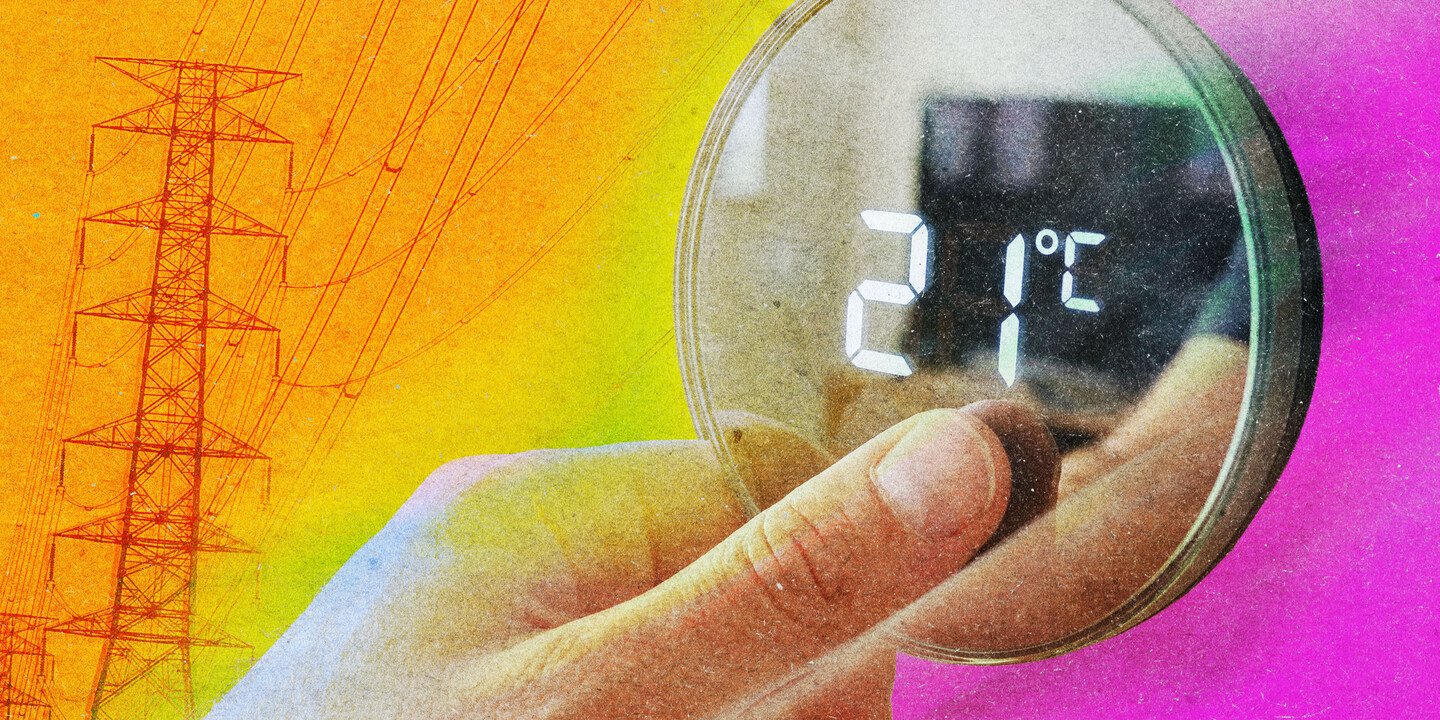
That resource is known as a virtual power plant, or VPP. Instead of producing electricity at one physical site, a VPP connects many flexible devices through software. During a period of high demand, the operator might raise a thermostat setting slightly, postpone part of an EV charge or call on stored battery energy.
Participants receive something in return, usually a bill discount, enrollment reward or performance payment. The central question is whether the money and public benefit justify giving an outside company limited influence over equipment inside your home.
What a Virtual Power Plant Does
Most consumer programs focus on reducing electricity use during peak hours rather than exporting power. A utility sends a temporary command, the connected device responds automatically, and thousands of small changes reduce the amount of expensive generation the grid must find at once.
VPPs create value by replacing bursts of expensive capacity, not by keeping devices curtailed all day. Events concentrate on hot afternoons, cold evenings or other strained periods. An occasional adjustment can therefore compete with infrastructure built for only a few critical hours a year.
Seth Frader-Thompson, chief executive and cofounder of VPP software provider EnergyHub, says a thermostat program may pay roughly $50 to $150 at enrollment and another $25 to $50 each year. Programs involving home batteries or electric vehicles can deliver annual value in the hundreds or even thousands of dollars.
One household contributes only a small adjustment. Coordinating hundreds of thousands or millions of homes changes the arithmetic: together they can supply capacity comparable to starting a conventional power plant. That can help a utility avoid emergency conservation measures or postpone a costly grid upgrade.
The market is already substantial. More than 500 US programs were operating in 2023, and growth has continued as companies including Google invest in VPPs to support data-center demand. By last year, an estimated four million homes with smart thermostats were participating in one.
Weaknesses remain. Severin Borenstein, faculty director of the Energy Institute at UC Berkeley’s Haas School, warns that poor program design may misjudge what customers intended to consume. A utility could then pay participants for reductions that would have happened anyway, shifting costs toward other ratepayers. Well-run programs, however, can improve reliability and reduce system spending.
Most VPPs do not yet discharge household batteries or EVs directly into the grid, despite the power-plant label. They simply reshape demand. True vehicle-to-grid and battery-to-grid arrangements are expanding, and they could eventually offer customers larger payments.
1. Find a Program That Fits
Start with your electricity provider, but do not search only for “virtual power plant.” Utilities often market the same idea under names such as demand response, peak rewards, connected solutions, managed charging, battery storage, smart-thermostat rewards or bring your own device.
Your device manufacturer may be an even better route. EnergyHub says many people discover an offer through the app or email associated with their thermostat, vehicle or battery. The manufacturer already knows the model you own and can present only programs likely to recognize it.
Enrollment may require little more than approving terms in an app, completing a utility form, or confirming account and device information on a third-party page. Joseph Vellone, chief executive of EV-focused VPP operator ChargeScape, says some drivers can view the rules and payment through an automaker’s app and join with a single confirmation.
Compatibility can nevertheless be extremely narrow. A thermostat offer may accept only approved Wi-Fi models. EV eligibility can depend on automaker, charger, rate plan and utility territory. Battery programs may specify the battery brand, inverter, installer or communication system.
A supported brand does not guarantee eligibility. Two homes with the same thermostat can receive different offers because they occupy utility territories or use different rate plans. Confirm the model number, address, enrollment term and payment rules before assuming an advertisement applies to you.
Location matters too. Programs are concentrated where grids are stressed, flexible devices are common, utilities are supportive or state policy encourages participation. California, Texas and New England have many options, while parts of the mid-Atlantic are adding more. Elsewhere, an otherwise compatible device may have no available program.
2. Measure Your Flexibility
Joining means allowing occasional changes to normal device operation, perhaps several times in a week. The practical burden depends less on the technology than on your schedule, comfort needs and how much unused flexibility exists in the first place.
Review your routine before deciding what flexibility feels painless. Note when the home must stay warm or cool, when the vehicle must be ready, and how much outage reserve the battery holds. An average reward may not compensate for disruption during your household’s important hours.
An EV that remains plugged in overnight but needs only two hours of charging can often move those hours without inconveniencing its owner. A driver who arrives nearly empty and leaves early every morning has far less room. Before enrolling, confirm the minimum charge level and whether the car can be ordered to charge immediately.
A home battery may earn attractive payments, but the contract should explain how frequently it will cycle, how much reserve remains for an outage and whether additional use affects its warranty or useful life. Higher compensation is less appealing if the program consumes backup capacity precisely when a household expects to need it.
Sanya Carley, a University of Pennsylvania professor and faculty director at its Climate Center for Energy Policy, stresses that flexibility is not distributed equally. Night-shift workers, caregivers, people with health requirements and households already minimizing consumption to save money may be unable to surrender heating, cooling or charging control at peak times.
3. Read the Override and Data Rules
Before enrolling, find the override policy. Most programs let customers cancel a temporary adjustment, and that right makes participation workable. You should know whether you can restore the thermostat for guests, begin charging before an unexpected trip, or preserve battery power when severe weather threatens.
Look for limits as well as the button itself. Ask how many events can occur, how long they last, whether opting out reduces payment, whether repeated overrides remove you from the program and how quickly a manual command takes effect. A simple exit process matters more than a generous promise that is difficult to use.
Then examine data collection. An EV or battery program may need charging status, schedules and real-time power draw. Thermostat records can reveal when a home is occupied, when residents sleep and when appliances are used. Those patterns can describe private routines even when a program never asks for names or personal explanations.
The Electronic Frontier Foundation has warned that household energy information may travel beyond the utility to manufacturers, software providers and other contractors. ChargeScape and EnergyHub say their VPP data is limited to operational needs: the condition and energy behavior of the device, plus aggregated customer patterns rather than the actions of one person. Read the specific program’s policy instead of assuming every operator follows the same boundary.
4. Decide What the Trade Is Worth
Compensation varies widely and may not arrive as a check. The offer could be a signup bonus, gift card, recurring bill credit, discounted thermostat, cheaper EV charging, annual performance payment or export credit for electricity returned to the grid. Compare the total annual value, not just the headline reward.
Compare the payment for each event with the maximum number of events allowed. A bonus may lose its appeal if participation is frequent, while a modest credit can be reasonable when adjustments are rare. Include battery wear, charging costs and forfeited payments in the calculation.
Expensive assets generally earn the most. Electric vehicles and home batteries can provide substantial flexibility, but requiring them creates an access barrier for households unable to buy those products. A thermostat program offers a lower-cost, lower-stakes introduction, though its payments are usually modest.
Money is not the only reason to join. Coordinated demand can improve reliability, support lower-carbon electricity, reduce system costs and prevent construction of another power plant nearby. Frader-Thompson argues that few household actions contribute as directly to decarbonization, affordability and reliability while also paying the participant.
The strongest offer is therefore not automatically the one with the largest bonus. It is the program that states what it can control, what data it receives, how often events occur, how quickly you can refuse and exactly how payment is calculated. Those terms should fit both your household and the grid outcome you want to support.
Your home may never feel like a generating station. But if its thermostat, car or battery can shift a little when electricity demand peaks, it can function as one small part of a much larger plant—provided the reward, flexibility and rules make sense for you.