












APPETITE, ATTENTION & WOMEN’S HEALTH
The pressure to keep a woman’s body small can consume far more than calories. It can also occupy attention, distort medical priorities, and turn chronic deprivation into a badge of competence.
Hunger is often described as a message from the stomach, a simple signal that appears before a meal and disappears after one. For many women, however, it becomes something closer to a mental climate. It follows them into classrooms, offices, clinics, and family conversations. A portion of attention remains assigned to food: what has been eaten, what is still allowed, how long until the next meal, and whether the body is becoming more visible than it ought to be.
This preoccupation is easy to misread because the person experiencing it may continue to function. She finishes the presentation, passes the exam, treats the patient, and remembers the groceries. Intelligence has not vanished. What can change is how much attention feels freely available. Repeatedly monitoring and resisting a biological signal may demand effort, much as a computer running a process in the background has less capacity for everything on the screen.
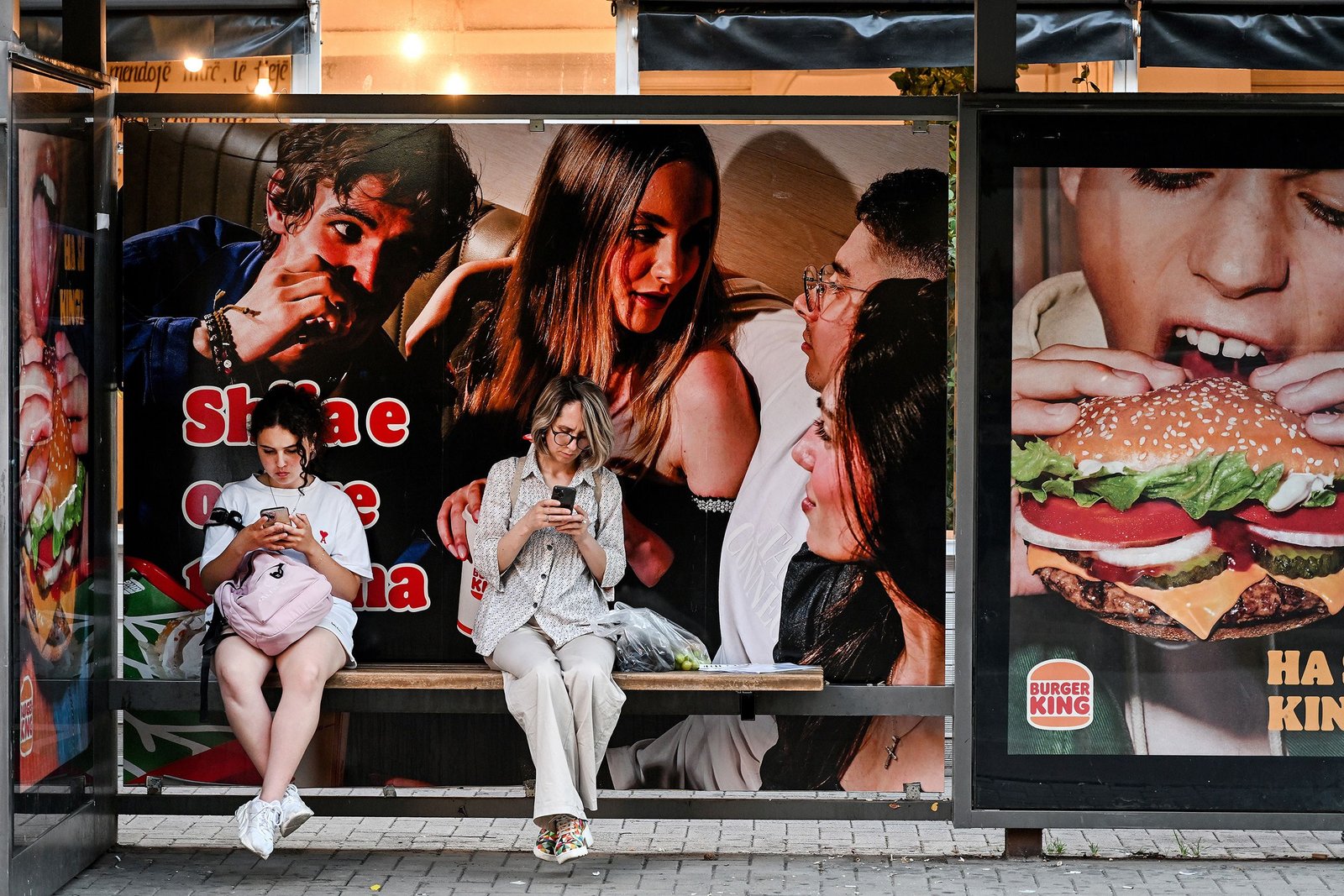
The burden is not distributed evenly. Girls often learn early that appetite is morally charged and that a smaller body can purchase approval. The lesson comes through advertising, teasing, family conversation, medical encounters, fashion, and compliments offered with affectionate intent. Over time, self-denial can look like personality: discipline, seriousness, control. The costs are harder to see because they are paid in fragments of concentration, patience, physical strength, and presence.
Learning to Be Hungry
One physician traces the beginning of this education to the summer before middle school. At 11, she decided to eat as little as she could before returning to class. Her chosen ration was a daily packet of fat-free biscuits, the kind of product sold during an era when dietary fat was treated as a threat and engineered restraint as a virtue. The biscuits did not satisfy her, but satisfaction was not the goal. Their promise was obedience without the appearance of going without.
At the swimming pool, the consequences were immediate and strangely ordinary. Friends talked beside her, yet their stories kept slipping away. Her thoughts circled dinner, portions, and the possibility that someone might notice her changing body. By the end of the week, her swimsuit sat differently on her shoulders. When an adult admired her new shape, the praise transformed the fog, distraction, and hunger into evidence that she had succeeded.

That exchange captures how a cultural rule can be taught without being formally stated. The adult did not intend to instruct a child to ignore hunger, and the child did not consciously calculate that attention was being exchanged for acceptance. Yet the reward was clear enough to shape future choices: if shrinking brought recognition, then the mental effort required to shrink could be classified as worthwhile labour.
The same rule appears in public life. A male politician can often prepare for a camera by adjusting a jacket or tie. A female politician is more likely to encounter commentary about her hair, clothes, age, or weight before her programme is considered. A meta-analysis spanning 90 studies and more than 750,000 news stories found that women politicians received more coverage of appearance and private life. The effects on voters are more conditional: negative appearance coverage can depress evaluations, while responses to neutral or favourable coverage vary with tone and context. Even praise can keep appearance on the agenda when policy should be central.
Girls absorb this bargain long before they have language for it. A growling stomach in a quiet classroom can feel like a public confession, not a routine bodily event. Eating enough may appear to expose weak control, while enduring the signal privately seems mature. The lesson becomes self-reinforcing: deprivation generates distraction, distraction is experienced as personal failure, and greater control is prescribed as the cure for a problem created by control itself.
The products and slogans change: low-fat biscuits give way to detoxes, fasting windows, wellness challenges, and tracking apps. Not every diet is dangerous, and people alter their food for many valid reasons. The concern begins when routine hunger is treated as proof of good character, regardless of what the effort removes from a woman’s inner life.
What Deprivation Does to Attention
Biology explains why willpower cannot make hunger cognitively neutral. When energy is scarce, the body does not politely file that information for later. Appetite-related signals are designed to compete for awareness and motivate food seeking. That priority helped human beings survive. In a culture that requires people to notice hunger and then continuously refuse it, an adaptive system becomes a recurring interruption.
A famous demonstration came from the Minnesota Starvation Experiment during the Second World War. Physiologist Ancel Keys and his colleagues recruited 36 healthy young men and observed them through 24 weeks of semi-starvation followed by rehabilitation. During the restriction phase, the participants became absorbed by food. They read recipes, discussed meals, studied menus, and reported difficulty concentrating. Standardised tests did not show a clear loss of general cognitive capacity; the experiment instead documented how insistently prolonged deprivation could reorganise attention and daily life.
The experiment involved men, a small sample, and conditions that do not reproduce the varied experiences of modern dieting. It should not be used as a precise model for every person who skips lunch. Its enduring value is conceptual: severe underfeeding can change what the mind prioritises. Some small studies of active, self-directed dieting have found poorer vigilance or memory performance, but the wider intervention literature is mixed, with many measures unchanged or sometimes improved. Severity, duration, population, stress, and the task being tested all matter, while the proposed roles of energy deficit and mental restraint remain difficult to separate.

Cognitive load is not always experienced as a dramatic inability to think. More often, it looks like diminished depth. A thought is started but not completed. A conversation is heard in pieces. Irritation arrives sooner. The task that requires flexible problem-solving feels unusually heavy. These effects can be attributed to stress, personality, or poor organisation because the person has learned to exclude food restriction from the list of possible causes.
Attention is finite even when it is highly trainable. Every repeated calculation—calories, timing, permission, compensation, concealment—occupies some part of it. The cost will vary with the degree and duration of restriction, the person’s health, sleep, stress, and access to food. It is therefore too strong to claim that all dieting produces the same impairment or that hunger explains every gap in achievement. The more defensible point is that habitual restraint can impose a real, undercounted mental demand.
In one cross-sectional survey of university-age adults in 23 countries, women more often reported dieting and several health-oriented food choices than men. The student sample and self-reported data limit both generalisation and causal conclusions, and some avoidance is beneficial or medically necessary. Even with those limits, the recurring gender pattern suggests that the demand to supervise appetite is not merely a private quirk. Different societies use different ideals, but women are repeatedly asked to demonstrate that eating is something they manage rather than a need they answer.
That demand changes the questions we ask about equality. Education and opportunity matter, but access to a room is not identical to full access to one’s attention inside it. If one group is more often encouraged to carry hunger into classrooms and workplaces, then a portion of its cognitive energy is being privately spent on meeting a public standard. The expense is difficult to measure precisely, yet invisibility does not make it imaginary.
When Thinness Becomes a Credential
By medical school, the physician no longer recognised hunger as an unusual condition. Meals happened when rounds, call schedules, and professional expectations allowed. This is partly a feature of demanding clinical training, where workers of every gender can miss food and rest. For women, however, the exhaustion may carry an additional reward: a body that remains small can be read as organised, healthy, and serious before any clinical judgement is heard.
At the outset of a surgical placement, a senior male doctor looked at the trainee’s body and approved of her for maintaining her figure. He contrasted her with other women in the programme and presented appearance as evidence of commitment. The remark was inappropriate, but it also revealed a powerful exchange rate. Years of self-monitoring could be converted into professional credibility. Her body introduced her as disciplined before her knowledge had the opportunity to speak.
The troubling part was not only that a superior made the comment. It was that she felt proud. In a hierarchy filled with structural disadvantages, any advantage seemed valuable, even one purchased by gradual depletion. This does not make her complicit in the system in any simple sense. People learn to use the currencies that institutions accept. If thinness repeatedly buys warmer treatment, refusing to value it requires more than individual enlightenment; it requires accepting a social penalty that others may not have to pay.
Years later, after the birth of a second child, severe gastrointestinal illness left her dehydrated, visibly unwell, and temporarily thinner. A colleague interpreted the weight loss as recovery from pregnancy and told her that she looked like herself again. The comment converted sickness into achievement. Even more revealing was her response: once she recovered from the infection, she restricted her food to preserve the shape the illness had produced.
This pattern shows why the issue cannot be reduced to vanity. When a body type affects whether a woman is perceived as competent, attractive, employable, or authoritative, pursuing it becomes a rational response to an irrational environment. Body size does not determine clinical skill, discipline, or moral worth. Nonetheless, weight stigma is documented in healthcare and employment, and women often face a particularly narrow acceptable range. A reward structure can be powerful even when nobody consciously designed it.
The reverse experience exposed the rule more clearly. When the physician later occupied a larger body, she felt that her expertise arrived with less automatic authority. She prepared more evidence, spoke with greater precision, and anticipated doubt. Some of that perception may have reflected her own internalised expectations, while some may have come from real bias. The significant asymmetry remained: thinness had once felt sufficient proof of seriousness, while professional accomplishment did not entirely protect her from judgement about size.
Calling this work “beauty” can conceal its institutional function. Beauty sounds optional and decorative; credibility is neither. The physician’s story illustrates how bodily conformity can operate like an unofficial qualification, one that is never listed but repeatedly assessed. The energy spent obtaining it does not appear in résumés or productivity statistics. It appears as time not spent elsewhere, meals treated as negotiations, and thought interrupted by the very strategy meant to make the thinker easier to accept.
The Health Measures That Earn No Compliment
Clinical practice makes the distorted incentives visible. Women often arrive reporting fatigue, irritability, poor sleep, or an inability to hold a thought. Many also focus intensely on a number on the scale. A responsible clinician must take weight-related risks seriously when they are relevant, but weight alone cannot describe nutrition, fitness, metabolic health, bone strength, sleep, medication effects, or the social conditions shaping a patient’s life.
When a doctor redirects the discussion toward protein, resistance exercise, cardiovascular health, or bone density, the patient may understand intellectually while remaining emotionally unconvinced. The reason is not ignorance. Thinness has been publicly rewarded for decades. Bone density is important, but nobody at a reunion praises a scan showing preserved mineral strength. A stable dress size receives immediate social recognition; adequate nourishment usually produces silence.
Adolescence and early adulthood are especially important for building bone, and prolonged energy deficiency can impair bone formation and increase later risk. Recovery and treatment help, but some losses associated with restrictive eating disorders may not be fully reversible. The exact outcome depends on severity, duration, hormones, age, activity, and many other factors. It would be misleading to draw a straight line from every childhood diet to a fracture in old age. It is reasonable, however, to regard repeated underfeeding during critical years as a health concern rather than a harmless rite of passage.
Midlife can make the old bargain impossible to ignore. During perimenopause and menopause, hormonal changes may alter body composition, fat distribution, sleep, and energy regulation. Women who have spent years maintaining a particular shape can experience these changes as a breach of contract: they followed the rules, yet the promised body no longer responds in the expected way. Culture often offers renewed restriction as the answer precisely when preserving muscle and bone becomes more urgent.
A better clinical frame separates appearance from function. It asks whether a person is sufficiently nourished, strong enough for daily life, sleeping, concentrating, and able to eat without constant fear or bargaining. It recognises that people in larger bodies can be undernourished and that people in smaller bodies can have significant metabolic or skeletal risk. It also avoids replacing one rigid ideal with another. Health is not a compulsory aesthetic, and no body owes observers visual proof of virtuous behaviour.
The same principle applies outside medicine. Compliments about weight loss can unintentionally praise grief, infection, financial hardship, medication side effects, cancer, or an eating disorder. A neutral response does not require coldness. We can notice energy, creativity, confidence, strength, or joy without declaring that a person looks most like herself when she is smaller. Changing ordinary language is modest, but ordinary language is one way the incentive system reproduces itself.
Quieting Appetite Is Not the Same as Listening
Newer anti-obesity medicines complicate this story because many people experience them as relief. GLP-1 receptor agonists and related drugs influence appetite and satiety pathways and can reduce persistent thoughts about food. Patients sometimes describe an unexpected spaciousness: they finish a conversation, work without planning the next meal, or discover what attention feels like when appetite is no longer shouting over it.
That experience deserves to be taken seriously. These medicines have evidence-based uses and can improve important outcomes for appropriately selected patients. It is reductive to portray everyone who takes them as surrendering to beauty culture, just as it is reductive to treat the prescription as a simple triumph of willpower. Obesity is complex, and treatment decisions should be individual, medically supervised, and informed by benefits, adverse effects, costs, and long-term plans.
At the same time, pharmacological quiet does not by itself change the culture interpreting the body. A medicine may reduce appetite while the old hierarchy remains intact: smaller still means more disciplined, weight loss still attracts praise, and weight regain still reads as failure. If treatment stops, appetite and weight may return to varying degrees, particularly without continuing support. That possibility reflects the chronic nature of the condition and the action of the drug; it is not proof that the patient lacked resolve.
Claims about body composition also require care. Weight loss from medication, dieting, surgery, or illness can include both fat and lean tissue. The proportion varies widely with the drug, rate of loss, diet, physical activity, age, and method of measurement. Adequate nutrition and resistance exercise may help preserve muscle, while clinicians should monitor people at risk of frailty or inadequate intake. Sweeping figures that imply most medication-related loss is muscle can overstate uncertain evidence.
The larger distinction is between eliminating a signal and building a humane relationship with it. Some patients benefit precisely because appetite regulation has been disrupted and treatment restores a workable range. Others may be using reduced appetite to comply more completely with an appearance standard that has already consumed too much of their lives. The same medicine can therefore sit in very different stories. Good care makes room for both possibilities rather than assigning a moral meaning in advance.
This is also why the phrase “food noise” should not flatten every experience into one mechanism. Persistent food thoughts may arise from restriction, metabolic regulation, scarcity, eating disorders, stress, medication, habit, or a combination of factors. For one person, treatment may quiet an intrusive symptom; for another, the most important intervention may be eating more regularly. The ethical aim is not universal appetite suppression. It is freedom from an exhausting struggle with food and enough nourishment for body and mind.
Making Room for a Whole Mind
The most meaningful change begins by refusing to treat hunger as evidence against a woman’s character. Appetite is neither a confession nor a command that must always be obeyed instantly; it is information. Responding to it thoughtfully is compatible with health, ambition, and self-command. The goal is not to glorify eating or to dismiss medical nutrition advice. It is to remove unnecessary deprivation from the entrance fee for social acceptance.
Families can start by examining praise. Telling a child that weight loss has improved her figure may sound kind, but it teaches her which transformation earns adult attention. Questions about what she is learning, making, enjoying, or becoming establish a different set of rewards. Adults can avoid moral labels such as “good” and “bad” for ordinary foods and refrain from narrating guilt at the table. These habits cannot seal children off from culture, but they can give them language with which to question it.
Schools, sports programmes, and workplaces have responsibilities too. Regular access to food, reasonable breaks, uniforms and equipment that accommodate different bodies, and policies against appearance-based harassment all protect attention. Coaches and clinicians should recognise signs of low energy availability and eating disorders without assuming that risk is visible from size. Professional leaders can stop commenting on employees’ bodies as if those observations were harmless encouragement.
Healthcare can widen its measures of success. Depending on the patient, treatment may track blood pressure, glucose, strength, mobility, sleep, menstrual or menopausal symptoms, mental health, bone risk, and quality of life alongside weight. Clinicians should neither ignore weight nor let it crowd out every other signal. Asking what a patient is eating, what she is avoiding, and how much thought food consumes can reveal problems that a body-mass index cannot.
None of these changes allows us to calculate the ideas already lost to distraction. Research can measure performance under particular conditions, but it cannot recover a sentence abandoned during a hunger loop, a difficult conversation entered without patience, or an ambition narrowed to make room for constant self-surveillance. That absence is part of the problem: cognitive costs leave no scar visible to an observer, and a life can look highly accomplished while containing years of unnecessarily divided attention.
A well-fed woman is not automatically healthy, powerful, or believed. Food cannot by itself undo sexism, poverty, racism, or weight stigma, and “well-fed” must include people whose medical conditions and access differ. But adequate nourishment can return something basic: the ability to stay with one’s own thought. It makes a person less dependent on the approval offered for self-erasure and less willing to mistake depletion for professionalism.
The deepest correction is therefore not a new rule about the right body. It is a change in what we recognise as evidence. Smallness is not proof of discipline. Hunger is not proof of virtue. A woman’s authority does not increase when illness or restriction makes her easier to look at. Strength, concentration, and presence may be less immediately visible, but they are far more relevant to what a person can contribute and to how fully she can inhabit her life.
When the background calculation finally quiets, the gain can feel ordinary: a thought reaches its conclusion; a story is heard without interruption; an afternoon is spent on work rather than negotiation. Yet ordinary attention is precisely what chronic restraint has made expensive. Feeding a body does not guarantee a brilliant idea. It gives the mind a fairer chance to follow one when it appears.
The central lesson: when a culture rewards women for ignoring hunger, it taxes attention as well as health. Revaluing nourishment, strength, and undivided thought is not indulgence; it is a condition of fuller participation.